Close Menu
FSNN | Free Speech News NetworkFSNN | Free Speech News Network
  • Home
  • News
    • Politics
    • Legal & Courts
    • Tech & Big Tech
    • Campus & Education
    • Media & Culture
    • Global Free Speech
  • Opinions
    • Debates
  • Video/Live
  • Community
  • Freedom Index
  • About
    • Mission
    • Contact
    • Support
Trending

Will MrBeast Push Crypto on Kids? Senator Warren Raises Alarm Over Banking App

1 minute ago

DHS Takes Out Its Funding Frustrations On Millions Of Americans By Sending ICE Agents To Do TSA Work

37 minutes ago

ICE Insists Liberia Is the Only Place It Can Deport Kilmar Abrego Garcia

38 minutes ago
Facebook X (Twitter) Instagram
Facebook X (Twitter) Discord Telegram
FSNN | Free Speech News NetworkFSNN | Free Speech News Network
Market Data Newsletter
Monday, March 23
  • Home
  • News
    • Politics
    • Legal & Courts
    • Tech & Big Tech
    • Campus & Education
    • Media & Culture
    • Global Free Speech
  • Opinions
    • Debates
  • Video/Live
  • Community
  • Freedom Index
  • About
    • Mission
    • Contact
    • Support
FSNN | Free Speech News NetworkFSNN | Free Speech News Network
Home»Cryptocurrency & Free Speech Finance»BlackRock is betting billions that tokenized funds will do for Wall Street what the internet did to mail
Cryptocurrency & Free Speech Finance

BlackRock is betting billions that tokenized funds will do for Wall Street what the internet did to mail

News RoomBy News Room2 hours agoNo Comments3 Mins Read1,048 Views
Share Facebook Twitter Pinterest Copy Link LinkedIn Tumblr Email VKontakte Telegram
BlackRock is betting billions that tokenized funds will do for Wall Street what the internet did to mail
Share
Facebook Twitter Pinterest Email Copy Link

Listen to the article

0:00
0:00

Key Takeaways

Playback Speed

Select a Voice

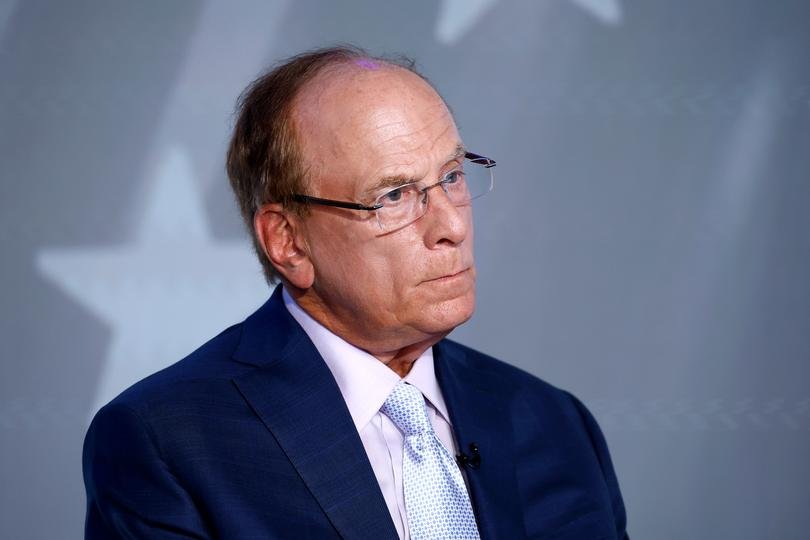
BlackRock Chairman and CEO Larry Fink used his annual letter to shareholders to argue that digital assets and tokenization could help update the financial system, even as he warned that the U.S. economic model is leaving too many people behind.

In the letter, Fink said the current system has delivered most of its gains to people who already own assets, while many workers have been shut out of market growth. He tied that imbalance to a wider problem in the U.S., where rising inequality, high government debt and weak participation in capital markets are putting pressure on the old model of finance.

“Capitalism is working—just not for enough people,” Fink wrote.

His proposed fix centered on tokenization and digital distribution as tools to expand access to investing and make markets run better.

Tokenization, Fink said, could “update the plumbing of the financial system” by making investments easier to issue, trade and access.

The idea is simple: If ownership of assets is recorded on digital ledgers, moving a fund share, bond or other security could become faster and cheaper. In practice, that would allow a regulated digital wallet to hold not just payments, but also tokenized bonds, ETFs and fractional interests in assets such as infrastructure or private credit.

“Half the world’s population carries a digital wallet on their phone,” Fink wrote. “Imagine if that same digital wallet could also let you invest in a broad mix of companies for the long term—as easily as sending a payment.”

Fink compared tokenization today to the internet in 1996, arguing that it will not replace traditional finance overnight, but could gradually connect old and new systems. He said policymakers should focus on building that bridge “as quickly and safely as possible” and called for clear buyer protections, counterparty-risk standards and digital identity checks to reduce illicit finance risks.

The comments add to BlackRock’s broader push into digital assets. In the same letter, Fink said the firm had built “early leadership” in the space, citing nearly $150 billion in assets connected to digital markets.

BlackRock’s USD Institutional Digital Liquidity Fund (BUIDL) is the largest tokenized fund in the world, and the firm also manages $65 billion in stablecoin reserves and nearly $80 billion in digital asset exchange-traded products.

Still, much of the letter focused on deeper stresses in the U.S. financial system. Fink warned that banks, corporations and governments can no longer fund large economic shifts on their own, especially as the country tries to rebuild manufacturing capacity, expand energy supply and compete in artificial intelligence.

He also argued that Social Security remains a critical safety net but may need structural reform, including some exposure to long-term market returns, to remain sustainable.

For Fink, tokenization sits inside that bigger picture. It is not a bet on hype, but a bet that better rails could help more people become investors rather than bystanders.

His broader message was that finance needs an upgrade, and that digital assets may become part of that overhaul.

Read the full article here

Fact Checker

Verify the accuracy of this article using AI-powered analysis and real-time sources.

Get Your Fact Check Report

Enter your email to receive detailed fact-checking analysis

5 free reports remaining

Continue with Full Access

You've used your 5 free reports. Sign up for unlimited access!

Already have an account? Sign in here

Share. Facebook Twitter Pinterest LinkedIn Tumblr Email Telegram Copy Link
News Room
  • Website
  • Facebook
  • X (Twitter)
  • Instagram
  • LinkedIn

The FSNN News Room is the voice of our in-house journalists, editors, and researchers. We deliver timely, unbiased reporting at the crossroads of finance, cryptocurrency, and global politics, providing clear, fact-driven analysis free from agendas.

Related Articles

Cryptocurrency & Free Speech Finance

Will MrBeast Push Crypto on Kids? Senator Warren Raises Alarm Over Banking App

1 minute ago
Cryptocurrency & Free Speech Finance

Backpack Exchange launches BP token with 25% airdrop, no insider allocation

58 minutes ago
Cryptocurrency & Free Speech Finance

Bitcoin Traders Warn BTC Price Bear Market Is Set to Resume Toward $46K

1 hour ago
Cryptocurrency & Free Speech Finance

Arrest Made in Violent Kidnapping of Ledger Founder for Crypto Ransom: Report

1 hour ago
Cryptocurrency & Free Speech Finance

Bitcoin Rebounds $4K in 60 Minutes as Trump Pauses Planned Iran Strikes

2 hours ago
Cryptocurrency & Free Speech Finance

European Bitcoin Treasury H100 Aims to Triple BTC Stash by Acquiring Two Firms

2 hours ago
Add A Comment
Leave A Reply Cancel Reply

Editors Picks

DHS Takes Out Its Funding Frustrations On Millions Of Americans By Sending ICE Agents To Do TSA Work

37 minutes ago

ICE Insists Liberia Is the Only Place It Can Deport Kilmar Abrego Garcia

38 minutes ago

CPJ, partners highlight threats to public broadcaster’s  independence in Lithuania

52 minutes ago

Access to the global internet is now restricted to loyal servants of the Iranian regime. Photo: Rahadiansyah/Unsplash In wartime Iran, connecting to the internet is now a perilous act, viewed as a crime against the state. Since hostilities erupted between Iran, Israel, and the United States on 28 February 2026, authorities have unleashed one of the most comprehensive internet shutdowns in history, cutting off millions from the rest of the world. Iranian authorities are now warning citizens that sharing photos of bombed locations or even trying to access the global internet could get you prosecuted for “collaborating with the enemy”. Against this backdrop, using a search engine or VPN is no longer innocent – it can be seen as a threat. Following massive airstrikes that killed the Supreme Leader and senior commanders, the state responded not only with anti-aircraft fire, but also activated a “kill switch” – severing international internet infrastructure. According to NetBlocks, connectivity dropped to just 1% of normal levels. For more than 280 hours, 90 million people have endured enforced silence, with over 40% of 2026 so far (up to 10 March) spent under internet shutdown. This calculated effort intends to isolate the population from information, not just a simple malfunction. A text message from an Iranian mobile operator calling on users to report people sharing images or information In a climate of heightened state paranoia, the SMS has become a tool of direct psychological warfare. Most frequently, messages from mobile operators to Iranian users characterise the sharing of images from bombing sites or “anti-government” sentiment as a “security violation”, effectively deputising mobile phones as tracking devices for dissent. More alarming are the rare reports of messages carrying direct judicial weight. These warn that “repeated connection to the international internet” will result in the immediate suspension of the phone line and referral to the judiciary. By criminalising attempts to bypass a firewall, authorities equate digital access with espionage. Notably, while these systems are used to threaten citizens, they have remained silent when issuing air-raid or public safety warnings. The architecture of the “class-based internet” The blackout is not total. Instead, authorities have enforced a “whitelisting” system that grants global web access only to pre-approved, loyal users. This system works because Iran has built its own internal internet, separating local traffic from the rest of the world. When the government turns on the whitelist, most people can only use local sites, while a small, approved group can still access the global internet. Instead of just blocking certain websites, the government now blocks most people entirely, letting only trusted insiders through. On 10 March, government spokesperson Fatemeh Mohajerani – representing an administration that, ironically, had campaigned on a pledge to reduce filtering – confirmed this graded reality. She stated that the government is working to provide limited access specifically for those who can “convey the voice of the system to the world”. This allows the regime to dominate the narrative reaching the outside world, drowning out civilian experiences with state propaganda. The digital underground: Configs and cat-and-mouse Despite threats, the Iranian people have not surrendered their right to speak. An underground network of “configs” now sustains resistance. Software like V2Ray, Xray, or Trojan is essentially an engine that does nothing on its own. To function, they require a specially formatted text file that specifies which server, protocol, and path to use. What users receive as links or files in private Telegram channels are actually encoded versions of these settings. Because the state’s deep packet inspection technology is constantly hunting for these connections, these files often have a very short lifespan. The challenge of keeping connections alive has created a high-risk black market. Short-lived configs are bought at high prices, making communication expensive and risky. For many users, especially those with limited technical knowledge, the situation creates new vulnerabilities. People searching for a way to contact relatives abroad often rely on unknown sellers or unverified software, exposing them to scams, malware, and surveillance risks. Some turn to Starlink, but owning such hardware adds further dangers of arrest and confiscation. Doxing as statecraft: The “spy hunters” The crackdown isn’t just online. Some Telegram channels linked to security forces now encourage people to report on each other, calling it an effort to find spies. These channels employ open-source intelligence tactics to identify citizens. When a video of an airstrike is posted, these groups inspect metadata and visual details to pinpoint the photographer’s location. Their personal information is then exposed, and they are labelled as enemy collaborators. This vigilante-style digital hunting is supported by the highest levels of the judiciary. Chief Justice Gholam-Hossein Mohseni-Ejei has publicly warned of “no leniency”, while state television has discussed punishments ranging from property confiscation to the death penalty for media actions that “damage national security”. The humanitarian cost of silence The human rights implications are catastrophic. Human Rights Watch has warned that the shutdown violates international law. When the IDF issues evacuation warnings on social media, those warnings fall into a digital vacuum. Because the general population cannot access the global web, they cannot see the maps or the warnings intended to save their lives. Centuries ago, the Persian Empire pioneered the Chapar-khaneh, a sophisticated postal system that revolutionised communication. Today, the heirs of that civilisation are being forced into a digital dark age. This is not the first time a nation has been stripped of its right to the global digital commons, nor will it be the last. But this crisis must serve as a provocation for the next generation of internet giants. As satellite-to-mobile technology advances, internet providers face the question of whether global access should be guaranteed in places where governments restrict connectivity. Preventing the criminalisation of communication may require new technical solutions. Securing open access remains a challenge for the global community. READ MORE

53 minutes ago
Latest Posts

Backpack Exchange launches BP token with 25% airdrop, no insider allocation

58 minutes ago

Bitcoin Traders Warn BTC Price Bear Market Is Set to Resume Toward $46K

1 hour ago

Arrest Made in Violent Kidnapping of Ledger Founder for Crypto Ransom: Report

1 hour ago

Subscribe to News

Get the latest news and updates directly to your inbox.

At FSNN – Free Speech News Network, we deliver unfiltered reporting and in-depth analysis on the stories that matter most. From breaking headlines to global perspectives, our mission is to keep you informed, empowered, and connected.

FSNN.net is owned and operated by GlobalBoost Media
, an independent media organization dedicated to advancing transparency, free expression, and factual journalism across the digital landscape.

Facebook X (Twitter) Discord Telegram
Latest News

Will MrBeast Push Crypto on Kids? Senator Warren Raises Alarm Over Banking App

1 minute ago

DHS Takes Out Its Funding Frustrations On Millions Of Americans By Sending ICE Agents To Do TSA Work

37 minutes ago

ICE Insists Liberia Is the Only Place It Can Deport Kilmar Abrego Garcia

38 minutes ago

Subscribe to Updates

Get the latest news and updates directly to your inbox.

© 2026 GlobalBoost Media. All Rights Reserved.
  • Privacy Policy
  • Terms of Service
  • Our Authors
  • Contact

Type above and press Enter to search. Press Esc to cancel.

🍪

Cookies

We and our selected partners wish to use cookies to collect information about you for functional purposes and statistical marketing. You may not give us your consent for certain purposes by selecting an option and you can withdraw your consent at any time via the cookie icon.

Cookie Preferences

Manage Cookies

Cookies are small text that can be used by websites to make the user experience more efficient. The law states that we may store cookies on your device if they are strictly necessary for the operation of this site. For all other types of cookies, we need your permission. This site uses various types of cookies. Some cookies are placed by third party services that appear on our pages.

Your permission applies to the following domains:

  • https://fsnn.net
Necessary
Necessary cookies help make a website usable by enabling basic functions like page navigation and access to secure areas of the website. The website cannot function properly without these cookies.
Statistic
Statistic cookies help website owners to understand how visitors interact with websites by collecting and reporting information anonymously.
Preferences
Preference cookies enable a website to remember information that changes the way the website behaves or looks, like your preferred language or the region that you are in.
Marketing
Marketing cookies are used to track visitors across websites. The intention is to display ads that are relevant and engaging for the individual user and thereby more valuable for publishers and third party advertisers.