

 Freedom Index

Listen to the article
Key takeaways:
-
Bitcoin reclaimed $68,000 as President Trump hinted at ending the Iran War even if the Strait of Hormuz remained partially closed.
-
Bitcoin derivatives data show high fear, with put options at a premium and low demand for bullish leveraged trades.
Bitcoin (BTC) rallied to $68,000 on Monday following the gains in the S&P 500 after US President Donald Trump suggested that the administration may consider ways to end the US and Israel-Iran war without a full reopening of the Strait of Hormuz. However, Bitcoin traders have kept a bearish stance according to derivatives metrics, indicating little confidence that the $66,000 level will hold for much longer.
Bitcoin’s momentary dip to $66,000 occurred on the same day that Google research analysts claimed that the elliptic curve discrete logarithm problem (ECDLP) could be cracked with 20 times less quantum computing power. However, some traders quickly realized that the entangled logical physical qubits needed for a successful attack remain far-fetched, given the equipment currently in existence.
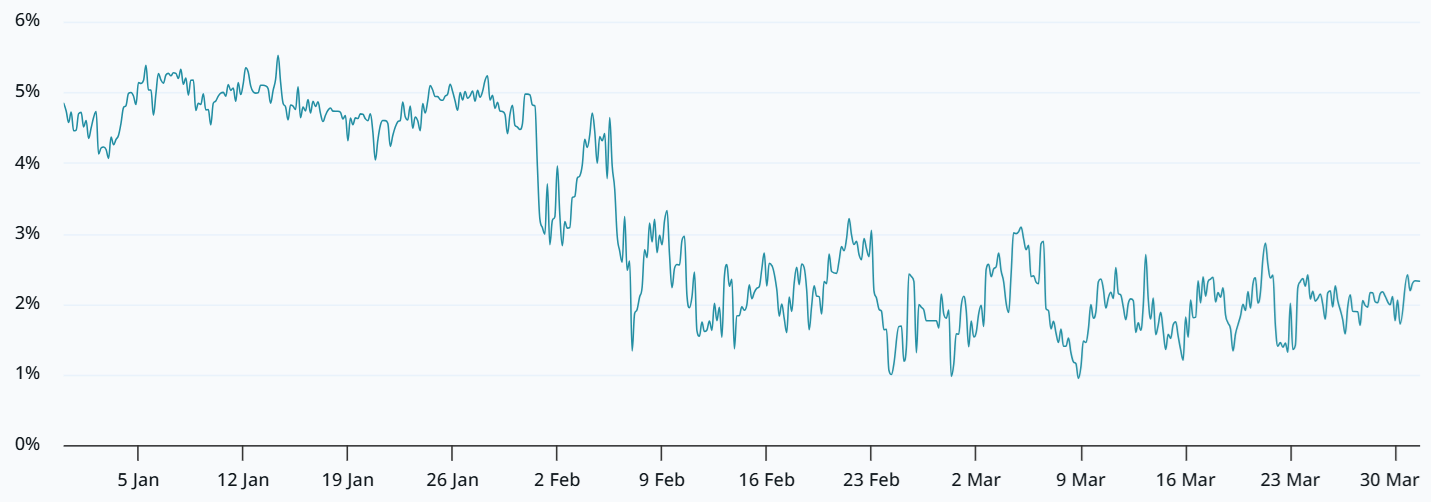
The Bitcoin monthly futures contracts annualized premium relative to regular spot markets stood at 2% on Tuesday, flat from the prior week. Numbers below 4% indicate a lack of demand for bullish leverage as shorts (sellers) typically demand a premium to compensate for the longer settlement period. More importantly, not even the price rally above $71,000 on Wednesday was able to make investors feel bullish.
Bitcoin derivatives show limited demand for bullish leverage
Bitcoin price signaled strength by holding above $66,000 for the past week while the S&P 500 plummeted to its lowest level in 7 months on Monday. Crude oil prices surged above $100 on Friday and this act cautiously. Expectations for monetary policy easing in the US dropped sharply over the past month as the pressure on fuel prices drove inflation upward.
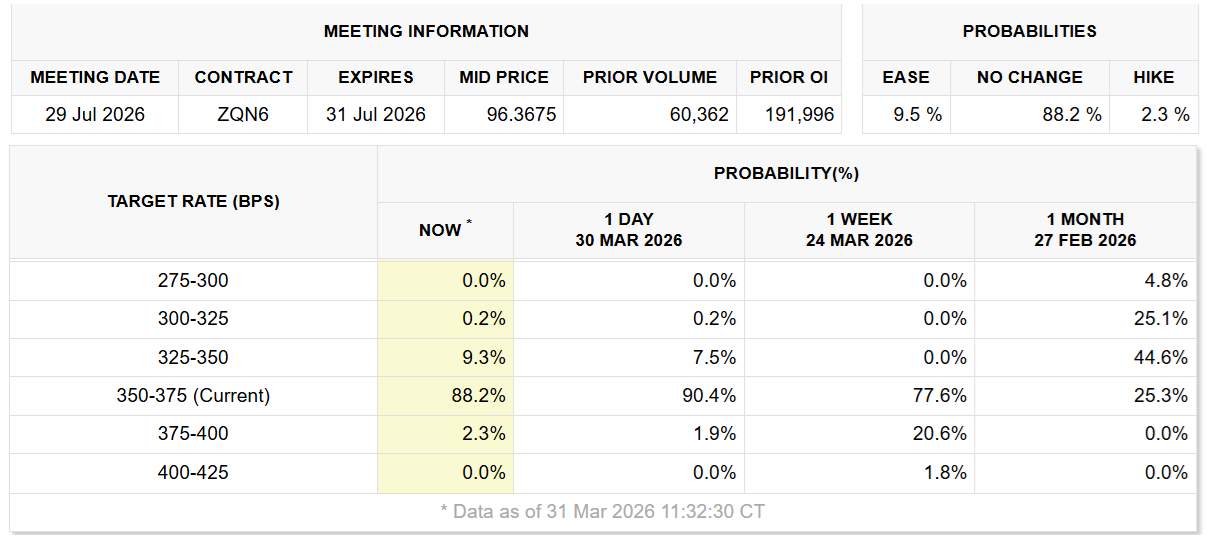
Traders now anticipate less than 10% odds of interest rate cuts by the US Federal Reserve by July, down from 75% one month ago, according to CME FedWatch Tool data. A higher cost of capital favors fixed-income investments, holds back consumer spending and reduces incentives for companies to grow. This situation puts an extra burden on the already weakened US job market.
To understand if professional traders are leaning bearish, one should look at the Bitcoin options market.
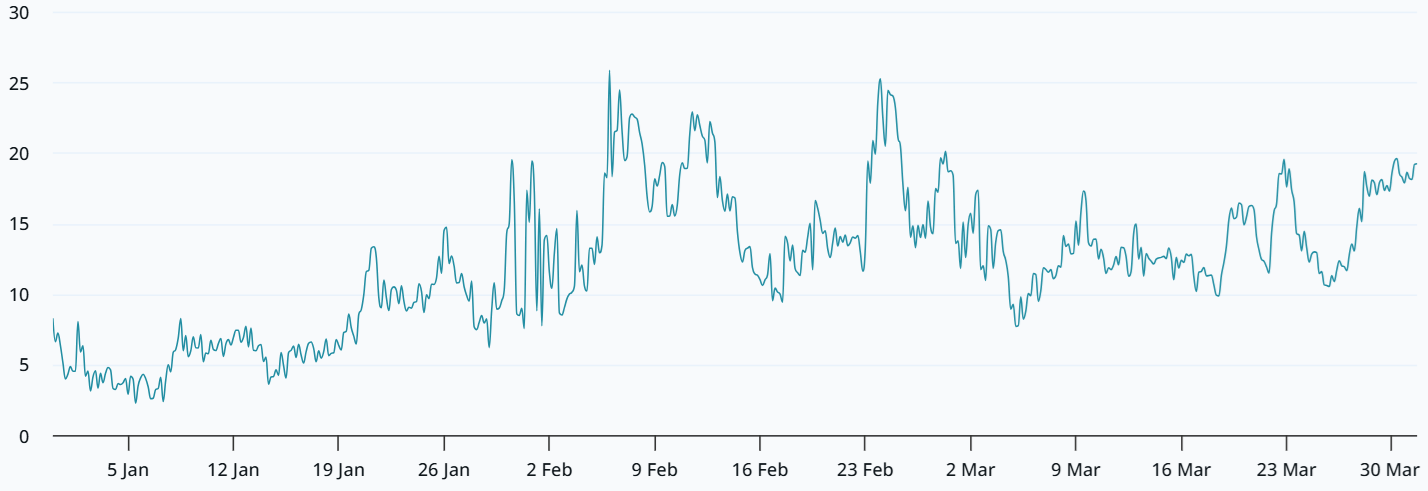
On Tuesday, Bitcoin put (sell) options traded at a 17% premium compared to call (buy) options. This level is usually linked to extreme fear of price drops. A range of -6% to +6% is expected in balanced markets, which last happened in mid-January. Whales and market makers are clearly not comfortable holding downside risk, even though Bitcoin has already declined 23% so far in 2026.
Related: Hyperliquid whale opens $53M Bitcoin short–Should traders take notice?
Bitcoin’s resilience near $67,000 suggests that the quantum computing fears were quickly dismissed, but something else might be behind the lack of excitement. Traders could be expecting economic stimulus packages as recession risks emerge. In the early stages, such packages often support the stock market more than they support Bitcoin.
Currently, most people see Bitcoin as a risky asset rather than a haven, which explains the bearish mood in Bitcoin derivatives. Therefore, one should not assume that traders are waiting for prices below $60,000 just because there is weak demand for bullish leveraged positions.
This article is produced in accordance with Cointelegraph’s Editorial Policy and is intended for informational purposes only. It does not constitute investment advice or recommendations. All investments and trades carry risk; readers are encouraged to conduct independent research before making any decisions. Cointelegraph makes no guarantees regarding the accuracy or completeness of the information presented, including forward-looking statements, and will not be liable for any loss or damage arising from reliance on this content.
Read the full article here
Fact Checker
Verify the accuracy of this article using AI-powered analysis and real-time sources.