

 Freedom Index

Listen to the article
Bitcoin mining companies are turning to renewable energy to reduce costs amid record-low hash price, a critical metric for miner profitability, which is below the $40 level that marks the breakeven point for mining operators.
Hash price, which measures expected miner profitability per unit of computing power used to successfully add a block, is about $39.4 per petahash second per day (PH/s/day) at the time of this writing, according to mining data provider Hashrate Index.
Sangha Renewables, a Bitcoin (BTC) miner and renewable energy company, energized a 20 megawatt (MW) solar-powered mining facility in Ector County, Texas, on Thursday, according to TheMinerMag.
The Phoenix Group, a mining and digital infrastructure company, announced in November that it had launched a 30-megawatt mining operation using hydroelectric power in Ethiopia.
In September, Canaan, a hardware manufacturer and Bitcoin miner, partnered with digital infrastructure company Soluna to deploy a mining facility at a wind-powered site in Briscoe County, Texas.
Canaan is also developing an adaptive mining rig to maximize energy efficiency. The hardware balances electrical loads and uses AI to adjust energy usage.
The Bitcoin mining industry is facing several economic challenges, including reduced mining rewards, which have placed industry players in the toughest profit margin environment in the sector’s history.
Related: Thirteen years after the first halving, Bitcoin mining looks very different in 2025
Mining BTC becomes increasingly expensive
The Bitcoin network’s mining hashrate, a proxy for the total amount of computing power securing the protocol, continues to reach new all-time highs.
Although the hashrate oscillates in the short term, the long-term trend is upward, with the network hashrate crossing the 1 zetahash milestone in April.
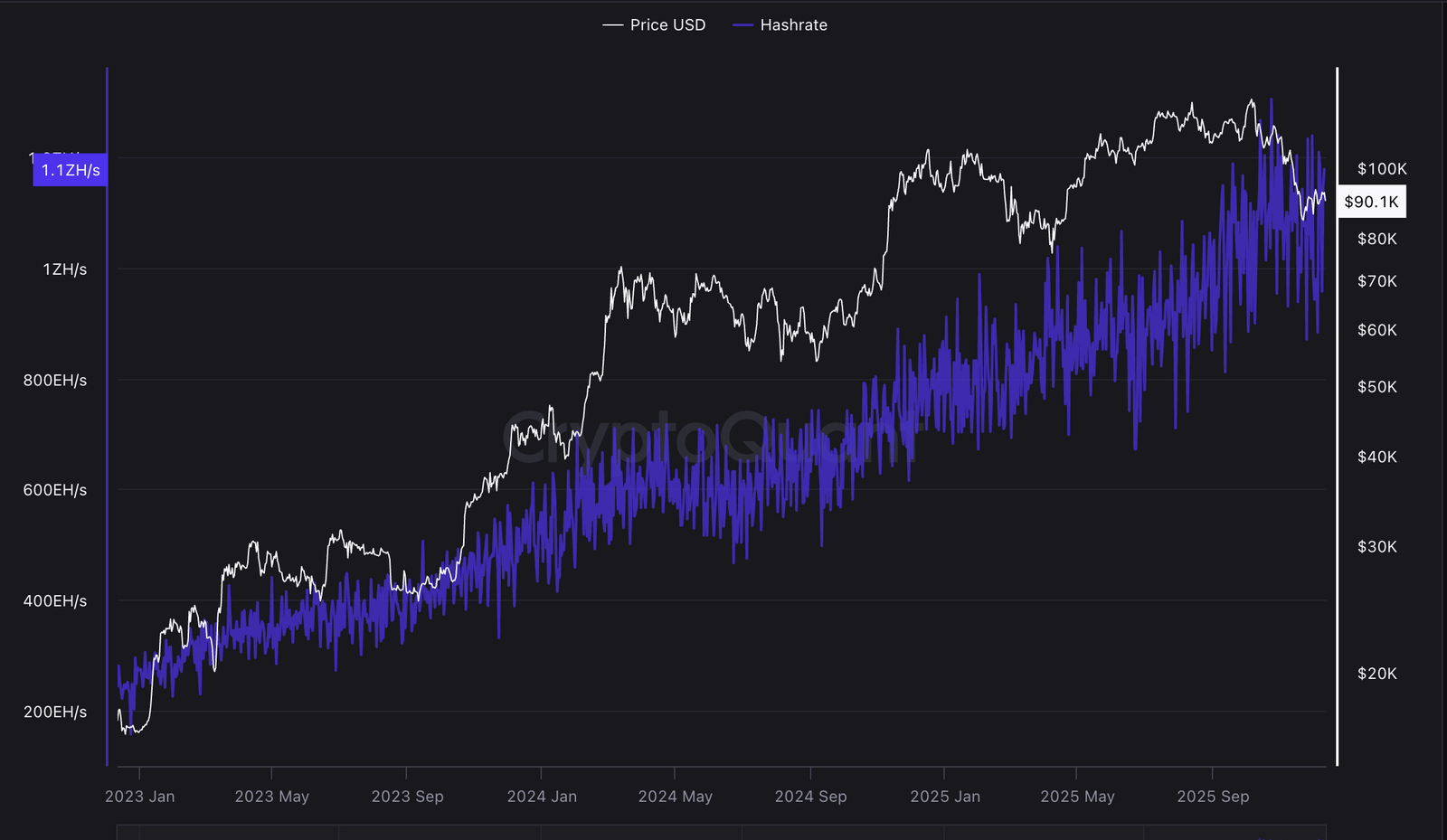
One zetahash is equal to 1,000 petahashes. Rising hashrate means that miners must expend ever-greater computing resources to remain competitive and successfully mine blocks.
In November, stablecoin issuer Tether said it was shuttering its Bitcoin mining operation in Uruguay, citing rising energy costs.
Magazine: Big questions: Would Bitcoin survive a 10-year power outage?
Read the full article here
Fact Checker
Verify the accuracy of this article using AI-powered analysis and real-time sources.