

 Freedom Index
Listen to the article
Hello and welcome to another edition of Free Agent! Get all your men out there this week, it’s no time to leave points on the floor.
Let’s start by talking about the latest socialist threat against sports, followed by some thoughts on the NBA’s plans to finally fix tanking once and for all if they just make the lottery system even more complicated. We’ll close with some thoughts on Drive to Survive and sports docuseries in general.
Don’t miss sports coverage from Jason Russell and Reason.
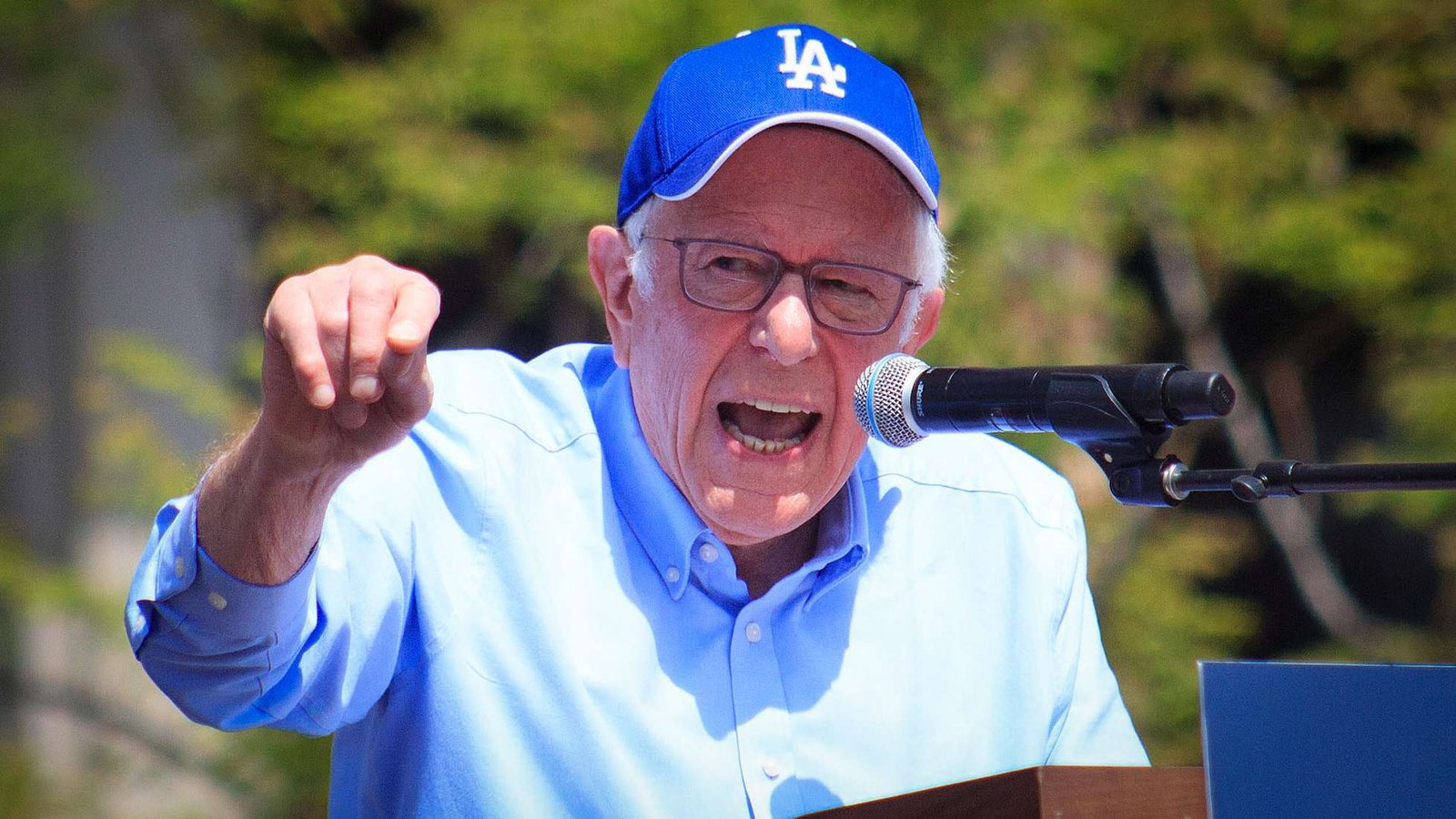
Businesses sometimes move around to larger, growing markets and Sen. Bernie Sanders (I–Vt.) does not like that—at least not when it’s a sports team.
The socialist has a plan to keep sports teams from moving around, unless locals have a chance to buy the team for a “fair price” (as determined by appraisers with the Treasury Department). Basically anyone could purchase the team: a company, private individual, nonprofit, government entity, or a community organization (like the Packers ownership model).
In fact, the bill lists which entities get priority—with “a local government entity or a home community cooperative” topping the list.
The bill would come into play anytime a team tries to cross state lines (like the Bears flirting with Indiana) or move to a new metropolitan area (like when some people thought the Spurs might move to Austin from San Antonio). Teams moving from a city’s downtown to its suburbs, or vice versa, would presumably be safe (like the Dallas Stars possibly moving from downtown Dallas to Plano), as long as they didn’t cross state lines (like when the Wizards and Capitals almost moved across the Potomac River to Alexandria, Virginia). The bill makes no distinction between teams in private or public stadiums, except that the cost of “any government payment, credit, or subsidy” for construction of the team’s current stadium gets deducted from the “fair price.”
Eight other Democrats in Congress have co-sponsored the bill, dubbed the Home Team Act. The financial penalty for not complying only comes out to $11 million a year, which is not much if you’re trying to sell a team for billions of dollars. The law’s text (only nine pages) seems to apply to any sports league, though it specifically includes the four major pro leagues, MLS, the WNBA, and NWSL.
The bill’s press release laments two specific team moves: the Dodgers out of Brooklyn and the A’s out of Oakland. If only such a law had existed in 1957 to keep the Dodgers and A’s from moving! Except the A’s were still in Kansas City at the time, and a law like this may have prevented them from ever moving to Oakland. MLB may have never gotten to California if a teenage Bernie had his way—even if MLB got there through expansion instead of relocation, new owners may have balked at not being able to leave town if they found the market lacking.
In fairness, if the bill became law, it would hopefully cut down on various local governments offering dreaded stadium subsidies to entice a new team to town or keep one around (remember that stadium subsidies have very real consequences). But getting local governments more entangled in sports is the wrong way to make that happen. Capitalism, not government, is what has made sports leagues grow and thrive (even if some leagues have socialist rules, like drafts).
Cities rise and fall, and it is only natural for businesses to move around based on market potential. Why shouldn’t Nashville or Las Vegas get to have sports teams? Why should Tampa or Oakland get to keep them? (There are already other teams in those states anyway.) Business owners, not city governments, should make those decisions.
City governments would make lousy team owners anyway—I am much more confident in the billionaires running my favorite sports teams (even Chris Illitch) than I am in having the city government of Detroit run them.
The NBA is tired of tanking (again) and has some sure-fire plans that will definitely, for sure, fix it (again). The worse the problem gets, the more complicated they try to make the system.
The NBA presented three comprehensive anti-tanking concepts to its Board of Governors on Wednesday, with modifications expected to each before a formal vote in May, per ESPN sources.
1. 18 teams in draft lottery (seeds 7-15 in each conference) – flattened odds, with bottom 10…
— Shams Charania (@ShamsCharania) March 27, 2026
I have to admit I read some of those proposals five times and I’m still not sure what they mean.
Having been burned by draft lotteries too many times, I sympathize with the longsuffering fans who watched their team bottom out, only for the lottery to screw them out of the helpful player they so desperately need.
3 straight years the team with the worst record in the NBA has slid to 5th in the draft. Just seems improperly weighted. Fans of those teams deserve better. The NFL draft is one of the biggest events in all of sports and they don’t have a circus like this.
— Dan Miller (@DanMillerFox2) May 12, 2025
Last year around lottery season I asked readers what they thought: a slight majority hated draft lotteries, with about a quarter approving of them. As for alternatives, people preferred the simplicity of the NFL Draft’s rules (no lottery, just reverse order of standings) or no draft at all (teams could just sign prospects).
Maybe tanking isn’t as much of a problem (with fans, anyway) as leagues think? At the very least, the new complex “solutions” are probably not going to be popular with fans.
I still like my anti-tanking solution: Simply pay players a small bonus for winning games toward the end of the season.
The latest season of Drive to Survive again shows why it’s the best sports docuseries there is—and not just because there’s a random Albert Pujols cameo.
Now in its eighth season, the series again delivers on its premise of getting fans greater access to the heroes and villains of Formula 1, whether they’re competing for championships or at the back of the pack. Some of that access is still overly filtered (like when cameras follow drivers into exclusive sponsor events where they say the same things they tell the press) or grossly manufactured (like when producers clearly asked one driver if they could film him in his hotel room scrolling through bad news of himself). But Drive to Survive still gets moments on film in the Formula 1 paddock that no one else gets, and does interviews that actually get meaningful, interesting answers out of people (my personal favorite: after Christian Horner gets fired, having him read his texts from rival team principal Toto Wolff).
I’ve watched plenty of sports docuseries, and Drive to Survive remains my favorite. Full Swing is a recent enjoyment as well. Other famous series like Hard Knocks or Amazon’s All or Nothing are fine, but even when they’ve covered my favorite teams for a season I haven’t managed to finish them.
If you’ve already watched Drive to Survive and are looking for more on Formula 1 history or business, the latest episode of the Acquired podcast has 4.5 hours for you (or if you’d rather read it, go with The Formula by Joshua Robinson and Jonathan Clegg, the book that provides the basis for much of the Acquired episode).
This amazing shot going down with less than a second on the clock is what I get for saying last week that there’s nothing like a walk-off winner. The main feed is below, but if you want to watch Duke get beat 10 more times, basically every possible angle is here. (The Duke radio call is also a fun listen.)
(And people claim legendary sports moments don’t happen anymore!)
OH MY GOODNESS ????
UCONN LEADSSSS UNBELIEVABLE #MarchMadness pic.twitter.com/IPX2JWiw0b
— NCAA March Madness (@MarchMadnessMBB) March 29, 2026
That’s all for this week. Enjoy watching the real game of the week, the McDonald’s All American Boys Game.
Read the full article here
Fact Checker
Verify the accuracy of this article using AI-powered analysis and real-time sources.