

 Freedom Index
Listen to the article
When Bari Weiss became the editor-in-chief of CBS News in October, reactions among the media class were sharply divided. Many centrists and liberals and conservatives who shared Weiss’s criticisms of the illiberal “woke” Left saw her ascension as a welcome victory for the woman who had left the New York Times in 2020 citing bullying by progressive colleagues. Commentary on the left, however, slammed her as a “polarizing provocateur” peddling right-wing narratives and lacking the journalistic experience needed to run a network’s news division.
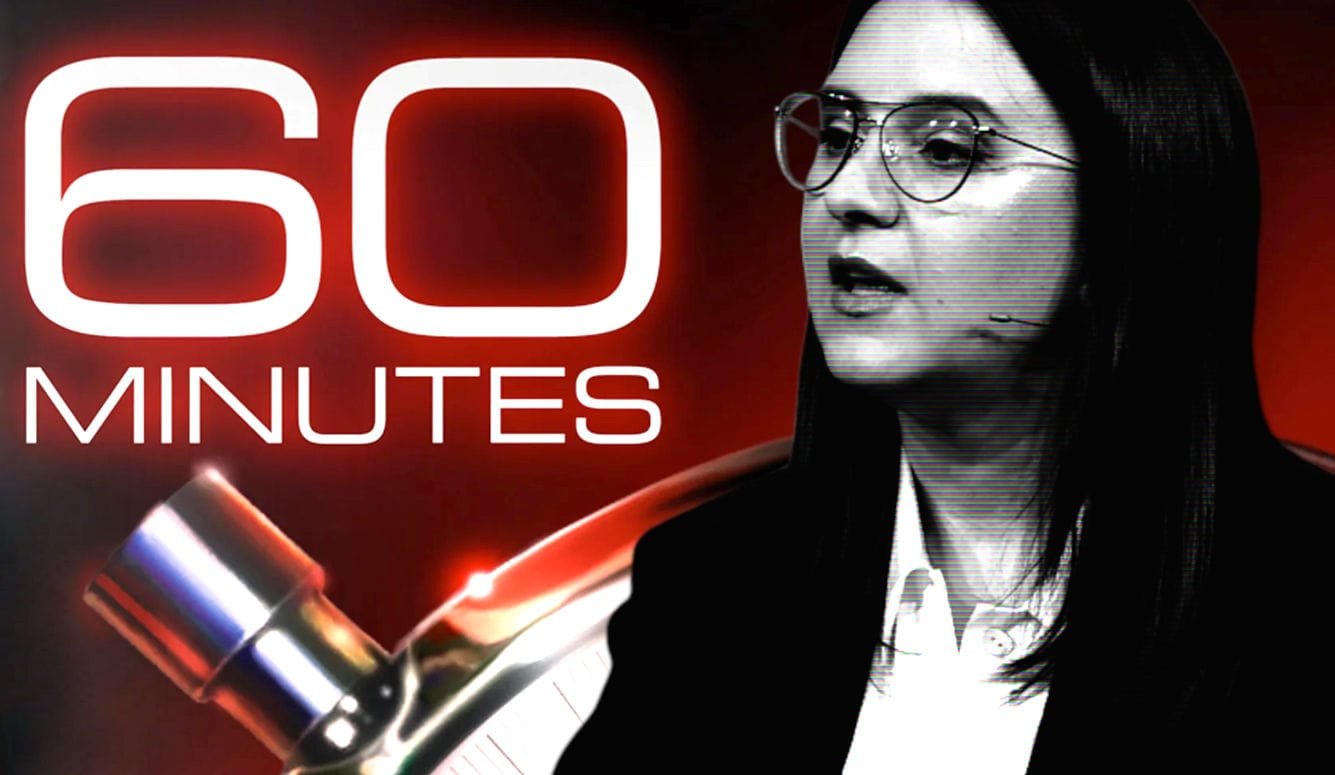
Now, Weiss is facing her first big controversy on CBS: the last-minute decision to postpone a segment of the network’s flagship show, 60 Minutes, titled “Inside CECOT”—a disturbing look at the Trump administration’s notorious deportation of 252 mostly Venezuelan migrants to El Salvador last March for indefinite incarceration in that country’s maximum-security prison, CECOT (Centro de Confinamiento del Terrorismo, the Terrorism Confinement Center). Once again, the reactions are sharply divided: from “Bari Weiss is exercising censorship on behalf of the authoritarian Trump regime and ruining a gold-standard TV newsmagazine” to “Bari Weiss is simply doing normal editorial oversight and leftists are freaking out because she is challenging their monopoly on television narratives.”
Some critiques of Weiss have been unfair. Atlantic columnist Adam Serwer, for instance, charges that her commitment to free speech has always been hypocritical, wrongly implying that she has never favoured speech rights for her critics or objected to the Trump administration’s abuses. Others have stooped to outright caricature which has little in common with Weiss’s actual record.
Bari Weiss, like many right-wing media figures, was discovered by a billionaire as a useful bigot during her college years. Her lucrative career is owed to her ability to tell wealthy men what they want to hear. She’s Charlie Kirk, but with Ivy League, legacy media arrogance. https://t.co/igx4QqEEIl
— Emma Vigeland (@EmmaVigeland) December 24, 2025
Even so, the defences of Weiss on the 60 Minutes story miss the mark. A close look at the timeline and substance of her decision suggests that the segment was spiked without a valid journalistic reason—and, very likely, to avoid angering Donald Trump.
Before moving on to the CECOT story, it’s worth looking at how Bari Weiss—who founded a newsletter called Common Sense, which later evolved into the online magazine The Free Press—came to be the editor-in-chief of CBS News.
A month before the 2024 election, Donald Trump and his supporters accused CBS of covertly aiding his Democratic rival Kamala Harris by deceptively editing her 60 Minutes interview, aired 7 October, to cover up what Trump called her “idiotic response” to a question on Israel and Gaza. It was a bizarre allegation, since the somewhat muddled Harris comment CBS supposedly wanted to cover up aired on another major CBS program, Face the Nation—and was featured in a CBS social media promo. Nonetheless, a pro-Trump group proceeded to file a complaint with the Federal Communications Commission (FCC) claiming “news distortion” by CBS. Then, on 1 November, Trump filed a lawsuit accusing CBS of “deceitful, deceptive manipulation of news” and “voter interference.”
While the FCC complaint was dismissed shortly before Trump’s inauguration, the commission’s new Trump-appointed chairman, Brendan Carr, reopened it in February 2025 and launched an investigation into CBS, which the Foundation for Individual Rights and Expression (FIRE), a rare genuinely nonpartisan free speech advocacy group, decried as an “illegitimate show trial” and an “unconstitutional abuse of regulatory authority.” Later that month CBS released the transcript and raw footage of the Harris interview, which left no doubt that the claim of dishonest editing was completely baseless. 60 Minutes had not misleadingly spliced the footage but simply trimmed a verbose, meandering answer—i.e., edited for length and clarity, which is standard practice. One portion of the answer was aired on Face the Nation and another on 60 Minutes.
Almost every legal expert agreed that Trump’s lawsuit against CBS had no merit and no chance of success. Nonetheless, in early July, the network’s parent company, Paramount, opted for a settlement (with a US$16 million contribution to Trump’s presidential library plus a reported $20 million in free advertising and public service announcements). There is little doubt that this decision was made for one reason only: Paramount needed FCC approval for a profitable merger with the Hollywood studio Skydance, the FCC was stalling, and the pending complaint about the 60 Minutes interview was reportedly the stumbling block.
Three weeks after the settlement, the FCC approved the Paramount/Skydance merger, with an unconvincing disclaimer that the review had been completely “unrelated” to Trump’s lawsuit and with an unusual clause: Paramount Skydance had to commit to appointing an ombudsman for at least the first two years, to evaluate reports of bias or misconduct by CBS. To many observers, it looked like a demand to install a pro-government monitor. (The post was given to former Hudson Institute head Kenneth Weinstein, a donor to Republican and pro-Trump groups and Trump’s 2020 nominee for ambassador to Japan.) The merger also placed Skydance CEO David Ellison, who had been cultivating a good relationship with Trump, in charge of the company. Ellison had been talking to Bari Weiss since late 2024 about bringing her on board at CBS if the deal went through.
Media Contagion
Latter-day journalism is helping to realize its own false narratives.
In mid-October, the long-awaited announcement came: Weiss was being made editor-in-chief at CBS News, and Paramount was also acquiring The Free Press, where she would continue as editor-in-chief.
It would be an exaggeration to say that Weiss ascension at CBS was the result of pressure from the Trump administration. But Paramount’s desire to placate the mercurial president certainly seems to have been a factor in her rise—which is especially troubling considering that, back in October 2024, a Free Press editorial essentially backed Trump’s accusations of deceptive editing by CBS for the purpose of hiding Harris’s “word salad” and waved aside Trump’s public threats to strip the network of its broadcasting licence as merely “overblown.” When the full interview transcript and raw footage were released as the editorial had demanded, there was no Free Press acknowledgment that the charges were unsubstantiated.
That’s the prehistory. Now, the present moment.
The 60 Minutes story of the CECOT deportees, reported by Sharyn Alfonsi, had been in the works for weeks. This is what happened at the end of the line, as reported by the New York Times (with no refutation from anyone):
The segment … was first screened for CBS journalists on Dec. 12; Ms. Weiss did not attend that screening or four others over the next week… She watched a video of the segment on Thursday night and offered suggestions, which producers integrated into the script. By Friday afternoon, “60 Minutes” had given CBS management the green light to announce and promote the segment to viewers.
Then, around midnight at the end of Friday, less than 48 hours before the segment was set to air, Ms. Weiss weighed in again, this time with more substantial requests. She asked producers to add a last-minute interview with Stephen Miller, the White House deputy chief of staff—a relatively straightforward task for a print journalist who needs to only make a phone call, but a logistically difficult one in TV news…
“If we run the piece as is, we’d be doing our viewers a disservice,” Ms. Weiss wrote in her internal note, which “60 Minutes” producers viewed as a more critical assessment than the one she had offered earlier in the week.
It wasn’t until Sunday 21 December that the final decision was made to pull the segment—only three hours before it was supposed to air. Amid the uproar, Weiss issued a statement saying that “holding stories that aren’t ready for whatever reason—that they lack sufficient context, say, or that they are missing critical voices” was a common practice and that the piece would air when ready.
The next day, Axios published a memo Weiss had emailed two top 60 Minutes producers after the segment was spiked. Weiss’s basic argument was that the “horrific conditions at CECOT” had already been extensively covered and that the 60 Minutes segment did not do enough to “advance” the topic—or to present the Trump administration’s side of the story, including the “genuine debate” about using the Alien Enemies Act as the basis for instant deportations. (Among her suggestions: interviews with top Trump administration officials such as “border czar” Tom Homan and homeland security adviser Stephen Miller, both notorious immigration hardliners.) She also thought the segment should have devoted more time to the deportees’ criminal records:
Of the 252 Venezuelans sent to CECOT, we say nearly half have no criminal histories. In other words, more than half do have criminal histories. We should spend a beat explaining this. We then say that only 8 of the 252 have been sentenced in America for violent offenses. But what about charged? My point is that we should include as much as we can possibly know and understand about these individuals.
Weiss’s defenders believe the memo raised fully legitimate concerns, or even that it insisted on nothing more than “basic editorial standards,” in the words of conservative columnist Becket Adams. But upon a closer look, and especially after viewing the segment—which aired in Canada, was widely shared in the United States before Paramount started taking it down, and is still available on Internet Archive and some other sites—most of Weiss’s objections appear specious.
Take the question of criminal histories. Considering that the administration deported 252 men to what was meant to be life imprisonment in shockingly brutal conditions on the grounds of alleged membership in the Venezuelan gang Tren de Aragua, the fact that nearly half had no criminal records is surely the important news. As for men charged but not convicted, the segment (the transcript of which is also available) deals with this issue:
60 Minutes reviewed the available ICE data. … It shows 70 men had pending criminal charges in the US, which could include immigration violations. We don’t know because the Department of Homeland Security has never released a complete list of the names or criminal histories of the men it sent to CECOT.
(One might add that at least fifty of the men had come to the United States legally—while only forty were definitely known to be illegal aliens.)
Comments from Homan and Miller certainly could have been interesting—though Weiss’s suggestion that they might have second thoughts about shipping the migrants to CECOT after the revelations about the abuse they had endured seems naïve at best. Both men are immigration hawks; Miller, in particular, is quite upfront about his obsessive hostility to even legal immigration, especially from non-Western countries. Neither has expressed any regret about the harsh treatment of migrants. While Weiss correctly noted that they “don’t tend to be shy,” it seems doubtful that they would have agreed to be grilled on camera about a deportation that had clearly led to appalling abuses.
The questions Weiss raised about the segment’s portrayal of Secretary of Homeland Security Kristi Noem’s visit to the facility in March 2025, when Noem famously posed against the backdrop of half-naked gang members densely packed in cells like penned cattle, have a similar patina of bizarre naiveté:
We report that she took pictures and video there with MS-13 gang members, not TdA members, with no comment from her or her staff about what her goal on that trip was, or what she saw there, or if she had or has concerns about the treatment of detainees like the ones in our piece.
But Noem, who was harshly criticised for her CECOT trip at the time, made its purpose extremely plain in the video she made at the facility: to send a “this could be you” warning to illegal migrants in the United States. She has had ample opportunities since then to express concern about the detainees’ treatment. The questions Weiss suggests would only invite boilerplate comments about protecting the American people from alien criminals.
I toured the CECOT, El Salvador’s Terrorism Confinement Center.
President Trump and I have a clear message to criminal illegal aliens: LEAVE NOW.
If you do not leave, we will hunt you down, arrest you, and you could end up in this El Salvadorian prison. pic.twitter.com/OItDqNsFxM
— Secretary Kristi Noem (@Sec_Noem) March 26, 2025
In the same bullet-point item, Weiss adds that “the ensuing analysis from the Berkeley students is strange. The pictures are alarming; we should include them. But what does the analysis add?” After watching the segment, I wondered if Weiss had actually viewed it. The analysis from the team of students at the University of California-Berkeley Human Rights Center has a very clear point: to corroborate the detainees’ testimony of abuse with physical evidence from open-data sources such as videos and satellite imagery.
Weiss’s comments about the legality of the administration’s use of the Alien Enemies Act (which allows the swift removal of citizens of an enemy nation during a declared war and has to be stretched a great deal to apply to members of a migrant gang) are even more bizarre, in that she either misunderstands or misrepresents the administration’s position. In her words, “The admin has argued that in court that detainees are due ‘judicial review.’” In fact, it has explicitly argued that they are not. Yes, at least one government brief conceded in passing that “TdA members subject to removal under the Alien Enemies Act get judicial review.” But the administration strenuously defended its practice of removing them without review and without a chance to contest the removal order. Indeed, many deportees were handed a paper informing them that, “You are not entitled to a hearing, appeal, or judicial review of this notice and warrant of apprehension and removal.”
Perhaps an on-air comment from an administration official would have added to the story. But all in all, Weiss’s criticisms amount to little more than smoke and mirrors.
Weiss’s defenders seized on another Axios revelation: while the segment ended by stating that the Department of Homeland Security “declined our request for an interview and referred all questions about CECOT to El Salvador,” it did not mention anything else from a 300-word comment provided by DHS assistant secretary and frequent spokeswoman Tricia McLaughlin and did not mention that the White House and the State Department had apparently also provided comments in response to CBS queries.
“CBS News straight up lied,” wrote journalist Michael Shellenberger—a Weiss associate at her academic venture, the University of Austin—in a typical reaction. But, of course, the segment never claimed that 60 Minutes received no responses to its queries, and it was hardly obligated to report comments that amounted to deflections or taunts. That’s certainly true of the one emailed reply that has been publicly reported, from White House spokeswoman Abigail Jackson—and that might have been worth including as an example of the Trump administration’s cheap demagoguery: “60 Minutes should spend their time and energy amplifying the stories of Angel Parents, whose innocent American children have tragically been murdered by vicious illegal aliens that President Trump are [sic] removing from the country.” McLaughlin had given a similar boilerplate response in July to a query from National Public Radio about the recently released detainees’ accounts of brutal abuse at CECOT: “Once again, the media is falling all over themselves to defend criminal illegal gang members. We hear far too much about gang members and criminals’ false sob stories and not enough about their victims.”
It is also worth noting that the administration, including McLaughlin, has a long trail of lies on the story of the CECOT deportees. Most egregiously, it asserted for months that, despite court orders to facilitate the return of the Venezuelan (and other) immigrants shipped to CECOT without due process, the US government couldn’t do anything because the men were no longer in its custody or under its authority. Then, in July, the US government arranged their release and transportation to Venezuela in a prisoner swap to free ten US citizens and lawful permanent residents who had been detained by the Nicolás Maduro regime. In view of all this, Weiss’s insistence on getting the administration’s side of the CECOT deportations story looks less like genuine balance than “both-sideism”—i.e., treating both sides as equivalent when they’re not.
Even assuming that all of Weiss’s objections in the memo are legitimate, this still leaves an obvious question: Why didn’t she raise those objections at once after viewing the segment on Thursday 18 December, instead waiting more than a day to bring them up? For that matter, why didn’t she attend the previous screenings? Writing in Puck, Dylan Byers suggests that the real issue may be “Bari’s inexperience in television and lack of administrative finesse.”
The more common explanation is that the decision was motivated by a desire (or, perhaps, a directive from Ellison) to placate Trump, who had been having tantrums about his treatment by CBS News under its new ownership—and, especially, by 60 Minutes—in the two weeks preceding the kerfuffle over the CECOT story. “60 Minutes has actually gotten WORSE!” he posted on his Truth Social network on 8 December, apparently after being angered by the program’s interview with Marjorie Taylor Greene, a former staunch supporter turned Trump critic.
Donald J. Trump Truth Social Post 02:32 PM EST 12/16/25
For those people that think I am close with the new owners of CBS, please understand that 60 Minutes has treated me far worse since the so-called “takeover,” than they have ever treated me before. If they are friends, I’d…
— Commentary Donald J. Trump Posts From Truth Social (@TrumpDailyPosts) December 16, 2025
One may or may not credit a thinly sourced CNN report that Weiss got “personally involved” in overseeing stories about politics after Trump started lashing out. But it’s worth noting that Ellison—to whom Weiss reports directly—has a strong interest in appeasing Trump at the moment: he is currently trying to buy Warner Brothers Discovery (WBD) (which, among other things, would put him in control of CNN), and Trump has made it clear that he would be involved in a review of the deal.
At a rally in North Carolina on 19 December, Trump launched into one of his trademark riffs about the “fake news” media and specifically zinged CBS and its new owners: “I mean, I love the new owners of CBS—something happens to them, though. 60 Minutes has treated me worse under the new ownership than—they just keep treating me, they just keep hitting me. It’s crazy.”
That was several hours before Weiss got back to the 60 Minutes producers with new concerns about the CECOT segment and with the suggestion that it should include an interview with a high-level administration official. Pure coincidence? I’m inclined to agree with Dispatch columnist Nick Catoggio, who thinks the timing is too suspicious.
In his Substack newsletter, veteran broadcast journalist Mike Pesca disagrees: he argues that grilling Homan or Miller on the air would have done nothing to help Trump and that delaying the segment by, say, two weeks would have done nothing to appease him. (The Paramount bid for Warner Brothers Discovery isn’t coming up for a WBD shareholder vote for a few more months.) But this logic underestimates Trump’s volatile nature: Ellison, and perhaps Weiss, may well have been concerned about his reaction if he felt that his complaint about his mistreatment by 60 Minutes was followed two days later by what he would see as another hit.
In addition, the changes Weiss asked for might well have weakened a segment focused on powerful testimonies about a hellish prison and evidence corroborating that testimony. (Yes, those testimonies had been reported before, but the visuals of interviews with the victims packs a very different punch than a print or even audio story.) And seeking an on-camera interview with Homan or Miller could have allowed the administration to drag its feet and undermine the report through a long delay.
Pesca, a onetime target of progressive cancel culture like Weiss (he was forced out of a podcast-hosting spot at Slate over his defence, in a Slack chat with colleagues, of a journalist under fire for uttering a racial slur during a discussion of such slurs), convincingly defends her against Serwer’s charges of free-speech hypocrisy—though he understates the extent to which The Free Press has leaned in a Trump-friendly direction in the past couple of years. But in my view, he gives her too much benefit of the doubt on the CECOT story. In an interview on Meghan Daum’s podcast, The Unspeakeasy, Pesca says that “the story was good and—pretty good, but could have been better if they had followed her edits.” Maybe—but does that justify the last-minute cancellation of a segment that had already been greenlit and was already being promoted? Weiss’s handling of the situation comes across as unprofessional at best, political at worst.
I happen to agree with Meghan Daum’s observation, in the same podcast, that there has been a “Bari Weiss Derangement Syndrome” on the left, probably stemming from her position in the 2010s as a right-of-centre “interloper” in a space progressives regarded as rightfully theirs (The New York Times). This derangement led to some truly bizarre episodes. Weiss was once Twitter-mobbed over a post that celebrated immigrants with a quote from Hamilton but, in doing so, referred to a daughter of Japanese-American immigrants as an “immigrant.” On another occasion, many progressives jumped to the defence of a grotesquely antisemitic post after Weiss denounced it.
Likewise, a lot of the attacks on The Free Press have been hyperbolic and either dishonest or ill-informed: for instance, the claim that it has “spread lies about trans kids” (a reference to a highly publicised 2023 piece by former clinic staffer Jamie Reed, much of it later vindicated, criticising practices in youth gender medicine), or that it publishes substandard writing comparable to AI-generated “slop.” (Whatever fair criticisms one may have of Weiss, she has assembled an impressive list of writers including George Mason University economist and author Tyler Cowen, former Washington Post editor Charles Lane, former Slate writer Emily Yoffe, and New York Times and New Yorker contributor Agnes Callard.)
That said, while Weiss is certainly not a “Make America Great Again” pro-Trump propagandist as her detractors often claim, a number of people once sympathetic to her work—myself included—have noted The Free Press’s drift, over the past couple of years, into an overall “anti-anti-Trump” or MAGA-adjacent stance. An analysis for The Unpopulist by Matt Johnson (a Quillette contributor) found that its political coverage during the six months before the 2024 election “was overwhelmingly tilted in favor of Trump and against the Democrats,” by a 5:1 ratio. Post-election, it has published some pieces sharply critical of the Trump administration; but much of its criticism has been hedged with excuse-making and “Democrats did it too” deflections. And even those critiques have been outweighed by content that amounts to pro-Administration puff pieces, apologism, or outright cheerleading. (The Free Press’s “sanewashing” of junk-science crank Robert F. Kennedy Jr. during his nomination and tenure as Secretary of Health and Human Services has been particularly disgraceful.)
If Weiss’s foes have overblown her journalistic sins, they have also overhyped the “gold standard” merits of CBS News and 60 Minutes. Critics have pointed to a 2021 segment—which happened to be reported by the same correspondent as the CECOT story, Sharyn Alfonsi—which covered the COVID vaccine rollout in Florida and suggested that the vaccination partnership between the state and the Publix grocery store chain may have been a reward for donations to Florida Governor Ron DeSantis’s re-election campaign. (DeSantis is a populist, militantly anti-woke Republican and something of a bête noire for left-of-centre media.) The allegations, unsupported by evidence, were blasted as baseless even by Florida Democrats. While a column in the newsletter of the Poynter Institute, a media watchdog nonprofit, noted that the segment’s other critiques of DeSantis’s vaccine rollout program were valid, they were undercut by the baseless allegation of corruption—definitely not a “gold standard” moment. It’s far from the only example; historian Ronald Radosh, who was interviewed by 60 Minutes for a 2016 two-segment story on the sons of executed Soviet spies Julius and Ethel Rosenberg, was harshly critical of the program for pushing the narrative of Ethel’s innocence.
But, as with Bari Weiss, there’s a lot more nuance to 60 Minutes than either defenders or detractors concede. Despite its leftward slant, the program, in its “classic” pre-Weiss days, did not shy away from going counter to progressive narratives. Its 13 May 2021 segment on “Health care challenges for transgender youth” drew the ire of LBGT activists by including detransitioners and professionals who warned about kids being steered toward transition without adequate safeguards. In November 2024, it aired a sympathetic story on Weiss’s University of Austin as a free-speech bastion (praise that, ironically, may have been premature). In a laudatory post about the segment in the University of Austin Substack newsletter, the school’s communications manager Maggie Kelly referred to 60 Minutes—at 58, the oldest television newsmagazine—as “an American institution.” Which it is, for all its flaws.
Does Weiss want to turn 60 Minutes into a MAGA propaganda mouthpiece? No, certainly not. But is she, as Dispatch columnist Nick Catoggio believes, under pressure to placate a “demagogic boor” of a President who keeps saying that TV networks should have their broadcasting licences terminated for being too mean to him (and, more recently, that it’s “seditious” and possibly “treasonous” to question his mental fitness for his job)? I think the evidence strongly suggests that she is.
In a memo to staff after the firestorm over the spiked CECOT segment, Weiss argued that change at CBS was necessary to “win back [Americans’] trust,” damaged by media bias. Both she and Ellison, the Paramount Skydance CEO, had talked about the goal of restoring “public trust in the news” when Weiss’s appointment was announced. And that would have been a worthwhile project—but the 60 Minutes controversy suggests that Weiss is going about it the wrong way. Indeed, her current approach is likely, as Catoggio argues, to have the opposite effect: to “make distrust for CBS News thoroughly bipartisan, with the left convinced that Weiss is slowly transforming the network into state media and the right disappointed that she’s not being nearly quick enough about it.”
The second Trump administration’s moves to bring the media to heel—including via Trump’s personal lawsuits against news outlets—have given rise to fears that we are seeing an effort to replicate what Vladimir Putin has done in Russia and, to a lesser degree, Viktor Orbán in Hungary: an attempt to turn most of the major media into mouthpieces for the state by having the President’s (or, in Orbán’s case, the Prime Minister’s) cronies take over private-sector media organisations and slowly squeeze out dissenting views. Can this work in the United States? We can hope not: The American media are too diverse, their tradition of a free press is too strong, and the majority of Americans across the political spectrum are too committed to this tradition to let the press be muzzled without pushback. But if the Trump media-taming project fails, it won’t be for lack of effort. Bari Weiss, who has very real accomplishments in journalism as a voice against ideological orthodoxy and groupthink, needs to think long and hard about whether she wants involvement in such a project to be her legacy.
Read the full article here
Fact Checker
Verify the accuracy of this article using AI-powered analysis and real-time sources.