Close Menu
FSNN | Free Speech News NetworkFSNN | Free Speech News Network
  • Home
  • News
    • Politics
    • Legal & Courts
    • Tech & Big Tech
    • Campus & Education
    • Media & Culture
    • Global Free Speech
  • Opinions
    • Debates
  • Video/Live
  • Community
  • Freedom Index
  • About
    • Mission
    • Contact
    • Support
Trending

Keonne Rodriguez on Bitcoin, Privacy, and Going to Prison

3 minutes ago

Why North Korea hacks crypto instead of evading sanctions like Russia and Iran

21 minutes ago

US Down To ‘Last Chance’ To Pass Clarity Act Before 2030: Lummis

25 minutes ago
Facebook X (Twitter) Instagram
Facebook X (Twitter) Discord Telegram
FSNN | Free Speech News NetworkFSNN | Free Speech News Network
Market Data Newsletter
Sunday, April 12
  • Home
  • News
    • Politics
    • Legal & Courts
    • Tech & Big Tech
    • Campus & Education
    • Media & Culture
    • Global Free Speech
  • Opinions
    • Debates
  • Video/Live
  • Community
  • Freedom Index
  • About
    • Mission
    • Contact
    • Support
FSNN | Free Speech News NetworkFSNN | Free Speech News Network
Home»News»Media & Culture»Auditors Submitted 24 Fake Applications for Subsidized Health Insurance. Only 1 Was Denied.
Media & Culture

Auditors Submitted 24 Fake Applications for Subsidized Health Insurance. Only 1 Was Denied.

News RoomBy News Room4 months agoNo Comments4 Mins Read184 Views
Share Facebook Twitter Pinterest Copy Link LinkedIn Tumblr Email VKontakte Telegram
Auditors Submitted 24 Fake Applications for Subsidized Health Insurance. Only 1 Was Denied.
Share
Facebook Twitter Pinterest Email Copy Link

Listen to the article

0:00
0:00

Key Takeaways

Playback Speed

Select a Voice

Government auditors tried to enroll 24 fictional people in health insurance plans offered via the Affordable Care Act exchanges—the marketplaces where taxpayer-subsidized health insurance plans are available for purchase.

Only one of those applications was denied.

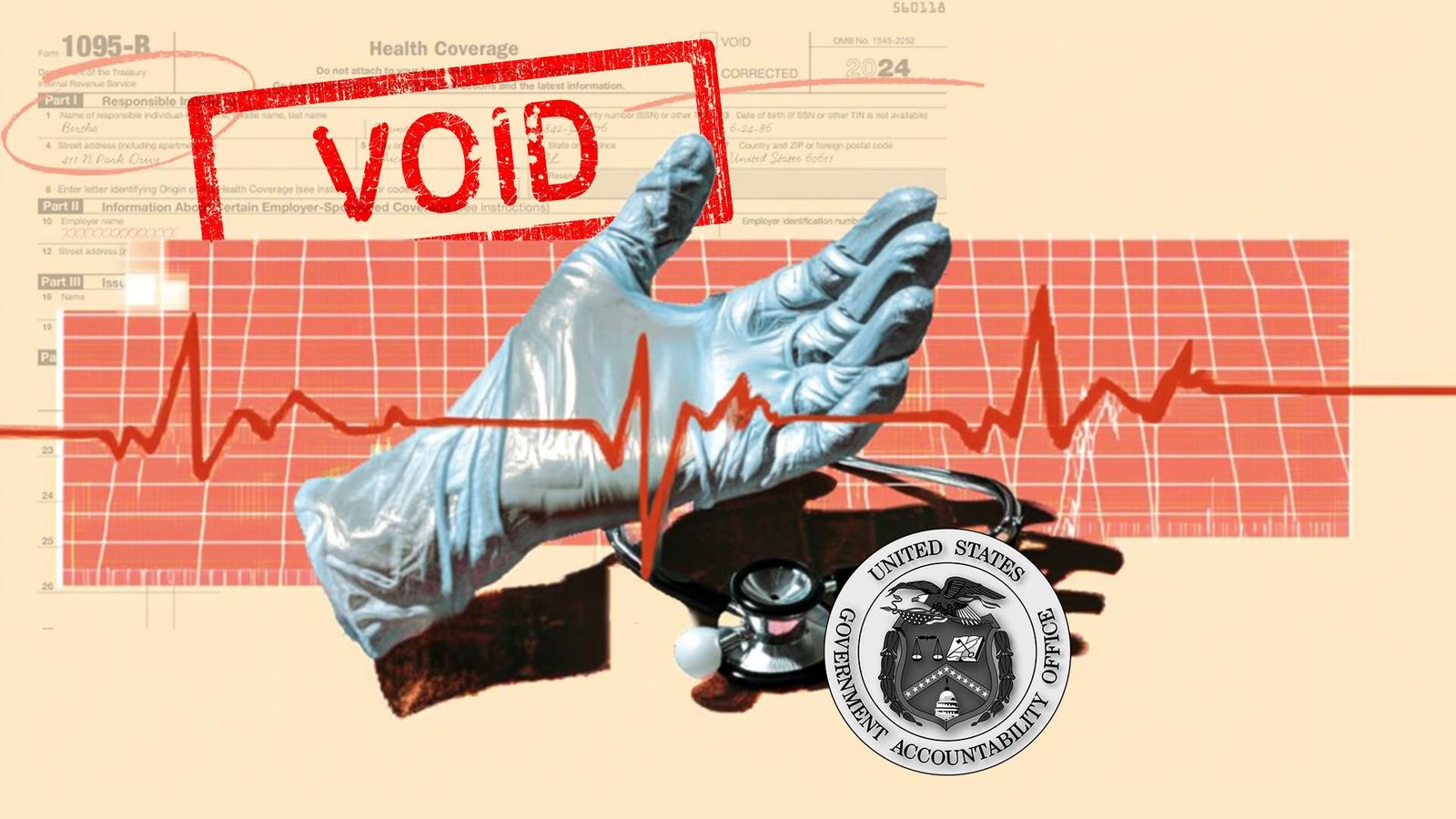
A stunning Government Accountability Office (GAO) report published Wednesday warns that there could be massive fraud in the health insurance exchanges due to lax anti-fraud protections—even after a 2018 study called for a more robust program to detect and block fraudulent applications.

Auditors with GAO created four fictional applications during 2024 that used fake Social Security numbers and income claims that lacked any verification. All four were approved for subsidized health insurance. In one case, GAO noted that the federal marketplace said “it confirmed the applicant’s estimated income based on documentation we submitted.”

“However, we did not submit documentation to confirm the applicant’s income,” the auditors reported.

For the 2025 application year, GAO created 20 more fictional applications following the same model as the previous year. Nineteen of those applications were initially approved, and 18 remained actively enrolled in subsidized health insurance plans as of September, GAO reports. Those 18 fraudulent enrollees would be eligible to collect over $10,000 in tax credits meant to offset the purchase of health insurance.

One of the major red flags in the report is the fact that auditors found more than 66,000 Social Security numbers attached to records showing more than 366 days of health insurance coverage—an indicator that those Social Security numbers may have been used multiple times in the same year. Additionally, GAO found more than 58,000 Social Security numbers matching death records in the Social Security Administration’s database. More than $94 million in tax credits were delivered to those accounts.

In many of those cases, “matches had different names and dates of birth across Marketplace enrollment data and SSA’s death data,” GAO noted. “These matches could represent synthetic identity fraud.”

The lack of a comprehensive plan to prevent such fraud, GAO warns, could allow individuals to qualify for larger health insurance tax credits than their income would allow. After previous GAO reports found similar issues in 2016 and 2017, the Centers for Medicare and Medicaid Services (CMS), which oversees the exchanges, did a “fraud risk assessment” in 2018. However, those recommendations were not implemented, and CMS now tells GAO that it will conduct another risk assessment.

In the meantime, lots of taxpayer-funded subsidies might be getting paid out to ineligible recipients. In the same report, GAO says it could not verify enrollees’ tax data for “over $21 billion in [tax credits]” from the 2023 plan year.

“That means nearly one-third of APTC [advanced premium tax credit] paid to individuals with Social Security numbers was not matched with a tax return showing reconciliation in states using the federal exchange,” writes Brian Blase, president of the Paragon Health Institute, which has produced studies showing widespread fraud in the health insurance exchanges. “In practical terms, CMS has no confirmation that tens of billions of dollars in payments were correct.”

The subsidies delivered via the Affordable Care Act exchanges are a huge and growing expense for the federal government. In 2024, CMS paid nearly $124 billion in APTC for about 19.5 million enrollees. Paragon estimates that as much as $20 billion of that total could be fraudulent. 

Even though the tax credits are delivered to individuals, the entire arrangement is effectively a giant subsidy program for health insurance companies. The insurers have little incentive to block fraudulent applications—more fraud in the exchanges just means more taxpayer-funded subsidies flowing to them—and CMS’ inability or unwillingness to take even very basic steps to prevent fraud suggests the government would rather keep the insurance companies happy than protect taxpayers’ money.

Read the full article here

Fact Checker

Verify the accuracy of this article using AI-powered analysis and real-time sources.

Get Your Fact Check Report

Enter your email to receive detailed fact-checking analysis

5 free reports remaining

Continue with Full Access

You've used your 5 free reports. Sign up for unlimited access!

Already have an account? Sign in here

Share. Facebook Twitter Pinterest LinkedIn Tumblr Email Telegram Copy Link
News Room
  • Website
  • Facebook
  • X (Twitter)
  • Instagram
  • LinkedIn

The FSNN News Room is the voice of our in-house journalists, editors, and researchers. We deliver timely, unbiased reporting at the crossroads of finance, cryptocurrency, and global politics, providing clear, fact-driven analysis free from agendas.

Related Articles

Media & Culture

Keonne Rodriguez on Bitcoin, Privacy, and Going to Prison

3 minutes ago
Debates

Germany’s Hidden Debt Crisis

2 hours ago
Media & Culture

Game Jam Winner Spotlight: As I Lay Flying

15 hours ago
Media & Culture

Fifth Circuit Strikes Down Federal Law Banning Home Alcohol Distilleries

18 hours ago
Cryptocurrency & Free Speech Finance

‘Not Going to Stop at Bitcoin’: Morgan Stanley Weighs Tokenization, Tax Solutions in Crypto Push

18 hours ago
Media & Culture

Petitioner’s Regret No Grounds for Sealing of 8-Year-Old Restraining Order Documents

19 hours ago
Add A Comment

Comments are closed.

Editors Picks

Why North Korea hacks crypto instead of evading sanctions like Russia and Iran

21 minutes ago

US Down To ‘Last Chance’ To Pass Clarity Act Before 2030: Lummis

25 minutes ago

Germany’s Hidden Debt Crisis

2 hours ago

Ether Machine Abandons Public Debut as Dynamix Merger is Terminated

2 hours ago
Latest Posts

What next for Ripple-linked token amid bitcoin (BTC) weakness

4 hours ago

Bitcoin, Ether Near Levels That Could Signal Trend Reversal: Investor

5 hours ago

BTC, ETH, XRP fall as U.S., Iran negotiators fail to reach war resolution

9 hours ago

Subscribe to News

Get the latest news and updates directly to your inbox.

At FSNN – Free Speech News Network, we deliver unfiltered reporting and in-depth analysis on the stories that matter most. From breaking headlines to global perspectives, our mission is to keep you informed, empowered, and connected.

FSNN.net is owned and operated by GlobalBoost Media
, an independent media organization dedicated to advancing transparency, free expression, and factual journalism across the digital landscape.

Facebook X (Twitter) Discord Telegram
Latest News

Keonne Rodriguez on Bitcoin, Privacy, and Going to Prison

3 minutes ago

Why North Korea hacks crypto instead of evading sanctions like Russia and Iran

21 minutes ago

US Down To ‘Last Chance’ To Pass Clarity Act Before 2030: Lummis

25 minutes ago

Subscribe to Updates

Get the latest news and updates directly to your inbox.

© 2026 GlobalBoost Media. All Rights Reserved.
  • Privacy Policy
  • Terms of Service
  • Our Authors
  • Contact

Type above and press Enter to search. Press Esc to cancel.

🍪

Cookies

We and our selected partners wish to use cookies to collect information about you for functional purposes and statistical marketing. You may not give us your consent for certain purposes by selecting an option and you can withdraw your consent at any time via the cookie icon.

Cookie Preferences

Manage Cookies

Cookies are small text that can be used by websites to make the user experience more efficient. The law states that we may store cookies on your device if they are strictly necessary for the operation of this site. For all other types of cookies, we need your permission. This site uses various types of cookies. Some cookies are placed by third party services that appear on our pages.

Your permission applies to the following domains:

  • https://fsnn.net
Necessary
Necessary cookies help make a website usable by enabling basic functions like page navigation and access to secure areas of the website. The website cannot function properly without these cookies.
Statistic
Statistic cookies help website owners to understand how visitors interact with websites by collecting and reporting information anonymously.
Preferences
Preference cookies enable a website to remember information that changes the way the website behaves or looks, like your preferred language or the region that you are in.
Marketing
Marketing cookies are used to track visitors across websites. The intention is to display ads that are relevant and engaging for the individual user and thereby more valuable for publishers and third party advertisers.