Close Menu
FSNN | Free Speech News NetworkFSNN | Free Speech News Network
  • Home
  • News
    • Politics
    • Legal & Courts
    • Tech & Big Tech
    • Campus & Education
    • Media & Culture
    • Global Free Speech
  • Opinions
    • Debates
  • Video/Live
  • Community
  • Freedom Index
  • About
    • Mission
    • Contact
    • Support
Trending

Same Lies, New War: Trump and the Iraq Playbook

33 minutes ago

Dormant Bitcoin Whale Wallet Awakens After 13 Years

52 minutes ago

As Trump Talks of ‘Taking Cuba,’ Real Change Requires More Than Replacing Its Leader

2 hours ago
Facebook X (Twitter) Instagram
Facebook X (Twitter) Discord Telegram
FSNN | Free Speech News NetworkFSNN | Free Speech News Network
Market Data Newsletter
Saturday, March 21
  • Home
  • News
    • Politics
    • Legal & Courts
    • Tech & Big Tech
    • Campus & Education
    • Media & Culture
    • Global Free Speech
  • Opinions
    • Debates
  • Video/Live
  • Community
  • Freedom Index
  • About
    • Mission
    • Contact
    • Support
FSNN | Free Speech News NetworkFSNN | Free Speech News Network
Home»News»Media & Culture»As Trump Talks of ‘Taking Cuba,’ Real Change Requires More Than Replacing Its Leader
Media & Culture

As Trump Talks of ‘Taking Cuba,’ Real Change Requires More Than Replacing Its Leader

News RoomBy News Room2 hours agoNo Comments4 Mins Read132 Views
Share Facebook Twitter Pinterest Copy Link LinkedIn Tumblr Email VKontakte Telegram
As Trump Talks of ‘Taking Cuba,’ Real Change Requires More Than Replacing Its Leader
Share
Facebook Twitter Pinterest Email Copy Link

Listen to the article

0:00
0:00

Key Takeaways

Playback Speed

Select a Voice

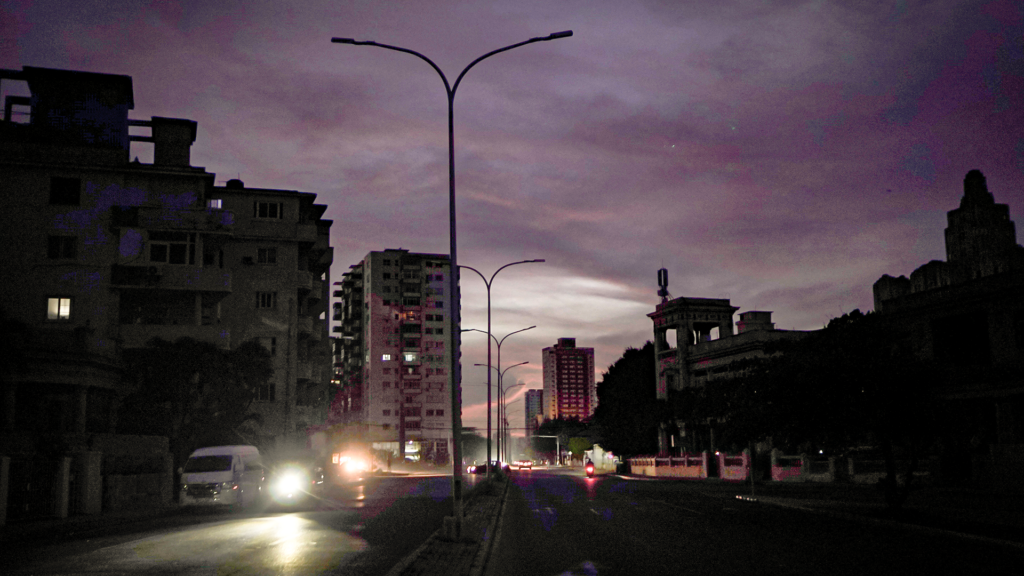
After three months of a U.S.-imposed oil blockade, Cuba’s energy system has collapsed, pushing the country into a full-blown national crisis. At one point this week, over 10 million people—almost the entire population—were left without electricity. Even now, roughly half the country remains in the dark.

This didn’t come out of nowhere. Cuba has long depended on imported oil to keep the country running. Before the blockade, the island consumed about 100,000 barrels of oil a day: around 40,000 produced domestically, 30,000 supplied by Venezuela at a discount, and the rest coming from countries like Mexico and Russia. After the U.S. capture of Venezuelan leader Nicolás Maduro, oil shipments from Venezuela stopped, and the system began to unravel. Washington then escalated further, threatening tariffs on any country that continued supplying fuel to the island. Mexico completely halted its deliveries. A Colombian tanker was intercepted. The island was effectively cut off.

The consequences have been immediate. Gasoline now sells for about $35 a gallon on the black market. Flights are being canceled because planes can’t refuel for return trips. Hotels sit empty. Food distribution has stalled. People are resorting to burning wood just to heat water.

The government has responded the only way it can: rationing. School hours have been reduced. Transportation services have been cut. Trash collection is halted, leaving garbage piling up in the streets. Hospital operations have scaled back. Gas sales are restricted to those with special permission. These are signs of a system under strain.

Cubans, for their part, are showing that strain more openly. What began as small nighttime protests, with people banging pots and pans from their homes, has grown into something more serious. People have taken to the streets, even ransacking a local Communist Party headquarters. 

President Miguel Díaz-Canel has responded with intensified anti-U.S. rhetoric, accusing Washington of waging a “ferocious war” and threatening the island “almost daily.” At the same time, he has acknowledged that Cuba has been holding secret meetings with U.S. officials, hoping to ease tensions before things spiral further.

If anything, the pressure is only intensifying.

After the dramatic capture of Maduro in January, Cuba has increasingly looked like the next target. And Trump has made that explicit. 

“I do believe I’ll be having the honor of taking Cuba,” Trump told reporters in the White House on Monday. “Taking Cuba. I mean, whether I free it, take it—I think I could do anything I want with it, if you want to know the truth.”

For now, there is no indication of an imminent military invasion. A top U.S. general told Reuters that the military isn’t preparing for one just yet. But Washington’s demands are clear. According to reports, U.S. officials have told Cuba that any transition would require removing Díaz-Canel from power. Secretary of State Marco Rubio reinforced the message, saying the country needs “new people in charge.”

That raises another question: Would removing Díaz-Canel change anything?

Removing Díaz-Canel might deliver a symbolic victory, a claim that the U.S. has toppled another dictator. But Cuba’s system isn’t built around a single figure. Power is concentrated in a tightly controlled political structure. That becomes even clearer when looking beyond Díaz-Canel. For example, there has been no mention of removing Raúl Castro, Fidel Castro’s brother, who remains a central figure behind the scenes, or of sidelining his family, which is gaining influence. Rubio has even reportedly bypassed official Cuban government channels to communicate with Castro’s grandson and caretaker—an indication that “the Trump administration still sees the 94-year-old as the island’s true decision-maker,” Axios reports. Nor has there been any talk of dismantling the system of repression, including the release of political prisoners. 

We’ve seen this before, most recently in Venezuela. After Maduro’s capture, many expected a democratic transition. Instead, rather than backing the opposition that won Venezuela’s 2024 election, the U.S. has supported Delcy Rodríguez, Maduro’s former vice president, as interim leader. A self-identified communist, Rodríguez has been accused of corruption and human rights violations and is deeply embedded in the same system that drove Venezuela’s collapse. Once in power, she consolidated control among regime loyalists and called for crackdowns against anyone who supported the “armed attack by the United States.” People were detained simply for shouting “freedom,” Reason‘s Autumn Billings wrote.

In other words, it’s less of a transition than the same regime under new management.

Swapping out the face at the top doesn’t dismantle the communist regime underneath. Real change would mean restoring liberties, allowing genuine democratic elections, releasing political prisoners, and reforming the broader apparatus of power. So far, there is little indication that any of that is part of the plan.

Read the full article here

Fact Checker

Verify the accuracy of this article using AI-powered analysis and real-time sources.

Get Your Fact Check Report

Enter your email to receive detailed fact-checking analysis

5 free reports remaining

Continue with Full Access

You've used your 5 free reports. Sign up for unlimited access!

Already have an account? Sign in here

#MediaAndPolitics #MediaEthics #NarrativeControl #PoliticalNews #PressFreedom
Share. Facebook Twitter Pinterest LinkedIn Tumblr Email Telegram Copy Link
News Room
  • Website
  • Facebook
  • X (Twitter)
  • Instagram
  • LinkedIn

The FSNN News Room is the voice of our in-house journalists, editors, and researchers. We deliver timely, unbiased reporting at the crossroads of finance, cryptocurrency, and global politics, providing clear, fact-driven analysis free from agendas.

Related Articles

Media & Culture

Same Lies, New War: Trump and the Iraq Playbook

33 minutes ago
Media & Culture

Judge Blocks Lawyer’s Distribution of Animation That Allegedly Shows “Uncommanded Discharge” of Sig Sauer Pistol

3 hours ago
Media & Culture

Trump Just Released a Framework To Govern AI. Here Are 7 Key Takeaways.

4 hours ago
Media & Culture

Judges and Justices Should Be Independent, Trump Says, As Long As They Side With Him

5 hours ago
Media & Culture

A Model For HHS: New Mexico Measles Outbreak Was Curtailed With Mass Vaccination Campaign

6 hours ago
Media & Culture

Markwayne Mullin Says Agents Don’t Need a Warrant If They’re Pursuing a Suspect. Here’s What the Law Says.

6 hours ago
Add A Comment
Leave A Reply Cancel Reply

Editors Picks

Dormant Bitcoin Whale Wallet Awakens After 13 Years

52 minutes ago

As Trump Talks of ‘Taking Cuba,’ Real Change Requires More Than Replacing Its Leader

2 hours ago

Judge Blocks Lawyer’s Distribution of Animation That Allegedly Shows “Uncommanded Discharge” of Sig Sauer Pistol

3 hours ago

Bitcoin Stalls at $70K as SPY, QQQ ETFs Post Record Outflows

3 hours ago
Latest Posts

Trump Just Released a Framework To Govern AI. Here Are 7 Key Takeaways.

4 hours ago

Dormant BTC wallet wakes up after 14 years with 11,000x paper profit

4 hours ago

Judges and Justices Should Be Independent, Trump Says, As Long As They Side With Him

5 hours ago

Subscribe to News

Get the latest news and updates directly to your inbox.

At FSNN – Free Speech News Network, we deliver unfiltered reporting and in-depth analysis on the stories that matter most. From breaking headlines to global perspectives, our mission is to keep you informed, empowered, and connected.

FSNN.net is owned and operated by GlobalBoost Media
, an independent media organization dedicated to advancing transparency, free expression, and factual journalism across the digital landscape.

Facebook X (Twitter) Discord Telegram
Latest News

Same Lies, New War: Trump and the Iraq Playbook

33 minutes ago

Dormant Bitcoin Whale Wallet Awakens After 13 Years

52 minutes ago

As Trump Talks of ‘Taking Cuba,’ Real Change Requires More Than Replacing Its Leader

2 hours ago

Subscribe to Updates

Get the latest news and updates directly to your inbox.

© 2026 GlobalBoost Media. All Rights Reserved.
  • Privacy Policy
  • Terms of Service
  • Our Authors
  • Contact

Type above and press Enter to search. Press Esc to cancel.

🍪

Cookies

We and our selected partners wish to use cookies to collect information about you for functional purposes and statistical marketing. You may not give us your consent for certain purposes by selecting an option and you can withdraw your consent at any time via the cookie icon.

Cookie Preferences

Manage Cookies

Cookies are small text that can be used by websites to make the user experience more efficient. The law states that we may store cookies on your device if they are strictly necessary for the operation of this site. For all other types of cookies, we need your permission. This site uses various types of cookies. Some cookies are placed by third party services that appear on our pages.

Your permission applies to the following domains:

  • https://fsnn.net
Necessary
Necessary cookies help make a website usable by enabling basic functions like page navigation and access to secure areas of the website. The website cannot function properly without these cookies.
Statistic
Statistic cookies help website owners to understand how visitors interact with websites by collecting and reporting information anonymously.
Preferences
Preference cookies enable a website to remember information that changes the way the website behaves or looks, like your preferred language or the region that you are in.
Marketing
Marketing cookies are used to track visitors across websites. The intention is to display ads that are relevant and engaging for the individual user and thereby more valuable for publishers and third party advertisers.