Close Menu
FSNN | Free Speech News NetworkFSNN | Free Speech News Network
  • Home
  • News
    • Politics
    • Legal & Courts
    • Tech & Big Tech
    • Campus & Education
    • Media & Culture
    • Global Free Speech
  • Opinions
    • Debates
  • Video/Live
  • Community
  • Freedom Index
  • About
    • Mission
    • Contact
    • Support
Trending

When will crypto’s CLARITY Act framework pass in the US Senate?

1 minute ago

Today in Supreme Court History: February 16, 1833

41 minutes ago

Hive, Riot earnings reports, FOMC minutes: Crypto Week Ahead

1 hour ago
Facebook X (Twitter) Instagram
Facebook X (Twitter) Discord Telegram
FSNN | Free Speech News NetworkFSNN | Free Speech News Network
Market Data Newsletter
Monday, February 16
  • Home
  • News
    • Politics
    • Legal & Courts
    • Tech & Big Tech
    • Campus & Education
    • Media & Culture
    • Global Free Speech
  • Opinions
    • Debates
  • Video/Live
  • Community
  • Freedom Index
  • About
    • Mission
    • Contact
    • Support
FSNN | Free Speech News NetworkFSNN | Free Speech News Network
Home»News»Media & Culture»As a Former Cop, I Have to Ask: What the Hell Is ICE Doing?
Media & Culture

As a Former Cop, I Have to Ask: What the Hell Is ICE Doing?

News RoomBy News Room2 hours agoNo Comments5 Mins Read1,493 Views
Share Facebook Twitter Pinterest Copy Link LinkedIn Tumblr Email VKontakte Telegram
As a Former Cop, I Have to Ask: What the Hell Is ICE Doing?
Share
Facebook Twitter Pinterest Email Copy Link

Listen to the article

0:00
0:00

Key Takeaways

Playback Speed

Select a Voice

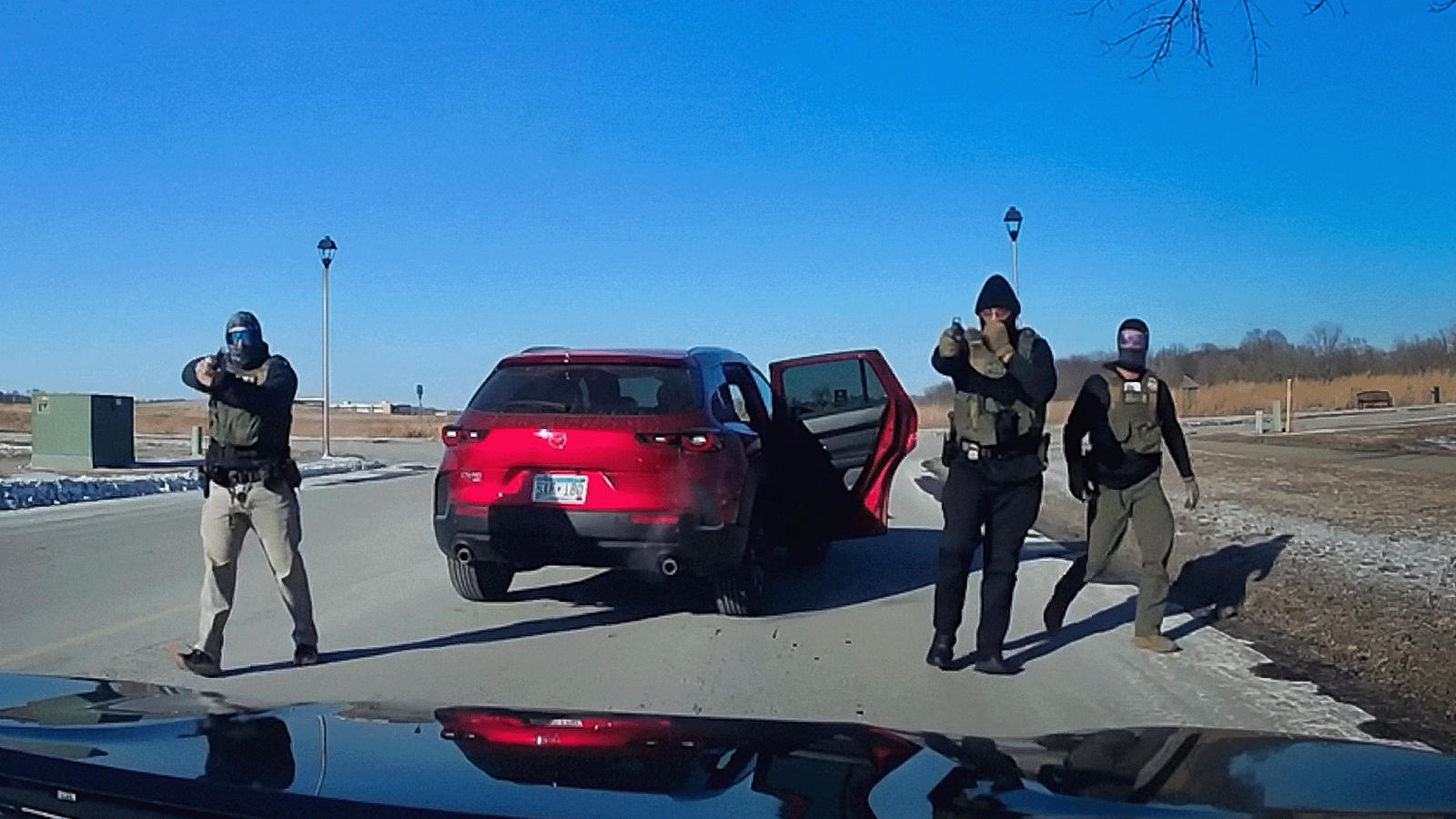
In a video of a late-January incident in Minnesota, federal immigration officers sped past an Immigration and Customs Enforcement (ICE) observer’s vehicle and swerved to box her in. While the driver called someone and asked them to dial 911, agents approached with weapons drawn and ordered her out of her car. She was taken into custody, only to be released later after an agent received a phone call and diverted to meet the local police chief.

From a citizen’s perspective, the encounter is frightening and tense. From the perspective of someone who spent years wearing a badge and operating within jurisdictional limits, it raises deeper concerns. The issue isn’t that enforcement occurred, but that it appears to have taken place without clear authority, restraint, or purpose.

The video is not an outlier. A growing body of footage shows similar patterns in federal immigration enforcement. Many of these encounters are initiated without a clear legal basis, then escalate rapidly, with agents using force that conflicts with widely accepted law enforcement standards. In one case, an agent punches an individual in the face during an attempted detention, even though the person does not appear to pose an immediate threat. In others, chemical agents are deployed on individuals already pinned to the ground by multiple officers, sometimes sprayed directly into the face at close range. People are being struck by canisters or other objects. Pepper-ball munitions are fired at distances that appear to violate use-of-force protocols.

Modern law enforcement training is explicit about these risks. Force stacking, prolonged prone restraint, and unnecessary escalation with chemical agents are repeatedly identified as dangerous and, in some cases, deadly. These are core principles taught across agencies because their value is clear and unambiguous.

Taken together, these encounters suggest more than isolated judgment errors. They point to a broader pattern of authority being exercised without sufficient legal grounding or professional discipline. 

A federal badge does not confer universal authority or “absolute immunity,” as some wrongly claim. Authority is contextual; it must be tied to a lawful mission, jurisdiction, and conduct. When those elements are absent or unclear, it is not sufficient to dismiss the resulting conduct as an unfortunate mistake. Many of these encounters appear to involve agents operating outside their authority, in ways that should demand discipline and accountability.

In many of these videos, encounters are initiated with U.S. citizens engaged in constitutionally protected activity: filming, speaking, standing nearby, or questioning authority. Those actions do not create detention power. Filming officers is not interference; verbal criticism is not obstruction; refusing an unlawful command is not resisting.

Every police academy teaches the same foundational rule: If you do not have lawful authority to detain, you cannot use force. Escalating force does not create authority where it did not exist before. It cannot be a substitute for legal justification. Yet in these encounters, escalation often appears to come first, followed by claims of resistance that are then used to rationalize the force that followed.

Officers are trained to avoid this dynamic. We are taught about officer-created jeopardy—the idea that officers are responsible for decisions that unnecessarily create danger. Initiating physical contact when disengagement is available, escalating verbal encounters without tactical need, or inserting oneself into a situation without a lawful purpose all increase risk. Courts understand this. They do not freeze the frame at the moment force is applied. They examine how that moment came to be; the totality of the circumstances.

Use-of-force policy also makes clear that officers must de-escalate after control is achieved. Earlier resistance does not justify continued force. Spraying chemical agents into the face of a restrained individual is not de-escalation. Holding someone prone while layering force tools is not decisive enforcement. This is exactly how people get seriously injured or killed.

Any working officer watching these videos should ask a simple question: What would happen if I handled an encounter this way? What if I deployed chemical agents on someone already prone and pinned? What if I escalated without clear detention authority? Would I be praised, or would I be investigated, disciplined, or fired?

The glaring violations and contradictions present in these incidents take a toll on local law enforcement, who must respond to everyday calls against a backdrop of renewed fear and distrust. The public does not distinguish between badges or agencies. They remember the coercion, not the jurisdiction. 

None of this criticism is meant to be anti-law enforcement. It is pro-professionalism. Policing depends on legitimacy. Patterns of agents overstepping, escalating unnecessarily, or treating force as a shortcut to control weaken the legal and moral foundation that allows law enforcement to function at all. Many officers see what is happening and know it is wrong. Now is the time to speak up.

It is not too late for federal immigration agencies to correct course, but doing so will require clear policy enforcement, real accountability, and a recommitment to disciplined, improved training and lawful policing. If the current trajectory continues, they may do irreparable damage not only to public trust, but also to the credibility of law enforcement more broadly.

Read the full article here

Fact Checker

Verify the accuracy of this article using AI-powered analysis and real-time sources.

Get Your Fact Check Report

Enter your email to receive detailed fact-checking analysis

5 free reports remaining

Continue with Full Access

You've used your 5 free reports. Sign up for unlimited access!

Already have an account? Sign in here

#Democracy #IndependentMedia #MediaAndPolitics #MediaEthics #PoliticalDebate
Share. Facebook Twitter Pinterest LinkedIn Tumblr Email Telegram Copy Link
News Room
  • Website
  • Facebook
  • X (Twitter)
  • Instagram
  • LinkedIn

The FSNN News Room is the voice of our in-house journalists, editors, and researchers. We deliver timely, unbiased reporting at the crossroads of finance, cryptocurrency, and global politics, providing clear, fact-driven analysis free from agendas.

Related Articles

Media & Culture

Today in Supreme Court History: February 16, 1833

41 minutes ago
Cryptocurrency & Free Speech Finance

Crypto Traders Rotate Into Select Altcoins as Bitcoin Stalls

1 hour ago
Cryptocurrency & Free Speech Finance

Animoca Granted Dubai License Amid Stricter Crypto Oversight

2 hours ago
Media & Culture

Brickbat: Raising Cane

4 hours ago
Cryptocurrency & Free Speech Finance

Bitcoin Leverage Heats Up as Traders Bet on Price Rebound

6 hours ago
Cryptocurrency & Free Speech Finance

OpenAI Taps OpenClaw Founder to Lead Push Into Personal AI Agents

7 hours ago
Add A Comment
Leave A Reply Cancel Reply

Editors Picks

Today in Supreme Court History: February 16, 1833

41 minutes ago

Hive, Riot earnings reports, FOMC minutes: Crypto Week Ahead

1 hour ago

Metaplanet Revenue Jumps 738% as Bitcoin Accounts for 95% of Income

1 hour ago

Crypto Traders Rotate Into Select Altcoins as Bitcoin Stalls

1 hour ago
Latest Posts

As a Former Cop, I Have to Ask: What the Hell Is ICE Doing?

2 hours ago

Ether steadies after $540 million sell wave while altcoins lag: Crypto Markets Today

2 hours ago

Binance Rejects Claims of Iran-Linked Transactions and Staff Firings

2 hours ago

Subscribe to News

Get the latest news and updates directly to your inbox.

At FSNN – Free Speech News Network, we deliver unfiltered reporting and in-depth analysis on the stories that matter most. From breaking headlines to global perspectives, our mission is to keep you informed, empowered, and connected.

FSNN.net is owned and operated by GlobalBoost Media
, an independent media organization dedicated to advancing transparency, free expression, and factual journalism across the digital landscape.

Facebook X (Twitter) Discord Telegram
Latest News

When will crypto’s CLARITY Act framework pass in the US Senate?

1 minute ago

Today in Supreme Court History: February 16, 1833

41 minutes ago

Hive, Riot earnings reports, FOMC minutes: Crypto Week Ahead

1 hour ago

Subscribe to Updates

Get the latest news and updates directly to your inbox.

© 2026 GlobalBoost Media. All Rights Reserved.
  • Privacy Policy
  • Terms of Service
  • Our Authors
  • Contact

Type above and press Enter to search. Press Esc to cancel.

🍪

Cookies

We and our selected partners wish to use cookies to collect information about you for functional purposes and statistical marketing. You may not give us your consent for certain purposes by selecting an option and you can withdraw your consent at any time via the cookie icon.

Cookie Preferences

Manage Cookies

Cookies are small text that can be used by websites to make the user experience more efficient. The law states that we may store cookies on your device if they are strictly necessary for the operation of this site. For all other types of cookies, we need your permission. This site uses various types of cookies. Some cookies are placed by third party services that appear on our pages.

Your permission applies to the following domains:

  • https://fsnn.net
Necessary
Necessary cookies help make a website usable by enabling basic functions like page navigation and access to secure areas of the website. The website cannot function properly without these cookies.
Statistic
Statistic cookies help website owners to understand how visitors interact with websites by collecting and reporting information anonymously.
Preferences
Preference cookies enable a website to remember information that changes the way the website behaves or looks, like your preferred language or the region that you are in.
Marketing
Marketing cookies are used to track visitors across websites. The intention is to display ads that are relevant and engaging for the individual user and thereby more valuable for publishers and third party advertisers.