

 Freedom Index
Listen to the article
As the Supreme Court was striking down many of the tariffs that President Donald Trump tried to impose one year ago today—on what he called “Liberation Day”—Justice Neil Gorsuch called attention to the most fundamental problem with the president’s tariff regime.
“Most major decisions affecting the rights and responsibilities of the American people (including the duty to pay taxes and tariffs) are funneled through the legislative process for a reason,” Gorsuch explained.
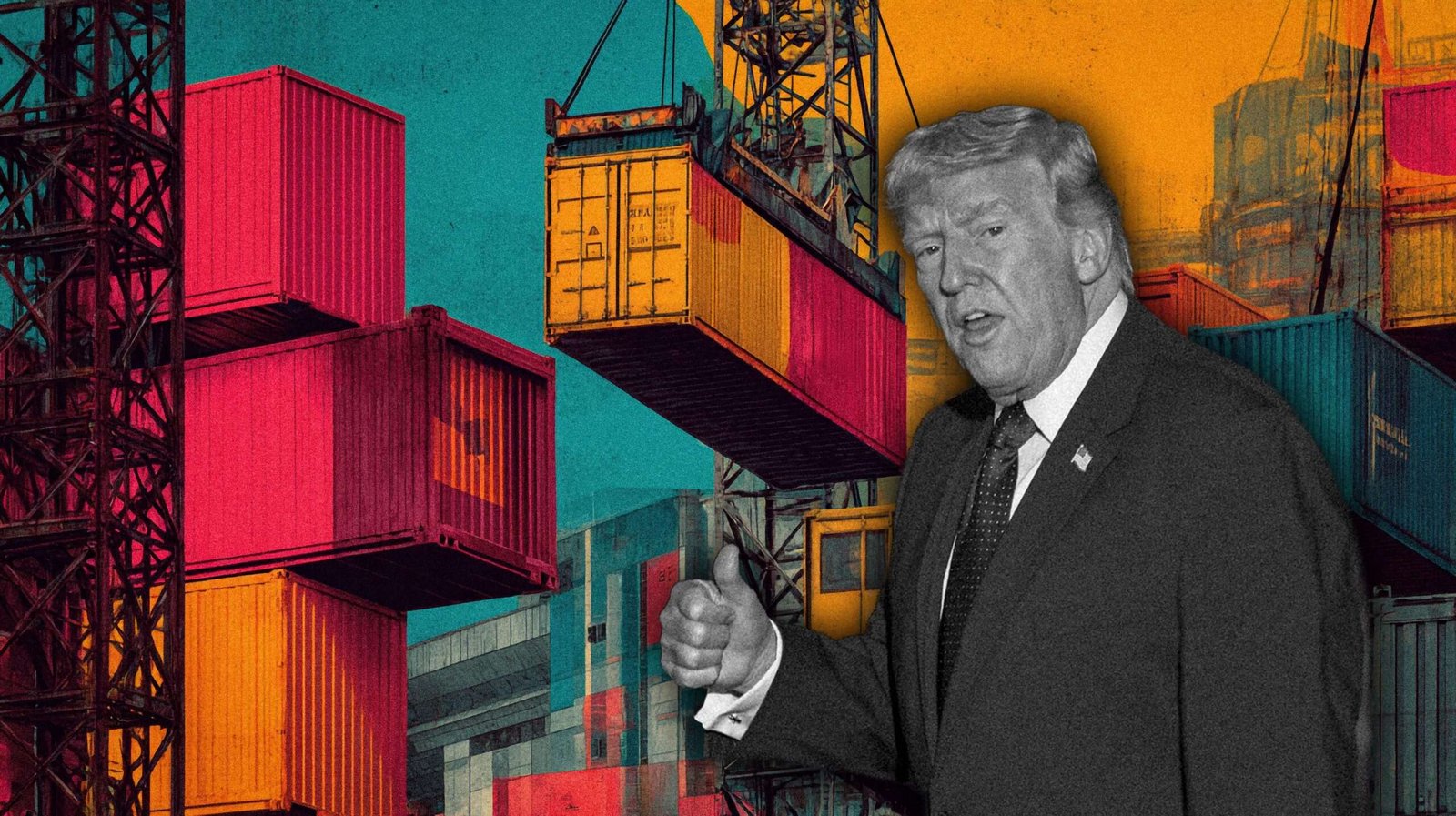
The year-long saga of Trump’s “Liberation Day” tariffs raised some major legal and political questions about the limits of executive power and the balance of powers. As an economic matter, the tariffs remain a foolish policy that has harmed American businesses and consumers, all while subjecting supply chains to an expensive, ever-changing tangle of regulations.
Beyond all that, however, Trump’s “Liberation Day” tariffs also asked a basic question about what makes government policy legitimate—a question that has been fundamental to the American experiment for nearly 250 years, ever since the founders told King George III that governments must justly derive their power “from the consent of the governed.”
That is the “reason,” as Gorsuch put it, that major legislative decisions are funneled through Congress.
“Yes, legislating can be hard and take time. And, yes, it can be tempting to bypass Congress when some pressing problem arises,” Gorsuch wrote. “But the deliberative nature of the legislative process was the whole point of its design.”
Before, during, and after Liberation Day, Trump has steadfastly refused to subject his tariff plans to that deliberative process.
Instead, he’s tried to force the tariffs through various loopholes created by Congress over the decades—like the International Emergency Economic Powers Act (IEEPA), which was the legal basis for most of the tariffs Trump announced during 2025. The Supreme Court shut that down in February, but the Trump administration quickly pivoted to another questionable mechanism: Section 122 of the Trade Act of 1974.
There is no doubt that Congress has traded away a lot of its authority over trade policy in the past few decades. But, as the Trump administration is now learning, those policies do not allow for the open-ended, anything-goes approach that Trump wants to take. The IEEPA tariffs were tripped up by the plain text of the underlying law, which courts at all levels agreed did not include the power to tariff. The new Section 122 tariffs face a similar legal challenge over the administration’s attempt to read broad powers into a narrowly tailored law.
There is an easy solution to all this. Put a tariff bill in front of Congress.
Of course, there is an equally obvious reason why Trump has refused to do that. It would be unlikely to pass.
Polls show that Trump’s tariffs are broadly unpopular. About 60 percent of Americans have an unfavorable view of tariffs in general, and only 36 percent have a favorable view of Trump’s use of tariffs, according to one poll released this week. Other polls show that many Americans believe tariffs have increased prices and have not provided much benefit.
All that means that getting a tariff bill through Congress would be a difficult task—though certainly not an impossible one, as Congress passes plenty of unpopular laws.
Republicans in Congress have been happy to stand aside while Trump has threatened and imposed tariffs against longtime allies and major trading partners. Behind the scenes, however, it is clear that many Republicans are opposed or at least uncomfortable with how this has all gone down.
In the absence of a congressional vote, however, Trump’s tariffs will never have legitimacy. It’s not quite as simple as saying that policies must be popular to be legitimate—but the whole point of a republican form of government is to limit the ability of leaders to impose wildly unpopular whims upon the country as a whole.
The legislative process, wrote Gorsuch in the concurring opinion, “tempers impulse, and compromise hammers disagreements into workable solutions. And because laws
must earn such broad support to survive the legislative process, they tend to endure, allowing ordinary people to plan their lives in ways they cannot when the rules shift from day to day.”
As Trump has pursued this tariff regime, he and his allies have often pointed to President William McKinley and the late-19th century as an inspiration. “President McKinley made our country very rich through tariffs,” Trump claimed in his inaugural address last year. “In the 1890s, our country was probably the wealthiest it ever was because it was a system of tariffs,” he said last year on the campaign trail.
As an economic matter, that claim has been widely debunked. Tariffs did not make America rich, and did not make American manufacturing strong.
Less frequently considered is the political angle of that analogy. The tariffs of the 1890s were not implemented by executive fiat. They were the result of congressional actions—major tariff bills were passed by Congress in 1890 (which McKinley was instrumental in passing during his time as a representative from Ohio), 1894, and 1897 (which McKinley signed as president). There are literally dozens of other examples. Sometimes those bills were pushed by presidents, like McKinley. Other times, Congress took the initiative and forced the president’s hand. Special interests always played a major role (some things never change) in determining which tariffs would be charged and what products would be exempt.
Whatever you think of those historical tariffs as economic or fiscal policy, they all had something that Trump’s tariffs lack. They were legitimate policies, passed by Congress and signed by the president.
Trump could send his tariff plan to Congress tomorrow and tell legislators to vote for it. If that happened, Reason would argue against the bill’s passage. Others would support it. At the end of the process, we’d learn whether the president’s idea is a popular one—and in a republic, that’s what matters—and we’d see which members of Congress were willing to be held accountable for the consequences of that policy.
Without that, Trump’s tariffs will remain illegitimate—no matter how many different legal loopholes the administration tries to find.
The same could be said for any number of other things. Trump should get permission from Congress to go to war or to build a ballroom at the White House.
Yes, the legislative process is annoying, slow, and deliberative. That, as Gorsuch put it, is “the whole point.”
Read the full article here
Fact Checker
Verify the accuracy of this article using AI-powered analysis and real-time sources.