Close Menu
FSNN | Free Speech News NetworkFSNN | Free Speech News Network
  • Home
  • News
    • Politics
    • Legal & Courts
    • Tech & Big Tech
    • Campus & Education
    • Media & Culture
    • Global Free Speech
  • Opinions
    • Debates
  • Video/Live
  • Community
  • Freedom Index
  • About
    • Mission
    • Contact
    • Support
Trending

Lido’s new stVaults will let L2s create their own rules for Ethereum staking

2 minutes ago

Tether Reaches Record High Treasury Holdings, Profits Fall

3 minutes ago

DOJ Arrests Journalists Don Lemon & Georgia Fort For Acts Of Journalism, Even After Courts Rejected Arrest Warrants

34 minutes ago
Facebook X (Twitter) Instagram
Facebook X (Twitter) Discord Telegram
FSNN | Free Speech News NetworkFSNN | Free Speech News Network
Market Data Newsletter
Saturday, January 31
  • Home
  • News
    • Politics
    • Legal & Courts
    • Tech & Big Tech
    • Campus & Education
    • Media & Culture
    • Global Free Speech
  • Opinions
    • Debates
  • Video/Live
  • Community
  • Freedom Index
  • About
    • Mission
    • Contact
    • Support
FSNN | Free Speech News NetworkFSNN | Free Speech News Network
Home»Opinions»Debates»A Crisis of Aid and Information
Debates

A Crisis of Aid and Information

News RoomBy News Room4 months agoNo Comments5 Mins Read302 Views
Share Facebook Twitter Pinterest Copy Link LinkedIn Tumblr Email VKontakte Telegram
A Crisis of Aid and Information
Share
Facebook Twitter Pinterest Email Copy Link

Listen to the article

0:00
0:00

Key Takeaways

Playback Speed

Select a Voice

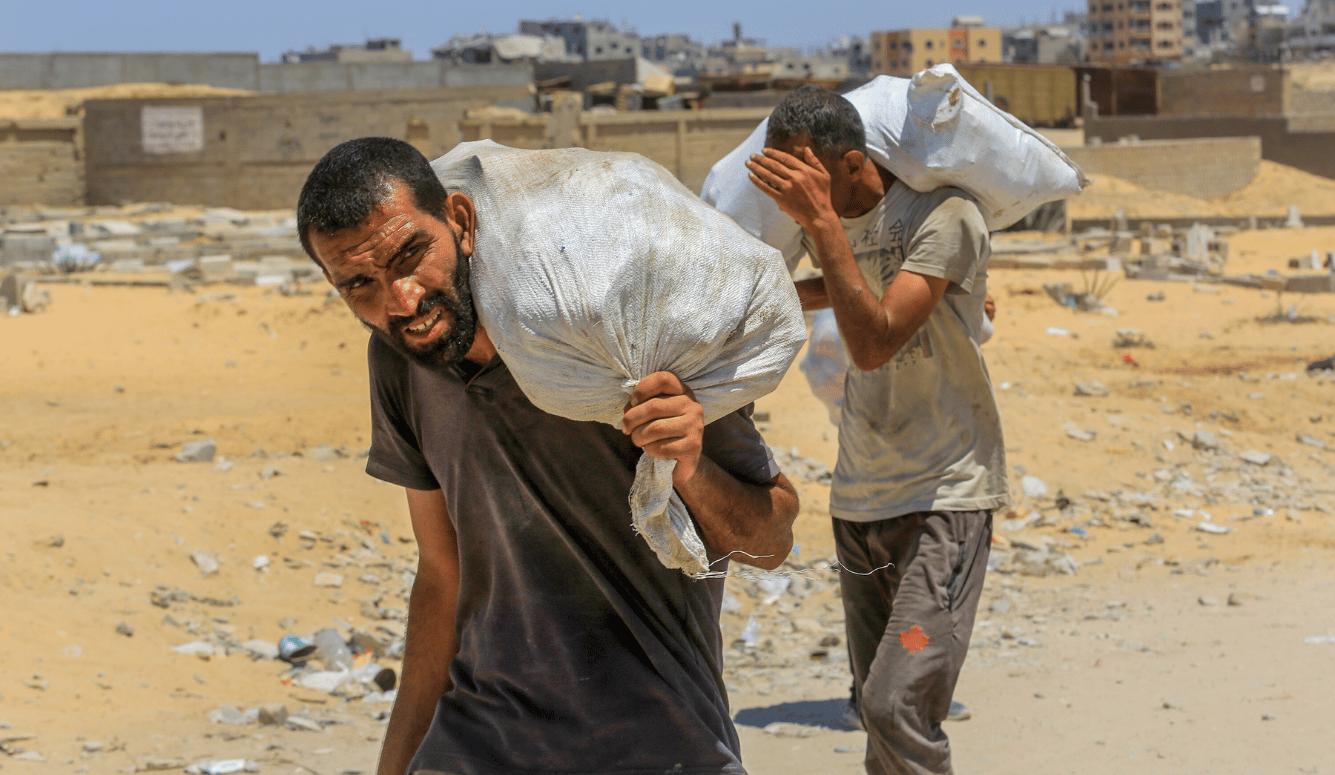
Since the Israel–Hamas war broke out in 2023, Gaza’s humanitarian crisis has become a focal point of international debate and widespread misinformation. Harrowing images of emaciated children and distressed families circulate daily, intensifying claims that Gaza is nearing famine. Meanwhile, Israeli and UN data indicate large aid convoys entering the territory. This contradiction (plentiful supplies on paper, yet ongoing hunger on the ground) has caused confusion over what is true and who bears responsibility for the deteriorating conditions in the Strip. Amid the chaos of war, what we know and don’t know has often been obscured by propaganda. Distinguishing fact from fiction is crucial to understanding Gaza’s aid crisis and holding the correct parties accountable.

Updates – July 18:

🚛210 trucks carrying humanitarian goods were transferred to Gaza. The trucks entered via the Kerem Shalom and Erez Crossings, and originated from Jordan, Israel, and Egypt.

⛽️1 tanker of fuel for the operations of vital infrastructure was transferred to… pic.twitter.com/iehBsaZEt5

— COGAT (@cogatonline) July 19, 2024

What we do know is that Gaza’s two million-plus residents have faced severe shortages of food, water, and medicine since the war began. Most recently, Israel’s blockade during the spring of 2025 and ongoing IDF military operations dramatically disrupted supply lines for weeks, leaving many Gazans struggling to survive. After an international outcry, limited aid deliveries resumed in mid-May, and by the early summer, millions of tonnes of aid had entered Gaza. Yet reports of hungry children and people scavenging for scraps continued. We also know that a new aid distribution system—the Gaza Humanitarian Foundation (GHF)—was launched with US and Israeli backing in late May 2025, delivering over 100 million meals within two months. What we do not know with certainty is how much aid has actually reached Gaza’s most vulnerable citizens, or how many people have truly died from starvation rather than other causes. Assertions of “famine” in Gaza often rest on fragmentary data and politically charged narratives. Misinformation has proliferated, making it difficult for outsiders to distinguish fact from exaggeration.

All things being equal, the sheer volume of aid sent into Gaza should have prevented mass starvation. From November 2024 onwards, daily convoys carried enough food to meet the population’s basic needs, and warehouses in Gaza filled up during ceasefires. However, supply is not the same as access, and much of this aid did not reach those who needed it most. The final stage of distribution broke down, particularly for families without ties to powerful factions of influential clans or militant groups. Even after a ceasefire in January 2025 allowed a large influx of supplies, pockets of Gaza experienced intense hunger, a clear sign that the aid was bottlenecked before reaching many civilians. In short, Gaza’s crisis was one of distribution failure rather than an absolute lack of food.

Why did the distribution system collapse? Several factors converged. The war itself displaced over a million people into makeshift shelters, disrupting the usual community networks through which aid used to flow. Israel’s strict monitoring of supplies, intended to prevent Hamas from seizing goods, slowed down and centralised deliveries. Most notably, Hamas authorities in Gaza actively undermined the process. From the war’s outset, Hamas openly refused any responsibility for civilian well-being. In October 2023, senior Hamas official Mousa Abu Marzouk was asked why Hamas built tunnels to protect its fighters but not bomb shelters to protect Gaza’s citizens. “Everybody knows,” he replied, “that 75 percent of the people in the Gaza strip are refugees, and it is the job of the United Nations to protect them.”

This was not mere rhetoric. Hamas and other militants effectively monopolised aid distribution within Gaza, seizing control of whatever supplies came in. By late July/early August 2025, approximately ninety percent of UN convoys were being “offloaded by hungry crowds or looted by armed gangs along aid convoy routes.” Gunmen seized or diverted aid convoys at will, and local warlords stole supplies to sell on the black market. Instead of facilitating humanitarian relief, Hamas deemed shortages to be politically advantageous: they could extort desperate civilians for loyalty or payment in exchange for food, while also blaming Israel for any suffering. In short, maintaining a degree of deprivation has served Hamas’s interests, both financially and as propaganda.

These troubling realities challenge the simple story that Israel’s blockade alone caused starvation in Gaza. Unfortunately, a lot of Western media coverage missed the details. Sensational claims of imminent famine spread faster than the more straightforward truth that aid is available but not always reaching people. Predictions of tens of thousands of deaths have not materialised at the time of writing, and early UN statements about low delivery figures were quietly revised upwards once complete data emerged. But these corrections received little notice. In public discussion, dire predictions persisted even after the underlying data changed. For example, stories of “zero aid,” “blockade,” or mass starvation were repeated by advocacy groups long after relief shipments resumed. This echo chamber of horror stories, amplified by social media, obscured the reality on the ground. Humanitarian conditions in Gaza have been extremely difficult, but the most extreme narratives often failed to account for the chaos in distribution, partly orchestrated by Hamas.


Read the full article here

Fact Checker

Verify the accuracy of this article using AI-powered analysis and real-time sources.

Get Your Fact Check Report

Enter your email to receive detailed fact-checking analysis

5 free reports remaining

Continue with Full Access

You've used your 5 free reports. Sign up for unlimited access!

Already have an account? Sign in here

Share. Facebook Twitter Pinterest LinkedIn Tumblr Email Telegram Copy Link
News Room
  • Website
  • Facebook
  • X (Twitter)
  • Instagram
  • LinkedIn

The FSNN News Room is the voice of our in-house journalists, editors, and researchers. We deliver timely, unbiased reporting at the crossroads of finance, cryptocurrency, and global politics, providing clear, fact-driven analysis free from agendas.

Related Articles

Media & Culture

DOJ Arrests Journalists Don Lemon & Georgia Fort For Acts Of Journalism, Even After Courts Rejected Arrest Warrants

34 minutes ago
Media & Culture

Key Inflation Metric Hits 3 Percent, Despite Trump’s Claim That Rising Prices Are ‘Solved’

37 minutes ago
Media & Culture

Teacher’s Firing for Reading “I Need a New Butt!” Children’s Book to Class Overturned

2 hours ago
Media & Culture

State Appellate Judge on the Second Amendment and Felons

3 hours ago
Media & Culture

Supreme Court to Decide Firearms Ban for Marijuana Users

4 hours ago
Cryptocurrency & Free Speech Finance

Bitcoin Price Holds Steady as Gold Falls and Silver Craters

4 hours ago
Add A Comment

Comments are closed.

Editors Picks

Tether Reaches Record High Treasury Holdings, Profits Fall

3 minutes ago

DOJ Arrests Journalists Don Lemon & Georgia Fort For Acts Of Journalism, Even After Courts Rejected Arrest Warrants

34 minutes ago

Key Inflation Metric Hits 3 Percent, Despite Trump’s Claim That Rising Prices Are ‘Solved’

37 minutes ago

Citi (C) says CLARITY Act momentum builds, but DeFi fight could stall crypto bill

1 hour ago
Latest Posts

Kraken-Backed SPAC Closes $345M Nasdaq IPO

1 hour ago

Teacher’s Firing for Reading “I Need a New Butt!” Children’s Book to Class Overturned

2 hours ago

Polymarket, Kalshi contract limits demonstrated in latest U.S. government shutdown fight

2 hours ago

Subscribe to News

Get the latest news and updates directly to your inbox.

At FSNN – Free Speech News Network, we deliver unfiltered reporting and in-depth analysis on the stories that matter most. From breaking headlines to global perspectives, our mission is to keep you informed, empowered, and connected.

FSNN.net is owned and operated by GlobalBoost Media
, an independent media organization dedicated to advancing transparency, free expression, and factual journalism across the digital landscape.

Facebook X (Twitter) Discord Telegram
Latest News

Lido’s new stVaults will let L2s create their own rules for Ethereum staking

2 minutes ago

Tether Reaches Record High Treasury Holdings, Profits Fall

3 minutes ago

DOJ Arrests Journalists Don Lemon & Georgia Fort For Acts Of Journalism, Even After Courts Rejected Arrest Warrants

34 minutes ago

Subscribe to Updates

Get the latest news and updates directly to your inbox.

© 2026 GlobalBoost Media. All Rights Reserved.
  • Privacy Policy
  • Terms of Service
  • Our Authors
  • Contact

Type above and press Enter to search. Press Esc to cancel.

🍪

Cookies

We and our selected partners wish to use cookies to collect information about you for functional purposes and statistical marketing. You may not give us your consent for certain purposes by selecting an option and you can withdraw your consent at any time via the cookie icon.

Cookie Preferences

Manage Cookies

Cookies are small text that can be used by websites to make the user experience more efficient. The law states that we may store cookies on your device if they are strictly necessary for the operation of this site. For all other types of cookies, we need your permission. This site uses various types of cookies. Some cookies are placed by third party services that appear on our pages.

Your permission applies to the following domains:

  • https://fsnn.net
Necessary
Necessary cookies help make a website usable by enabling basic functions like page navigation and access to secure areas of the website. The website cannot function properly without these cookies.
Statistic
Statistic cookies help website owners to understand how visitors interact with websites by collecting and reporting information anonymously.
Preferences
Preference cookies enable a website to remember information that changes the way the website behaves or looks, like your preferred language or the region that you are in.
Marketing
Marketing cookies are used to track visitors across websites. The intention is to display ads that are relevant and engaging for the individual user and thereby more valuable for publishers and third party advertisers.