

 Freedom Index

Listen to the article
The Bank of England (BOE) appears to be softening its stance on proposed limits to corporate stablecoin holdings, with plans to introduce exemptions for certain firms that may need to maintain larger reserves of fiat-pegged assets, according to a Bloomberg report published Tuesday.
Citing people familiar with the discussions, Bloomberg reported that the BOE’s reconsideration comes amid intense industry backlash and growing international competition, particularly from the United States, which is moving toward clearer regulation through the GENIUS Act, which was signed into law in July.
The BOE had initially proposed caps on stablecoin holdings — 20,000 pounds (about $27,000) for individuals and 10 million pounds for companies — citing concerns over systemic risks posed by widely used tokens such as USDt (USDT) and USDC (USDC).
The restrictions were intended to help the central bank maintain control over the money supply, protect consumers and prevent excessive reliance on privately issued digital currencies.
While those limits may be workable for traditional businesses, crypto-native companies may argue that such caps would constrain their operations, given their need to hold substantial stablecoin reserves for trading and liquidity management. Bloomberg reported that the BOE may therefore consider granting exemptions to these firms.
As Cointelegraph reported, Simon Jennings of the UK Cryptoasset Business Council argued that the proposed stablecoin limits “simply don’t work in practice.”
BOE Governor Andrew Bailey had previously warned that privately issued stablecoins could threaten financial stability and undermine governments’ ability to conduct monetary policy. However, in remarks last week, Bailey struck a more conciliatory tone, acknowledging that stablecoins may represent a useful innovation capable of coexisting within the broader financial system.
The BOE’s evolving stance highlights the UK’s ongoing effort to balance financial stability with competitiveness in the fast-growing stablecoin sector. In this area, some critics say the country has been slow to act compared with peers like the US and the European Union.
Related: Bank of England governor says stablecoins could reduce reliance on banks
UK lags in stablecoin race
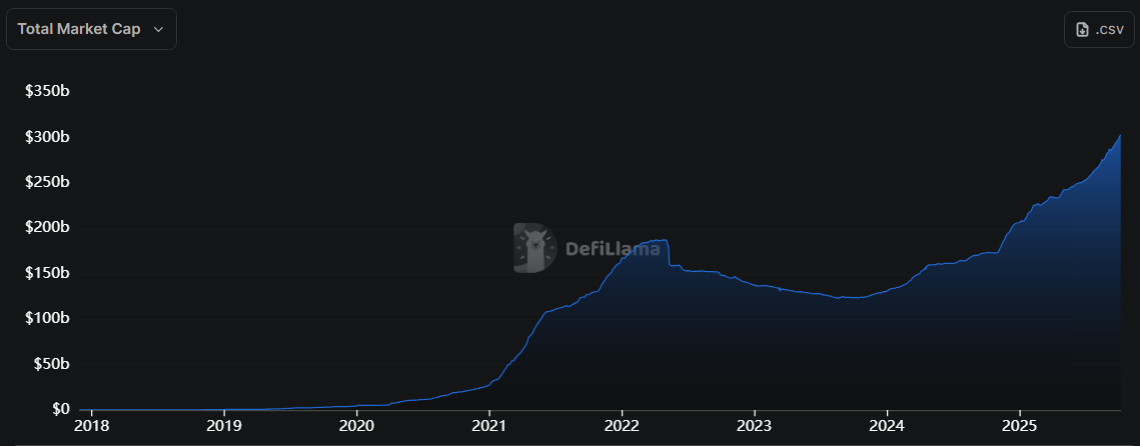
The global stablecoin market has surged to a valuation of roughly $314 billion, with the vast majority of tokens pegged to the US dollar.
By contrast, pound-pegged stablecoins remain a tiny fraction of the market — less than $1 million in total circulation, according to DefiLlama data cited by Bloomberg.
Despite the UK’s cautious approach and concerns over market risk, Tether co-founder Reeve Collins said it’s only a matter of time before all fiat currencies exist in stablecoin form, possibly as soon as 2030.
“All currency will be a stablecoin. So even fiat currency will be a stablecoin. It’ll just be called dollars, euros, or yen,” Collins said at the Token2049 conference in Singapore.
In Collins’ view, stablecoins are poised for widespread adoption thanks to their ease of use and their role in supporting the growth of tokenized assets, a sector increasingly attracting traditional financial capital.
Related: Coinbase turns lobbying efforts to UK in scathing op-ed
Read the full article here
Fact Checker
Verify the accuracy of this article using AI-powered analysis and real-time sources.