

 Freedom Index
Listen to the article
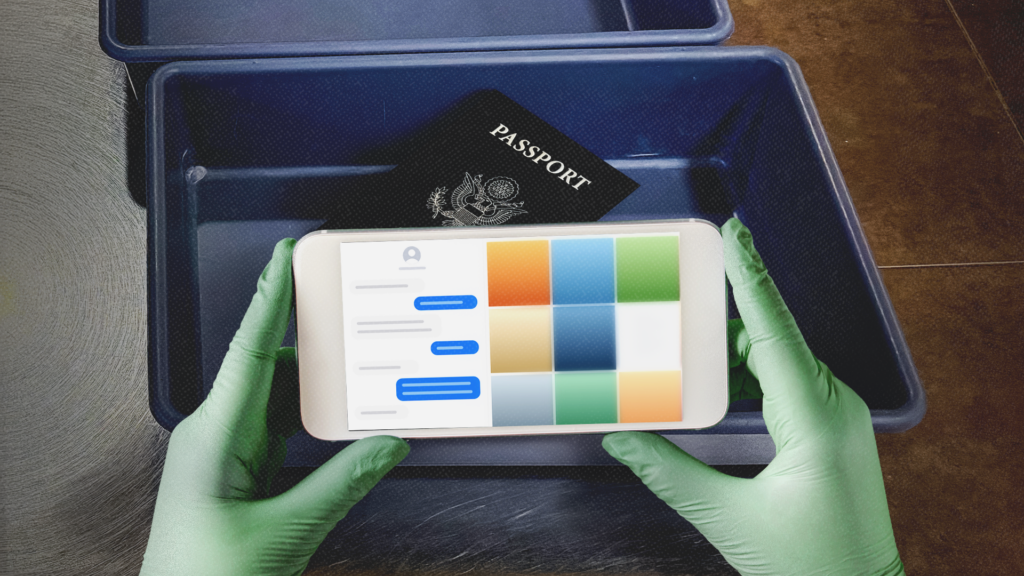
George Anibowei, a U.S. citizen, is a Texas-based immigration attorney with many clients battling the Department of Homeland Security. Border agents have searched his phone at least five times without a warrant as he returned to the United States.
In the first search, agents copied the phone’s entire contents, including his confidential communications with clients. The government still has that data, and Anibowei still doesn’t know why it was kept or who has seen it. He now leaves his work phone at home when he travels.
On September 29, the Supreme Court asked the federal government to respond to Anibowei’s petition, which asks whether the Fourth Amendment lets border agents search the contents of a phone without a warrant. (I’m one of his lawyers.) The government waived its response, expecting the Court would deny the petition without a second look.
But in 2021, the solicitor general told the Court that this very question had produced an “entrenched circuit conflict” of “considerable practical importance.” The conflict has only deepened since. Seven federal appeals courts now hold that a warrant is never required to search a phone at the border, while the 4th and 9th Circuits require one in at least some cases. That means one of your constitutional rights currently depends on which airport you fly into.
While circuit courts may disagree, the Supreme Court has already shown the best answer for this question. In Riley v. California (2014), the Court unanimously held that police generally need a warrant to search the phone of someone they arrest. There is an exception for searches incident to arrest, which allows the police to arrest someone without a warrant; that exists to protect officers and preserve evidence. Data can’t hurt an officer, and a phone can be secured while police get a warrant. An extension of an old exception to digital data, the court said, “has to rest on its own bottom.” Treating a phone like any other container in an arrestee’s pockets was like saying “a ride on horseback is materially indistinguishable from a flight to the moon.”
The border-search exception fails the same test. Those searches exist to collect duties, keep out people who may not enter, and stop contraband. But duties attach to physical goods, not data. And as the legal scholar Orin Kerr has put it, agents “will not find a person smuggled inside a computer hard drive.” As for digital contraband, anyone who wants illicit files can carry a clean phone and download them after clearing customs. Suspicionless phone searches burden millions of innocent travelers while barely inconveniencing smugglers.
The appeals courts that disagree mostly cite one another. But the Supreme Court rejected a lopsided lower-court consensus in Riley, and again in Carpenter v. United States (2018). Counting courts is not a constitutional argument.
Defenders of these searches lean on history. In United States v. Ramsey (1977), the Court noted that the first Congress authorized warrantless customs searches in 1789, less than two months before it proposed the Fourth Amendment. True enough. But that statute let officers search ships for hidden dutiable goods. To search a house, store, or other building for the same goods, officers needed a warrant. And nothing in the statute let officers read a traveler’s papers.
That distinction was no accident. Customs abuses had helped spark the Revolution. Writs of assistance gave British customs officers blanket authority to search wherever they pleased, which James Otis said placed “the liberty of every man in the hands of every petty officer.” And the founding generation guarded letters especially closely. Benjamin Franklin, as the first postmaster general, made postal workers swear they would not open mail without an express written warrant.
Even Ramsey, the government’s favorite border search precedent, respected that distinction. It upheld opening international mail to look for contraband, but the regulations before the court flatly prohibited reading correspondence without a warrant, a point the justices stressed repeatedly. The Court has never held that border agents may read a traveler’s papers without a warrant. A phone holds years of correspondence. It deserves at least the same protection the Founders gave a sealed envelope.
Last month, however, the 2nd Circuit joined those courts that have disregarded this tradition. In United States v. Alisigwe, Judge Steven Menashi wrote that agents need no suspicion whatsoever to search a traveler’s property at the border, phones included. A border search becomes non-routine, he reasoned, only when it intrudes on the person, as a strip search does. A phone is property, so searching it is routine.
Judge Eunice Lee concurred, agreeing that no warrant was required. But she warned that the majority’s rule permits suspicionless searches for any reason, “including political or discriminatory ones.”
The Alisigwe majority’s premise miscasts the Fourth Amendment. The amendment’s text secures “persons, houses, papers, and effects” in a single, unranked list. The abuses that produced the amendment were searches of property, including private papers. Agents may properly physically examine a phone to ensure it’s not really a container for smuggling contraband. But reading or viewing its digital contents without a warrant trespasses on a person’s papers and effects. The framers protected property because they recognized that human beings are not ghosts: We live in the physical world by exercising our property rights, and so searching our property can reveal much about our lives.
Alisigwe is the latest word from a Court of Appeals, but it contains complications for the constitutional issue. The trial court found that agents had reasonable suspicion, so the no-suspicion holding arguably wasn’t needed to decide the case. That suspicion involved a forged passport, which goes to identity and admissibility, the core of border authority. Finally, Alisigwe was a permanent resident, not a citizen, so the government’s interest in deciding who may enter was heightened.
Anibowei is simple on each of these counts, which is why one can be hopeful the Supreme Court will take it and address the Fourth Amendment question now. Anibowei is a naturalized citizen, no one suspects him of anything, and he challenges the government’s search policies directly rather than seeking suppression of evidence in a criminal case. As the 5th Circuit itself acknowledged, his case “turns squarely and solely” on the warrant question.
The stakes keep growing. In FY 2025, Customs and Border Protection (CBP) searched 55,318 electronic devices, nearly 11 times as many as in 2012—and nearly a quarter of those searches targeted U.S. citizens. According to the directives Anibowei challenges, agents may keep what they find and share it with federal, state, local, and foreign agencies. Investigators have learned to wait for a target to travel and ask CBP to search his phone on the way back in, rather than go to the trouble of demonstrating probable cause to a judge. No wonder universities, bar associations, and press freedom groups now advise travelers to leave their devices at home.
The Founders rebelled against customs officers who could search wherever they pleased and read whatever they found. A rule letting border agents scroll through a citizen’s correspondence, photos, and client files without a warrant, or any suspicion at all, revives that power. The Supreme Court should take Anibowei’s case. Our papers don’t lose Fourth Amendment protections at the border just because they’re digital.
Read the full article here
Fact Checker
Verify the accuracy of this article using AI-powered analysis and real-time sources.