Close Menu
FSNN | Free Speech News NetworkFSNN | Free Speech News Network
  • Home
  • News
    • Politics
    • Legal & Courts
    • Tech & Big Tech
    • Campus & Education
    • Media & Culture
    • Global Free Speech
  • Opinions
    • Debates
  • Video/Live
  • Community
  • Freedom Index
  • About
    • Mission
    • Contact
    • Support
Trending

Does Allowing Turning Point USA “Two Genders: One Truth” Event to Be Held and Promoted at Public School Violate Title IX?

11 minutes ago

Bitcoin and ether holders urged to prepare ‘bunker mode’ against possible AI attacks

19 minutes ago

Sui’s Hashi Bitcoin Network to Launch With $500M in Capital Commitments

29 minutes ago
Facebook X (Twitter) Instagram
Facebook X (Twitter) Discord Telegram
FSNN | Free Speech News NetworkFSNN | Free Speech News Network
Market Data Newsletter
Thursday, October 8
  • Home
  • News
    • Politics
    • Legal & Courts
    • Tech & Big Tech
    • Campus & Education
    • Media & Culture
    • Global Free Speech
  • Opinions
    • Debates
  • Video/Live
  • Community
  • Freedom Index
  • About
    • Mission
    • Contact
    • Support
FSNN | Free Speech News NetworkFSNN | Free Speech News Network
Home»News»Global Free Speech»Criminal defamation threat hangs over dozens of Angolan journalists ahead of 2027 vote
Global Free Speech

Criminal defamation threat hangs over dozens of Angolan journalists ahead of 2027 vote

News RoomBy News Room2 hours agoNo Comments16 Mins Read1 Views
Share Facebook Twitter Pinterest Copy Link LinkedIn Tumblr Email VKontakte Telegram
Criminal defamation threat hangs over dozens of Angolan journalists ahead of 2027 vote
Share
Facebook Twitter Pinterest Email Copy Link

Listen to the article

0:00
0:00

Key Takeaways

Playback Speed

Select a Voice

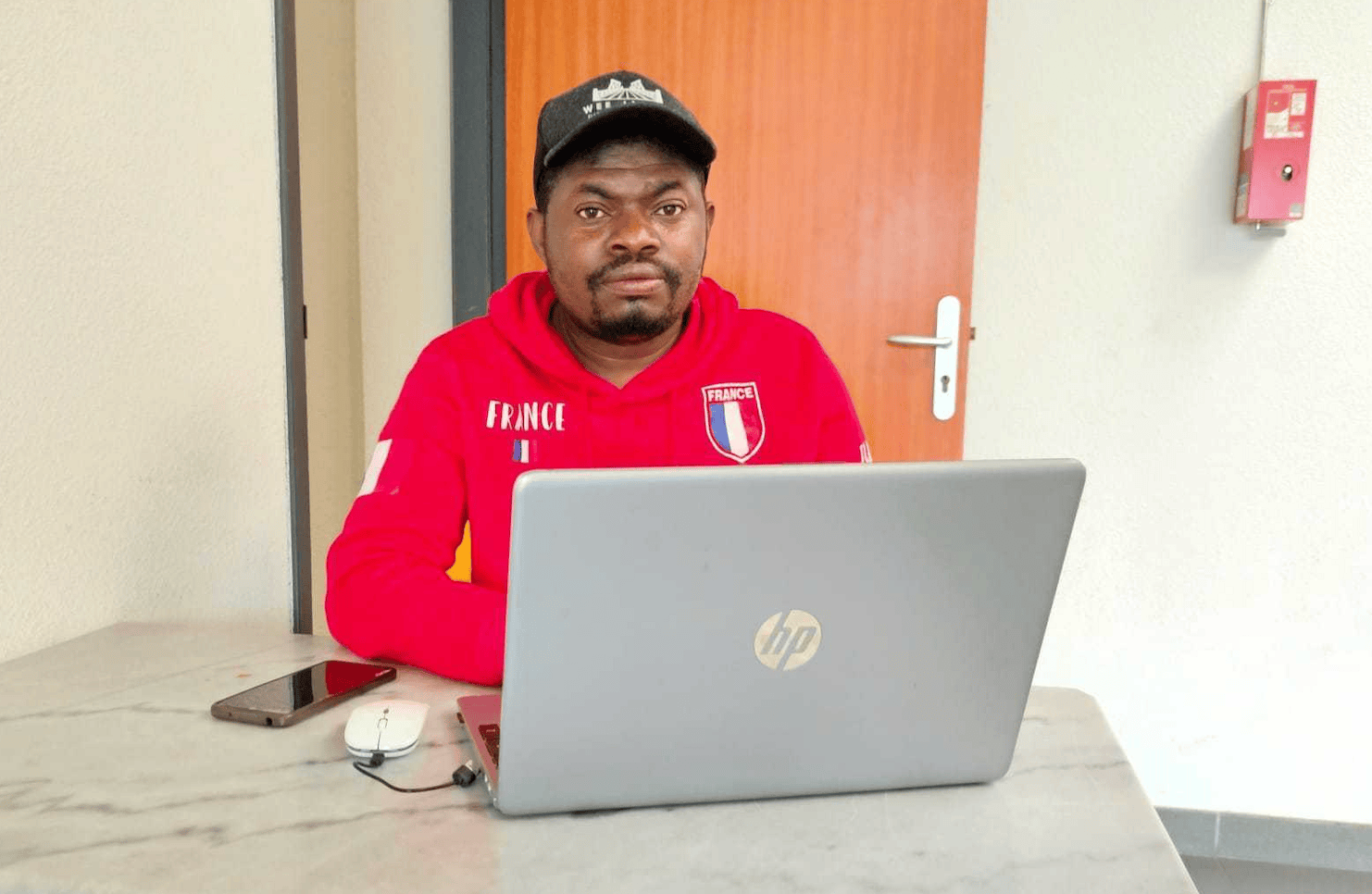
In 2025, Angolan journalist Daniel Frederico fled his home country for fear that he would be jailed for defamation for an article that he did not write.

His fears were realized on October 2, 2026, when he was given a 14-month sentence, despite his absence, for a 2022 report written and published by another media outlet. Frederico, editor of the Reporter Angola news site, told CPJ from exile that his only ‘crime’ was to meet the prosecutor mentioned in Angola Online’s article to hear his response to the allegations made against him. 

“We are appealing this unjust conviction,” Frederico’s lawyer Antonio Martins told CPJ. “He went to get commentary from the complainant about a story that was already circulating, and got sued for it.” 

Frederico’s legal headaches are far from over. In July, an Angolan Criminal Investigation Service (SIC) agent phoned and asked him to attend a hearing into “a matter of interest,” while refusing to identify himself or provide any further information.

Frederico soon found out that he and his website administrator were under investigation for defamation over a five-year-old article that criticized transport minister Ricardo Abreu. Frederico believes this latest case was opened to intimidate him ahead of next year’s elections. Angolans are due to vote in a new president as João Lourenço is constitutionally barred from seeking a third term.

“They [Angolan authorities] know that the largest websites are run by the diaspora and they want to instill fear, especially during elections,” Frederico told CPJ, adding that such vexatious cases are used by “those with political and economic power to defend themselves against what’s in the constitution in Articles 40 and 44 — freedom of the press and freedom of expression.”

Abreu replied to CPJ’s September 23 text message with a request for additional details about CPJ’s report, which CPJ provided, and said he would respond. He had not done so by the time of publication.

Journalists face constant threat

Frederico is one of 38 Angolan journalists interviewed by CPJ who have been investigated for defamation since 2015, which makes Angola one of Africa’s worst offenders in criminalizing journalism in this way.

At least 11 African countries have abolished criminal defamation laws that clashed with constitutional guarantees of press freedom: Gambia (2018), Ghana (2001), Kenya (2017), Lesotho (2018), Liberia (2019), Malawi (2025), Seychelles (2021), Sierra Leone (2020), South Africa (2024), Uganda (2026), and Zimbabwe (2014). However, some, like Sierra Leone and Zimbabwe, have reintroduced criminal defamation through the back door by passing cybercrime and data protection laws.

In Angola, criminal defamation is the preferred route for those seeking redress, with the state bearing the cost of a prosecution, rather than complainants seeking recourse via media regulators or damages through the civil code for offenses against an individual’s honor or reputation. This leaves journalists under constant threat of prison sentences of up to 18 months for investigating allegations of wrongdoing. 

Carlos Alberto (Photo: Courtesy of Carlos Alberto)

The 38 Angolan journalists that CPJ interviewed have collectively faced more than 200 different criminal defamation investigations. One, William Tonet, said he had lost count but the cases against him exceeded 100.

Only one of the 38, Carlos Alberto, editor of the investigative site Portal A Denúncia, has served jail time in the last decade. Six were acquitted or had their cases dismissed in court. The remaining 31 have ongoing cases, many of which have dragged on for years.
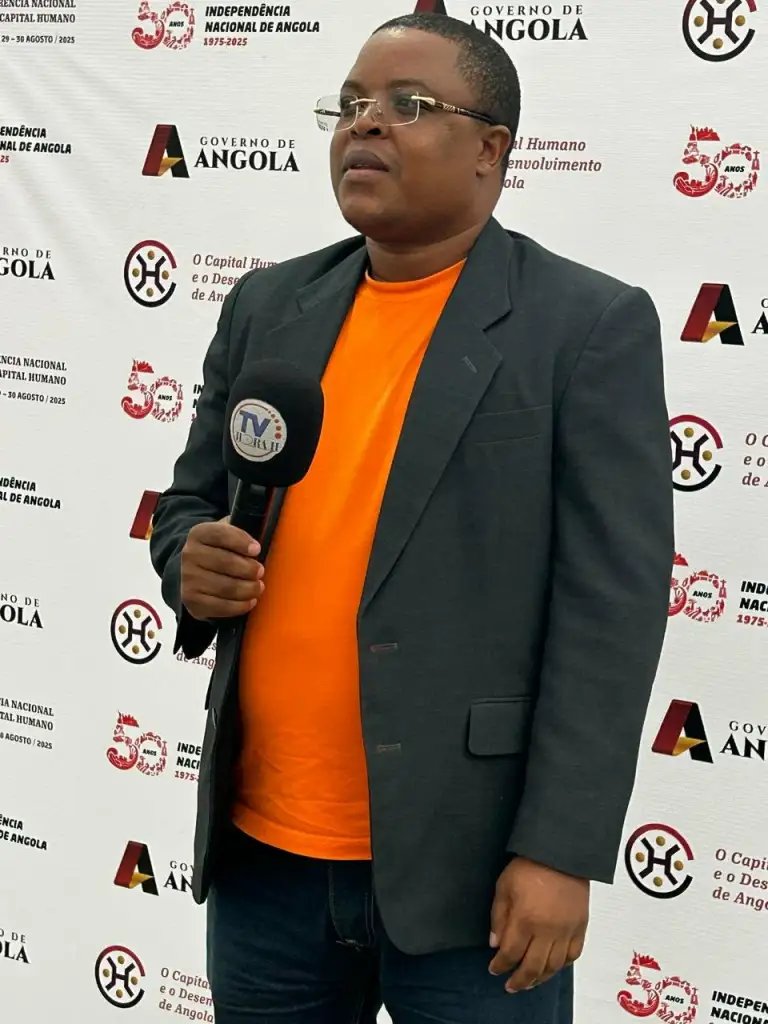
Angolan journalist Escrivão José
Escrivão José (Photo: Ana Filho)

“The goal of the system is to intimidate,” said Escrivão José, editor of the online news journal Hora H, adding that he has spent “immeasurable hours and funds” dealing with 32 defamation investigations over the last 16 years. 

There are no official figures into the number of journalists under investigation for criminal defamation in Angola.

“We have a breakdown by type of offense. It does not break down by profession or sector,” said Marty Kanando, spokesperson for the Prosecutor General’s (PGR) office, which carries out the second stage of investigations, with a view to bringing charges, after the SIC has conducted initial investigations.

Keeping powerful names out of the news

Most of the journalists told CPJ that they came under investigation for reporting on alleged misconduct involving the police or government officials. They said litigation was used to keep sensitive stories out of the news, undermining both journalists’ right to report under the Press Law and the public’s constitutional right to information.

“This is a tool used by those in power or in high-level positions to ensure their names are off limits,” Teixeira Cândido, a journalist, lawyer, and former head of the Angolan Journalists Syndicate, told CPJ. “[It can] be used any time that is convenient for authorities to call in journalists and intimidate and harass them.”

The African Commission on Human and Peoples’ Rights has called for states to amend criminal laws on defamation in favor of civil sanctions, but Cândido said Angolan authorities are not interested in reform.

“They want to keep the power to intimidate the press,” he told CPJ, adding that there is no time limit for authorities to investigate a case or on the number of times someone can be questioned.

In many other countries, legal action must be initiated within one to three years of publication.
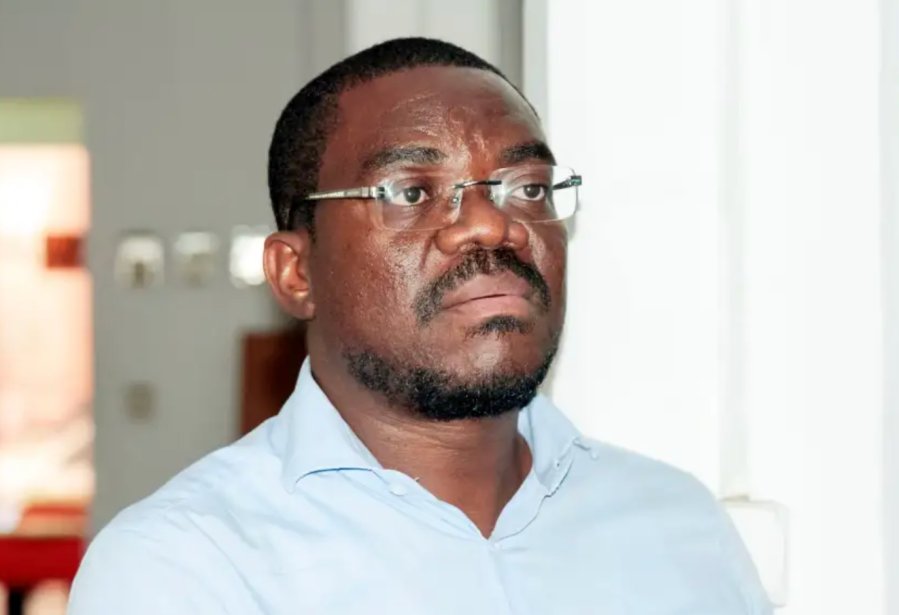
Angolan journalist Teixeira Cândido
Teixeira Cândido (Photo: Mario Mujetes)

Most of the 38 journalists were made a formal suspect, or arguido — a Portuguese legal status that restricts a suspect’s movements and often precedes arrest or charge. 

Police spokesperson Superintendent Manuel Halaiwa, who is also responsible for queries about the SIC, asked CPJ via messaging app in March for more detail about all the journalists’ complaints involving the police and the SIC in this article, which CPJ provided. He did not respond to subsequent messages. 

Interior ministry spokesperson Wilson dos Santos, whose ministry is responsible for the police, sent CPJ a statement which he said was on behalf of the SIC.

“It is important to note that these are standard legal proceedings, as any person who feels wronged regarding a matter that concerns them may assert their rights,” the September 11 text message said. “It should be noted that all proceedings are overseen by the Public Prosecutor’s Office, as the entity responsible for criminal prosecution.”

The PGR’s Kanando told CPJ that his office had no choice about criminalizing journalists for defamation because it is mandatory to investigate all cases passed on to them by the SIC. 

“This is a matter of criminal policy. It is up to the legislature to define the circumstances of a dispute of this type, and if it determines that it is a crime, the prosecutor’s office has no alternative but to proceed with the investigation and pursue criminal accountability,” he said via phone on September 8.

CPJ warned of ‘legal action against your institution’

One of the most disturbing aspects of Angolan authorities’ misuse of the law is that journalists are punished for following best practices and giving those adversely mentioned the chance to comment on allegations prior to publication. This makes it dangerous for journalists to pursue fair and balanced reporting. 

On October 6, 2025, Hora H editor Ana Filho was questioned by the SIC over her 2024 call to national police commander Francisco Ribas before her outlet published a report alleging his involvement in corrupt land deals, which included his rejection of the claims. The case is ongoing.

When CPJ made its own request for comment, Ribas said that he did not have anything against journalism as a profession but “reporting needs to be able to prove what is alleged.”

CPJ experienced such intimidation firsthand in seeking to report fairly on one of José’s cases. Lenilton Jordão, human resources director at Dubai-based DP World, a logistics company that manages the capital Luanda’s port, filed a complaint against José over a 2024 report accusing Jordão of breaching migration and labor laws.

José told CPJ that Jordão refused to comment pre-publication but “was quick to file the complaint” afterwards, and he was summoned for questioning by the PGR in February 2025. The report’s author, Angelino Canhango, told CPJ that he was also questioned by the SIC in May 2025.

After phoning Jordão to request comment, CPJ was called by a PR firm and then exchanged text messages with Jordão’s lawyer, Noé Eduardo, who said his client had a right to take legal action against CPJ but would not comment as the matter was in court.

“If I see any name in the newspapers, whether it be my client’s or mine as a lawyer, in the terms that you are now presenting to me, I will take legal action against your institution,” Eduardo told CPJ via messaging app on December 15, 2025.

‘Exhausting and taxing’
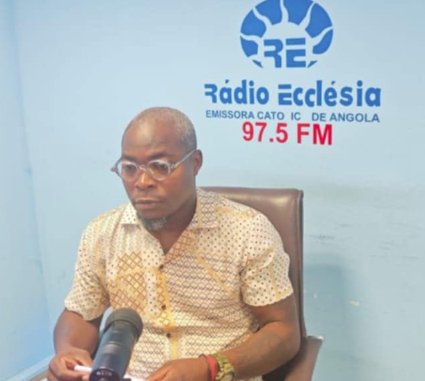
Osvaldo Nascimento, editor of the crime reporting site Na Mira do Crime, is interviewed by a radio station.
Osvaldo Nascimento. (Photo: Siona Junior)

Journalists told CPJ that defamation investigations can exact a heavy toll, even if they do not proceed to trial, draining time and money that would otherwise be dedicated to journalism.

“It’s exhausting and taxing on many levels, to put it mildly,” said Osvaldo Nascimento, editor of the crime reporting site Na Mira do Crime, who is facing eight defamation investigations.

These include:

  • On May 28, 2025, the PGR summoned Nascimento over a complaint by Angola’s ambassador to Equatorial Guinea, Potássio Nngana, about a January 2025 report alleging embezzlement by the embassy. Nngana told CPJ in May 2025 the allegations were “fabricated” and he used the “avenues available in the Angolan justice system to get justice.” Preliminary hearings took place in March and May 2026, the journalist’s lawyer, Osvaldo Salupupa, said. 
  • In June and July 2025, Nascimento also appeared in a Luanda court on defamation charges related to his 2023 report on allegations that a presidential employee accused of abducting and raping a 13-year-old girl was using his influence to avoid court. On February 2, 2026, the government official was convicted but the sentence was suspended on appeal. The case against Nascimento has not been formally closed. 
  • On November 28, 2025, Nascimento was questioned by the PGR after Luis Lélis, executive director of Angolan Investment Bank (BAI), complained about reports that the PGR was investigating him over an irregular $13 million loan to a foreign businessman, who fled Angola after being charged. Lélis has previously filed defamation complaints against multiple news outlets.

BAI’s legal and litigation department told CPJ via email that Lélis’ complaint against Na Mira do Crime’s article about the “alleged loan” was among “a series of attacks on the reputation of individuals and institutions, carried out anonymously or under pseudonyms and disseminated through ‘platforms’ lacking any editorial oversight or accountability.”

“I don’t give up because it is my profession,” Nascimento told CPJ. “It is with it that I put food on my family’s table.”
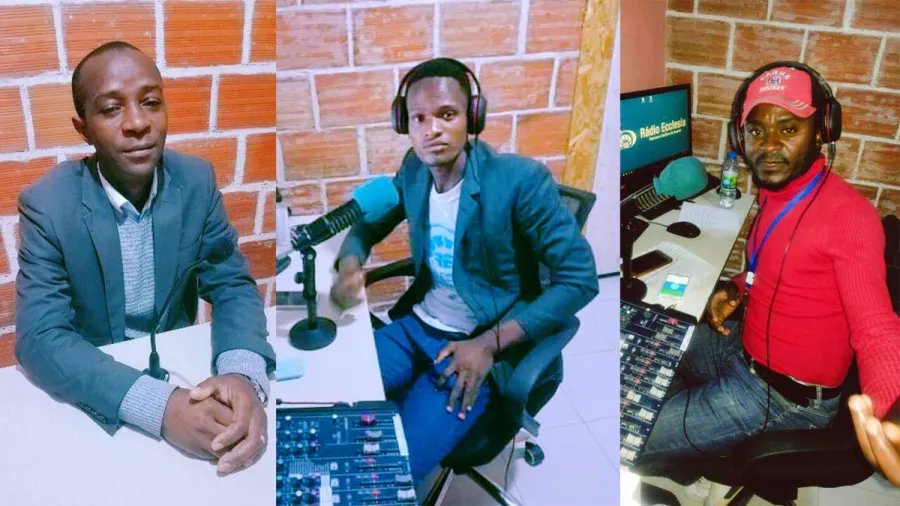
Alberto Java (from left), Diamantino Sangueve, and José Kalembe of the Catholic Church-run Radio Ecclésia were investigated for criminal defamation for a report that a police commandant was trafficking guns. All three were acquitted in 2023. (Photo: Flaviana Samba)

CPJ previously documented 12 criminal defamation investigations involving the following journalists: Mariano Brás, Fernando Caetano, Óscar Constantino, Liberato Furtado Pereira, Capita Inga, José Kalembe, Rafael Marques de Morais, Coque Mukuta, Jorge Neto, Lucas Pedro, Diamantino Sangueve, and Alberto Java. 

Two of CPJ’s 38 interviewees declined to have their accounts published, citing fear of reprisals.

Here are the stories of the remaining 17 journalists: 

  • On September 25, 2026, Isidro Kangandjo, editor of Factos Diários news site, and his camera operator Victor Capeio, were detained at an SIC police station in the town of Zango, about 35 kilometers southwest of Luanda. The journalists were on their way to Calumbo municipal administration office to interview deputy administrator Joelson Joaquim da Costa Gomes about Factos Diários’ September 24 video allegations that he had illegally acquired land. Kangandjo told CPJ he had asked Gomes for comment multiple times prior to publication but did not receive any response. Kangandjo said administration spokesperson Miguel Madeira phoned him on September 25 with an invitation to interview Gomes. 

“Victor has high blood pressure and fainted from the smell in the cell. I called for help and no one came,” Kangandjo told CPJ, adding that he could see Gomes chatting amicably with the police officers who had detained them. “This is the type of abuse journalists are exposed to and the reason why so many leave the country,” he said, adding that he and Capeio were released without charge the following day. 

Madeira referred CPJ to the administration’s September 29 statement, which said Factos Diários’ report was false and the journalists were detained after Gomes filed a complaint with the SIC. “The Municipal Administration regrets what happened, as it believes institutionally that dialogue and the search for consensus should have preceded any criminal proceedings,” it said.

Kangandjo told CPJ that he was facing several other defamation investigations. In March 2025, the PGR questioned him about a defamation complaint by the chief inspector of police in southern Cunene Province, Ana Mbala, over a February 2025 report implicating her in corruption. Cunene police spokesperson, Inspector Lino Chipalanga, asked CPJ to request comment in writing on March 19, 2026, which CPJ provided, but received no response.

  • On July 23, 2026, Francisco Rasgado, founder of Chela Press newspaper, was questioned by the PGR in Benguela in connection to his reporting on the alleged diversion of donations for people hit by April’s floods in the southern region, the journalist and his lawyer, José Faria, told CPJ. Rasgado was previously acquitted of defamation.
  • In May 2026, Matias Miguel, editor of the Na Lente do Crime site, was called for an SIC hearing in connection with a 2025 report alleging that SIC officers were involved in the killing of a motorcycle taxi driver, the journalist told CPJ, adding that he had two other ongoing defamation cases.
  • On December 18, 2025, the PGR charged José Costa, also known as José Samakaka, editor of Radio Cuquema in central Bié province, with defamation following a complaint from Angela Chicomo Ukueianga, municipal administrator of Cuito, about his critical reporting on the lack of electricity and sanitation in the provincial capital. Cuito administration’s spokesperson, Stanislau Silva, told CPJ via messaging app that he could not comment on an ongoing judicial case.
  • In mid-2025, brothers Francisco Luquino and Frederico Luquino, editors of social media-based Luanda Sul Line, appeared several times at the SIC and PGR offices in Belas municipality in Luanda province to respond to a criminal defamation complaint by a businessman over their reports about his ill treatment of workers. The brothers told CPJ that they took the content down after the SIC hearings but the matter proceeded to trial. On November 26, 2025, the businessman withdrew his complaint, according to a court document, reviewed by CPJ.
  • On March 7, 2025, Domingos Figueiredo, editor of the news site O Flagrante, was questioned at the SIC headquarters following a defamation complaint by Adão Sebastião, municipal police commander of the city’s Cazenga neighborhood, over a 2024 editorial about rising crime in the area, the journalist told CPJ. Sebastião did not answer CPJ’s calls to request comment.
  • In February 2025, Na Mira do Crime reporter Alfredo Talamaku was questioned by SIC officers about a December 2024 report about a stolen police car. He was also re-questioned about his sources for a May 2024 report alleging that police failed to collect evidence from a murder scene. The initial December 2024 questioning on that case lasted six hours, he said, with officers threatening him.

“They would put their guns on the table near me, and tell me that I would not leave, and that they would take me to their prison dungeons,” he told CPJ.

The interior ministry’s dos Santos rejected the allegation and told CPJ via messaging app on September 11 that journalists were “interviewed in accordance with the principles of professional ethics; no situations occurred that could be construed as threats. SIC affirms its commitment to truth and justice, ensuring that the conduct of its staff is always exemplary and professional.”
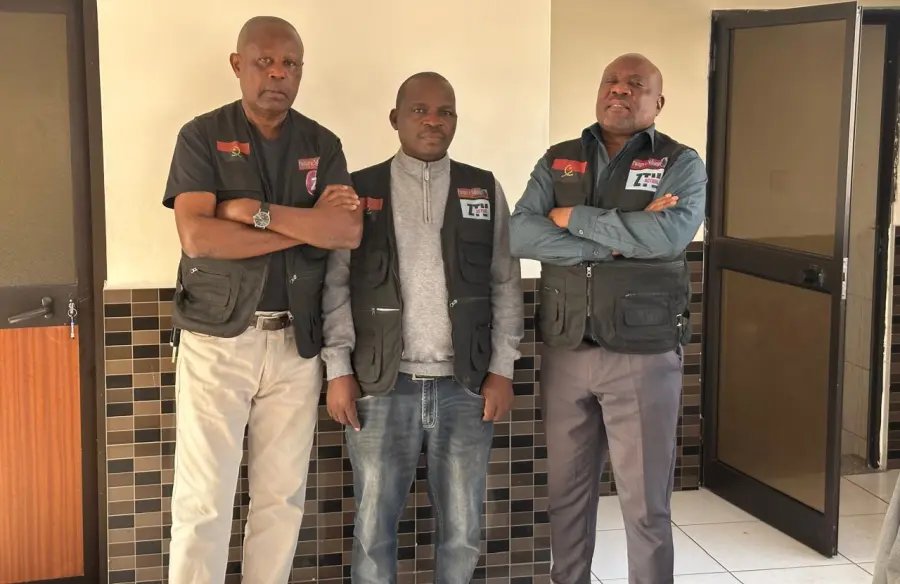
Angolan journalists Felipe Eduardo (from left), Irineu Mujoco, and Julio Gomes
Felipe Eduardo (from left), Irineu Mujoco, and Julio Gomes pose for a photo after learning in 2024 that they were being sued for defamation by the interior minister. (Photo: Felipe Eduardo)
  • In August 2024, Pungo a Ndongo newspaper’s editor Irineu Mujoco was questioned by the SIC and told that he, the outlet’s director Felipe Eduardo, and reporter Julio Gomes were being sued by the then-interior minister Eugénio Laborinho, over allegations that he had been using the police to support one faction in a leadership dispute within the Brazil-based Universal Church of the Kingdom of God. Eduardo told CPJ on September 23, 2026, that he had not received any further official updates on the case. Laborinho did not respond to CPJ’s September 25 calls and messages requesting comment. 
  • In April 2024, Na Mira do Crime reporter Adão Manuel was questioned over a SIC defamation complaint from the Universal Church of the Kingdom of God over a 2023 report alleging its staff broke into someone’s home, the journalist told CPJ. Alberto Segunda, the church’s general presbyter in Angola, told CPJ via phone that it “had to make complaints when it was being defamed” but he was not in a position to comment on the case. 
  • In 2022, prominent journalist Graça Campos was sued for an article on his Facebook page which accused TV commentator Bali Chionga of inciting violence. Campos went into exile because he feared arrest but returned to Angola later that year, his lawyer Sergio Raimundo told CPJ at the time. On September 24, 2026, Campos told CPJ that he was heard by PGR in 2024 but there had been no further action. Campos was previously jailed in 2007. 
  • On September 9, 2021, the PGR summoned Wizi-Kongo reporter Jeremias Kaboco for questioning and made him an arguido, over his report alleging a senior military officer was involved in corruption and money laundering, according to the journalist and the summons, reviewed by CPJ. Kaboco, who is also a teacher, told CPJ on September 11, 2026, that the case was ongoing and he still had to notify the PGR if he wanted to leave northwestern Uige Province. 
  • On August 19, 2021, Hora H reporter Pedro Vicente was questioned by the SIC after a senior official in the Attorney General’s office sued him and José for alleging that he was corrupt, Vicente told CPJ. The complainant dropped the case in September 2024.
  • In 2021, Rádio Ecclesia commentator Óscar Ventura Lourenço was prosecuted for defamation for his critical comments on air about a local governor who was using state funds to repair a family property, Lourenço and the then-editor Óscar Constantino told CPJ on September 21, 2026, adding that the case was dismissed by the judge.
  • In 2017, Rádio Mais journalist Albino Capitango was prosecuted for criminal defamation over a report alleging corruption by an SIC official, he told CPJ at the time. The case was dismissed in 2022. Capitango died in 2024. 

Read the full article here

Fact Checker

Verify the accuracy of this article using AI-powered analysis and real-time sources.

Get Your Fact Check Report

Enter your email to receive detailed fact-checking analysis

5 free reports remaining

Continue with Full Access

You've used your 5 free reports. Sign up for unlimited access!

Already have an account? Sign in here

Share. Facebook Twitter Pinterest LinkedIn Tumblr Email Telegram Copy Link
News Room
  • Website
  • Facebook
  • X (Twitter)
  • Instagram
  • LinkedIn

The FSNN News Room is the voice of our in-house journalists, editors, and researchers. We deliver timely, unbiased reporting at the crossroads of finance, cryptocurrency, and global politics, providing clear, fact-driven analysis free from agendas.

Related Articles

Global Free Speech

Painting of trader Elihu Yale One bright spring day in early April 2026, I visited Leeds Castle in Kent to see its dog collar museum. Of the 130 “rare and valuable collars” in the museum, about 60 had been collected by John Hunt, a historian and antiquarian, and later gifted to the castle by his wife Gertrude in 1977. A further 70 had been acquired by “purchase and donation”. According to the Leeds Castle website, its collection of historic collars, many dating back to the 17th and 18th centuries “was the largest of its kind on public display anywhere in the world”. Perhaps – if the exhibits were actually dog collars. But as an historian of slavery, my suspicion was that at least some of the items that I had seen on the website were not dog collars at all, but rather collars once worn by enslaved Black and Indian people in Britain as a mark of their servitude. Photographs of exhibits at the museum revealed large collars which match depictions of these slave collars in paintings dating to the late 17th and early 18th century, and I was keen to compare the two first-hand. But I was thwarted. Despite the website’s pronouncement that “Leeds Castle’s Dog Collar Museum is open daily,” the museum had been closed. It seems that at some point the curatorial team at Leeds Castle discovered that their exhibits were not all dog collars, and quietly shut the museum. So quietly they forgot to update the castle’s website. There were good intentions behind this, no doubt. But it was also an act of historical censorship, even if inadvertent – part of a pattern of rewriting Britain’s role in the slave trade, a tendency that has become more pronounced over the past few years. Between 1675 and 1807 Britain was the main importer of slaves to the New World from Africa. After 1807, when Parliament passed the Abolition of the Slave Trade Act, Britain not only ended its involvement in the international slave trade but actively worked to combat it. Nevertheless, its participation in the slave trade is part of British history. How best to engage with this distasteful part of the story is a complex issue, one that British museums and National Trust sites have a duty to consider carefully. My suspicion was that at least some of the items that I had seen on the website were not dog collars at all As historians undertake deeper research into the topic, the extent of Britain’s investment in slavery, both cultural and material, is becoming evident. Suppressing artefacts, which provide evidence distorts history. Silver slave collars are crucial artefacts which speak to that difficult legacy. The Yale Center for British Art in New Haven, Connecticut owns four portraits of Elihu Yale, dating to between 1710 and 1720. Yale, a wealthy merchant and British colonial administrator, was an early donor to the university now named after him. One of these, painted by the Briton James Worsdale and an imposing 2.3 metres tall, is described as Elihu Yale with his Servant. The portrait, clearly intended to depict Yale as a man of substance, shows him being attended to by a Black slave wearing a silver collar around his neck. Until 2007, it hung in the Yale Corporation Room in the university’s Woodbridge Hall, where the Yale Board of Trustees met to decide campus policy, until a student pointed out the incongruity of the painting on social media: not because it existed, but because of how it existed, benignly watching over meetings of the university’s trustees. John Marciari, a curator for the Yale Center for British Art at the time, acknowledged to the local newspaper, the Hartford Courant, that he knew of many other similar paintings, but that these were normally kept off display. Curators at some museums, he continued, “have since painted over the collars to make the art more palatable.” The paintings of Elihu Yale date to when he was part of the circle of courtiers surrounding Queen Anne. They can be viewed on the Center’s website, along with a discussion of the paintings’ historical provenance and context. Slave collars were a real thing at the time and archival evidence testifies to their ubiquity in England itself. Take, for example, an advertisement in popular newspaper The London Postman, from 17 September 1706: “Runaway from his Master about a fortnight since, a lusty Negro Boy about 18 years of age… Had about his neck a silver collar engraved Captain Thomas Mitchel’s Negro, Living Curators at some museums, he continued in Griffin Street in Shadwell.” An exhibit showing collars at Leeds Castle (Steve Vidler/Alamy) Leeds Castle, to be fair, is an unlikely location for a historical reckoning. On the Easter weekend of my visit to the “dog collar museum”, I was greeted on the path towards the castle by a carved wooden dragon, pretend mermaids and other magical creatures for children to discover. A day at the castle is clearly intended to be a fun day out for children and adults alike. Why force happy families to engage with such disturbing things? But this question underscores an important point: careful thought is a basic prerequisite for the display of such artefacts. For some time, the National Trust (NT) has been engulfed in controversy about the best way to display – or not – such artefacts forming part of the collections in many of its houses. The NT’s collection at Dyrham Park near Bristol, for example, includes a pair of stands that display Black men wearing gold collars holding scallops that serve as side tables. These were given to William Blathwayt in 1700 by his uncle, Thomas Povey. Both had been administrators for empire, with Blathwayt serving six kings and queens over almost 50 years. Leeds Castle, to be fair, is an unlikely location for a historical reckoning The curators at Dyrham Park have approached the issue thoughtfully. In a series of introductory exhibits that visitors encounter before entering the house, they frame Blathwayt’s involvement in empire and in slavery carefully, inviting the observer to acknowledge complicity in a deeply problematic and exploitative system. Then before entering the room with the side tables, visitors find a warning sign providing context for what awaits them. By way of contrast, the same stands also appear on the NT’s website along with the rest of the Dyrham Park collection. The item was once listed as “Nubian Slaves” and “Blackamoor Stands” and is now blandly described as “a pair of giltwood and polychrome stands”; here, there is no discussion of the wider context that the stools are a part of. Dyrham Park stands out for the willingness of its curators to confront this difficult past. Elsewhere, censorship by omission is far more commonplace. Indeed, sometimes this is done in the name of anti-racial history. Some Dutch museums, for instance, seem uncomfortable with any racially descriptive words such as “negro”. In 2015, a painting on the website of the RKD Nederlands Institute for Art History by Herman van der Mijn was entitled Portrait of a Lady with a Negro Servant; now it is just Portrait of an Unknown Woman, with a Servant. Dated about 1720, the Black “servant” was wearing a silver collar, marking him as a slave. Like painting over the silver collars in other works, the renaming of this painting to exclude racial signifiers, which makes it more difficult to be found and to be seen, is again a way of censoring an uncomfortable past. Rather than conceal the existence of these silver collars, museums and other repositories of history have a duty to reckon with the past in meaningful ways. We must see the evidence in order to fully understand the battles fought and costs paid to get rid of such a system. To comprehend how the past continues to shape the present – not only for the descendants of those enslaved in Britain’s empire but for all of us – we cannot and should not censor these historical memories. Museums need to explain to the visitor why it is necessary to engage with such material and why it still disturbs. Perhaps it all comes down to the purpose of museums. Are they supposed to be places that are just a fun day out for families, warming the blood with patriotic ardour? Or can they also be places that help us learn and make us think, that educate us about the past in order for us to make better decisions about the future? Here in the USA, as recently as 30 years ago one could go to Charleston in South Carolina and have little idea that slavery was once pervasive there. The one place that did promise some evidence, the site of the former slave market, was closed to the public. While there and elsewhere across the US, prominent museums have opened to address this history, their interpretations are now directly threatened by the Trump administration. These silver collars and their history, are a part of British history too. Morgan Godwyn, an English minister who had served in Virginia and Barbados wrote in 1682 that “Tho but a few were concerned in this horrid Fact” of slavery in Barbados “yet our whole Nation are guilty”. Perhaps he put it too strongly. But slavery did not just stay safely in the colonies. The NT’s 2020 interim report, Connections between Colonialism and Properties, now in the Care of the National Trust, stating that slavery needs to be more carefully acknowledged at Britain’s historic sites, was exactly right. These silver collars and their history, are a part of British history In response to an email query I sent after my visit, Jo Wiltcher, heritage and engagement director at Leeds Castle, confirmed that the dog collar exhibits were completely closed “following a leak in one of the rooms” in December 2022. When the exhibition was partially reopened, the new display only included a few of the collars. In response to my specific query stating that, “I’ve been working on slave collars for more than a decade (part of a much bigger book) and the online pictures indicated to me that some of the collars might actually have once been used for that purpose,” Wiltcher said: “We are aware of, and are actively working on, [a presentation strategy] behind the scenes.” She further stated that researchers could access the collars by special permission. I suspect that their awareness about the problematic provenance of the collars was sparked by the Guardian’s 2021 coverage of an exhibit at Amsterdam’s Rijksmuseum. As Valika Smeulders, the curator for an exhibit in 2021 put it, with regard to a Dutch silver collar dated 1689: “For the longest time people have not wanted to come to terms with the meaning of those collars … they were always described as being dog collars, but if you look at the paintings, the ones wearing those collars are never the dogs, they are the men.” My best guess is that when Leeds Castle realised what they actually possessed, their solution was to quietly, without fanfare, close the dog collar museum, leaving only a dozen collars behind in two small glass display cases in an otherwise empty room. Ironically, this work of erasure is incomplete. Leeds Castle’s website still has a page dedicated to the dog collar museum, enthusiastically describing its collection of “130 rare and valuable collars … which date from the 15th, 16th and 17th centuries”. Affording researchers access is welcome. But it does not fully address the larger issue of setting out the context that led to the existence of these disturbing collars. If Leeds Castle choose not to display them, they should loan them to another museum. Honest curation is certainly possible to do: to frame these artefacts around the complex issues at stake, to show the real bonds and chains, and the structural legal and social system that was racial slavery. Censoring history is not the answer. More generally, the fact that a dog collar museum was open for 50 years with artefacts that were in many cases likely not meant for dogs – that, in fact, likely intended for humans – raises profound questions about how censorship can work as much by omission as by commission. Because of this omission, a difficult history has been hiding all this time in plain sight. READ MORE

2 hours ago
Global Free Speech

Lebanese journalist Christina Assi calls on EU leaders to hold Israel accountable for crimes against journalists

4 hours ago
Global Free Speech

Spate of attacks on DRC press include journalist threatened over Fally Ipupa controversy

21 hours ago
Global Free Speech

Matsada2sh, Arabic for “don’t believe it”, was founded in 2018 to check the facts in a country where the official narrative goes largely unchallenged. President Abdel Fattah El-Sisi has repeatedly told his people to only believe what he says. What started as a fact-checking platform has since expanded into investigative reporting covering Egypt and other Arab countries, digging into everything from discrepancies in official figures to hidden cracks within state institutions. Its Facebook page, the primary channel through which it reached readers inside a country that has reportedly blocked its website, accumulated more than 1.3 million followers. On the nights of 28 and 29 September 2026, Egyptian security forces arrested all six members of its editorial team in a coordinated operation spanning multiple governorates. After days of forced disappearance, they emerged before the public prosecutor, facing charges of being members of the banned Muslim Brotherhood and spreading fabricated news in exchange for foreign funding. The detained journalists denied these charges, accusing state security of torturing them, which the Ministry of Interior denied in a statement. It was the first time an entire newsroom team had been arrested in Egypt. “Even when state forces stormed Mada Masr several years back, they only detained several journalists at the time, and these were quickly released,” Mohamed Lotfy, co-founder and executive director of Egyptian Centre for Rights and Freedoms (ECRF), a homegrown organisation defending rights in Egypt, told Index on Censorship. “This is an alarming precedent.” President Abdel Fattah El-Sisi has repeatedly told his people to only believe what he says The arrests brought the number of journalists behind bars in Egypt to at least 26, according to the Egyptian Initiative for Personal Rights — all facing security and political charges, including belonging to the banned Muslim Brotherhood and spreading false news. What Matsada2sh actually did “Did the state want journalism from abroad? We chose to do journalism from Egypt. Why are we paying the price?” With these lines, a post published on Matsada2sh’s Facebook page on 3 October began defending its editorial team against the Ministry of Interior’s accusations – accusations replayed across countless talk shows and headlines run by state-aligned media. What distinguished Matsada2sh was its method. “It used open-source tools to overcome the limited access to information in the country, investigate and report stories other media platforms haven’t covered, and challenge the official narrative on many issues,” said Mina Thabet, head of the Middle East and North Africa at PEN International. Over the years, Matsada2sh dug into official narratives, challenging officials’ statements inflating immigrants’ numbers as another justification for economic hardships; exposing otherwise overlooked decline in spending on the education system; breaking down legal and economic expressions for a general audience. It also revealed concealed disagreements within institutions long considered opaque. “Recent reports about discontent among judges and public prosecutors over new hirings revealed the scale of favouritism and patronage, but also brought before the public disagreements within the judiciary that are meant to remain hidden,” said Lotfy. “Matsada2sh relied in its reports on official and verified sources, precisely the kind of fact-based journalism that made it dangerous to the system. Its reporting revealed information about those in power and undermined the trust of citizens in official narratives, which the authorities characterised as destabilising public security.” “We chose to do journalism from Egypt. Why are we paying the price?” In 2023, the platform published reporting on the identities of Egyptian nationals, including security officials, on board a private plane seized in Zambia carrying cash and weapons. A journalist was arrested within hours and later released. Matsada2sh invoked the incident directly: “If we are Brotherhood [members] and funded [from abroad], why did [the] security apparatus clear us in 2023?” The exact trigger for the September 2026 arrests remains unclear. Co-founder Abdelrahman Mansour, who lives abroad and has denied all accusations of ties to the Brotherhood, had played a pivotal role in the 2011 uprising through a Facebook page he co-founded, which helped mobilise mass protests that ultimately toppled President Hosni Mubarak and threatened the military’s grip on the country. Since seizing power in 2014 following a coup against Mohamed Morsi – the country’s only freely elected president and a senior Brotherhood figure – El-Sisi has taken systematic measures to prevent any recurrence. A media landscape hollowed out from within Egypt’s media consolidation happened through both censorship and ownership. In 2017, the General Intelligence Service established Eagle Capital, which acquired controlling shares in the Egyptian Media Group, a nominally private conglomerate that now controls major television channels and newspapers. The State Media Monitor identifies three structures through which the government has consolidated control of the media sector: the constitutional bodies of the National Media Authority and the National Press Authority, as well as the Egyptian Media Group. Three media laws passed in 2018 – Laws 178, 179, and 180 – together with a cybercrime law the same year, gave the Supreme Council for Media Regulation (SCMR) sweeping powers to block websites, revoke licences, and refer journalists to prosecutors. By the 2024 World Press Freedom Index, Egypt ranked 170th out of 180 countries. “Since President El-Sisi seized power in 2014, spaces for independent and free media have shrunk significantly,” said Thabet. “These practices and policies have created a fragile press and a new breed of journalism that does what the security apparatus tells it and never questions the authorities’ narrative – with many even turning to propaganda platforms for the regime.” This left Matsada2sh, “along with a handful of other online platforms – which continue to operate without mandated licence from the SCMR –  the only independent, professional and serious journalism in a country with a dying media landscape,” said Lotfy. “With little to no challenge to official narratives, policies, and decisions,” Thabet said. “The regime lost its tolerance for criticism and, within a few years, grew sensitive and insecure about even the simplest questions.” Noting that the exact reason for the attack on the platform is unclear, he added that “it is clearly part of El-Sisi’s crackdown on press freedom and a manifestation of his zero-tolerance policy toward criticism.” In its 3 October post, which garnered nearly 30,000 reactions, Matsada2sh wrote: “We belong to neither side. We didn’t want a press that parroted a ready-made narrative simply because it originated domestically, nor did we want a press that acted according to a political discourse imposed from abroad. It was a difficult gamble. We chose ourselves. We chose Egypt, and the press we dream of. A press that is impartial and unbiased, where ideology doesn’t trump professionalism, where agendas aren’t imposed on truth, and where there is no place for political affiliations.” *Journalist used a pseudonym for security concerns. READ MORE

24 hours ago
Global Free Speech

Guatemalan journalist Evelio López shot dead after denouncing threats

2 days ago
Global Free Speech

Journalist Derya Okatan arrested in Turkey for allegedly possessing classified material

2 days ago
Add A Comment
Leave A Reply Cancel Reply

Editors Picks

Bitcoin and ether holders urged to prepare ‘bunker mode’ against possible AI attacks

19 minutes ago

Sui’s Hashi Bitcoin Network to Launch With $500M in Capital Commitments

29 minutes ago

AI Video Game Mod Mashups Are Taking Off—Here Are the Wackiest Examples

32 minutes ago

DOGE Shut Down This Agency. Now Its Employees Are Back on the Payroll With Nothing To Do.

1 hour ago
Latest Posts

Bitcoin ETFs bleed nearly $500 million in one day: Crypto Daily

1 hour ago

US government moves $770M of seized Bitcoin to Coinbase Prime

1 hour ago

Former PlayStation Exec Slams Sony’s Move to Kill Discs: ‘What Are You Buying?’

2 hours ago

Subscribe to News

Get the latest news and updates directly to your inbox.

At FSNN – Free Speech News Network, we deliver unfiltered reporting and in-depth analysis on the stories that matter most. From breaking headlines to global perspectives, our mission is to keep you informed, empowered, and connected.

FSNN.net is owned and operated by GlobalBoost Media
, an independent media organization dedicated to advancing transparency, free expression, and factual journalism across the digital landscape.

Facebook X (Twitter) Discord Telegram
Latest News

Does Allowing Turning Point USA “Two Genders: One Truth” Event to Be Held and Promoted at Public School Violate Title IX?

11 minutes ago

Bitcoin and ether holders urged to prepare ‘bunker mode’ against possible AI attacks

19 minutes ago

Sui’s Hashi Bitcoin Network to Launch With $500M in Capital Commitments

29 minutes ago

Subscribe to Updates

Get the latest news and updates directly to your inbox.

© 2026 GlobalBoost Media. All Rights Reserved.
  • Privacy Policy
  • Terms of Service
  • Our Authors
  • Contact

Type above and press Enter to search. Press Esc to cancel.

🍪

Cookies

We and our selected partners wish to use cookies to collect information about you for functional purposes and statistical marketing. You may not give us your consent for certain purposes by selecting an option and you can withdraw your consent at any time via the cookie icon.

Cookie Preferences

Manage Cookies

Cookies are small text that can be used by websites to make the user experience more efficient. The law states that we may store cookies on your device if they are strictly necessary for the operation of this site. For all other types of cookies, we need your permission. This site uses various types of cookies. Some cookies are placed by third party services that appear on our pages.

Your permission applies to the following domains:

  • https://fsnn.net
Necessary
Necessary cookies help make a website usable by enabling basic functions like page navigation and access to secure areas of the website. The website cannot function properly without these cookies.
Statistic
Statistic cookies help website owners to understand how visitors interact with websites by collecting and reporting information anonymously.
Preferences
Preference cookies enable a website to remember information that changes the way the website behaves or looks, like your preferred language or the region that you are in.
Marketing
Marketing cookies are used to track visitors across websites. The intention is to display ads that are relevant and engaging for the individual user and thereby more valuable for publishers and third party advertisers.