Close Menu
FSNN | Free Speech News NetworkFSNN | Free Speech News Network
  • Home
  • News
    • Politics
    • Legal & Courts
    • Tech & Big Tech
    • Campus & Education
    • Media & Culture
    • Global Free Speech
  • Opinions
    • Debates
  • Video/Live
  • Community
  • Freedom Index
  • About
    • Mission
    • Contact
    • Support
Trending

Stripe to expand stablecoin cards to 100 countries as crypto payments strategy grows

7 minutes ago

Metaplanet Reveals Net Income Strategy for Bitcoin Accumulation

14 minutes ago

Strategy Posts $21B Q3 Gain, Buys $29M in BTC, Repurchases $176M in STRC

16 minutes ago
Facebook X (Twitter) Instagram
Facebook X (Twitter) Discord Telegram
FSNN | Free Speech News NetworkFSNN | Free Speech News Network
Market Data Newsletter
Monday, October 5
  • Home
  • News
    • Politics
    • Legal & Courts
    • Tech & Big Tech
    • Campus & Education
    • Media & Culture
    • Global Free Speech
  • Opinions
    • Debates
  • Video/Live
  • Community
  • Freedom Index
  • About
    • Mission
    • Contact
    • Support
FSNN | Free Speech News NetworkFSNN | Free Speech News Network
Home»News»Global Free Speech»Inside Turkey’s Lawfare: How Turkey uses its disinformation law against journalists
Global Free Speech

Inside Turkey’s Lawfare: How Turkey uses its disinformation law against journalists

News RoomBy News Room2 hours agoNo Comments9 Mins Read1 Views
Share Facebook Twitter Pinterest Copy Link LinkedIn Tumblr Email VKontakte Telegram
Inside Turkey’s Lawfare: How Turkey uses its disinformation law against journalists
Share
Facebook Twitter Pinterest Email Copy Link

Listen to the article

0:00
0:00

Key Takeaways

Playback Speed

Select a Voice

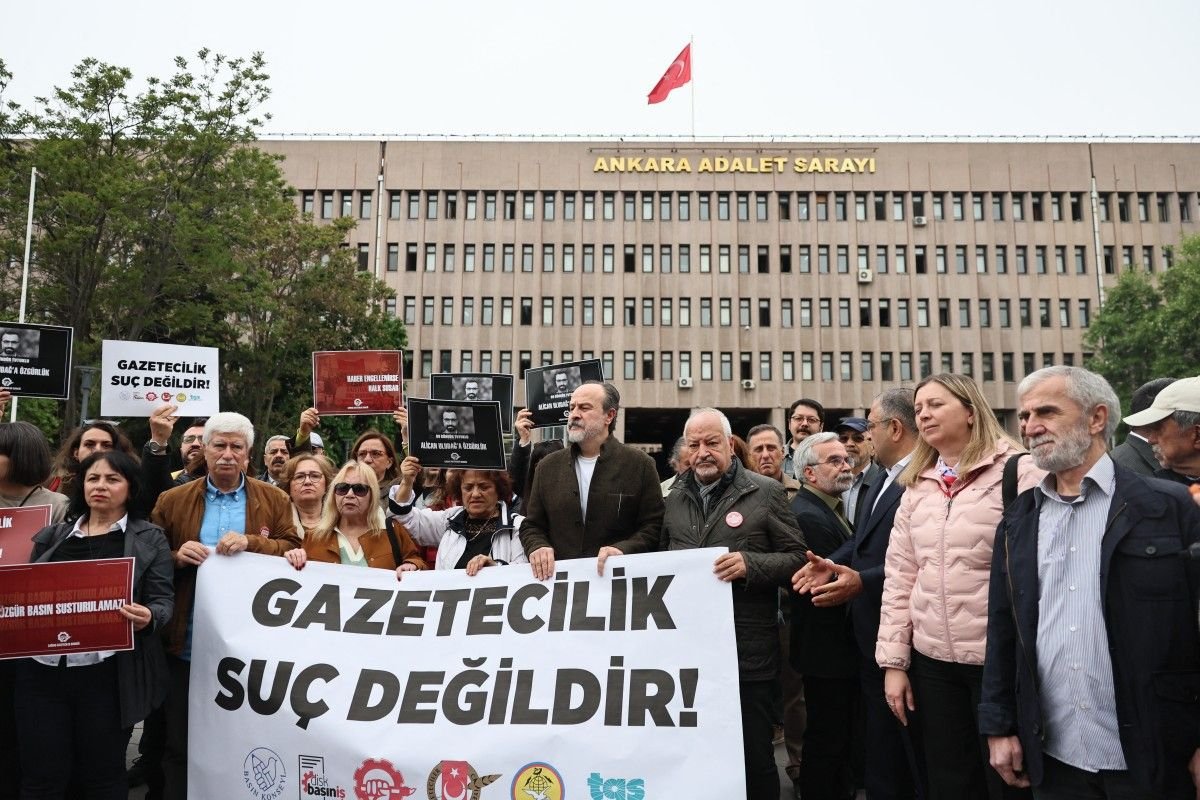
Istanbul, October 5, 2026—Turkish authorities have weaponized the country’s disinformation law to stifle independent reporting by repeatedly detaining and arresting journalists on charges of spreading false information based on the vague tenets of this poorly conceived legislation.

This tactic fits into a global pattern of using legal systems and institutions to criminalize legitimate journalism and silence reporting – a practice known as lawfare. 

CPJ has called for the law – Article 217/A of the Turkish Penal Code – to be repealed and for all journalists arrested under its auspices to be released. 

“The disinformation law was designed to be a one-size-fits-all tool to prosecute journalists for reporting information that the authorities would rather the public did not know. We have long seen Turkey’s authorities use anti-terrorism legislation and other laws to unjustly target journalists but this new disinformation legislation – which is broad and vaguely worded – allows them to do this on an even larger scale,” said Özgür Öğret, CPJ’s Turkish representative. 

“As such, it fits into the global trend of authoritarian governments criminalizing news they dislike by labelling it ‘disinformation’ and prosecuting the journalists who report it,” he said. 

As of September 4, CPJ had documented 16 arrests and detentions for publicly spreading disinformation this year alone; these cases involved 14 journalists – two were detained or arrested twice – and two journalists remained in jail as of mid-September.

Independent data journalism platform Veriler Ne Diyor estimated in April that at least 83 journalists had been charged 114 times over disinformation since the disinformation law came into effect on October 18, 2022. 

What does the law say?

The law against publicly spreading disinformation is just one of a suite of legal measures used to target journalists, who can also face charges under other legislation that criminalizes “provoking the people into animosity and hatred”, “insulting the president,” and “degrading” the Turkish nation as well as charges based on certain articles of the anti-terrorism law. 

Article 217/A of the penal code says: “Any person who publicly disseminates false information regarding the country’s internal and external security, public order, or general health – in a manner capable of disturbing public peace and with the sole intent of creating anxiety, fear, or panic among the public – shall be sentenced to imprisonment for a term of one to three years.” 

The sentence can be increased by half for those who run anonymous social media accounts or act under the orders of criminal groups.

How is the disinformation law being used to target journalists? 

Journalists are regularly detained under this law because of information they have disclosed in videos, articles or on social media – information that constitutes the normal work of journalism, but which authorities deem to be false or liable to disturb the peace. Often this reporting focuses on the actions of the government, leading many journalists to describe the disinformation legislation as “a censorship law.” None of the reporting by the detained or prosecuted journalists caused fear or panic among the public, according to CPJ’s monitoring. 

Some journalists are released quickly, while others are arrested and taken to prison as investigations continue or pending trial. Those arrested can spend months in pre-trial detention but even if they are released pending trial, they may wait months for their trial to begin, leaving them stuck in legal limbo. If they appeal the eventual judgment, they could have to wait months for a final ruling as the case ping pongs between local and appeal courts.

Even if cases are dropped during investigation or end in acquittal, the targeted journalists will have experienced months of worry and fear.

Several prominent journalists have been repeatedly detained for allegedly flouting this law, locking them into drawn-out legal processes that stop them from doing their jobs while discouraging others from reporting freely. 

This crackdown is happening against the background of a marked decline in press freedom, with a sharp escalation of political pressure, judicial harassment and censorship targeting the press. Journalists also continue to face assault, threats, and intimidation.

And although the number of jailed journalists has fallen from a peak of 84 in 2016 to 14 in September 2026, this figure does not capture the fact that many journalists are moving in and out of jail or spending months in pre-trial detention.

What does the government say?

When the legislation was first proposed in April 2022, there were already concerns that the vagueness of language around what constituted false information could be used against journalists. 

The ruling AK Party dismissed these concerns, saying disinformation could destabilise society. 

In a speech in May 2022, President Recep Tayyip Erdoğan said “digital fascism” was a threat preventing people from accessing accurate and unbiased news. 

“In particular, social media platforms, devoid of any self-regulation, oversight, rules, and ethical values pose serious risks to all societies,” he said.

The bill’s authors wrote in the introduction to the bill that the change to the penal code was designed to protect Turkish citizens’ rights online while combating “disinformation” and “illegal content” produced by “false names and accounts;” they argued that this action fell in line with regulations in the United States and European countries, including Germany, France, and the United Kingdom.

The day after the bill passed, on October 14, Hakan Çavuşoğlu, chair of parliament’s Committee on Human Rights Inquiry met with press freedom groups, including CPJ, and said the disinformation law would improve freedom of speech because people would be basing their opinions on verified facts. He said no journalists would be imprisoned under the law. 

What do journalists say?

Journalists, politicians, academics and lawyers have all criticised the law, saying that in practice it means that all information that does not come straight from the government can be labelled false.  

The writing was on the wall in 2022. 

After that meeting with Çavuşoğlu on October 14, 2022,  press freedom groups said: “The fact that (the law) will be implemented by the politicized Turkish judiciary will expose journalists, as well as millions of internet users, to the risk of criminal sanctions, playing a major role in increasing censorship and self-censorship in the country’s already damaged media landscape.” 

In the intervening years, these fears have played out. 

İsmail Arı, a reporter for the leftist daily BirGün, spent two and a half months in pretrial detention in 2026 on suspicion of spreading disinformation. He was eventually released in early June, pending the outcome of his trial.

İsmail Arı, a reporter for the daily BirGün who was detained on March 21, 2026, is among many journalists who have been imprisoned under Turkey’s disinformation law. (Photo: Courtesy of İsmail Arı)

Arı said authorities were using the disinformation law to pursue journalists instead of resorting to the narrower charge of “insulting the president” – punishable by up to four years in jail under Article 299 of the Turkish penal code – or the charge of “provoking the people into animosity and hatred” as defined under Article 216 of the penal code and punishable by one to three years in jail.

At his trial in June, Arı challenged the accusation that his reporting had caused “anxiety, fear, or panic,” as specified in the text of the law.

“I never saw any chaos erupting nor people succumbing to fear, panic, or anxiety regarding the news stories of myself or anyone else arrested and prosecuted due to this accusation,” he told CPJ.

He said the disinformation law particularly targeted journalists active on social media, who tend to be less pro-government than traditional media, often identifying themselves as pro-opposition.

“I believe that (the authorities) wanted to rupture this opposition influence in social media and either punish or intimidate the influential names and journalists with this law,” he said. 

Veteran parliamentary deputy and former journalist Utku Çakırözer, the deputy chair responsible for media in the opposition New Party, says the law is being “enforced maliciously,” as evidenced by the number of journalists prosecuted despite the lack of proof that their reporting has caused panic or distress. 

“What is disinformation? What does it mean to publicly spread it? According to who? These were all abstract concepts as discussed before the law was passed,” he told CPJ. 

The government is “taking steps aiming to suppress, intimidate and censor criticism at every chance,” said Çakırözer.

He said other clauses in the Turkish Penal Code can be used to combat disinformation and while he thinks the disinformation law should be repealed, any reform should prioritize “lawfulness, temperance, press freedom and the people’s right to be informed.” 

What do lawyers say?

Elif Ergin, a lawyer for the Journalists’ Union of Turkey (TGS), told CPJ the disinformation law was vague, unconstitutional and designed as a tool to interfere with the press. 

“The law against spreading disinformation, in fact, violates the people’s constitutional right to be informed” by making it easier to prosecute journalists for doing their jobs, she said.

Even journalists who are not arrested have been obstructed; some have spent time in police detention, others have been given foreign travel bans while others still have been placed under judicial control, requiring them to regularly present themselves at police stations, she said. 

“Unfortunately, today we see that in our country actions are no longer guided by legal certainty or written law, and there is a departure from legal principles,” she said. “And it should be said that the journalists suffer the most due to the judiciary being run like this.” 

Çakırözer has presented a bill to Turkey’s parliament to repeal the law, and he expects this to be put to a vote by the end of the next parliamentary year, which began on October 1.

“Then we’ll see the attitude of both the government and the opposition on this matter. I believe the opposition parties will act in unity to dissolve this law.”

Recommendations:

CPJ calls on Turkey to:

  • Release all journalists arrested under Article 217/A.
  • Drop all pending charges against journalists arising from their reporting or commentary.
  • Repeal Article 217/A in its entirety.
  • Bring all legislation regulating freedom of expression into conformity with Turkey’s international obligations.

Read the full article here

Fact Checker

Verify the accuracy of this article using AI-powered analysis and real-time sources.

Get Your Fact Check Report

Enter your email to receive detailed fact-checking analysis

5 free reports remaining

Continue with Full Access

You've used your 5 free reports. Sign up for unlimited access!

Already have an account? Sign in here

Share. Facebook Twitter Pinterest LinkedIn Tumblr Email Telegram Copy Link
News Room
  • Website
  • Facebook
  • X (Twitter)
  • Instagram
  • LinkedIn

The FSNN News Room is the voice of our in-house journalists, editors, and researchers. We deliver timely, unbiased reporting at the crossroads of finance, cryptocurrency, and global politics, providing clear, fact-driven analysis free from agendas.

Related Articles

Global Free Speech

Cuban content creator sentenced to 2 years of ‘restricted freedom’ for filming agent

2 days ago
Global Free Speech

CPJ joins legal effort to restore White House press access

3 days ago
Global Free Speech

The six detained journalists At 12 noon on Friday, Cairo time, Eman Ouf, the rapporteur of the Women’s Committee and the Freedoms Committee at the Egyptian Press Syndicate, was rushing to the public prosecutor’s office. Technically, it was her day off, but the public prosecutor was working as normal, and she – along with other members of the syndicate’s board – feared that the six detained journalists who make up the editorial team of the fact-checking newsroom Matsada2sh would be brought before prosecutors without warning. “I’m too scared they’d be brought in alone,” Ouf told Index on Censorship. “We were here all day yesterday too, because, typically, statements from the [Ministry of] Interior would be followed by being brought to the public prosecutor.” Mohamed Ashraf Abu Emeira, Abdallah Qadry, Islam Barakat, Omar Helal, Mohamed Mahmoud and Mohamed Adel were detained by Egyptian security forces, in a coordinated operation spanning several governorates, and in a period of less than 24 hours. Starting on Monday evening, security personnel raided homes, confiscated electronic devices – including devices belonging to family members – and did not show arrest or search warrants, nor did they tell the families where the journalists were being taken. Some were arrested on the streets of Cairo. As of the time of writing, none of the six journalists have been brought before a judicial authority, according to the Egyptian Initiative for Personal Rights (EIPR), which represents all six. Neither their families nor their lawyers have been allowed to contact them, and their whereabouts remain officially unknown. The arrests brought the number of Egyptian journalists detained in connection with their work to 26, according to EIPR. They also represent something with no recent precedent: the simultaneous detention of an entire independent newsroom’s editorial staff. “Rather than targeting an individual journalist over a specific piece of reporting, the authorities aim to take an entire independent media platform offline by arresting its whole team,” Lobna Darwish, EIPR’s advocacy director, told Index on Censorship. Journalists treated as national security issue Matsada2sh – Arabic for “Don’t Believe It” – was founded in 2018 and has built a reputation for fact-checking government statements, scrutinising official claims, and producing open-source investigative reporting. In a media landscape tightly controlled by the government and mocked by critics for delivering content largely dictated word-for-word by officials, the platform has faced pressure before. In 2023, journalist Karim Asaad was arrested after Matsada2sh published information about Egyptian nationals detained in Zambia alongside a plane carrying cash and weapons. He was released after one day following pressure from the Press Syndicate. The Egyptian Ministry of Interior subsequently issued a statement on Thursday accusing Matsada2sh of being “part of the media committees of the terrorist Muslim Brotherhood group,” operating from abroad, spreading “false and fabricated news,” and receiving foreign funding. The invocation of the Muslim Brotherhood, which Egypt designated a terrorist organisation in 2013, carries significant legal consequences for the accused, according to Darwish. “The apparent use of the counterterrorism framework against the six journalists raises serious concerns about the state’s approach to media freedom,” she told Index on Censorship. “It also raises concerns that invoking terrorism allegations may be used to undermine the journalists’ basic due process rights and the constitutional guarantees protecting against imprisonment for offences committed through publication or other forms of expression.” The invocation of the Muslim Brotherhood, which Egypt designated a terrorist organisation in 2013, carries significant legal consequences for the accused “Unfortunately, this is not new,” she said, adding that the state invokes counterterrorism charges in most cases of arrests based on speech as well as publication of false news, to undermine due process rights and constitutional guarantees. She concluded: “More broadly, the statement treats journalistic activity as a national security issue.” Alarming precedent and unclear red lines In its statement, the ministry also noted that five of the six detained journalists are not registered members of the Egyptian Press Syndicate, an observation which CPJ’s Qudah said could not be used to justify their detention. “The fact that some of the detained journalists are not members of the Journalists’ Syndicate does not justify their detention or invalidate their work as journalists,” Sara Qudah told Index on Censorship. “Any genuine licensing or registration issue should be addressed through transparent administrative or judicial procedures, not through arrests or prolonged detention.” Qudah noted that one of the detained journalists is a Syndicate member, yet was detained regardless. “This should not be viewed simply as a dispute over professional registration,” she said. The arrests follow a well-documented pattern of press suppression in Egypt. Egypt is holding the highest number of journalists behind bars since record-keeping began. In 2024, Egypt ranked 170th out of 180 countries in the World Press Freedom Index issued by Reporters Without Borders. “The ‘red lines’ for independent journalism and public criticism in Egypt have become increasingly unclear and constantly shifting,” Darwish said. “Journalists often have no way of knowing what particular piece of reporting might provoke a security response.” The arrests follow a well-documented pattern of press suppression in Egypt Qudah echoed the concern about wider effects. “The fact that an entire newsroom has been detained is particularly alarming,” she said. “It risks sending a message to other journalists that investigative reporting, fact-checking government statements, or scrutinising officials can expose them to serious repercussions. That can contribute to greater self-censorship across the media sector.” In recent years, Egyptian President Abdelfattah El-Sisi has repeatedly warned journalists from coverage which the state deems disruptive and dishonest, calling on newsrooms to only report what the government confirms. Back at the public prosecutor’s office, Ouf waited. The syndicate’s position was clear: whatever the charges, journalists should not face prosecutors alone. “If Egyptian authorities believe that Matsada2sh or individual journalists have violated licensing requirements or committed an actual crime,” Qudah said, “they should present the evidence and allow the allegations to be tested through due process. Journalism itself should not be treated as a security offence.” *Journalist used a pseudonym for security concerns. READ MORE

3 days ago
Global Free Speech

Physical attacks and threats of violence. Lawsuits. Criminal charges. All, alarmingly, have become everyday hazards for librarians in the USA. “Public libraries nationwide are reaching a breaking point,” declared PEN America in a report published last month. The same is true for school libraries as well. In culture war America, librarians are being portrayed as the bogeymen – sinister figures trying to pervert the minds of the nation’s youth. It’s rubbish, of course. The real perversion here is that of the truth. Access to a wide variety of books is demonstrably a net good for society as a whole. It’s good for the young and developing mind, where reading widely correlates with greater literacy, higher attainment and better emotional wellbeing; for minorities, who feel less isolated and othered through seeing themselves (and others) in diverse literature; for society at large, which always benefits from pluralism. It’s a disservice to deny children the right to read. But the language of “safeguarding”, appropriated by well-funded groups like Moms for Liberty for their own ends, is a powerful one which has left librarians exposed and under attack. While the USA might be home to the most fervent book-banning cheerleaders, the game wasn’t invented there. DH Lawrence, Gustave Flaubert, even Ovid – all faced down powerful people who accused them of promoting values other than the most traditional. Americans are not the only ones doing this today, either. In Viktor Orban’s Hungary, LGBTQ books were wrapped in plastic, as if even a quick leaf through could contaminate. Years back, Russia made the sale of LGBTQ literature illegal. Today, the same is happening in the UK. Our exposé last March of Lowry Academy in Greater Manchester, where nearly 200 books were removed from the school library and the librarian was forced out of her job, is but the most extreme example. Writing on the eve of Banned Books Week 2026, it’s important to highlight that book banning is not the work of the purity police alone. In many places around the world, it’s the literature that challenges governments and dares to defend human rights that is deemed to be beyond the pale. In the latest issue of Index Magazine (get your copy here!), I dive into the world of Hong Kong’s “yellow” bookstores – shops opened in response to repression, and that are now being forced shut. On one level, there are positive aspects to this story about book banning today: people are fighting back, in the UK and the USA and elsewhere. I never expected unassuming librarians and booksellers to become the heroes of our time, but many will not succumb to the pressure to censor literature without putting up a fight. Some are taking great risks to protect books that have been branded as illicit. I salute them. Others are standing alongside the librarians and the booksellers. Earlier this week, I shared a stage at London’s Institut Français with Marc Levy, one of France’s foremost writers. His most recent novel, The Bookshop of Forbidden Books, is an excellent example of people using their craft and platform to confront this growing trend. During our event, Levy pointed out that in today’s USA, the gun is afforded greater legal protections than the book – an absurd thing. As he noted, a book never killed anyone. Indeed, it’s much the opposite. Books have saved countless lives, and it’s our duty to save books in return. READ MORE

3 days ago
Global Free Speech

Joseph Mischyshyn/WikiCommons Earlier this week, academic and environmental campaigner Professor Geraint Ellis appeared before the Royal Courts of Justice in Belfast, where his legal team had applied for the defamation proceedings filed against him to be struck out. The legal action is being brought by two directors of leading fuel supplier LCC Group Ltd, in connection with Ellis’s contribution to a podcast published by Queen’s University Belfast (QUB) in August 2023. Ellis, Professor of Environmental Planning at QUB, is a prominent member of the Stop Whitehead Oil Terminal (SWOT) campaign. Through SWOT, Ellis has opposed LCC Group’s proposals for the development of an oil terminal and distribution depot at Cloghan Point in Whitehead, Northern Ireland. The defamation proceedings arise from two episodes of QUB’s podcast Solastalgia: Stories of accidental environmental activism in Northern Ireland. In the podcasts, Ellis and a fellow campaigner discussed their concerns about LCC’s proposed development and the likely environmental consequences. Representatives of the UK Anti-SLAPP Coalition were in court to monitor proceedings. A full report is on the UK Anti-SLAPP Coalition website here. READ MORE

3 days ago
Global Free Speech

Egypt detains entire newsroom of Matsda2sh media platform

3 days ago
Add A Comment
Leave A Reply Cancel Reply

Editors Picks

Metaplanet Reveals Net Income Strategy for Bitcoin Accumulation

14 minutes ago

Strategy Posts $21B Q3 Gain, Buys $29M in BTC, Repurchases $176M in STRC

16 minutes ago

Oyez! Oyez! Oyez! The October Term 2026 of FantasySCOTUS is now in session

53 minutes ago

XRP news: SPAC tracking Ripple-linked token jumps nearly 300%

1 hour ago
Latest Posts

Strategy opts for bigger spending on STRC buybacks over BTC purchases

1 hour ago

Metaplanet Sold 10,000 Bitcoin and Bought Back 11,000 to Prove a Point

1 hour ago

Denial of Pistol Permit Based on Allegedly “Unsubstantiated” Past Allegations of Sexual Misconduct and Child Abuse

2 hours ago

Subscribe to News

Get the latest news and updates directly to your inbox.

At FSNN – Free Speech News Network, we deliver unfiltered reporting and in-depth analysis on the stories that matter most. From breaking headlines to global perspectives, our mission is to keep you informed, empowered, and connected.

FSNN.net is owned and operated by GlobalBoost Media
, an independent media organization dedicated to advancing transparency, free expression, and factual journalism across the digital landscape.

Facebook X (Twitter) Discord Telegram
Latest News

Stripe to expand stablecoin cards to 100 countries as crypto payments strategy grows

7 minutes ago

Metaplanet Reveals Net Income Strategy for Bitcoin Accumulation

14 minutes ago

Strategy Posts $21B Q3 Gain, Buys $29M in BTC, Repurchases $176M in STRC

16 minutes ago

Subscribe to Updates

Get the latest news and updates directly to your inbox.

© 2026 GlobalBoost Media. All Rights Reserved.
  • Privacy Policy
  • Terms of Service
  • Our Authors
  • Contact

Type above and press Enter to search. Press Esc to cancel.

🍪

Cookies

We and our selected partners wish to use cookies to collect information about you for functional purposes and statistical marketing. You may not give us your consent for certain purposes by selecting an option and you can withdraw your consent at any time via the cookie icon.

Cookie Preferences

Manage Cookies

Cookies are small text that can be used by websites to make the user experience more efficient. The law states that we may store cookies on your device if they are strictly necessary for the operation of this site. For all other types of cookies, we need your permission. This site uses various types of cookies. Some cookies are placed by third party services that appear on our pages.

Your permission applies to the following domains:

  • https://fsnn.net
Necessary
Necessary cookies help make a website usable by enabling basic functions like page navigation and access to secure areas of the website. The website cannot function properly without these cookies.
Statistic
Statistic cookies help website owners to understand how visitors interact with websites by collecting and reporting information anonymously.
Preferences
Preference cookies enable a website to remember information that changes the way the website behaves or looks, like your preferred language or the region that you are in.
Marketing
Marketing cookies are used to track visitors across websites. The intention is to display ads that are relevant and engaging for the individual user and thereby more valuable for publishers and third party advertisers.