Close Menu
FSNN | Free Speech News NetworkFSNN | Free Speech News Network
  • Home
  • News
    • Politics
    • Legal & Courts
    • Tech & Big Tech
    • Campus & Education
    • Media & Culture
    • Global Free Speech
  • Opinions
    • Debates
  • Video/Live
  • Community
  • Freedom Index
  • About
    • Mission
    • Contact
    • Support
Trending

A Court Rules That San Francisco’s Empty Home Tax Is Illegal

23 minutes ago

CONNECT Recap: Hayes on Money Printing, Stablecoins and Onchain Finance

36 minutes ago

Circle Pushes Back on MiCA’s Bank-Deposit Mandate for Stablecoins

37 minutes ago
Facebook X (Twitter) Instagram
Facebook X (Twitter) Discord Telegram
FSNN | Free Speech News NetworkFSNN | Free Speech News Network
Market Data Newsletter
Friday, October 2
  • Home
  • News
    • Politics
    • Legal & Courts
    • Tech & Big Tech
    • Campus & Education
    • Media & Culture
    • Global Free Speech
  • Opinions
    • Debates
  • Video/Live
  • Community
  • Freedom Index
  • About
    • Mission
    • Contact
    • Support
FSNN | Free Speech News NetworkFSNN | Free Speech News Network
Home»News»Media & Culture»Rand Paul Was Right To Block the Senate’s Attempt To Censor the Internet
Media & Culture

Rand Paul Was Right To Block the Senate’s Attempt To Censor the Internet

News RoomBy News Room1 hour agoNo Comments4 Mins Read2 Views
Share Facebook Twitter Pinterest Copy Link LinkedIn Tumblr Email VKontakte Telegram
Rand Paul Was Right To Block the Senate’s Attempt To Censor the Internet
Share
Facebook Twitter Pinterest Email Copy Link

Listen to the article

0:00
0:00

Key Takeaways

Playback Speed

Select a Voice

Congress’ latest attempt to regulate the internet has been stalled until after the midterms.

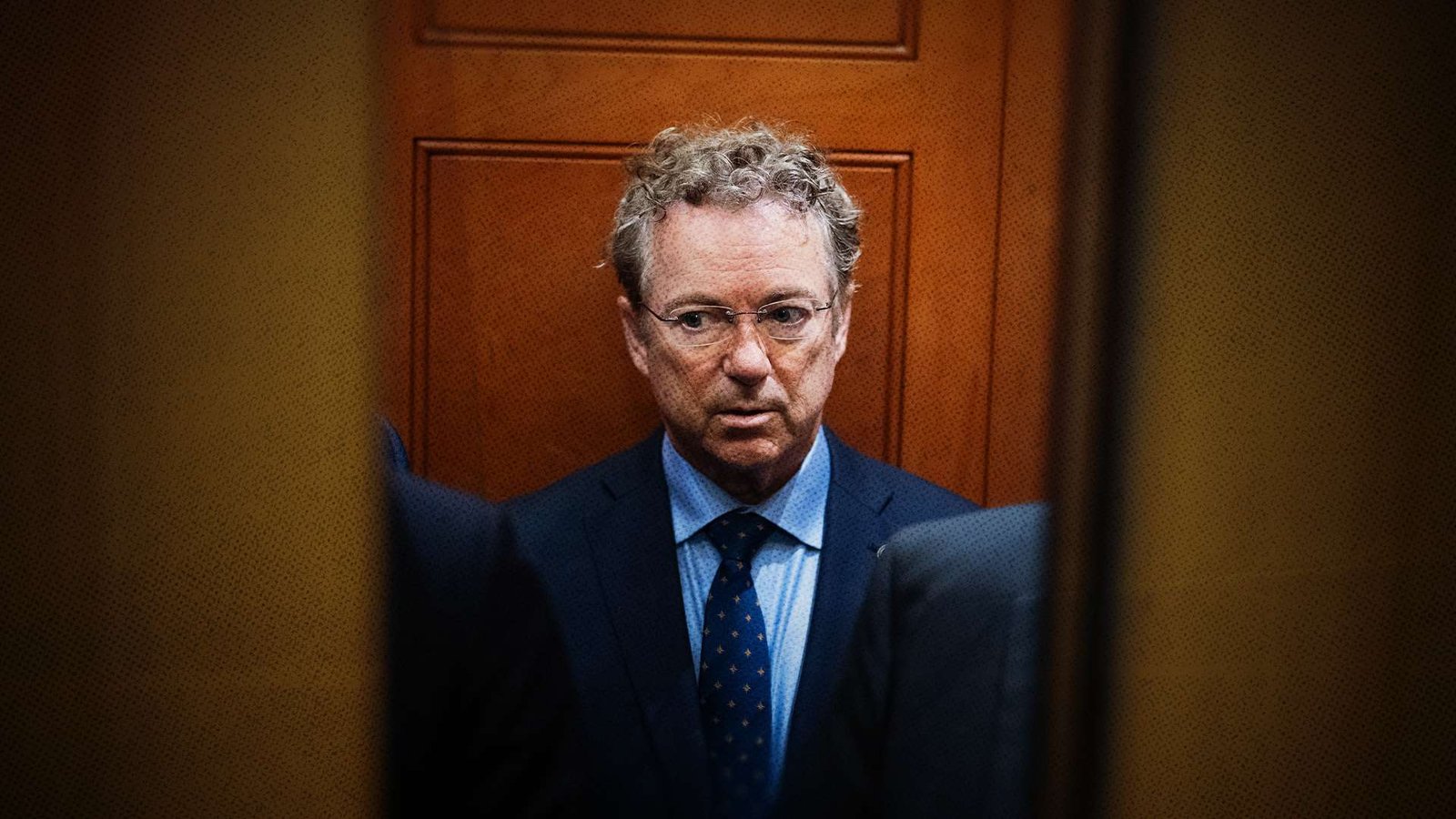
On Wednesday, Sen. Rand Paul (R–Ky.) blocked efforts to pass the Senate’s Kids Online Safety Act (KOSA)—a bill that would legally require platforms to “exercise reasonable care” in creating any “design feature” that could foreseeably harm minors—through unanimous consent (a fast-track procedure that would only pass if no senator objects). Paul objected, and because the Senate has left Washington until after the midterm elections, KOSA has been stalled for the time being.

“If good intentions created laws, or created good laws, there would be no need for congressional debate,” said Paul in his objection. “I have no doubt that the authors of this bill genuinely want to protect children, but the bill they have written promises to be a Pandora’s box of unintended consequences.” He argued that KOSA would “impose an unprecedented duty of care” on platforms, and that this will “inevitably lead” to “the stifling of First Amendment protected speech.”

“Free minds and parental guidance are the best means to protect our children online,” Paul added.

The bill has been floated in the halls of Congress for more than four years, and the free speech fight Paul raised this week has followed it almost from the beginning. In June, the House passed online-safety legislation incorporating parts of KOSA but omitted its “duty of care” requirement, while the Senate Commerce Committee advanced a version retaining it in August (which is the version Paul blocked).

Civil liberties groups have expressed concern that, in an attempt to moderate content that regulators deem harmful to children, platforms will inadvertently suppress lawful speech. According to the bill, such “harms” can include content about eating disorders, substance abuse, depression, anxiety, suicidal behaviors, harassment, drugs, tobacco, alcohol, and finances. These broad categories pave the way for widespread content moderation.

In an opposition letter to the House of Representatives, the American Civil Liberties Union (ACLU) outlined its First Amendment concern with the legislation. “In response to KOSA’s requirement that platforms establish ‘reasonable policies’ to address harms…platforms are likely to remove information that they think could cause those harms.”

While platforms “may intentionally over-censor to avoid liability, the problem will be compounded by imprecise content moderation methods,” the ACLU added. For example, a platform’s “content moderation algorithm may inadvertently remove information about addiction recovery, because it contains similar keywords as content that could cause kids to buy or drink alcohol.”

The “duty of care” provision is a red line for the Senate sponsors, Richard Blumenthal (D–Conn.) and Marsha Blackburn (R–Tenn.). In a June statement, the two scolded the House for removing the provision from their version of the legislation, arguing that it “is a pale imitation of Big Tech accountability.” They also refused to remove this provision from the Senate version: “We will not back down from the fight to pass the stronger, more widely supported version of the Kids Online Safety Act, and we will not greenlight hollow reforms that allow Big Tech’s predatory business model to remain intact.”

Free speech concerns aside, there seems to be widespread political consensus that social media is harmful to children, and that regulation must be the answer. The evidence is not so clean-cut. A 2022 umbrella review of 25 studies on adolescent mental health showed that “most reviews interpreted the associations between social media use and mental health as ‘weak’ or ‘inconsistent.'” A 2023 longitudinal study of 10- to 15-year-olds in the U.K. found “little evidence” that spending more time on social media predicted later mental health problems among adolescents once other factors were taken into account.

The benefits of social media rarely get a fair hearing either. A 2022 systematic review and meta-analysis found that online social support “may be associated with increased self-identity and life satisfaction, decreased loneliness and social anxiety,” and that “it also counteracts the negative effect of stress and cyberbullying on mental health.” For LGBTQ youth, social media is particularly important: A 2022 systematic review found that social media “may support the mental health and well-being of LGBTQ youths through peer connection, identity management, and social support.” Additionally, as Reason’s Elizabeth Nolan Brown reported, a 2026 JAMA Pediatrics study of fourth- through 12th-graders found that moderate use of online platforms was “associated with the best well-being outcomes,” better than children who abstain from social media entirely.

With the evidence around social media so mixed, Paul is right that parents, rather than federal regulators, are better placed to decide what is appropriate for their children. And giving platforms a legal duty to prevent broadly defined harms risks suppressing lawful—and potentially beneficial—speech in the process.

Read the full article here

Fact Checker

Verify the accuracy of this article using AI-powered analysis and real-time sources.

Get Your Fact Check Report

Enter your email to receive detailed fact-checking analysis

5 free reports remaining

Continue with Full Access

You've used your 5 free reports. Sign up for unlimited access!

Already have an account? Sign in here

#Democracy #MediaBias #PoliticalCoverage #PoliticalDebate #PublicOpinion
Share. Facebook Twitter Pinterest LinkedIn Tumblr Email Telegram Copy Link
News Room
  • Website
  • Facebook
  • X (Twitter)
  • Instagram
  • LinkedIn

The FSNN News Room is the voice of our in-house journalists, editors, and researchers. We deliver timely, unbiased reporting at the crossroads of finance, cryptocurrency, and global politics, providing clear, fact-driven analysis free from agendas.

Related Articles

Media & Culture

A Court Rules That San Francisco’s Empty Home Tax Is Illegal

23 minutes ago
Cryptocurrency & Free Speech Finance

Circle Pushes Back on MiCA’s Bank-Deposit Mandate for Stablecoins

37 minutes ago
Cryptocurrency & Free Speech Finance

California Subpoenas OpenAI Over AI Models That Hacked Their Way Out of a Test

2 hours ago
Media & Culture

2 Lawsuits Cast Further Doubt on the Claim That ICE Agent Jonathan Ross Killed Renée Good in Self-Defense

2 hours ago
Cryptocurrency & Free Speech Finance

Ethereum Now Lets You Pay for AI Without Revealing Who You Are

3 hours ago
Media & Culture

Would a Firing Squad Have Been More ‘Humane’ for Christa Pike?

3 hours ago
Add A Comment
Leave A Reply Cancel Reply

Editors Picks

CONNECT Recap: Hayes on Money Printing, Stablecoins and Onchain Finance

36 minutes ago

Circle Pushes Back on MiCA’s Bank-Deposit Mandate for Stablecoins

37 minutes ago

Rand Paul Was Right To Block the Senate’s Attempt To Censor the Internet

1 hour ago

Bank group sues U.S. regulator over granting crypto trust charters

2 hours ago
Latest Posts

European crypto users have ‘more faith’ in regulated firms under MiCA: Bitpanda co-CEO

2 hours ago

California Subpoenas OpenAI Over AI Models That Hacked Their Way Out of a Test

2 hours ago

2 Lawsuits Cast Further Doubt on the Claim That ICE Agent Jonathan Ross Killed Renée Good in Self-Defense

2 hours ago

Subscribe to News

Get the latest news and updates directly to your inbox.

At FSNN – Free Speech News Network, we deliver unfiltered reporting and in-depth analysis on the stories that matter most. From breaking headlines to global perspectives, our mission is to keep you informed, empowered, and connected.

FSNN.net is owned and operated by GlobalBoost Media
, an independent media organization dedicated to advancing transparency, free expression, and factual journalism across the digital landscape.

Facebook X (Twitter) Discord Telegram
Latest News

A Court Rules That San Francisco’s Empty Home Tax Is Illegal

23 minutes ago

CONNECT Recap: Hayes on Money Printing, Stablecoins and Onchain Finance

36 minutes ago

Circle Pushes Back on MiCA’s Bank-Deposit Mandate for Stablecoins

37 minutes ago

Subscribe to Updates

Get the latest news and updates directly to your inbox.

© 2026 GlobalBoost Media. All Rights Reserved.
  • Privacy Policy
  • Terms of Service
  • Our Authors
  • Contact

Type above and press Enter to search. Press Esc to cancel.

🍪

Cookies

We and our selected partners wish to use cookies to collect information about you for functional purposes and statistical marketing. You may not give us your consent for certain purposes by selecting an option and you can withdraw your consent at any time via the cookie icon.

Cookie Preferences

Manage Cookies

Cookies are small text that can be used by websites to make the user experience more efficient. The law states that we may store cookies on your device if they are strictly necessary for the operation of this site. For all other types of cookies, we need your permission. This site uses various types of cookies. Some cookies are placed by third party services that appear on our pages.

Your permission applies to the following domains:

  • https://fsnn.net
Necessary
Necessary cookies help make a website usable by enabling basic functions like page navigation and access to secure areas of the website. The website cannot function properly without these cookies.
Statistic
Statistic cookies help website owners to understand how visitors interact with websites by collecting and reporting information anonymously.
Preferences
Preference cookies enable a website to remember information that changes the way the website behaves or looks, like your preferred language or the region that you are in.
Marketing
Marketing cookies are used to track visitors across websites. The intention is to display ads that are relevant and engaging for the individual user and thereby more valuable for publishers and third party advertisers.