In brief
- President Trump signed an executive order Tuesday directing the NIH to spend $50 million on AI projects aimed at improving childhood cancer research and treatment.
- The initiative will fund scientific teams to enhance clinical trials, sharpen diagnoses, and develop better therapies using data from the Childhood Cancer Data Initiative.
- The announcement comes as the administration faces criticism for deep cuts to broader cancer research funding, including a proposed $2.7 billion reduction to the National Cancer Institute budget.
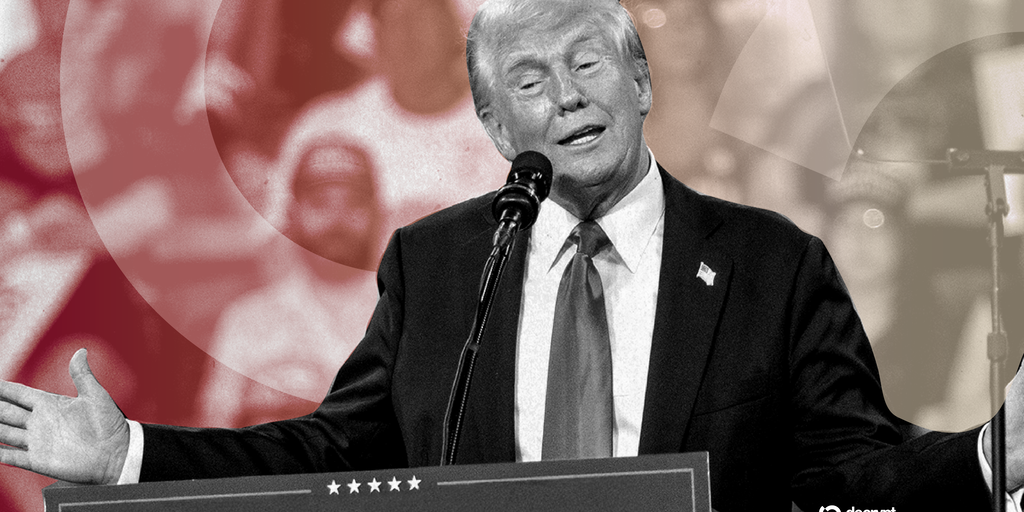
President Donald Trump signed an executive order Tuesday directing the National Institutes of Health to spend $50 million developing AI systems to analyze data related to childhood cancer, in a move the administration said could “fundamentally transform” how young cancer patients are treated in the United States.
“The treatments of the future will have the promise of a higher cure rate as well as lower side effects,” Jay Bhattacharya, director of the National Institutes of Health, told reporters Tuesday. “With this executive order, we have a real chance of making this promise real.”
A White House official told reporters Tuesday that, in the immediate term, the NIH will pay $50 million to scientific teams leveraging AI with the aim of improving childhood cancer-related clinical trials, sharpening diagnoses, fine-tuning treatments, discovering cures, and strengthening prevention strategies.
“The promise of AI is to allow us to understand how rare cancers can be managed well,” the official said. “The outcomes for patients with lung cancer, what lessons can they teach us for managing other cancers?”
More investments will come over time as the NIH implements today’s executive order, the official added.
The White House intends for AI research teams to rely largely on data collected via the Childhood Cancer Data Initiative, which Trump established in 2019 during his first term in office. The NIH may also direct some funding announced today towards improving its data collection operations.
It’s not yet known which AI companies will receive these government contracts, and it’s too early to say, according to the White House. The NIH will soon announce a call for research proposals on the subject, and an “open scientific competition” will see teams “evaluated by NIH processes on figures, peer review, [and] the most promising ideas,” a White House official said.
Under the second Trump administration, emerging technology companies have seen a boom in government contract work, even as the White House slashes research and spending across the board nationwide.
Numerous crypto companies, for instance, were tapped last month to bring federal agencies on-chain—making use of blockchain networks to store government data—an initiative that continues to expand.
Government spending cuts by the White House this year appear to have significantly impacted cancer research. In recent months, the Trump administration has already canceled hundreds of millions of dollars in cancer-related research grants and contracts; it has also pushed to reduce the federal government’s financial obligations in supporting federally funded cancer research labs.
The White House’s proposed budget for 2026 would also cut $2.7 billion worth of funding from the NIH’s cancer-focused wing, the National Cancer Institute—a budget reduction of over 37%.
When asked Tuesday how the childhood cancer AI initiative squares with the Trump administration’s recent, steep cuts to cancer research in other areas, the White House official pushed back.
“The president’s policy is to invest fully in cancer research,” they said, “so I guess I reject the premise of the question.”
Generally Intelligent Newsletter
A weekly AI journey narrated by Gen, a generative AI model.


 Freedom Index