Close Menu
FSNN | Free Speech News NetworkFSNN | Free Speech News Network
  • Home
  • News
    • Politics
    • Legal & Courts
    • Tech & Big Tech
    • Campus & Education
    • Media & Culture
    • Global Free Speech
  • Opinions
    • Debates
  • Video/Live
  • Community
  • Freedom Index
  • About
    • Mission
    • Contact
    • Support
Trending

Jewish Community Center’s Lawsuit Against “Goyim Defense League” Can Go Forward

11 minutes ago

CPJ urges Morocco to end press surveillance following Amnesty report 

23 minutes ago

NEAR Intents hit by $3.8M exploit, pauses cross-chain services in latest crypto hack

28 minutes ago
Facebook X (Twitter) Instagram
Facebook X (Twitter) Discord Telegram
FSNN | Free Speech News NetworkFSNN | Free Speech News Network
Market Data Newsletter
Thursday, October 1
  • Home
  • News
    • Politics
    • Legal & Courts
    • Tech & Big Tech
    • Campus & Education
    • Media & Culture
    • Global Free Speech
  • Opinions
    • Debates
  • Video/Live
  • Community
  • Freedom Index
  • About
    • Mission
    • Contact
    • Support
FSNN | Free Speech News NetworkFSNN | Free Speech News Network
Home»News»Media & Culture»Like Nikole Hannah-Jones, My Parents Put Ideology Over Pedagogy in Sending Me to Catholic School
Media & Culture

Like Nikole Hannah-Jones, My Parents Put Ideology Over Pedagogy in Sending Me to Catholic School

News RoomBy News Room2 hours agoNo Comments11 Mins Read1 Views
Share Facebook Twitter Pinterest Copy Link LinkedIn Tumblr Email VKontakte Telegram
Like Nikole Hannah-Jones, My Parents Put Ideology Over Pedagogy in Sending Me to Catholic School
Share
Facebook Twitter Pinterest Email Copy Link

Listen to the article

0:00
0:00

Key Takeaways

Playback Speed

Select a Voice

Writing in The New York Times, journalist and 1619 Project creator Nikole Hannah-Jones recently copped to the fact that she sent her daughter to poorly performing New York City public schools out of an ideological commitment to ending what she sees as structural or systemic racism, among other ills. She notes that she and her husband, who are both African American, attended integrated schools and benefited from the experience. Which helps to explain why her husband was at first steadfast against her plan. “As I told Faraji my plan, he slowly shook his head no. He wanted to look into parochial schools, or one of the ‘good’ public schools, or even private schools.”

But Hannah-Jones ultimately won the argument by standing firm to her political commitments. “I understood that so much of school segregation is structural,” she writes, “a result of decades of housing discrimination, of political calculations and the machinations of policy makers, of simple inertia. But I also believed that it is the choices of individual parents that uphold the system, and I was determined not to do what I’d seen so many others do when their values about integration collided with the reality of where to send their own children to school.”

“In Fighting for Every Black Child, Did I Betray My Own?” has become a viral sensation in large part because Hannah-Jones fully and openly documents the undeniably substandard education her daughter was receiving at places like P.S. 307, which is currently allocated at least $43,927 per pupil according to city databases (the amount is higher still if certain related costs like transportation and lunch programs are included). And because she includes not just her husband’s initial misgivings but her daughter’s unmitigated anger when she realizes her education was being sacrificed on her mother’s ideological altar. “Did you know my school was bad like this when you decided to put me here?” the daughter, Najya, asks early on. Later in the piece, Najya, now 16 years old and attending a competitive public high school of her own choosing, tells her mother, “Sometimes I wish instead of always thinking about other kids, you would have thought about me. I never really got the education I wanted.” In an episode of the popular radio program This American Life, Najya is harsher still, saying, “There’s no benefit that came out of you putting me in those schools. There’s no benefit at all. Could you tell me a benefit?”

Oddly—and unconvincingly—Hannah-Jones attacks “school choice” throughout her story, as if it is the problem rather than a solution for students trapped by limited educational opportunities. I’ll come back later to some of the ways in which I think Hannah-Jones’ analysis is deeply mistaken, but for the moment, I want to explain why the story struck me with such intensity, even though I graduated high school fully 45 years ago (!) in 1981.

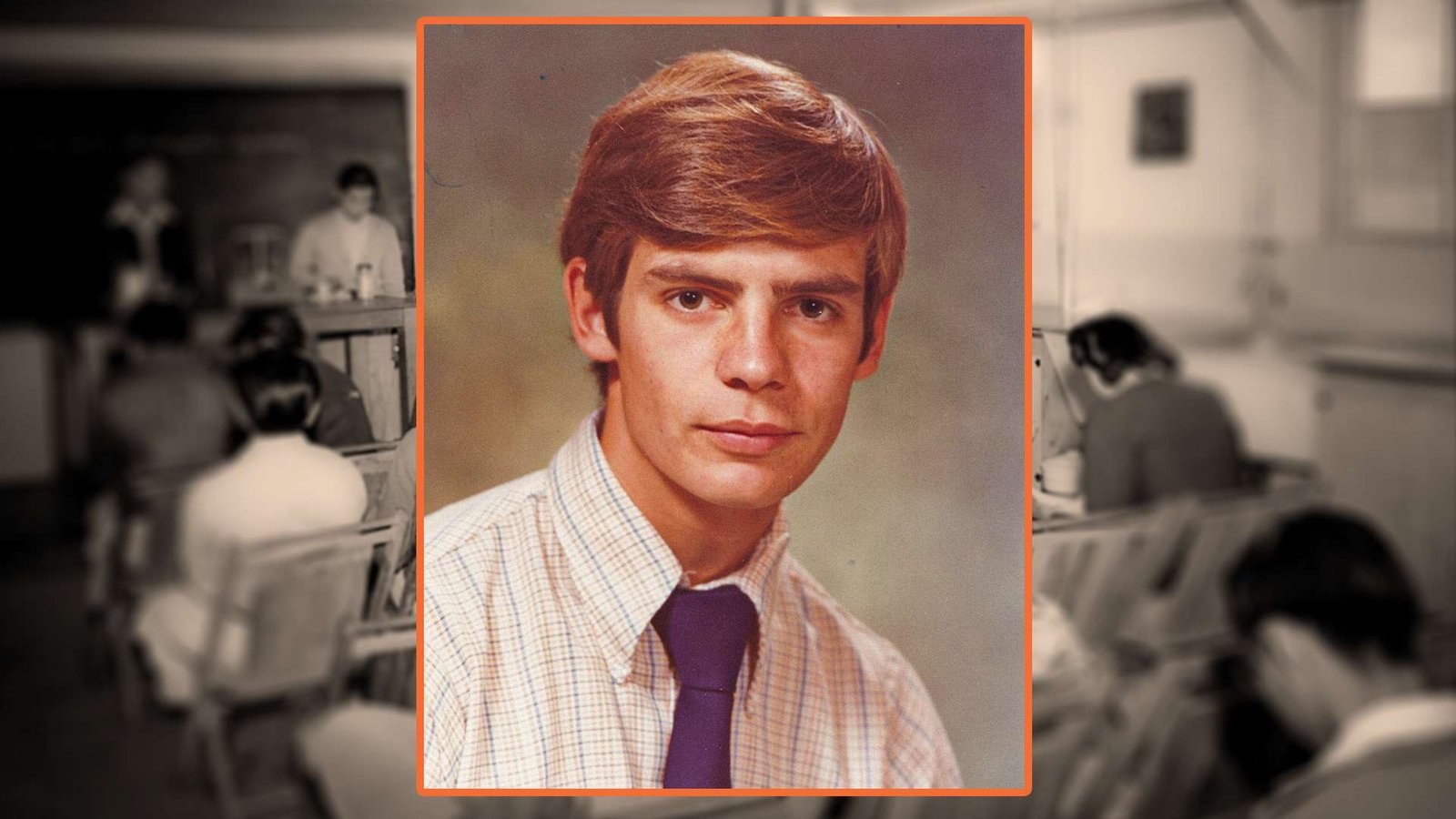
It’s because my parents, just like Nikole Hannah-Jones, sent me to clearly inferior schools because of a misplaced sense of duty borne out of the past. Ironically, this didn’t mean sending me to rotten public schools in a big city but to mediocre Catholic schools in the New Jersey suburbs in the 1970s.

My father and mother were born to Irish and Italian immigrants in the 1920s in New York City (father) and Waterbury, Connecticut (mother); their families were struggling long before the Great Depression hit and stayed that way until sometime after World War II. My parents married in 1950 and lived in Brooklyn but didn’t have kids for almost a decade (the youngest of three, I was born in 1963). Like many New Yorkers, they moved out of the city toward the end of the 1960s, buying the one house they would ever own in Middletown, New Jersey, about 50 miles away from Manhattan and then on the very edge of commuting distance.

My father was a high school dropout and worked as an officer manager for a shipping company. My mother graduated high school in 1945 on a business track and worked as a bookkeeper until she had kids. We had enough to eat, but money was always palpably tight, even after my mother went back to work when I was around 10 years old. On a few occasions as a teenager, I paid utility bills out of my savings from after school or summer jobs to avoid service interruptions (my deeply embarrassed folks always paid me back). My parents bought a car about once a decade, and it was always a stripped-down model. (For reasons that remain obscure to everyone but the salesman, they bought a 1979 Chevy Malibu that did not have even an AM radio, much less air conditioning.)

Through my whole childhood, we went on exactly two vacations (a four-day trip to Washington, D.C. and a weeklong stay at a beach cottage in Lavalette, New Jersey, a 35-mile drive from my hometown). Unlike some of my friends’ parents, my mother and father had no expensive hobbies, but even still, especially during the peak stagflation years of the 1970s, more than a few Christmases were as sparse as the branches on the artificial tree we used for about 20 years straight. Despite their own lack of education, they made it clear that my siblings and I would go to college but also were upfront that they would not be able to pay for it.

The one indulgence—if that’s the right term—they insisted on was sending my brother and sister and me to St. Mary’s, the local Catholic elementary school, even though the public school, Middletown Village, was closer and better appointed along virtually every conceivable dimension. When it came time to attend high school, they sent my brother to the expensive and highly regarded all-boys Christian Brothers Academy. That was a real reach for them, but so was Mater Dei, the now-shuttered parochial high school my sister and I attended. (They breathed a deep sigh of relief when I told them I didn’t want to attend an all-boys school.)

I know it was a reach for them because about two weeks before my graduation in 1981, I was called down to the principal’s office, where I was told that I owed $950 on a $1,000 tuition bill. My parents, it seemed, had paid a $50 deposit the previous August and then kept deferring the bill. If the account wasn’t settled, the principal said, I couldn’t get my diploma or walk during the ceremony. I scoffed at the news and told the principal that there must be some sort of mistake. But when I recounted the conversation to my parents that evening at dinner, they shrugged and said, “That sounds about right.” There was a kicker, too: They didn’t have the money on hand to pay the balance. So I footed the bill out of my own savings, which I’d earmarked for my coming stint at Rutgers University in the fall.

Among the several things that got under my skin was just how academically weak Mater Dei was compared to either of the two public high schools in Middletown. For instance, my school—which had a Latin name, fer chrissakes!—offered just two years of Latin, where the publics offered four. We had French and Spanish for three years; they had those for four years, plus German. Our math classes topped out at pre-calculus, where they offered college-equivalent courses in actual calculus. The primary and secondary schools I attended (and even paid of pocket for!) had no music instruction or bands of any sort. At the time, Middletown public school teachers were among the best paid in the state, whereas my high school teachers were reduced to working as lifeguards and waiters during the summers.

And yet sending me to these schools, no matter how threadbare or deficient, was a curious point of pride for my parents, who finally paid me back four years later when I graduated college. They drove up to New Brunswick, took me out to a fancy restaurant after the ceremony, and proudly gave me a cashier’s check for $1,000. I nodded, thought for a moment, felt a rush of simultaneous gratitude and anger, and then told them, “You know, it’s a little light if you add in interest.” My father, whose sense of sarcasm I had inherited, laughed, and my mother playfully slapped my hand.

It wasn’t until many years later that I learned why they were so committed to sending their kids to Catholic school, which they often called private school, to emphasize (I think) a sense of economic achievement and class advancement. In a similar way, they had insisted we learn how to swim properly and to play tennis—two activities that were the province only of swells when they were young and underprivileged. During a visit a year or so before he died in 1997, my father explained to me that when he was a kid in Brooklyn during the Depression, he attended schools run by St. Augustine’s parish. “We’re giving this to you for free, they told us, but we expect you to send your kids to Catholic schools when you have them.” And so he did.

And I felt that rush of gratitude and anger again, tipping more toward anger, if I’m being honest, as I realized again I had paid a bill I shouldn’t have had to. To their immense credit, and despite their lack of financial resources, my parents had always been kind and compassionate and supportive toward my siblings and me. Everything had turned out fine, and it’s hard to imagine how my life might have been different, or better, had I attended different schools as a kids.

Yet when I hear Nikole Hannah-Jones’ daughter say, “I never really got the education I wanted,” I feel it. When it comes to education, parents matter as much or more than any other factor at work. But just like generals, parents are often, if not always, fighting the last war. If mine were paying a debt incurred in the past (leave aside the dubiousness of extracting promises from struggling kids in the Depression), Hannah-Jones seemed determined to make her daughter replay a struggle that had already been fought. She and her husband attended integrated schools and thus “are both beneficiaries of educational opportunities that were forced into existence by generations of Black parents willing to put their most personal stake—their own children—in the fight for school equality for all Black children.”

Somehow that led to a decision to put Najya in a bad school despite options. As Stony Brook University sociologist Musa al-Gharbi writes, in many ways Hannah-Jones is simply play-acting. For instance, by her own account, she didn’t simply send her daughter to the school that she would have been assigned by residential status. Instead, she chose to send her to P.S. 307. And still, al-Gharbi argues:

Very little changed about her daughters’ life prospects as a result of being sent to these schools. It’s not like there’s a plausible scenario wherein NHJ’s kid is going to be unable to get into an elite school if she wants to go to college. She isn’t going to end up poor or working class (or even conventionally middle class) because her parents didn’t send her to elite K-12 schools. This is a fact.

He notes that Najya’s parents are multi-millionaires, that her mother is a MacArthur “Genius” Grant winner, a Pulitzer Prize winner, and an endowed chair at Howard University. The rest of us are not so lucky.

Yet an increasing number of parents are exercising all forms of choice. In New York City, that means pulling kids out of traditional public schools, with the nation’s largest school system losing about 123,000 students since the 2019–2020 school year. For the nation’s Catholic schools, it means decades of decline. In the mid-1960s, about 5.6 million children attended Catholic schools, but in 2025, that figure was just 1.7 million. Jude Schwalbach of Reason Foundation, the nonprofit that publishes this website, writes that all sorts of school choice programs are expanding in virtually every state.

We can only hope that parents are putting their kids’ interests above settling old scores.

Read the full article here

Fact Checker

Verify the accuracy of this article using AI-powered analysis and real-time sources.

Get Your Fact Check Report

Enter your email to receive detailed fact-checking analysis

5 free reports remaining

Continue with Full Access

You've used your 5 free reports. Sign up for unlimited access!

Already have an account? Sign in here

#CivicEngagement #FreePress #Journalism #PressFreedom #PublicOpinion
Share. Facebook Twitter Pinterest LinkedIn Tumblr Email Telegram Copy Link
News Room
  • Website
  • Facebook
  • X (Twitter)
  • Instagram
  • LinkedIn

The FSNN News Room is the voice of our in-house journalists, editors, and researchers. We deliver timely, unbiased reporting at the crossroads of finance, cryptocurrency, and global politics, providing clear, fact-driven analysis free from agendas.

Related Articles

Media & Culture

Jewish Community Center’s Lawsuit Against “Goyim Defense League” Can Go Forward

11 minutes ago
Cryptocurrency & Free Speech Finance

Citi Lifts 12-Month Bitcoin Target to $113K, Ethereum to $3K

30 minutes ago
Media & Culture

Will Texas Turn Blue?

1 hour ago
Cryptocurrency & Free Speech Finance

Minecraft, Candy Crush Among 11 Games in EU Virtual Currency Crackdown

2 hours ago
Media & Culture

Trump’s ‘Morally Binding’ New AI Guardrails Are Meaningless Pudding

2 hours ago
Cryptocurrency & Free Speech Finance

Morning Minute: Crypto Gives Up on Congress and Goes After Senators

3 hours ago
Add A Comment
Leave A Reply Cancel Reply

Editors Picks

CPJ urges Morocco to end press surveillance following Amnesty report 

23 minutes ago

NEAR Intents hit by $3.8M exploit, pauses cross-chain services in latest crypto hack

28 minutes ago

Stablecoins Can Drain From Banks And Nations At Lightning Speed

29 minutes ago

Citi Lifts 12-Month Bitcoin Target to $113K, Ethereum to $3K

30 minutes ago
Latest Posts

Will Texas Turn Blue?

1 hour ago

          As news broke that 84,270 people, including more than 32,000 children, had been affected by Nepal’s catastrophic floods, one visual offered something the world desperately needed in the moment: hope. The video shows a little girl, buried under thick mud, being is rescued by Nepal’s emergency teams. Instinctively, the viewer roots for her as rescuers carry her to safety, wrapping her shivering body in a red shawl. But the most moving moment of the video comes towards the end. The girl is sitting motionless in a relief camp, an officer feeding her warm soup. As the camera lingers on her face, a faint smile almost begins to show. It is the kind of image that can offer the viewer respite from the horrors of a humanitarian crisis. The video rapidly spread rapidly across all social media platforms, with commentators calling it a miracle. Of sorts. In fact, it was an AI miracle. Agence France-Presse (AFP) Fact Check’s investigation led them to an India-based creator, who admitted creating the video with the help of AI-generative tools. His justification was disarmingly straightforward: emotionally engaging visuals perform well online. This was just one of the many digitally-manufactured “miracles” put into social media heavy rotation during the floods. Another clip, showing a bridge collapsing into floodwaters swallowing vehicles and human lives, seemed to have been lifted straight out of a Roland Emmerich disaster film. The video racked up more than 2 million views on X before it was debunked as AI-generated by Factly. What made this social media post stand out for me was the identity of one of the people sharing it – an experienced news editor. The post, still pinned on his X profile and with more than 2 million views, suggests that even experienced newsroom decision-makers could be fooled by synthetic disaster footage – or, worse still, be untroubled about the veracity of such videos. Both videos incorporate the visual language of short films, but were not released in cinemas or on Netflix. They surfaced on Facebook, X and Instagram, even as emergency teams continued to search for the thousands of people that went missing after a glacial collapse triggered devastating floods in Nepal and Tibet on August 26. Even as survivors photographed authentic eyewitness footage, synthetic visuals emerged alongside them. The floods became one of the first major climate disasters in South Asia where documentation and fabrication coexisted in the same visual ecosystem.     Screenshot of debunked Nepal floods footage “During earlier disasters, our primary challenge was identifying old footage, establishing where a video was recorded and determining whether it was being presented in the correct context,” Saurabh Shukla told Index. Shukla is founder and editor-in-chief of NewsMobile, an India-based independent media organisation that debunks AI-related deepfakes and focuses on verified information. “The biggest difference today is the sheer speed at which fabricated and misleading visuals entered the information ecosystem,” Shukla said. “With generative AI, we now have an additional challenge – determining whether the event depicted in a video ever happened in the first place.” This has fed into a media environment where unverified visuals are disseminated faster than the verified facts reported by journalists. “Speed without verification can amplify confusion, while verification without timely reporting can leave an information vacuum,” Shukla said. “The challenge for newsrooms is to strike the right balance between being fast and being accurate.” The first images of rescue missions in secluded mountainous regions almost always come from locals, and thus forming the spine of disaster reporting. These inevitably blurry and shaky recordings do not have the polished quality of professional news reporting, but do carry something far more consequential: the credibility that comes with eyewitness documentation. These images often shape the core of the collective memory of a tragedy. But in an age of visual manipulation and trickery, that presumption of authenticity no longer holds. Factly conducted 30 fact-checks into coverage of the Nepal floods; fully one-third involved AI-generated visuals. “Beyond checking the location, source, and context of a visual, we also had to establish whether the visual itself was authentic,” Akshay Kumar Appani, lead fact checker and researcher at Factly, told Index. “During breaking disasters, old AI-generated visuals can spread rapidly while being presented as current footage. This makes it harder for journalists to establish the truth. The visual of the miracle child perfectly captured this dilemma. It was designed to evoke an emotional reaction; but it also looked like the kind of footage that journalists hope to find during crisis reporting. The video was vertically filmed. The camera movement was wobbly. The lighting was grainy. The muffled background sound felt believable. The video presented none of the glaring distortions that once made AI interventions easy to spot. Fabricated videos, today, can be produced to mimic the aesthetics of authentic citizen journalism. It was for this precise reason that the floods presented journalists with a crisis that went beyond recognising AI-generated images: they were increasingly obliged to verify whether the footage reaching them was genuine in the first place. Screenshot of video debunked by Factly Newsmobile’s verification process increasingly involves examining individual frames, conducting reverse-image searches, analysing visual inconsistencies and using AI-detection tools where appropriate. “However, detection tools are only one part of the process. We still need corroboration,” Shukla said. “We cannot rely solely on automated detection tools,” Sumit Dubey, South Asia digital verification editor for AFP’s Fact Check vertical, told Index. Fact-checking, he explained, requires going beyond automated outputs: tracing the original source, examining context, verifying metadata, looking for corroborating evidence and, where possible, speaking to relevant sources. “Automated tools are useful indicators, but fact-checking cannot be outsourced to a button,” Dubey said. The proliferation of synthetic media output in the wake of natural disasters is not new. It’s the sophistication of the output that has changed. For years, much of the public conversation around AI manipulation centred on faces: celebrity deepfakes, altered political speeches and fabricated portraits. The Nepal floods flipped that narrative. Almost every fabricated clip featured rivers, glaciers, collapsing hillsides, dams, flooded valleys or stranded animals. “AI-generated environmental content poses a different problem: [the] tells are failures of physics rather than anatomy,” Mahsa Alimardani told Index. Alimardani is associate director for technology threats and opportunities at Witness, a global organisation helping people use video and technology to protect and defend human rights This explains why the Nepal videos were so plausible. The miracle girl video wasn’t believable just because of her facial expressions. It was convincing because the sludge moved convincingly, because the choreography resembled actual emergency rescues, because the emotional tonality seemed genuine. “Most post-hoc detection tools were designed for content featuring physical characteristics, and they currently struggle significantly with environmental and disaster content,” Bruna Martins dos Santos – policy and advocacy manager, Witness Technology Threats and Opportunities – told Index. “Journalists might also struggle because many tools have limited capabilities to identify synthetic content generated elsewhere,” she said. Another emerging trend is the increasingly complicated role of Big Tech itself in detecting and labelling fake generative-AI content. Some of the clearest AI verdicts came from detection tools built by the very same companies whose models created the same fakes. Three weeks after the US state of California and the EU mandated the requirement for greater transparency with respect to AI-generated content, Witness and Indicator tested thirteen major AI providers. They found that seven had no public detector at all. “The capability to identify synthetic content partly existed. The governance around it did not,” Alimardani said. When both authentic and synthetic content circulate in disaster situations, the biggest challenge that journalists face is that of establishing truth amidst widespread public uncertainty and doubt. According to Martins dos Santos, “Journalists and local fact-checkers can face immense time pressure, often wasting scarce resources re-detecting the same recycled disaster footage across multiple platforms and languages.” The greatest danger emerging from Nepal may not be that people believed the fake videos. It may be that they have begun to doubt the real ones. Shukla’s concern is that people may stop trusting visual evidence altogether. “Imagine a situation where genuine footage of a disaster emerges, but people dismiss it as AI-generated. Facts become secondary to perception.” Within days of the floods, even authentic CCTV footage from the Gyirong border was being perceived as AI-generated, prompting fact-checkers to establish that the scenes it depicted were real. This exposed a troubling issue: even authentic visuals can no longer be taken at face value. Martins dos Santos told Index that the phenomenon has a name: “Liar’s dividend”, whereby the mere existence of convincing synthetic content allows bad actors to dismiss genuine, damaging evidence as fake simply by claiming it was AI-generated. This means that genuine footage is no longer accorded credibility immediately; it may first be perceived with suspicion. “This means a video may look completely authentic and still be fabricated. Conversely, genuine footage can contain compression artefacts that make it appear suspicious,” Shukla warned. Appani, for his part, noted that synthetic media doesn’t merely affect verification in real time. It also reshapes collective memory. “Widely circulated synthetic or recycled footage may eventually be remembered as genuine imagery from the disaster. Generative-AI could therefore affect not only how disasters are verified in real-time, but also how they are documented and remembered in the future.”The Nepal floods left destruction in its wake, and also a warning for journalists covering climatic disaster. The defining challenge of disaster reporting is no longer capturing the first image, but establishing which image the world can trust. In Shukla’s words: “For fact-checkers, the challenge is not just determining whether a video is real. It is establishing whether it actually belongs to the event it claims to depict.” READ MORE

1 hour ago

Illinois agrees to six-month delay of crypto tax as industry continues court battle

1 hour ago

Subscribe to News

Get the latest news and updates directly to your inbox.

At FSNN – Free Speech News Network, we deliver unfiltered reporting and in-depth analysis on the stories that matter most. From breaking headlines to global perspectives, our mission is to keep you informed, empowered, and connected.

FSNN.net is owned and operated by GlobalBoost Media
, an independent media organization dedicated to advancing transparency, free expression, and factual journalism across the digital landscape.

Facebook X (Twitter) Discord Telegram
Latest News

Jewish Community Center’s Lawsuit Against “Goyim Defense League” Can Go Forward

11 minutes ago

CPJ urges Morocco to end press surveillance following Amnesty report 

23 minutes ago

NEAR Intents hit by $3.8M exploit, pauses cross-chain services in latest crypto hack

28 minutes ago

Subscribe to Updates

Get the latest news and updates directly to your inbox.

© 2026 GlobalBoost Media. All Rights Reserved.
  • Privacy Policy
  • Terms of Service
  • Our Authors
  • Contact

Type above and press Enter to search. Press Esc to cancel.

🍪

Cookies

We and our selected partners wish to use cookies to collect information about you for functional purposes and statistical marketing. You may not give us your consent for certain purposes by selecting an option and you can withdraw your consent at any time via the cookie icon.

Cookie Preferences

Manage Cookies

Cookies are small text that can be used by websites to make the user experience more efficient. The law states that we may store cookies on your device if they are strictly necessary for the operation of this site. For all other types of cookies, we need your permission. This site uses various types of cookies. Some cookies are placed by third party services that appear on our pages.

Your permission applies to the following domains:

  • https://fsnn.net
Necessary
Necessary cookies help make a website usable by enabling basic functions like page navigation and access to secure areas of the website. The website cannot function properly without these cookies.
Statistic
Statistic cookies help website owners to understand how visitors interact with websites by collecting and reporting information anonymously.
Preferences
Preference cookies enable a website to remember information that changes the way the website behaves or looks, like your preferred language or the region that you are in.
Marketing
Marketing cookies are used to track visitors across websites. The intention is to display ads that are relevant and engaging for the individual user and thereby more valuable for publishers and third party advertisers.