Close Menu
FSNN | Free Speech News NetworkFSNN | Free Speech News Network
  • Home
  • News
    • Politics
    • Legal & Courts
    • Tech & Big Tech
    • Campus & Education
    • Media & Culture
    • Global Free Speech
  • Opinions
    • Debates
  • Video/Live
  • Community
  • Freedom Index
  • About
    • Mission
    • Contact
    • Support
Trending

Whatever Happened to Trump’s Housing Affordability Executive Order?

23 minutes ago

Anthropic Lost $42 Billion Last Year. It Wants to Go Public at $2 Trillion

48 minutes ago

Kids Are Using NPR Podcast Comments as Secret Group Chats

1 hour ago
Facebook X (Twitter) Instagram
Facebook X (Twitter) Discord Telegram
FSNN | Free Speech News NetworkFSNN | Free Speech News Network
Market Data Newsletter
Wednesday, September 30
  • Home
  • News
    • Politics
    • Legal & Courts
    • Tech & Big Tech
    • Campus & Education
    • Media & Culture
    • Global Free Speech
  • Opinions
    • Debates
  • Video/Live
  • Community
  • Freedom Index
  • About
    • Mission
    • Contact
    • Support
FSNN | Free Speech News NetworkFSNN | Free Speech News Network
Home»News»Media & Culture»Kids Are Using NPR Podcast Comments as Secret Group Chats
Media & Culture

Kids Are Using NPR Podcast Comments as Secret Group Chats

News RoomBy News Room1 hour agoNo Comments4 Mins Read1 Views
Share Facebook Twitter Pinterest Copy Link LinkedIn Tumblr Email VKontakte Telegram
Kids Are Using NPR Podcast Comments as Secret Group Chats
Share
Facebook Twitter Pinterest Email Copy Link

Listen to the article

0:00
0:00

Key Takeaways

Playback Speed

Select a Voice

Some teens have been using the comments section of an NPR podcast as a group chat to communicate with one another.

Ella, 14, is not allowed on social media. She is, however, allowed on Spotify. She and about 20 friends, most of whom were girls with parents who didn’t let them on social media, decided to communicate with one another by creating playlists on Spotify, naming them something along the lines of “chat here,” adding one podcast, and telling their friends to chat in the comments.

When asked why they chose NPR shows to chat under, Ella said that they “just looked for podcasts that didn’t have many comments.” Ouch.

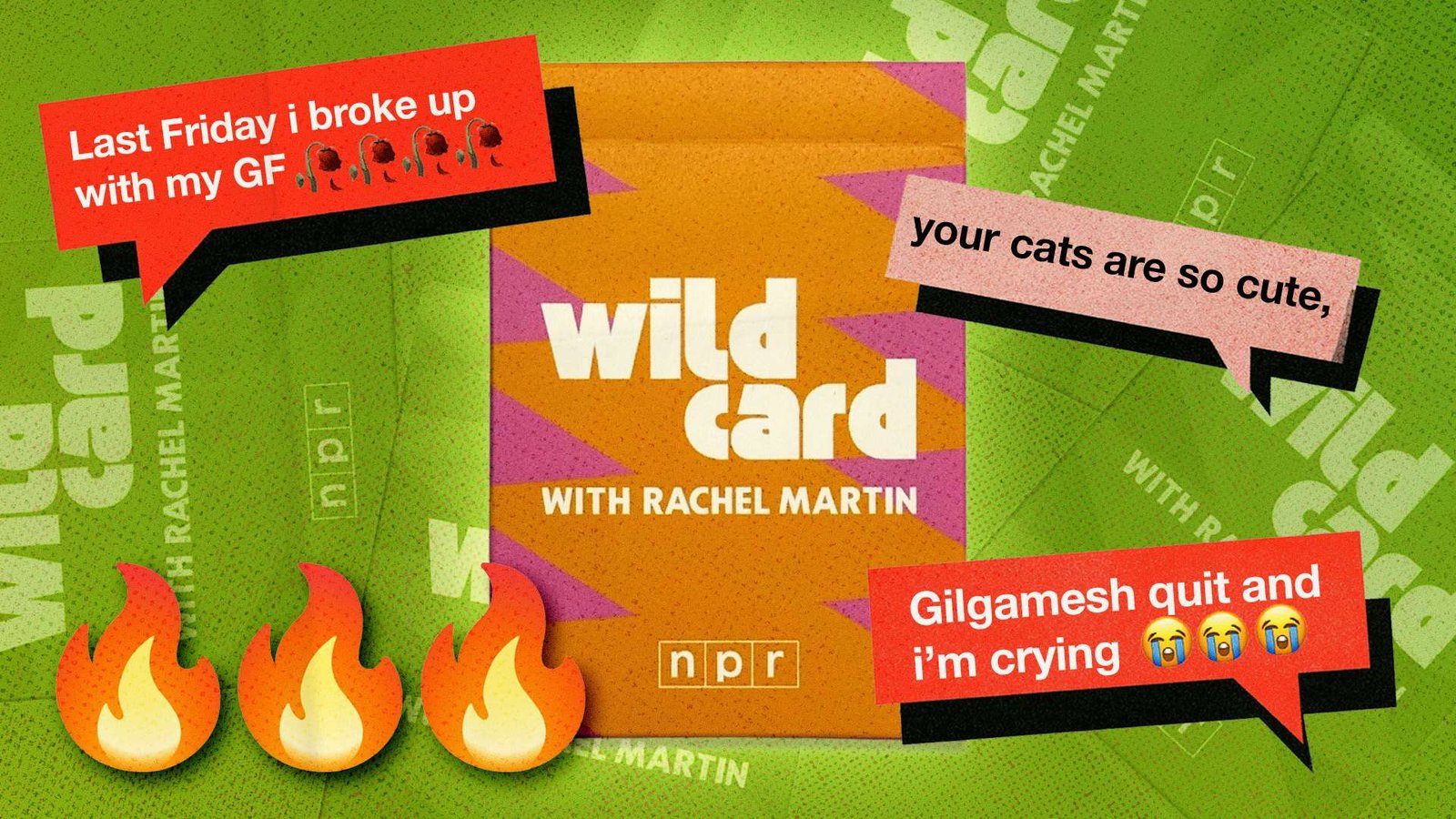
The discovery was made by Dave Blanchard, who runs NPR’s Wild Card and keeps an eye on the comments that people post about the show. Last year, he noticed new comments on an episode: “Gilgamesh quit and I’m crying,” “Last Friday I broke up with my GF,” “Your cats are so cute,” “You’re gorgeous in that dress. OML, pink heart.”

The comments seemed like “gibberish” to Blanchard, who told This American Life that he thought the accounts were bots. “They’re just these clipped, weird, incoherent postings,” he said. “But the fact that they were all from different accounts seemed very weird. And the fact that they also maybe seemed to be interacting in some way also seemed weird and not like typical bot behavior.”

After assuming they were bots, Blanchard deleted the comments, but then noticed new ones pop up. One account said that their comment was deleted. “That felt very strange that a bot would be able to recognize that the thread got deleted and post it, letting people know that it had been deleted,” Blanchard told This American Life.

He decided to investigate further. After posting some screenshots to NPR’s Slack, his Gen Z colleague “almost immediately” recognized that “these are kids,” partly because of the display names, some of which contain special character emojis.

Teens want to communicate with other teens—and are incredibly resourceful in making that happen. Indeed, this is not the first time that children have been found using the comments section as their very own reinvented chat room where adults won’t think to look.

In October 2025, Fiona Geiran, who works on NPR’s TED Radio Hour, made a similar discovery. “So one of my responsibilities on my team is to monitor our Spotify comments,” she told the How To Do Everything podcast. “And for the most part, we mostly get really, like, nice comments or people engaging with our content, giving constructive feedback or saying how much they liked it. But about three weeks ago, I noticed kind of a different floodgate situation. And the first instance was only about 20 comments.”

The comments were similar. Geiran described them as a lot of “You’re so pretty,” “No, you’re so pretty.” She began to question why an episode published three years prior would suddenly spark a discussion about beauty.

It turned out, Geiran suspects, that the comments were from kids. “Maybe this is just a way to get around a classroom phone-free situation,” said Geiran. “Maybe they can have their laptops out, but they can’t have Instagram open, or Spotify is the only thing they’re allowed to have.”

Of course, kids have found workarounds to social media bans. In 2019, The Atlantic reported that middle and high schoolers were using Google Docs to speak to their peers.

With social media bans for minors catching on across the world (Australia, Canada, Malaysia, and the United Kingdom, to name a few), there is an obvious lesson here: Kids adapt and get around bans. In Australia, the first country to introduce a ban on social media for those under the age of 16, around 70 percent of children who already had accounts on Instagram, Snapchat, TikTok, or Facebook still had them after the ban went into effect.

Kids want to communicate with one another, and they are remarkably good at turning whatever corner of the internet that remains available into a social space of their own. Perhaps lawmakers ought to give them more credit.

Read the full article here

Fact Checker

Verify the accuracy of this article using AI-powered analysis and real-time sources.

Get Your Fact Check Report

Enter your email to receive detailed fact-checking analysis

5 free reports remaining

Continue with Full Access

You've used your 5 free reports. Sign up for unlimited access!

Already have an account? Sign in here

#IndependentMedia #MediaAndPolitics #PoliticalMedia #PressFreedom #PublicOpinion
Share. Facebook Twitter Pinterest LinkedIn Tumblr Email Telegram Copy Link
News Room
  • Website
  • Facebook
  • X (Twitter)
  • Instagram
  • LinkedIn

The FSNN News Room is the voice of our in-house journalists, editors, and researchers. We deliver timely, unbiased reporting at the crossroads of finance, cryptocurrency, and global politics, providing clear, fact-driven analysis free from agendas.

Related Articles

Media & Culture

Whatever Happened to Trump’s Housing Affordability Executive Order?

23 minutes ago
Cryptocurrency & Free Speech Finance

Anthropic Lost $42 Billion Last Year. It Wants to Go Public at $2 Trillion

48 minutes ago
Cryptocurrency & Free Speech Finance

Cboe’s New S&P Deal Opens the Door to Tokenized Options

2 hours ago
Media & Culture

Beware the Rush to Judgment in the Cornell Rape Case

2 hours ago
Cryptocurrency & Free Speech Finance

Ethereum Gets Another Privacy Boost as Aztec Brings Back zk.money

3 hours ago
Media & Culture

Eleventh Circuit Upholds Restriction on Referring to “Settlement” of Trump v. IRS,

3 hours ago
Add A Comment
Leave A Reply Cancel Reply

Editors Picks

Anthropic Lost $42 Billion Last Year. It Wants to Go Public at $2 Trillion

48 minutes ago

Kids Are Using NPR Podcast Comments as Secret Group Chats

1 hour ago

Robinhood (HOOD) adds AI agents, perps and weekend trading in push to win active traders

2 hours ago

Greece Gets First MiCA Entrants, HCMC Denies Binance-Lagarde Claim

2 hours ago
Latest Posts

Cboe’s New S&P Deal Opens the Door to Tokenized Options

2 hours ago

Beware the Rush to Judgment in the Cornell Rape Case

2 hours ago

OpenAI valuation could hit $1.4T in new funding round: Report

3 hours ago

Subscribe to News

Get the latest news and updates directly to your inbox.

At FSNN – Free Speech News Network, we deliver unfiltered reporting and in-depth analysis on the stories that matter most. From breaking headlines to global perspectives, our mission is to keep you informed, empowered, and connected.

FSNN.net is owned and operated by GlobalBoost Media
, an independent media organization dedicated to advancing transparency, free expression, and factual journalism across the digital landscape.

Facebook X (Twitter) Discord Telegram
Latest News

Whatever Happened to Trump’s Housing Affordability Executive Order?

23 minutes ago

Anthropic Lost $42 Billion Last Year. It Wants to Go Public at $2 Trillion

48 minutes ago

Kids Are Using NPR Podcast Comments as Secret Group Chats

1 hour ago

Subscribe to Updates

Get the latest news and updates directly to your inbox.

© 2026 GlobalBoost Media. All Rights Reserved.
  • Privacy Policy
  • Terms of Service
  • Our Authors
  • Contact

Type above and press Enter to search. Press Esc to cancel.

🍪

Cookies

We and our selected partners wish to use cookies to collect information about you for functional purposes and statistical marketing. You may not give us your consent for certain purposes by selecting an option and you can withdraw your consent at any time via the cookie icon.

Cookie Preferences

Manage Cookies

Cookies are small text that can be used by websites to make the user experience more efficient. The law states that we may store cookies on your device if they are strictly necessary for the operation of this site. For all other types of cookies, we need your permission. This site uses various types of cookies. Some cookies are placed by third party services that appear on our pages.

Your permission applies to the following domains:

  • https://fsnn.net
Necessary
Necessary cookies help make a website usable by enabling basic functions like page navigation and access to secure areas of the website. The website cannot function properly without these cookies.
Statistic
Statistic cookies help website owners to understand how visitors interact with websites by collecting and reporting information anonymously.
Preferences
Preference cookies enable a website to remember information that changes the way the website behaves or looks, like your preferred language or the region that you are in.
Marketing
Marketing cookies are used to track visitors across websites. The intention is to display ads that are relevant and engaging for the individual user and thereby more valuable for publishers and third party advertisers.