Close Menu
FSNN | Free Speech News NetworkFSNN | Free Speech News Network
  • Home
  • News
    • Politics
    • Legal & Courts
    • Tech & Big Tech
    • Campus & Education
    • Media & Culture
    • Global Free Speech
  • Opinions
    • Debates
  • Video/Live
  • Community
  • Freedom Index
  • About
    • Mission
    • Contact
    • Support
Trending

Metaplanet board defends controversial executive equity scheme

1 minute ago

Standard Chartered Sees ENA at $2, USDe at $40B by 2028

4 minutes ago

FBI Tells Its Employees to Assume Hackers Have Their Personal Data

6 minutes ago
Facebook X (Twitter) Instagram
Facebook X (Twitter) Discord Telegram
FSNN | Free Speech News NetworkFSNN | Free Speech News Network
Market Data Newsletter
Wednesday, September 30
  • Home
  • News
    • Politics
    • Legal & Courts
    • Tech & Big Tech
    • Campus & Education
    • Media & Culture
    • Global Free Speech
  • Opinions
    • Debates
  • Video/Live
  • Community
  • Freedom Index
  • About
    • Mission
    • Contact
    • Support
FSNN | Free Speech News NetworkFSNN | Free Speech News Network
Home»News»Campus & Education»The Biden-era Title IX rule was already dead. Now it’s off the books.
Campus & Education

The Biden-era Title IX rule was already dead. Now it’s off the books.

News RoomBy News Room1 day agoNo Comments4 Mins Read1 Views
Share Facebook Twitter Pinterest Copy Link LinkedIn Tumblr Email VKontakte Telegram
The Biden-era Title IX rule was already dead. Now it’s off the books.
Share
Facebook Twitter Pinterest Email Copy Link

Listen to the article

0:00
0:00

Key Takeaways

Playback Speed

Select a Voice

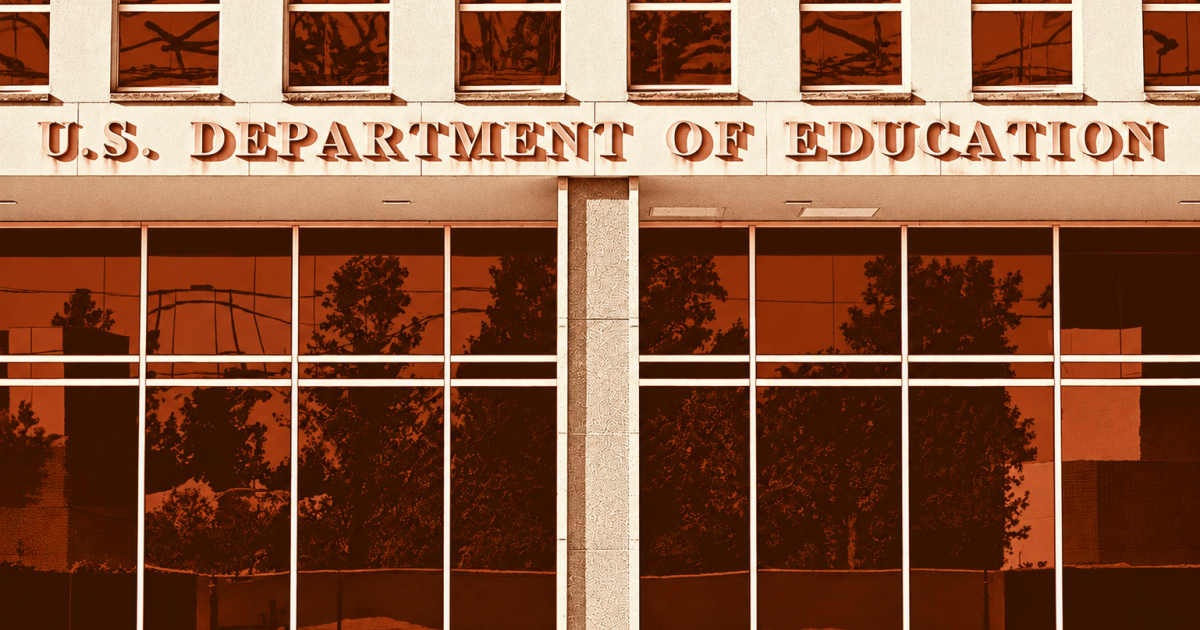
Yesterday, the Department of Education formally repealed the Biden administration’s 2024 Title IX regulations and restored the 2020 rule promulgated during the first Trump administration. The repeal does little to change the status quo; federal courts already vacated the unlawful 2024 rule nationwide and ED has enforced the 2020 regulation for over a year and a half now. But the move does remove the last source of ambiguity by making the Code of Federal Regulations match the rule that is actually in force.

For civil liberties advocates, this development is welcome news. 

When the Biden administration released its rule in April 2024, we warned that it would unconstitutionally undermine students’ free speech and due process rights. The 2024 rule sought to replace the 2020 regulation’s speech-protective harassment standard — a standard required by the Supreme Court of the United States — and eliminated important procedural protections, including mandatory live hearings and cross-examination in higher education proceedings. FIRE raised those concerns during the rulemaking process, arguing that the proposed changes violated the First Amendment and a growing body of case law requiring fair proceedings in campus disciplinary cases. 

A federal agency cannot require universities — public or private — to punish constitutionally protected speech. Nor should it pressure institutions to abandon important procedural protections when they are needed most: when students are facing potentially life-altering disciplinary sanctions. (Much of the public debate over the 2024 rule centered on its treatment of gender identity, but that debate lies beyond FIRE’s institutional concerns. Our objections center on civil liberties and exist independently from the Title IX rule’s impact on athletics or other disputes over the meaning of “sex.”) 

Chilled into silence at Whitman College

Faced with backlash from student government, Whitman College’s Republican Club will not reapply for recognition. This is how the censors win.


Read More

Federal courts repeatedly found serious problems with the 2024 rule; eight courts preliminarily blocked its enforcement. In Tennessee v. Cardona, for example, a federal district court concluded, among other things, that the expanded harassment definition violated the First Amendment by compelling speech and chilling protected expression. 

The contrast with the 2020 regulations is instructive. That rule, which FIRE defended in federal court, largely survived the multiple legal challenges brought against it. One district court invalidated a single sentence governing the treatment of statements by parties or witnesses who did not submit to cross-examination. The remainder of the 2020 framework survived. 

Even ATIXA, a leading association of Title IX administrators that criticized parts of the 2020 framework, acknowledged during the litigation over the Biden rule that the 2020 regulations were fair: “We know them. We understand them. They’re fair. They’re workable, even if not ideal.”

The 2020 rule contains protections FIRE sought for years. It uses the Supreme Court’s constitutional, speech-protective standard for student-on-student harassment, limiting actionable harassment to unwelcome conduct that is “so severe, pervasive, and objectively offensive, and that so undermines and detracts from the victims’ educational experience, that the victim-students are effectively denied equal access to an institution’s resources and opportunities.”

The rule also requires colleges to provide live hearings where parties can test relevant evidence through questioning, requires an institution to disclose all of the evidence in its possession, provides a presumption of innocence, and requires institutions to allow students an advisor of their choice, who can be an attorney. 

Those protections are not obstacles to enforcing Title IX. They are basic requirements of fundamental fairness, increasingly recognized by courts after the Obama administration pressured institutions to weaken due process for accused students. They produce more reliable outcomes and reduce the risk that schools will face successful lawsuits over flawed disciplinary procedures. We should want schools to get these difficult proceedings right the first time, for the benefit of everyone involved. 

The alternative is the sort of ping-pong between campus proceedings and federal courts that became far too common following the Obama administration’s infamous “Dear Colleague” letter. Accused students suffer obvious harm. Complainants do, too, when defective procedures force them through a process that can drag on for years instead of being handled correctly the first time. And when institutions repeatedly get these cases wrong, public trust erodes. 

The Education Department’s latest action therefore does something useful even though federal courts already settled the immediate legal question. Until now, anyone searching the Code of Federal Regulations would still find regulatory text that had been declared unlawful and was no longer being enforced. The Department itself acknowledges that this created unnecessary uncertainty for schools, students, parents, and courts. The repeal removes the invalid provisions and reaffirms the 2020 rule. 

After years of regulatory uncertainty, clarity is welcome. 

Read the full article here

Fact Checker

Verify the accuracy of this article using AI-powered analysis and real-time sources.

Get Your Fact Check Report

Enter your email to receive detailed fact-checking analysis

5 free reports remaining

Continue with Full Access

You've used your 5 free reports. Sign up for unlimited access!

Already have an account? Sign in here

#AcademicFreedom #FirstAmendment #FreeSpeechOnCampus #HigherEd #OpenDebate #UniversityLife Bidenera books dead rule Title
Share. Facebook Twitter Pinterest LinkedIn Tumblr Email Telegram Copy Link
News Room
  • Website
  • Facebook
  • X (Twitter)
  • Instagram
  • LinkedIn

The FSNN News Room is the voice of our in-house journalists, editors, and researchers. We deliver timely, unbiased reporting at the crossroads of finance, cryptocurrency, and global politics, providing clear, fact-driven analysis free from agendas.

Related Articles

Media & Culture

Americans Are Wealthier Than 30 Years Ago. Here’s the Data To Prove It.

2 hours ago
Campus & Education

Pepperdine banned a professor who taught about a black Jesus

4 hours ago
Legal & Courts

Will Trump Administration Officials Be Held Accountable for Defying a Court Order? The Courts Are Still Deciding.

4 hours ago
Media & Culture

No Sealing of Property Information in Motion Challenging Diversity Jurisdiction

9 hours ago
Media & Culture

No, libertarians don’t only care about ‘weed and porn’

1 day ago
Legal & Courts

Your Questions Answered: How the ACLU Is Safeguarding the 2026 Midterms

1 day ago
Add A Comment
Leave A Reply Cancel Reply

Editors Picks

Standard Chartered Sees ENA at $2, USDe at $40B by 2028

4 minutes ago

FBI Tells Its Employees to Assume Hackers Have Their Personal Data

6 minutes ago

Trump Wants AI Companies To Police Themselves. His FTC Isn’t Waiting.

43 minutes ago

OpenAI, Google sign AI safety pact as attacks hit software, including bitcoin

1 hour ago
Latest Posts

Base Expands Tokenized Asset Controls With Cobalt Upgrade

1 hour ago

Coinbase-Backed Crypto Group Reveals Midterm Endorsements After Clarity Act Collapse

1 hour ago

Daily Deal: Microsoft Access Complete Course

2 hours ago

Subscribe to News

Get the latest news and updates directly to your inbox.

At FSNN – Free Speech News Network, we deliver unfiltered reporting and in-depth analysis on the stories that matter most. From breaking headlines to global perspectives, our mission is to keep you informed, empowered, and connected.

FSNN.net is owned and operated by GlobalBoost Media
, an independent media organization dedicated to advancing transparency, free expression, and factual journalism across the digital landscape.

Facebook X (Twitter) Discord Telegram
Latest News

Metaplanet board defends controversial executive equity scheme

1 minute ago

Standard Chartered Sees ENA at $2, USDe at $40B by 2028

4 minutes ago

FBI Tells Its Employees to Assume Hackers Have Their Personal Data

6 minutes ago

Subscribe to Updates

Get the latest news and updates directly to your inbox.

© 2026 GlobalBoost Media. All Rights Reserved.
  • Privacy Policy
  • Terms of Service
  • Our Authors
  • Contact

Type above and press Enter to search. Press Esc to cancel.

🍪

Cookies

We and our selected partners wish to use cookies to collect information about you for functional purposes and statistical marketing. You may not give us your consent for certain purposes by selecting an option and you can withdraw your consent at any time via the cookie icon.

Cookie Preferences

Manage Cookies

Cookies are small text that can be used by websites to make the user experience more efficient. The law states that we may store cookies on your device if they are strictly necessary for the operation of this site. For all other types of cookies, we need your permission. This site uses various types of cookies. Some cookies are placed by third party services that appear on our pages.

Your permission applies to the following domains:

  • https://fsnn.net
Necessary
Necessary cookies help make a website usable by enabling basic functions like page navigation and access to secure areas of the website. The website cannot function properly without these cookies.
Statistic
Statistic cookies help website owners to understand how visitors interact with websites by collecting and reporting information anonymously.
Preferences
Preference cookies enable a website to remember information that changes the way the website behaves or looks, like your preferred language or the region that you are in.
Marketing
Marketing cookies are used to track visitors across websites. The intention is to display ads that are relevant and engaging for the individual user and thereby more valuable for publishers and third party advertisers.