Close Menu
FSNN | Free Speech News NetworkFSNN | Free Speech News Network
  • Home
  • News
    • Politics
    • Legal & Courts
    • Tech & Big Tech
    • Campus & Education
    • Media & Culture
    • Global Free Speech
  • Opinions
    • Debates
  • Video/Live
  • Community
  • Freedom Index
  • About
    • Mission
    • Contact
    • Support
Trending

US SEC, CFTC to Oversee Crypto Market With Reduced Leadership

22 minutes ago

Bitwise Launches First US Spot Near ETF After Token Nearly Triples Since August

23 minutes ago

No, libertarians don’t only care about ‘weed and porn’

55 minutes ago
Facebook X (Twitter) Instagram
Facebook X (Twitter) Discord Telegram
FSNN | Free Speech News NetworkFSNN | Free Speech News Network
Market Data Newsletter
Tuesday, September 29
  • Home
  • News
    • Politics
    • Legal & Courts
    • Tech & Big Tech
    • Campus & Education
    • Media & Culture
    • Global Free Speech
  • Opinions
    • Debates
  • Video/Live
  • Community
  • Freedom Index
  • About
    • Mission
    • Contact
    • Support
FSNN | Free Speech News NetworkFSNN | Free Speech News Network
Home»News»Media & Culture»TikTok’s $100 Million Settlement With Alabama Is No Win for the Public
Media & Culture

TikTok’s $100 Million Settlement With Alabama Is No Win for the Public

News RoomBy News Room2 hours agoNo Comments4 Mins Read1 Views
Share Facebook Twitter Pinterest Copy Link LinkedIn Tumblr Email VKontakte Telegram
TikTok’s 0 Million Settlement With Alabama Is No Win for the Public
Share
Facebook Twitter Pinterest Email Copy Link

Listen to the article

0:00
0:00

Key Takeaways

Playback Speed

Select a Voice

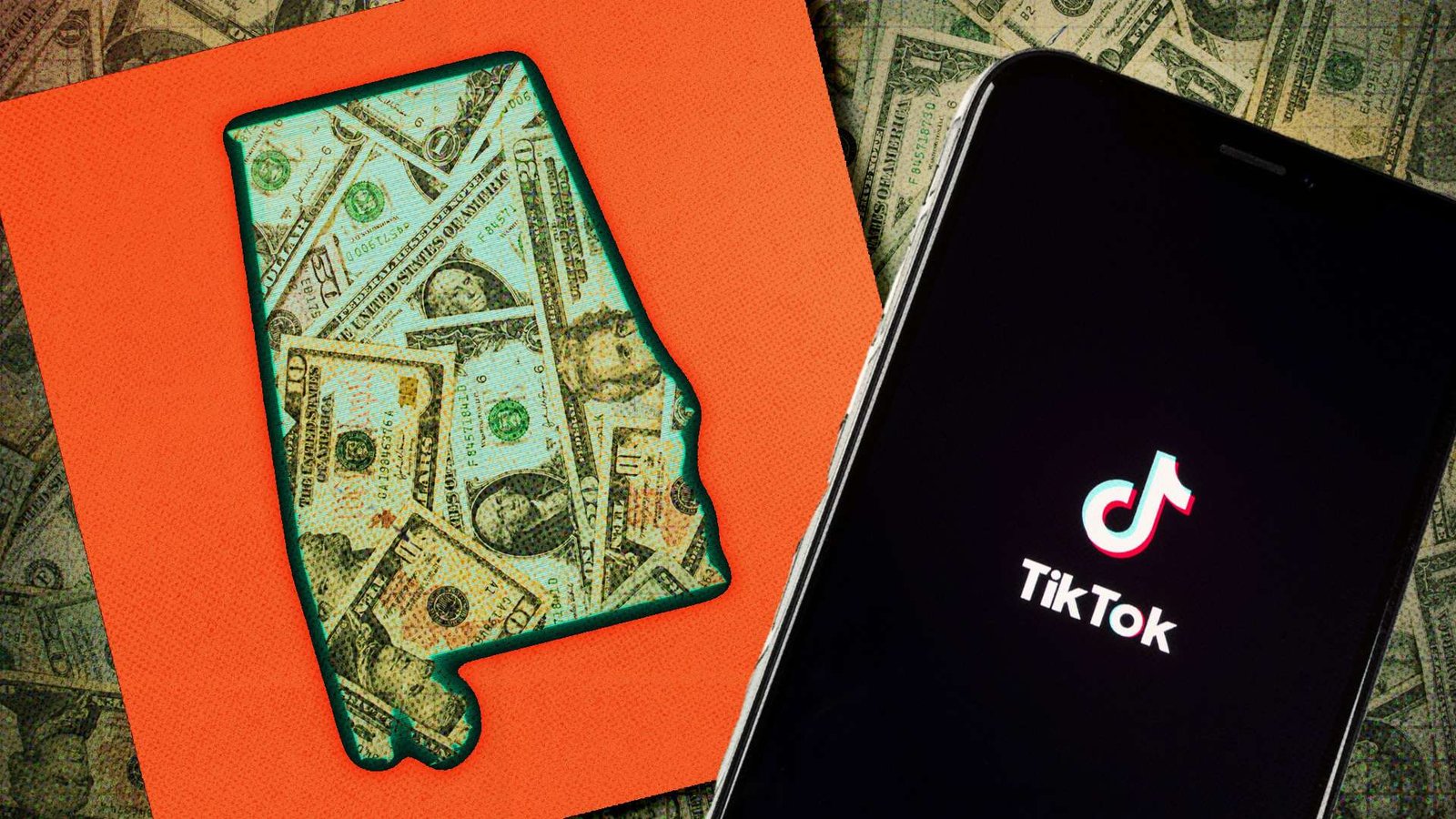
TikTok and the state of Alabama were supposed to face off in court on Monday, but a $100 million settlement stopped the case from going to trial. 

On Friday, TikTok agreed to settle a lawsuit brought by Alabama Attorney General Steve Marshall alleging the platform knowingly damaged children’s mental health. The settlement requires TikTok to implement several features, including restrictions on nighttime access for children, a default nonpersonalized feed for teens, stronger parental controls, a two-hour daily time limit for children, and “robust age assurance measures to effectively verify the age of young users.” TikTok could also owe Alabama an additional $183.8 million if other states reach qualifying settlements with the company, reports the Associated Press.

Alabama’s office of the attorney general celebrated the settlement, calling it “the latest victory in Attorney General Marshall’s efforts to hold technology companies and social media platforms accountable for putting Alabama consumers, particularly children, at risk.” Last month, the office noted, Meta settled with Alabama for $117 million as part of a $17.1 billion multistate lawsuit over similar claims that social media platforms are harming children.

Social media platforms are not the only targets of Alabama’s online safety crusade. The video game company Roblox reached a $12.2 million settlement with the state in April over online safety concerns. The settlement terms require all Roblox users to “undergo age verification to ensure children have access only to age-appropriate content on the platform.” According to the state, Roblox said it would rely on facial recognition technology and government-issued IDs to verify users’ ages.

Strict age-verification requirements raise serious privacy concerns. Implementing Roblox’s ID checks would mean that all users would be subject to these age-verification measures, making online anonymity extremely difficult. Whatever such measures TikTok enforces in Alabama would presumably apply to all users to distinguish adults from children.

Meanwhile, creative and tech-savvy users often work around these restrictions or flee to less regulated realms of the internet. In Australia, a social media ban for children under 16 has proven largely ineffective, as many young children have not been asked to verify their ages. Among those who encounter age gating online, many circumvent the ban by having older friends set up accounts on their behalf, gaming the age assurance system, and, in some cases, using VPNs.

As This American Life host Ira Glass reported last week, users who were too young to be on social media were conversing in the comments section of an NPR show on Spotify. Why? Because it was a place without many comments, said one young user. While the NPR comments section is not exactly the online Wild West, the story shows that young people can be extremely creative in finding less regulated places to meet online. Techdirt‘s Mike Masnick pointed out last year that kids banned from social media at school have even used Google Docs as a makeshift group chat.

“Maybe Australia will ban kids from Spotify comments next. Then Google Docs. Then whatever random corner of the internet kids discover after that,” he wrote. “We can keep playing [whack-a-mole] until we’ve legislated away every possible space where teenagers might talk to each other without adult supervision.” Still, he warned, kids always find ways around bans, so it is best to teach kids how to navigate online spaces safely.

At best, government-imposed social media restrictions are acts of political theater; users are often savvy enough to work around them. At worst, they’re chilling censorship orders. If more of these safety measures are enforced, entire swaths of the internet could become age-gated. Officials may feel that they are protecting children in their states by securing settlements with social media companies, but they’re making the internet less free for adults and pushing kids to less visible realms of the web.

Read the full article here

Fact Checker

Verify the accuracy of this article using AI-powered analysis and real-time sources.

Get Your Fact Check Report

Enter your email to receive detailed fact-checking analysis

5 free reports remaining

Continue with Full Access

You've used your 5 free reports. Sign up for unlimited access!

Already have an account? Sign in here

#Journalism #MediaAndPolitics #PoliticalCoverage #PoliticalNews #PressFreedom
Share. Facebook Twitter Pinterest LinkedIn Tumblr Email Telegram Copy Link
News Room
  • Website
  • Facebook
  • X (Twitter)
  • Instagram
  • LinkedIn

The FSNN News Room is the voice of our in-house journalists, editors, and researchers. We deliver timely, unbiased reporting at the crossroads of finance, cryptocurrency, and global politics, providing clear, fact-driven analysis free from agendas.

Related Articles

Cryptocurrency & Free Speech Finance

Bitwise Launches First US Spot Near ETF After Token Nearly Triples Since August

23 minutes ago
Media & Culture

No, libertarians don’t only care about ‘weed and porn’

55 minutes ago
Cryptocurrency & Free Speech Finance

Someone Finally Jailbroke the PS5—Just After Sony Said Players Don’t Own Their Games

1 hour ago
Cryptocurrency & Free Speech Finance

OpenAI Gave AI Agents Their Own Computers at DevDay 2026. Here’s Everything It Announced

2 hours ago
Media & Culture

The Supreme Court’s two decades of constitutional change

3 hours ago
Cryptocurrency & Free Speech Finance

BBC Director-General Deems AI-Generated Doctor Who Episode ‘Pretty Good’

3 hours ago
Add A Comment
Leave A Reply Cancel Reply

Editors Picks

Bitwise Launches First US Spot Near ETF After Token Nearly Triples Since August

23 minutes ago

No, libertarians don’t only care about ‘weed and porn’

55 minutes ago

Dinari, Ondo Team With Kakaopay on Korean Stock Tokenization

1 hour ago

Someone Finally Jailbroke the PS5—Just After Sony Said Players Don’t Own Their Games

1 hour ago
Latest Posts

The Biden-era Title IX rule was already dead. Now it’s off the books.

2 hours ago

TikTok’s $100 Million Settlement With Alabama Is No Win for the Public

2 hours ago

Cboe, S&P Dow Jones open door for tokenized options under extended licensing deal

2 hours ago

Subscribe to News

Get the latest news and updates directly to your inbox.

At FSNN – Free Speech News Network, we deliver unfiltered reporting and in-depth analysis on the stories that matter most. From breaking headlines to global perspectives, our mission is to keep you informed, empowered, and connected.

FSNN.net is owned and operated by GlobalBoost Media
, an independent media organization dedicated to advancing transparency, free expression, and factual journalism across the digital landscape.

Facebook X (Twitter) Discord Telegram
Latest News

US SEC, CFTC to Oversee Crypto Market With Reduced Leadership

22 minutes ago

Bitwise Launches First US Spot Near ETF After Token Nearly Triples Since August

23 minutes ago

No, libertarians don’t only care about ‘weed and porn’

55 minutes ago

Subscribe to Updates

Get the latest news and updates directly to your inbox.

© 2026 GlobalBoost Media. All Rights Reserved.
  • Privacy Policy
  • Terms of Service
  • Our Authors
  • Contact

Type above and press Enter to search. Press Esc to cancel.

🍪

Cookies

We and our selected partners wish to use cookies to collect information about you for functional purposes and statistical marketing. You may not give us your consent for certain purposes by selecting an option and you can withdraw your consent at any time via the cookie icon.

Cookie Preferences

Manage Cookies

Cookies are small text that can be used by websites to make the user experience more efficient. The law states that we may store cookies on your device if they are strictly necessary for the operation of this site. For all other types of cookies, we need your permission. This site uses various types of cookies. Some cookies are placed by third party services that appear on our pages.

Your permission applies to the following domains:

  • https://fsnn.net
Necessary
Necessary cookies help make a website usable by enabling basic functions like page navigation and access to secure areas of the website. The website cannot function properly without these cookies.
Statistic
Statistic cookies help website owners to understand how visitors interact with websites by collecting and reporting information anonymously.
Preferences
Preference cookies enable a website to remember information that changes the way the website behaves or looks, like your preferred language or the region that you are in.
Marketing
Marketing cookies are used to track visitors across websites. The intention is to display ads that are relevant and engaging for the individual user and thereby more valuable for publishers and third party advertisers.