

 Freedom Index
Listen to the article
Today, the Montreal Economic Institute published my paper on “The Legal Battle Over Trump’s Tariffs: Implications for Canada.” This overview of the legal weaknesses of Trump’s tariffs and what can be done to curb future abuses of the same kind, may also be of use to Americans interested in these issues. Here is an excerpt:
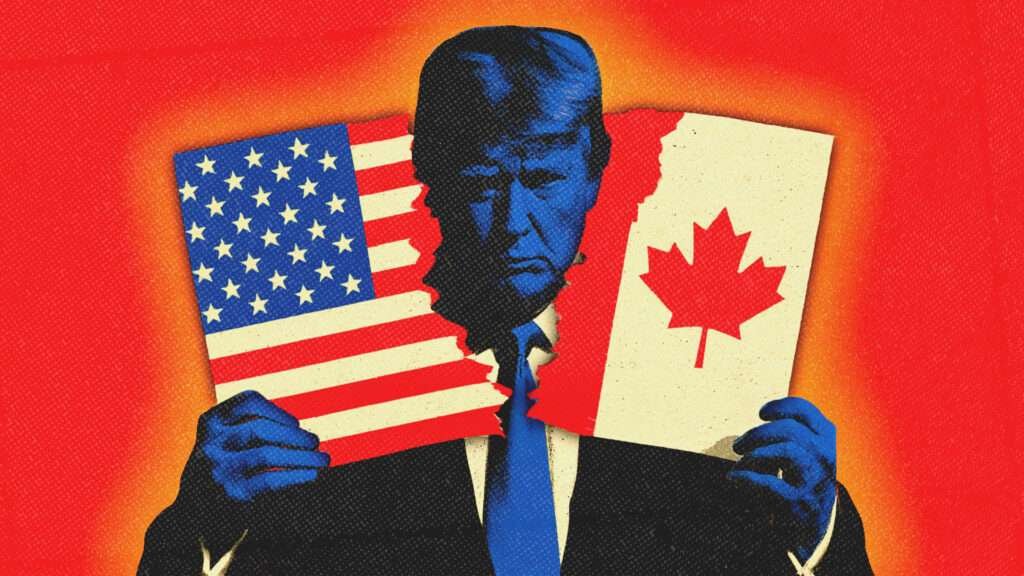
Since returning to power in January 2025, President Donald Trump has sought to impose massive tariffs on imports from Canada, as well as numerous other trading partners. This policy is simultaneously harmful, unjust, illegal, and damaging to the US, Canadian, and world economies. It is also needlessly poisoning US relations with Canada and other crucial allies.
Trump’s initial tariffs were invalidated by the US Supreme Court, and more recent ones may well also be struck down. But even if invalidated by courts, illegal tariffs and associated economic uncertainty may still persist for many months. Canada would do well to recognize that these US tariffs are unpopular and rest on shaky legal ground, and try to capitalize on the resulting opportunities.
In February 2025, President Trump tried to use the International Emergency Economic Powers Act of 1977 (IEEPA) to impose 25% tariffs on Canada, ostensibly to combat the smuggling of fentanyl across the US-Canadian border. On April 2, 2025, he invoked the same law to impose general 10% tariffs against most US trading partners around the world, plus additional massive tariffs against several dozen nations, supposedly to combat trade deficits. After extensive litigation, the US Supreme Court eventually invalidated these tariffs, in a case I helped litigate on behalf of five small businesses (eventually consolidated with two other cases).
The Supreme Court held that the IEEPA does not authorize the imposition of tariffs at all and emphasized that under the US Constitution, tariffs are a congressional power, not an executive one. The Court also held that the president is not entitled to unlimited power to “impose tariffs on imports from any country, of any product, at any rate, for any amount of time.”(2) Three Supreme Court justices and two lower court rulings also concluded the IEEPA tariffs run afoul of the “major questions doctrine,” which requires Congress to speak clearly when authorizing the executive to make “decisions of vast economic and political significance.”
Immediately after the Supreme Court’s ruling, the president tried to use Section 122 of the Trade Act of 1974 to impose similar 10% tariffs on imports from around the world (though Canadian imports were largely exempted). The US Court of International Trade rightly invalidated these tariffs on the grounds that Section 122 can only be used in response to a balance-of-payments crisis of a kind that generally cannot occur under a flexible exchange rate regime, and that Trump’s interpretation of Section 122 would, if accepted, create an unconstitutional delegation of legislative power to the executive…. The case is currently on appeal….
Trump has also sought to use Section 301 of the 1974 Act to impose 10-12.5% tariffs on sixty US trading partners, including Canada, the European Union and many more. These tariffs were instituted on the pretext that all these countries allow the importation of goods made with “forced labor” in ways that somehow burden US exports…..
In this case, the “forced labor” investigation is a blatant sham designed to reach a predetermined conclusion; nor is there any real proof that the policies in question meaningfully burden US exports. In addition, the administration’s interpretation of Section 301 violates both major questions of doctrine and constitutional constraints on the delegation of legislative power to the executive; Trump is trying to use Section 301 to claim the virtually unlimited tariff power the Supreme Court rejected in the IEEPA case…..
Three lawsuits challenging the Section 301 tariffs have already been filed…. The Court of International Trade is likely to make a decision within the next few weeks. Here, too, there is a significant likelihood the courts will ultimately rule against the president.
Most recently, Trump has tried to use Section 338 of the notorious 1930 Smoot-Hawley tariff act (which severely exacerbated the Great Depression) to try to impose 50% tariffs on various Canadian imports. Section 338 has never been used. Trump’s attempt to exhume it may well also be struck down in court, because Section 338 has been superseded by later laws and because his invocation of it does not meet the provision’s own requirements. In addition, his broad interpretation of Section 338 is subject to challenge based on the major questions and nondelegation doctrines; the latter constrains delegations of legislative power to the executive. At the time of writing, no legal challenges to the Section 338 tariffs have yet been filed, but it is likely some will be filed soon, by state governments, importers, or others….
Despite their unpopularity and the likelihood of defeat in court, the tariffs could still inflict harm and create uncertainty lasting for many months. It can take a long time for courts to resolve these cases…. Moreover, if the courts fail to block the tariffs until appellate litigation concludes, billions of dollars of illegal tariffs might be collected in the meantime, causing extensive economic damage. Trump used the IEEPA tariffs to collect some US$166 billion in illegal payments before the Supreme Court finally stopped him; even now, not all of the illegally collected funds have yet been refunded. But the courts might reduce such damage by refusing to stay early rulings against the new illegal tariffs.,,,
In addition, Canada should work with Americans who oppose the tariffs in order to enact new legislation—possibly including a new CUSMA trade agreement—that clearly blocks the unilateral imposition of future tariffs by the executive, so that no future president can repeat Trump’s harmful actions. The new agreement should also require that any court decisions striking down illegal tariffs take immediate effect and not be stayed until appellate litigation concludes, which would limit the harmful impact of illegal tariffs. Such reforms almost certainly will not happen while Trump is in office…. But he has only about two years to go, much of which time is likely to be a “lame duck” period.
Read the full article here
Fact Checker
Verify the accuracy of this article using AI-powered analysis and real-time sources.