

 Freedom Index
Listen to the article
I have seen the future, and it works.
~Lincoln Steffens
When he visited Soviet Russia (the brief precursor state to the Soviet Union) in 1919, Lincoln Steffens was housed in a newly confiscated palace, with a retinue of servants to wait on him. Steffens, an American investigative journalist, had crafted the famous quote shown above before he had even arrived in Russia, and nothing about the subsequent experience softened his conviction. He concluded that “the destructive phase of the revolution in Russia is over.” But the Red Terror was already underway as Steffens wrote, and the great famine was coming. After that, Stalin would ascend. Then the truly destructive phase would begin.
There has always been a certain type of Westerner easily seduced by the ability of Communist regimes to give impressive displays. He asks no questions; he sees only what they want him to see. In his bewitchment, he develops a hazy conviction that their political system must be superior. Today, for complex and sometimes counterintuitive reasons, his type appears to be multiplying.
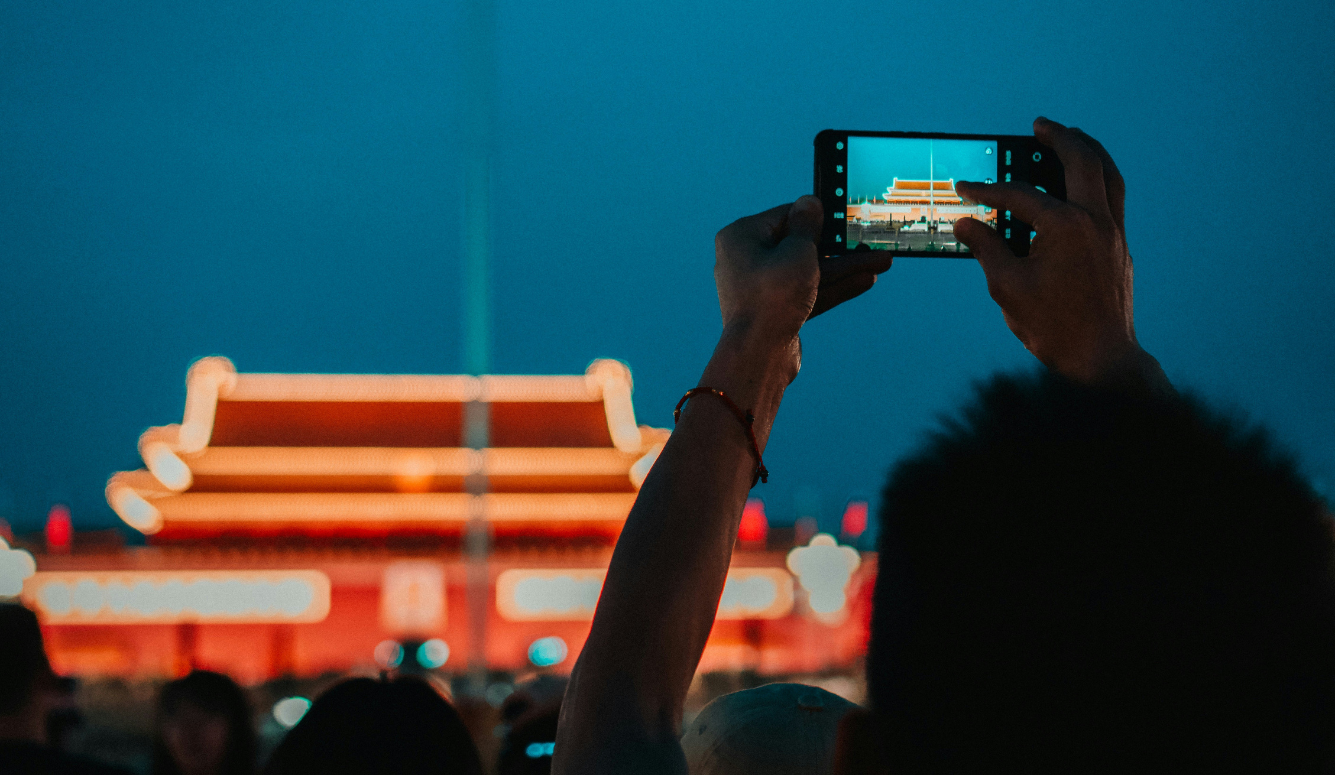
In a phenomenon known as ‘Chinamaxxing’, Anglophone teens extol the benefits of ‘becoming Chinese’. “You met me at a very Chinese time in my life,” they say, parodying Fight Club. They squat and practise tai chi and drink hot water—old Sinic traditions—and at the same time, they marvel at the country’s more futuristic features, like high-speed rail and drone light shows. Some broadcast live from Chongqing, the cyberpunk megacity. The sights of Chongqing could almost have been tailor-made for this 2020s world of short-form content—the monorail that bores through an apartment building, the crystal skybridge 250 metres in the air, the soaring, plunging, perspective-warping vistas.
Dazzled, the Chinamaxxers conclude: “Everything you’ve heard about China is wrong.” From here, they progress (or perhaps regress) to: “China is governed better than we are.” One end of the Chinamaxxing spectrum is all squatting and chopsticks, the other is ideological. There we find people for whom the skyscrapers and drone shows lead to a political verdict: “China proves there is an alternative to Western neoliberalism and hypercapitalism.”
The change began in early 2025, when the threat of an American TikTok ban had the unintended effect of driving hundreds of thousands of self-styled ‘TikTok refugees’ to the Chinese lifestyle app Xiaohongshu (also called RedNote), thus propelling it to the top of Apple’s App Store in the United States. The refugees were impressed with the China they found, and some of them began comparing it favourably to American society. Two months later, the American streamer IShowSpeed went viral with an unscripted and surreal journey through the country. The eyes of many Westerners were opened—to the sights, the variety, and the sheer strangeness of China.
Beijing was taken aback. Chinamaxxing is an organic phenomenon, and the Party is nervous about anything it can’t control. Right now, however, it will take all the good Western press it can get. This year, Beijing extended visa-free entry to British visitors staying up to 30 days. Of course, few of those visitors will stray too far from the glittering lights of China’s opulent eastern seaboard, or from the Chongqing megalopolis. They won’t see the empty apartment complexes that litter the country, or the poverty ravaging the hinterland. Instead, they will broadcast the smiling image of rich and quirky China to a credulous home audience.
Chinamaxxers actually fit into a broader global trend. The Pew Research Center surveyed more than 45,000 people in 37 countries earlier this year, finding that a median of 51% have a favourable view of China (39% unfavourable). Views of China are at or near historic highs in Turkey, Spain, Malaysia, Peru, Italy, Colombia, Greece, Mexico, Indonesia, Nigeria, Hungary, Singapore, and Sri Lanka.
Favourability is strongest in the Global South, where people can hardly escape the presence of the Middle Kingdom. They engage every day with Chinese apps and cars and phones and fast food; their social media feeds unroll an endless thread of Chinese fashion, Chinese dramas, Chinese tech. China is visible, tangible: often, it is linked to practical necessity. These realities will certainly play a part in the average person’s approval.
But as in the case of the Western Chinamaxxers, this success has little to do with the Communist Party, which spent the past decade failing repeatedly in its soft power strategy. Top-down efforts to follow President Xi’s mandate and “tell China’s story well” were clumsy, coercive, cackhanded. State media was always unconvincing. Wolf Warrior rhetoric backfired. Confucius Institutes closed across the West. The Belt and Road lost its lustre. China’s story simply did not sell overseas. The overall effect was one of a simpering mask with a rictus grin, slipping at the slightest provocation to reveal a face distorted with rage: the face of the Party.
Private entrepreneurs are now succeeding where the state failed, and their success comes via an ironic and circuitous route. China’s chronic lack of domestic consumption drove firms to seek new markets abroad. Facing tariffs and data-security scrutiny in the West, they expanded instead throughout the Global South. There, the relentless intensity of competition between Chinese brands led to creative adaptations. Transsion, for instance, built cheap phones kitted out with batteries suited to the erratic electricity grids in countries like Uganda and Nigeria, with camera software flattering to darker complexions. Streaming platforms DramaBox and ShortMax boosted their audiences in Malaysia and Indonesia by putting local actors in their microdramas, and avoiding the romantic scenes that affront Muslim-majority cultures.
Among richer countries, the swing in Beijing’s favour has been stranger and more complex. Sometimes the Chinamaxxing message is preached by minor celebrities with their own YouTube channels, almost certainly in the employ of the Chinese Communist Party’s Propaganda Department. God only knows what they believe in the privacy of their own minds; or even what honeytrap twists and blackmail turns might conceivably have brought them to this point. More concerning is the cohort of ordinary youth genuinely sold on the propaganda. These are people with the most slippery grasp on reality. I’ve sat in a Sheffield bar watching a local explain with great earnestness to a visibly bored Chinese woman that Britain actually has a sham democracy while China has “true democracy.”
Read the full article here
Fact Checker
Verify the accuracy of this article using AI-powered analysis and real-time sources.