Close Menu
FSNN | Free Speech News NetworkFSNN | Free Speech News Network
  • Home
  • News
    • Politics
    • Legal & Courts
    • Tech & Big Tech
    • Campus & Education
    • Media & Culture
    • Global Free Speech
  • Opinions
    • Debates
  • Video/Live
  • Community
  • Freedom Index
  • About
    • Mission
    • Contact
    • Support
Trending

TN news outlet wins court battle for records about seizure of Rep. Andy Ogles’s cell phone

3 minutes ago

Revolut hackers demand $3 million in Monero, threaten to sell customer data

7 minutes ago

UK FCA Issues Crypto Authorization Guidance Ahead of New Regime

15 minutes ago
Facebook X (Twitter) Instagram
Facebook X (Twitter) Discord Telegram
FSNN | Free Speech News NetworkFSNN | Free Speech News Network
Market Data Newsletter
Wednesday, September 16
  • Home
  • News
    • Politics
    • Legal & Courts
    • Tech & Big Tech
    • Campus & Education
    • Media & Culture
    • Global Free Speech
  • Opinions
    • Debates
  • Video/Live
  • Community
  • Freedom Index
  • About
    • Mission
    • Contact
    • Support
FSNN | Free Speech News NetworkFSNN | Free Speech News Network
Home»News»Media & Culture»American Tax Dollars Are Financing Cell Towers in Angola
Media & Culture

American Tax Dollars Are Financing Cell Towers in Angola

News RoomBy News Room2 hours agoNo Comments4 Mins Read1 Views
Share Facebook Twitter Pinterest Copy Link LinkedIn Tumblr Email VKontakte Telegram
American Tax Dollars Are Financing Cell Towers in Angola
Share
Facebook Twitter Pinterest Email Copy Link

Listen to the article

0:00
0:00

Key Takeaways

Playback Speed

Select a Voice

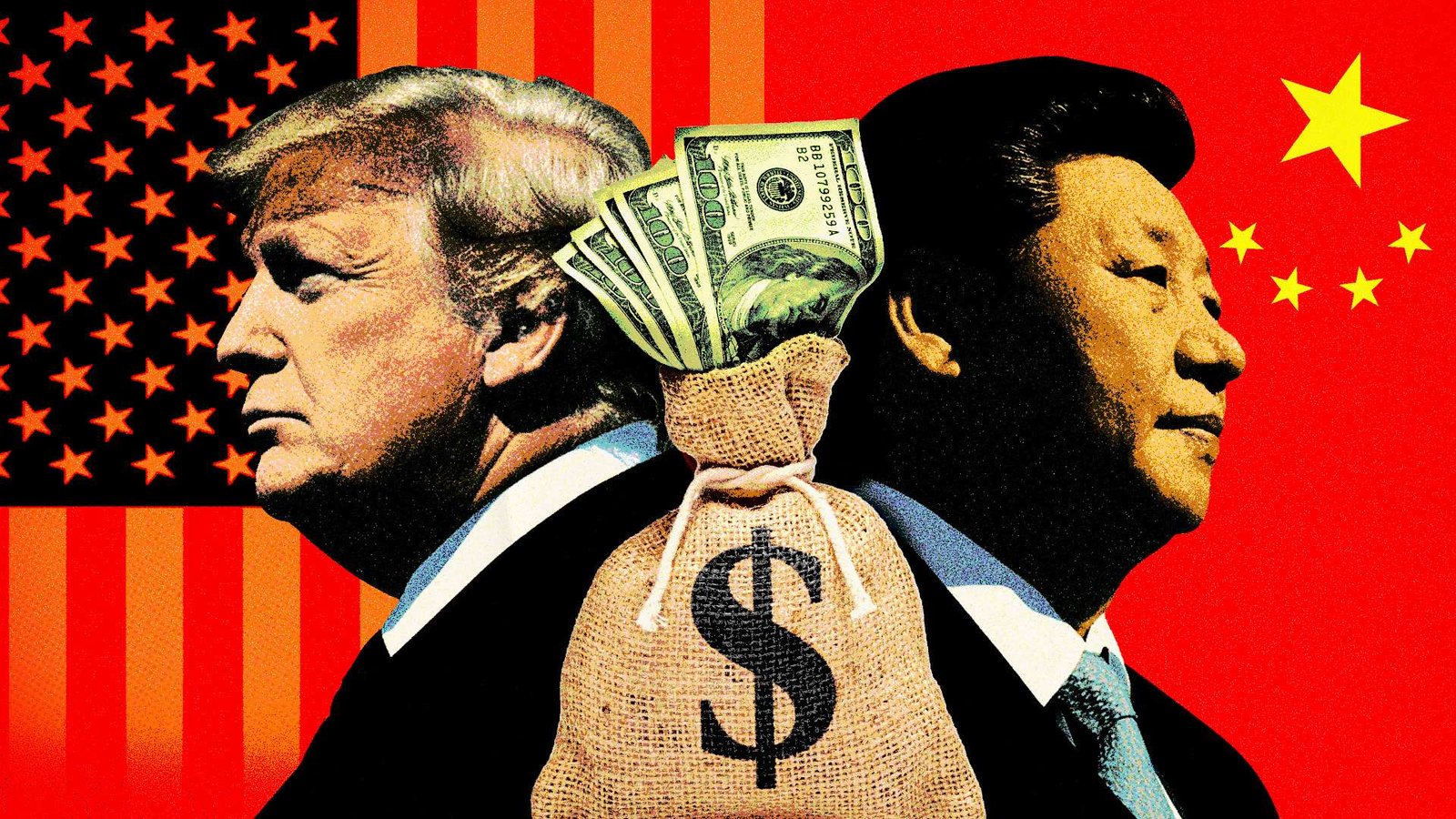
American taxpayers are supporting cellphone networks in sub-Saharan Africa, airlines in Turkey, and a host of other large-scale infrastructure projects worldwide as part of President Donald Trump’s plan to increase America’s influence internationally, presumably to break China’s stranglehold on the global critical mineral supply chain. 

In FY 2025, the U.S. Export-Import Bank (EXIM)—a federal credit agency that provides loans and guarantees to international buyers of American goods, and insurance to domestic exporters when the private sector is unwilling or unable to take the risk—approved $5.03 billion in loans and long-term guarantees across 23 transactions. The Trump administration authorized 16 of those deals, for a total of $3.39 billion. Since the start of Trump’s second term, EXIM has authorized $4.83 billion in spending through project and structured finance—the bank’s most flexible financing options—alone. That’s 61 percent more than the $2.99 billion the Biden administration approved under the same vehicle.

Last week, the White House added another deal to its ledger when EXIM provided a $99.6 million loan to Africell—the only U.S.-owned cellphone network operator in Africa—to finance the company’s operations in Angola. Africell said the loan is part of a broader $5 billion commitment for developing railways, bridges, and broadcasting in the Lobito Corridor, a transnational network that connects mineral-rich regions of the Democratic Republic of the Congo and Zambia to Angola’s port of Lobito.

It’s hard to see how building Angola’s telecommunications industry benefits American taxpayers. For the Trump administration, the deal is a chance to counter China-based Huawei, which is “estimated to have supplied more than half the 4G and 5G network infrastructure in Africa,” according to the Associated Press.

If the president hopes to cut into Beijing’s market share of critical minerals by replicating its foreign lending strategy, both he and American taxpayers will be displeased by the return on investment.

In 2013, China announced its Belt and Road Initiative, a plan to finance infrastructure projects across the developing world by providing fixed-interest loans with favorable repayment terms through the Export-Import Bank of China and the China Development Bank. Since it began, China has spent $1.39 trillion on the initiative, according to the Green Finance & Development Center, a think tank within China’s Fudan University. In 2025 alone, Beijing spent $61.2 billion on developing countries in Africa like Angola.

Yet, because of their nascent economies, these countries often struggle to repay the principal and interest on Chinese loans, leaving them in significant debt distress and beholden to Beijing. 

In 2023, a study by Stanford’s Center on China’s Economy and Institutions found that distressed borrowers made up 60 percent of China’s overseas lending portfolio. In a 2025 report, the Lowy Institute—an Australian think tank—projected that the world’s poorest countries “will make record high debt repayments totalling $22 billion to China” that year. The group also said that “China is grappling with a dilemma of its own making,” including “growing diplomatic pressure to restructure unsustainable debt, and mounting domestic pressure to recover outstanding debts.”

Meanwhile, many details of its loans are unknown because “Chinese loan contracts often include far-reaching confidentiality clauses that bar the borrower from revealing the terms or even the existence of the debt,” according to a study in The Journal of Economic Perspectives.

If Trump is trying to replicate China’s public spending spree, American taxpayers should be wary that it might come with little transparency. In fact, there are already reasons for concern.

While federal law bars EXIM from granting final approval for any loan, financial guarantee, or insurance of $100 million or more without sending Congress a detailed statement on the transaction, the explanation isn’t published, and the bank isn’t required to disclose whether private financing was available. For deals under the $100 million threshold—like Africell—EXIM isn’t required to publish anything at all.

When private lenders exit a market or decline to back a project, it typically signals that success would be prohibitively costly. However, with public financing, there are no such signals, meaning that American taxpayers will have to eat the losses when these “investments” fail.

It’d be understandable if the government were providing American companies with market access in other countries through trade agreements (something Trump has scorned), but playing the role of financier for the world’s development projects is a losing gambit. 

The U.S. can’t beat China by copying its foreign lending playbook. 

Read the full article here

Fact Checker

Verify the accuracy of this article using AI-powered analysis and real-time sources.

Get Your Fact Check Report

Enter your email to receive detailed fact-checking analysis

5 free reports remaining

Continue with Full Access

You've used your 5 free reports. Sign up for unlimited access!

Already have an account? Sign in here

#CivicEngagement #FreePress #IndependentMedia #MediaAccountability #MediaEthics
Share. Facebook Twitter Pinterest LinkedIn Tumblr Email Telegram Copy Link
News Room
  • Website
  • Facebook
  • X (Twitter)
  • Instagram
  • LinkedIn

The FSNN News Room is the voice of our in-house journalists, editors, and researchers. We deliver timely, unbiased reporting at the crossroads of finance, cryptocurrency, and global politics, providing clear, fact-driven analysis free from agendas.

Related Articles

Legal & Courts

TN news outlet wins court battle for records about seizure of Rep. Andy Ogles’s cell phone

3 minutes ago
Cryptocurrency & Free Speech Finance

Bitcoin Core Software Update Aims for Speed and Security Patches

18 minutes ago
Media & Culture

Court: The First Amendment Allows You To Tell The ICE Director He’s A ‘Sad, Despised Man’

49 minutes ago
Media & Culture

Firing of Employee for Kirk-Murder-Related Post Wasn’t a Clear First Amendment Violation,

55 minutes ago
Cryptocurrency & Free Speech Finance

Fed Hikes Rates for the First Time Since 2023, Bitcoin Spikes

1 hour ago
Cryptocurrency & Free Speech Finance

CFTC and SEC Double Down on Crypto After Clarity Act Defeat

2 hours ago
Add A Comment
Leave A Reply Cancel Reply

Editors Picks

Revolut hackers demand $3 million in Monero, threaten to sell customer data

7 minutes ago

UK FCA Issues Crypto Authorization Guidance Ahead of New Regime

15 minutes ago

Bitcoin Core Software Update Aims for Speed and Security Patches

18 minutes ago

👮 Flock Searches for the LOLs | EFFector 38.16

41 minutes ago
Latest Posts

Court: The First Amendment Allows You To Tell The ICE Director He’s A ‘Sad, Despised Man’

49 minutes ago

Firing of Employee for Kirk-Murder-Related Post Wasn’t a Clear First Amendment Violation,

55 minutes ago

Fed raises rates by 25 basis points in first hike since July 2023

1 hour ago

Subscribe to News

Get the latest news and updates directly to your inbox.

At FSNN – Free Speech News Network, we deliver unfiltered reporting and in-depth analysis on the stories that matter most. From breaking headlines to global perspectives, our mission is to keep you informed, empowered, and connected.

FSNN.net is owned and operated by GlobalBoost Media
, an independent media organization dedicated to advancing transparency, free expression, and factual journalism across the digital landscape.

Facebook X (Twitter) Discord Telegram
Latest News

TN news outlet wins court battle for records about seizure of Rep. Andy Ogles’s cell phone

3 minutes ago

Revolut hackers demand $3 million in Monero, threaten to sell customer data

7 minutes ago

UK FCA Issues Crypto Authorization Guidance Ahead of New Regime

15 minutes ago

Subscribe to Updates

Get the latest news and updates directly to your inbox.

© 2026 GlobalBoost Media. All Rights Reserved.
  • Privacy Policy
  • Terms of Service
  • Our Authors
  • Contact

Type above and press Enter to search. Press Esc to cancel.

🍪

Cookies

We and our selected partners wish to use cookies to collect information about you for functional purposes and statistical marketing. You may not give us your consent for certain purposes by selecting an option and you can withdraw your consent at any time via the cookie icon.

Cookie Preferences

Manage Cookies

Cookies are small text that can be used by websites to make the user experience more efficient. The law states that we may store cookies on your device if they are strictly necessary for the operation of this site. For all other types of cookies, we need your permission. This site uses various types of cookies. Some cookies are placed by third party services that appear on our pages.

Your permission applies to the following domains:

  • https://fsnn.net
Necessary
Necessary cookies help make a website usable by enabling basic functions like page navigation and access to secure areas of the website. The website cannot function properly without these cookies.
Statistic
Statistic cookies help website owners to understand how visitors interact with websites by collecting and reporting information anonymously.
Preferences
Preference cookies enable a website to remember information that changes the way the website behaves or looks, like your preferred language or the region that you are in.
Marketing
Marketing cookies are used to track visitors across websites. The intention is to display ads that are relevant and engaging for the individual user and thereby more valuable for publishers and third party advertisers.