

 Freedom Index
Listen to the article
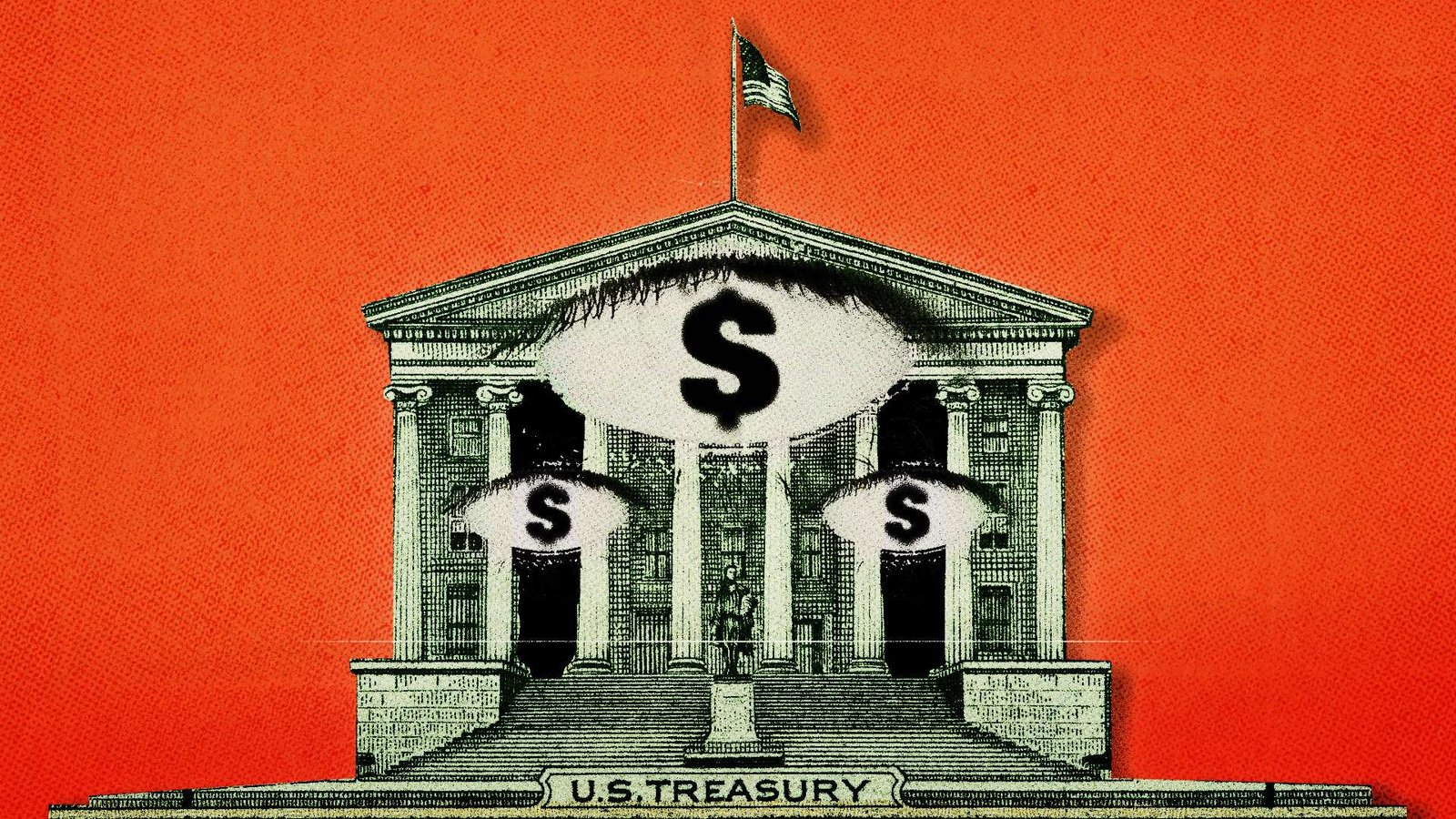
President Donald Trump has made a lot of hay about the Internal Revenue Service (IRS) unfairly persecuting Americans. But his administration is quietly setting up far more intrusive financial surveillance of citizens. The Department of Homeland Security (DHS) has set up a secretive unit that refers Americans to local police based on “suspicious” financial transactions, recent court documents reveal. Meanwhile, the Treasury Department is fighting to maintain a program that would require money transfer offices to report suspected illegal immigration.
Kyle William Olson, a licensed marijuana farmer in California, was pulled over and searched by the Montana Highway Patrol, who charged him with a DUI and possession of marijuana with intent to distribute. Although patrolmen at the scene told Olson he was being pulled over for an obstructed license plate, his legal defense team obtained documents showing that the DHS flagged him to local police for “financial activity patterns commonly associated with illicit narcotics activity,” which he shared with 404 Media.
Specifically, the document is a report from the Predictive Intelligence Targeting Team at the U.S. Border Patrol sector for Spokane, Washington, which cross-referenced Olson’s banking data with arrest records and “additional law-enforcement sensitive records” from an unspecified source. “Based on this analysis, I relayed the information to [Montana Highway Patrol] Sergeant James Beck as law enforcement-sensitive situational awareness to support general interdiction efforts and officer safety considerations,” Border Patrol Agent Matthew Frank Phelps wrote in the report.
It wasn’t the first time that the DHS sent local police to pull over drivers. Border Patrol and Immigration and Customs Enforcement (ICE) both run a nationwide network of license plate cameras and flag drivers with suspicious “patterns of life” to local police, who then search the drivers under another pretext. “The beautiful thing about the Texas Traffic Code is there’s thousands of things you can stop a vehicle for,” Bexar County Sheriff’s Deputy Joel Babb said in a deposition for a lawsuit by the libertarian Institute for Justice against these searches.
But the Olson case reveals that bank records are also being integrated into this surveillance—along with the existence of creepy-sounding “predictive intelligence targeting teams.” The DHS wouldn’t tell 404 Media how it obtained private citizens’ bank records. Agencies at the department have been secretly vacuuming up massive amounts of data on the American public. For example, ICE has gained access to an industry database of 1.8 billion insurance claims and 58 million medical bills, an investigation by 404 Media last year revealed.
The Treasury’s Financial Crimes Enforcement Network (FinCEN) does require banks to report on customers suspected of money laundering, under the PATRIOT Act of 2001. And the Trump administration has tried to turn this power against immigrants. Last year, FinCEN ordered money services businesses such as Western Union and MoneyGram to report all major transactions in border counties, and to be on the lookout for “cross-border funds transfers involving illegal aliens.”
In response to lawsuits by small-business owners and the Institute for Justice, the U.S. Court of Appeals for the 9th Circuit ruled in July 2026 that the FinCEN order was “likely arbitrary and capricious” and “failed to consider the cost of compliance” for businesses under “threat of extinction.” (Esperanza Gomes Escobar, a shop owner in San Diego, told the court that it was physically impossible for her to fill out all the required FinCEN paperwork in time every day.) Last week, FinCEN reissued its reporting order for border counties in New Mexico and Texas, outside the authority of the 9th Circuit.
The Institute for Justice is currently suing to stop the reporting in Texas, too; two district courts have ruled against it, and the Court of Appeals for the 5th Circuit is considering whether to uphold the orders. With its new order, the Treasury is “still insisting on mass financial surveillance in the states where appeals courts have not yet ruled,” Institute for Justice Senior Attorney Andrew Ward said in a statement.
Escobar, the shop owner, also told the court that she lost customers who were afraid of being “put on a list with the names of criminals” if they used her store’s money transfer service. As the Olson case demonstrates, that fear is not exactly unfounded. The federal government is building databases of Americans’ finances, using it for everyday policing, and hiding the paper trail from the public.
Read the full article here
Fact Checker
Verify the accuracy of this article using AI-powered analysis and real-time sources.