Close Menu
FSNN | Free Speech News NetworkFSNN | Free Speech News Network
  • Home
  • News
    • Politics
    • Legal & Courts
    • Tech & Big Tech
    • Campus & Education
    • Media & Culture
    • Global Free Speech
  • Opinions
    • Debates
  • Video/Live
  • Community
  • Freedom Index
  • About
    • Mission
    • Contact
    • Support
Trending

O.J. Simpson and Lindsay Clancy

41 minutes ago

Habibi City: New York Magazine’s Antizionist Turn

55 minutes ago

Hunter Biden defends LAPTOP ahead of Wednesday launch, calls TRUMP a ‘grift’

1 hour ago
Facebook X (Twitter) Instagram
Facebook X (Twitter) Discord Telegram
FSNN | Free Speech News NetworkFSNN | Free Speech News Network
Market Data Newsletter
Wednesday, September 9
  • Home
  • News
    • Politics
    • Legal & Courts
    • Tech & Big Tech
    • Campus & Education
    • Media & Culture
    • Global Free Speech
  • Opinions
    • Debates
  • Video/Live
  • Community
  • Freedom Index
  • About
    • Mission
    • Contact
    • Support
FSNN | Free Speech News NetworkFSNN | Free Speech News Network
Home»Opinions»Debates»Fukuyama’s Memoir Revisits the End of History
Debates

Fukuyama’s Memoir Revisits the End of History

News RoomBy News Room3 hours agoNo Comments5 Mins Read1 Views
Share Facebook Twitter Pinterest Copy Link LinkedIn Tumblr Email VKontakte Telegram
Fukuyama’s Memoir Revisits the End of History
Share
Facebook Twitter Pinterest Email Copy Link

Listen to the article

0:00
0:00

Key Takeaways

Playback Speed

Select a Voice

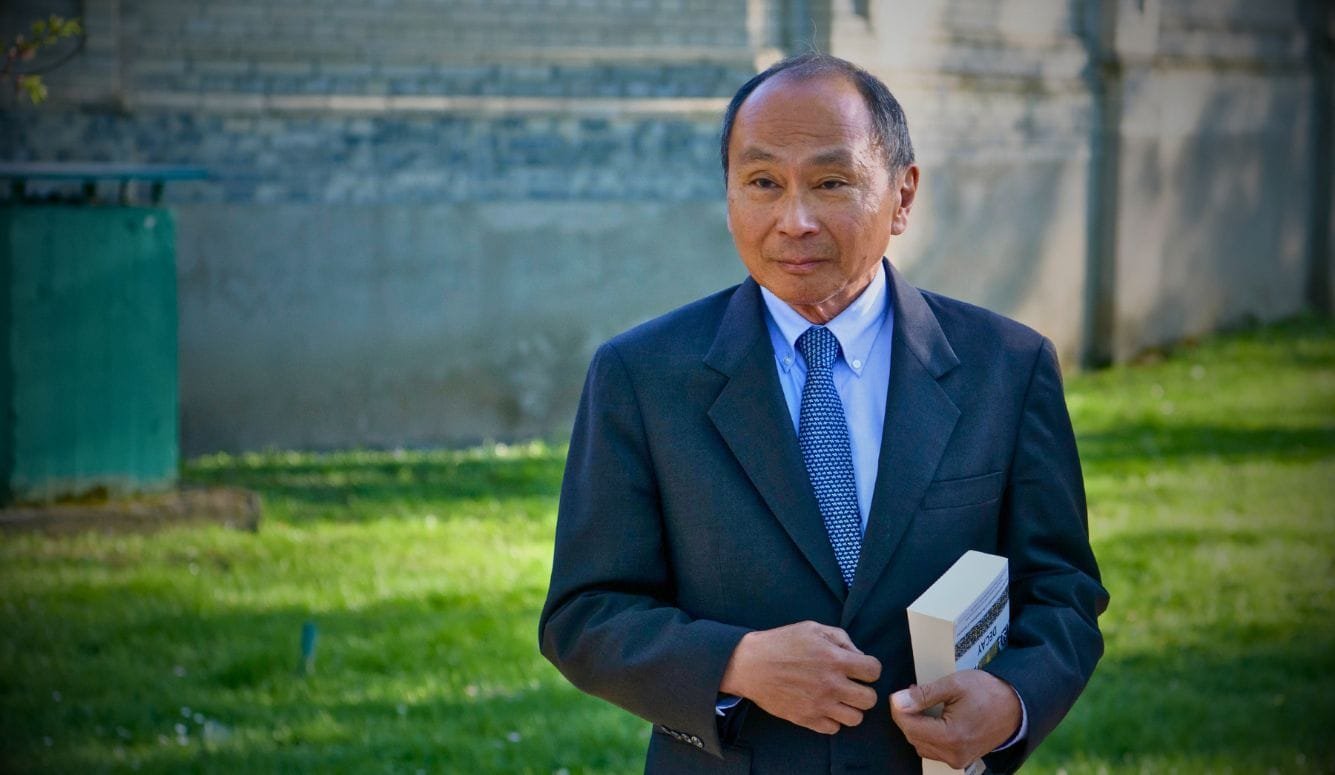
A review of In the Realm of the Last Man: A Memoir by Francis Fukuyama; 304 pages; Farrar, Straus and Giroux (September 2026)

I.

Over the past 37 years, Francis Fukuyama has written countless words, but he has been answering for four. His 1989 essay for The National Interest was titled “The End of History?” and it argued that there were no longer any systematic alternatives to liberal capitalist democracy. That essay appeared months before the fall of the Berlin Wall. By the time Fukuyama published his book The End of History and the Last Man in 1992, the Soviet Union had dissolved. Now that communism and fascism had been vanquished, it did seem as though there were no appealing or sustainable ideological challengers to liberal democracy left.

As the title of Fukuyama’s new memoir suggests, its author remains preoccupied with his most famous work, but he doesn’t recapitulate its argument in detail. Instead, he focuses on its most overlooked aspect. The reference to the “Last Man” comes from Friedrich Nietzsche, who declared his contempt for “democratic man” in Thus Spoke Zarathustra. Fukuyama summarises Nietzsche’s view that this type of person—conditioned by the comforts of modernity and the “slave morality” of Christianity—is a “creature without pride or a striving to be something better, content with petty pleasures and material well-being.” Fukuyama worries that liberal societies naturally produce such people, which is why he argued in 1989 that the “end of history will be a very sad time.” The “daring, courage, imagination, and idealism” required by existential ideological conflict, he wrote, were bound to be replaced by “economic calculation, the endless solving of technical problems, environmental concerns, and the satisfaction of sophisticated consumer demands.”

In the Realm of the Last Man revisits the notion of thymos, a Greek word that refers to our need for recognition from other people. This impulse takes two forms: isothymia is the desire to be recognised as equal, while megalothymia is the desire to be recognised as superior. While the latter is a “necessary motivator of any kind of human excellence,” Fukuyama writes, it is also what drives “narcissists and tyrants.” Central to Fukuyama’s thesis is the idea that the struggle for recognition is a basic human need and the primary driver of history. While liberal democracy meets this need better than any other system, it does not provide the same sense of meaning and purpose as the great life-and-death ideological battles throughout history. These are the battles for which Nietzsche and other anti-liberal thinkers are nostalgic. When Fukuyama writes “perhaps [the] prospect of centuries of boredom at the end of history will serve to get history started once again,” he is emphasising the natural discontentment with liberalism.

The End of History is a thoroughly Hegelian hypothesis, which supposes that history has a sense of purpose and direction. Unlike Marxists, who believe that history would inevitably produce a dictatorship of the proletariat and a workers’ utopia, Fukuyama contends that history culminated in the victory of liberal democracy in the “realm of ideas or consciousness” (although this process is “as yet incomplete in the real or material world”). This did not, however, mean an end to national and international strife and conflict. The Russian-French philosopher Alexandre Kojève believed that history had ended with the global expansion of liberalism after the French Revolution, and that belief was undisturbed by the wars, atrocities, and threat of nuclear annihilation that followed. “Progress in history,” Fukuyama writes, “is neither uniform nor linear. For [Kojève], none of the perturbations of the nineteenth and twentieth centuries served to undermine the truth of the principles of the equality of freedom first articulated in the French Revolution.”

But Fukuyama also takes Nietzsche’s misgivings about “democratic man” seriously, and this leads him to a bleak conclusion:

Experience suggests that if men cannot struggle on behalf of a just cause because that just cause was victorious in an earlier generation, then they will struggle against the just cause. They will struggle for the sake of struggle. They will struggle, in other words, out of a certain boredom: for they cannot imagine living in a world without struggle. And if the greater part of the world in which they live is characterized by peaceful and prosperous liberal democracy, then they will struggle against that peace and prosperity, and against democracy.

Fukuyama argues that the chaos and political instability in liberal democracies over the past decade are the result of this urge to struggle for the sake of struggling, even if that meant struggling against peace and prosperity. The same urge helps us to understand the authoritarian assault on liberal democracy led by figures like Vladimir Putin and Xi Jinping.

II.

Over the past decade, Fukuyama has been trying to solve a political puzzle. “The United States and its fellow liberal democracies in Europe and Asia are as politically free and materially prosperous as at any time in human history,” he writes in In the Realm of the Last Man. “Our problems are ones of extraordinary affluence, rather than material deprivation or gross injustice.” So why have many citizens of liberal democracies turned against the system that has bestowed such historically unprecedented gifts?


Read the full article here

Fact Checker

Verify the accuracy of this article using AI-powered analysis and real-time sources.

Get Your Fact Check Report

Enter your email to receive detailed fact-checking analysis

5 free reports remaining

Continue with Full Access

You've used your 5 free reports. Sign up for unlimited access!

Already have an account? Sign in here

Share. Facebook Twitter Pinterest LinkedIn Tumblr Email Telegram Copy Link
News Room
  • Website
  • Facebook
  • X (Twitter)
  • Instagram
  • LinkedIn

The FSNN News Room is the voice of our in-house journalists, editors, and researchers. We deliver timely, unbiased reporting at the crossroads of finance, cryptocurrency, and global politics, providing clear, fact-driven analysis free from agendas.

Related Articles

Media & Culture

O.J. Simpson and Lindsay Clancy

41 minutes ago
Debates

Habibi City: New York Magazine’s Antizionist Turn

55 minutes ago
Media & Culture

A SCOTUS Petition Argues That the Second Amendment Requires Carry-Permit Reciprocity

2 hours ago
Media & Culture

Why Conservative Republicans Are Worried About License Plate Cameras

3 hours ago
Media & Culture

Reporting Indicates RFK Jr. Directly Intervened To Keep PA Deaths Off CDC Measles Report

4 hours ago
Media & Culture

Why Public Schools Lost 1.4 Million Students

4 hours ago
Add A Comment
Leave A Reply Cancel Reply

Editors Picks

Habibi City: New York Magazine’s Antizionist Turn

55 minutes ago

Hunter Biden defends LAPTOP ahead of Wednesday launch, calls TRUMP a ‘grift’

1 hour ago

Gemini Gains Full MAS License for Crypto Services

1 hour ago

A SCOTUS Petition Argues That the Second Amendment Requires Carry-Permit Reciprocity

2 hours ago
Latest Posts

Moonshot’s Kimi rattled markets. U.S. agencies now say it was trained on American models

2 hours ago

Malone Lam Pleads Guilty in $245M Crypto Theft Case

2 hours ago

Why Conservative Republicans Are Worried About License Plate Cameras

3 hours ago

Subscribe to News

Get the latest news and updates directly to your inbox.

At FSNN – Free Speech News Network, we deliver unfiltered reporting and in-depth analysis on the stories that matter most. From breaking headlines to global perspectives, our mission is to keep you informed, empowered, and connected.

FSNN.net is owned and operated by GlobalBoost Media
, an independent media organization dedicated to advancing transparency, free expression, and factual journalism across the digital landscape.

Facebook X (Twitter) Discord Telegram
Latest News

O.J. Simpson and Lindsay Clancy

41 minutes ago

Habibi City: New York Magazine’s Antizionist Turn

55 minutes ago

Hunter Biden defends LAPTOP ahead of Wednesday launch, calls TRUMP a ‘grift’

1 hour ago

Subscribe to Updates

Get the latest news and updates directly to your inbox.

© 2026 GlobalBoost Media. All Rights Reserved.
  • Privacy Policy
  • Terms of Service
  • Our Authors
  • Contact

Type above and press Enter to search. Press Esc to cancel.

🍪

Cookies

We and our selected partners wish to use cookies to collect information about you for functional purposes and statistical marketing. You may not give us your consent for certain purposes by selecting an option and you can withdraw your consent at any time via the cookie icon.

Cookie Preferences

Manage Cookies

Cookies are small text that can be used by websites to make the user experience more efficient. The law states that we may store cookies on your device if they are strictly necessary for the operation of this site. For all other types of cookies, we need your permission. This site uses various types of cookies. Some cookies are placed by third party services that appear on our pages.

Your permission applies to the following domains:

  • https://fsnn.net
Necessary
Necessary cookies help make a website usable by enabling basic functions like page navigation and access to secure areas of the website. The website cannot function properly without these cookies.
Statistic
Statistic cookies help website owners to understand how visitors interact with websites by collecting and reporting information anonymously.
Preferences
Preference cookies enable a website to remember information that changes the way the website behaves or looks, like your preferred language or the region that you are in.
Marketing
Marketing cookies are used to track visitors across websites. The intention is to display ads that are relevant and engaging for the individual user and thereby more valuable for publishers and third party advertisers.