

 Freedom Index
Listen to the article
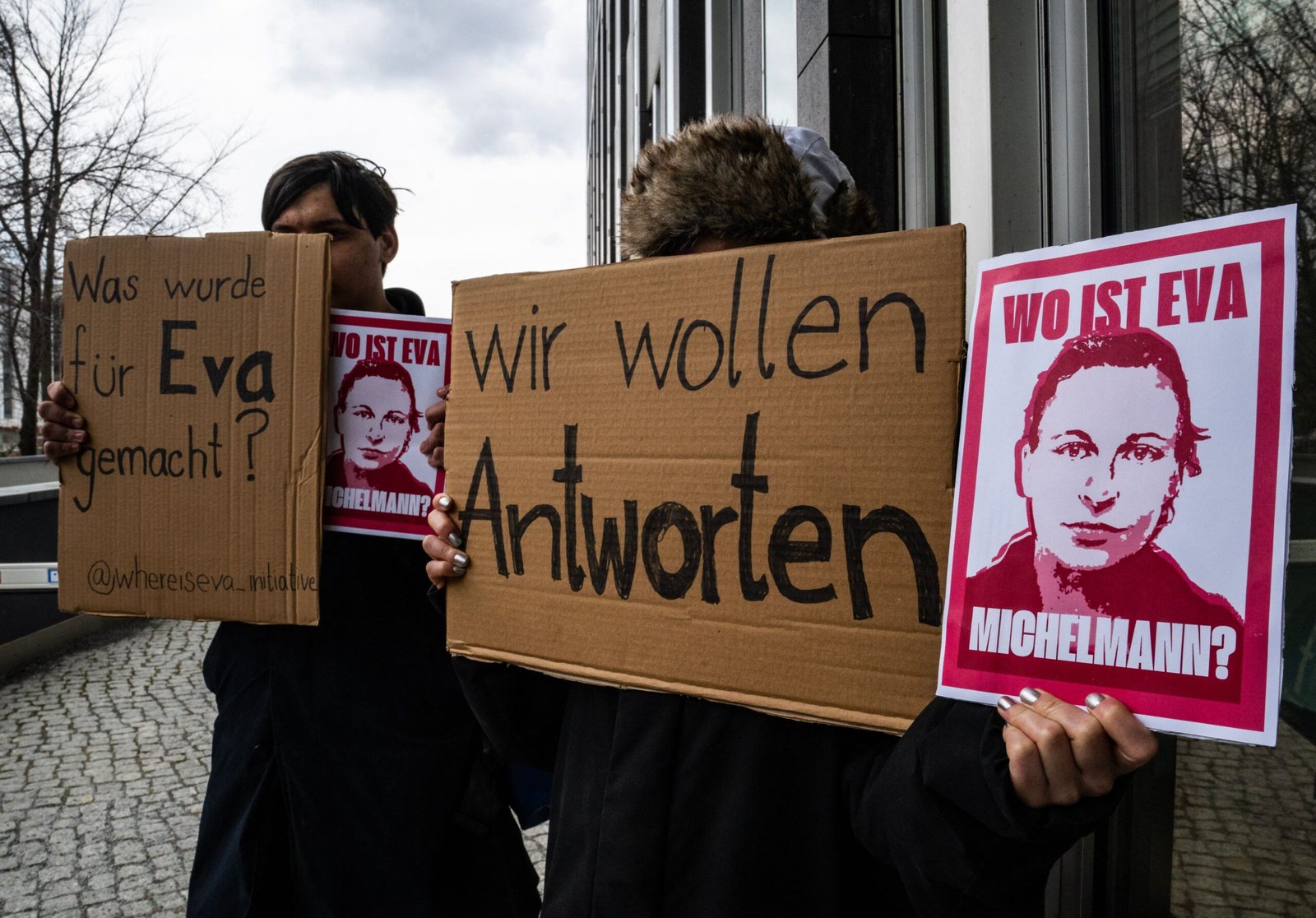
On January 18, 2026, German journalist Eva Maria Michelmann and her Kurdish-Turkish colleague Ahmed Polad were detained while reporting from the northern Syrian city of Raqqa, as government forces advanced on the territory controlled by the Kurdish-led Syrian Democratic Forces (SDF). After months of denying knowledge, authorities admitted holding them in custody.
Michelmann, who had lived in Syria since 2022 and reported for the Istanbul-based socialist Etkin News Agency (ETHA), spent five months in detention, where she was interrogated and accused of having ties to Kurdish armed groups, denied access to a lawyer and the outside world, and held alongside women bearing the signs of what she described as torture. She was released on June 19, however, no recent official information regarding Polad — who was working as a producer and reporter for ETHA and Özgür TV — has been made available.
The arrest of Michelmann and Polad has become an early test of Syria’s commitment to press freedom under its transitional authorities. Although officials pledged to uphold freedom of the press after the fall of Bashar al-Assad’s government in 2024, journalists continue to face attacks, arbitrary detention, enforced disappearances, censorship, and legal restrictions.
Omar Haj Ahmed, director general of press affairs at Syria’s Ministry of Information, disputed several elements of Michelmann’s account. He told CPJ that she was detained in Raqqa and later transferred to Aleppo, and denied that she had been held in detention facilities in Idlib or Damascus, apart from being taken to Damascus on the day of her handover to German authorities. He also rejected Michelmann’s account that she had been in Raqqa solely to report, alleging that Syrian authorities had identified her as an SDF affiliated, and that she lacked documents proving she was working as a journalist. CPJ requested but was not provided with the records he cited, and could not independently verify those claims.
Haj Ahmed said that Polad had not identified himself as a journalist when detained, and that Syrian authorities were in contact with the Turkish Consulate. He said that, to his knowledge, Polad would be released, but did not provide a timeline or further details. Syrian Interior Ministry spokesperson Nour al-Din al-Baba did not respond to CPJ’s request for comment.
CPJ also emailed Turkey’s Ministry of Foreign Affairs, embassy in Damascus, consulate general in Aleppo, and the presidency’s Directorate of Communications, asking what action Turkish authorities had taken on behalf of Polad, but did not receive a response.
In this interview, Michelmann recounts the assignment that brought her and Polad to Raqqa, the months she spent inside Syria’s prison system, and why she believes sustained international pressure is essential to securing Polad’s release.
Editor’s note: The interview was translated from German and edited for length and clarity. Michelmann uses the acronym “HTS” throughout the interview to refer to Syrian government and security forces aligned with the country’s transitional authorities. This is Michelmann’s personal characterization of the government. Hay’at Tahrir al-Sham (HTS) led the offensive that overthrew Bashar al-Assad in December 2024, but announced its dissolution when armed factions were integrated into new state institutions.
Can you describe the circumstances of your arrest in Raqqa on January 18?
When HTS military units were advancing toward Raqqa, Ahmed and I were in the city to document the events.
We believed that an attack by HTS could be accompanied by attacks from inside the city by covert armed groups or Islamic State sleeper cells. We wanted to document the confrontation and, in particular, related human rights violations.
On January 18, we sought shelter in a youth center close to a residential neighborhood inhabited mainly by Kurdish refugees from Afrin. They eventually sought shelter in the same building.
HTS forces entered the building where we had sought shelter with other civilians, alongside armed groups that had tried throughout the night to carry out a massacre against us. The forces, under Muhammad Abdul Ghani, later introduced themselves as police officers.
During questioning, what information were they seeking, and were you pressured to confess to certain activities, reveal journalistic sources, or make statements about Kurdish authorities, armed groups, or your reporting?
Early on January 19, we were taken to the headquarters of the Internal Security Command in Aleppo. That evening, two officials interrogated us. One was Mohammed Shabib, a member of the public relations office of the leadership of the Internal Security Command in Aleppo. He repeatedly asked whether we worked with the SDF and insisted, in a very angry tone, that the SDF were terrorists.
I explained that I was a German citizen and asked to contact the embassy. Because we were denied access to a telephone, I wrote a letter to the embassy requesting assistance returning to Germany. Shabib promised to forward it that evening.
A month later, in another interrogation, Shabib told me that Germany had not responded and that people in Aleppo might want to kill me. I was supposedly being held for my own protection.
After I challenged those explanations, Shabib said the real reason they were holding me was that they considered it possible that I might be working with the Kurdistan Workers Party. Apparently, my presence in the building in Raqqa was enough for them to make that assumption.
My demand that any assessment of whether I had violated a law should be based on international law was met only with an ironic smile.
Because I was denied contact with the German Embassy, access to a telephone, and a lawyer of my choice, I began refusing to make statements. They then searched for information about me, my lifestyle, and sociopolitical views in everything I said and did — from my language skills and how I cleaned the cell, to my sleeping and eating habits. I gradually stopped almost all communication.
Only near the end of my imprisonment, due to considerable public pressure, was contact established with representatives of Germany and, during the final days, with my family.
No clear legal basis for my continued detention was presented to me.
What did you experience or witness in detention?
I could say a lot about my personal experiences of ill-treatment and torture, but I would like to avoid the public discussion focusing on me.
Torture involving beatings and electricity is routine and widespread in HTS prisons. I came into contact with many people who had been subjected to this treatment.
Numerous women showed me burns on their legs left by electric-shock . Many said they had confessed to things that were not true simply so that the torture would stop.
I met women who had been suspended by their hands and beaten across their bodies, women whose legs had been broken, and women who were left in a locked cell during a bombardment, despite their cries for help and the possibility that they could be killed.
Where were you held, and what were the conditions like?
I was held in six locations: two in Aleppo, one in Idlib, and three in Damascus.
The first prison in Damascus contained mainly Alawite women. Fifteen of us were confined to about 16 square meters [172 square feet]. That space included the toilet, which we also used as a shower.
At another location, there were no beds, and the floor was tiled. It was extremely overcrowded there as well.
At my final place, there were women from Iraq, Uzbekistan, Somalia, and Ethiopia. There were many children and babies.
What do you know about Ahmet Polad’s current situation, and what steps would you like to see the Turkish authorities take?
I was separated from Ahmed a few days after our abduction in Raqqa. After my release, I learned that he had last been seen with injuries to his abdomen and hand. This gives serious cause for concern, because he was uninjured when I last saw him in captivity.
While in detention, Ahmed made it very clear to me that he believed he would be in mortal danger in the hands of HTS, as well as if he were extradited to Turkey, because of his identity as a left-wing Kurdish journalist.
His reported injuries are a clear indication that he may have been subjected to severe physical abuse. We must also assume that he is being held in complete isolation, as I was for a long time.
Preventing Ahmed’s lawyer from having any contact with him is an open violation of internationally recognized human rights and makes it impossible for legal counsel to protect him from further threats to his life and physical integrity.
Pressure must be placed on the Syrian and Turkish governments to disclose Ahmed Polad’s whereabouts and state of health. Germany has the ability to grant Ahmed humanitarian protection and should make use of that.
The authorities must allow him to communicate with his lawyer and family, disclose any charges against him, and protect his life and physical integrity.
How has your detention affected your view of journalism and advocacy?
Without the immense public pressure generated by the tireless work of countless journalists and human rights activists, my liberation would certainly not have taken place. They could simply have made me disappear.
My experience, as well as what I saw inside HTS detention facilities, showed me how influential and urgently necessary this kind of public advocacy is.
Critical journalism, public pressure, and solidarity save lives. I will never forget that.
Read the full article here
Fact Checker
Verify the accuracy of this article using AI-powered analysis and real-time sources.