Close Menu
FSNN | Free Speech News NetworkFSNN | Free Speech News Network
  • Home
  • News
    • Politics
    • Legal & Courts
    • Tech & Big Tech
    • Campus & Education
    • Media & Culture
    • Global Free Speech
  • Opinions
    • Debates
  • Video/Live
  • Community
  • Freedom Index
  • About
    • Mission
    • Contact
    • Support
Trending

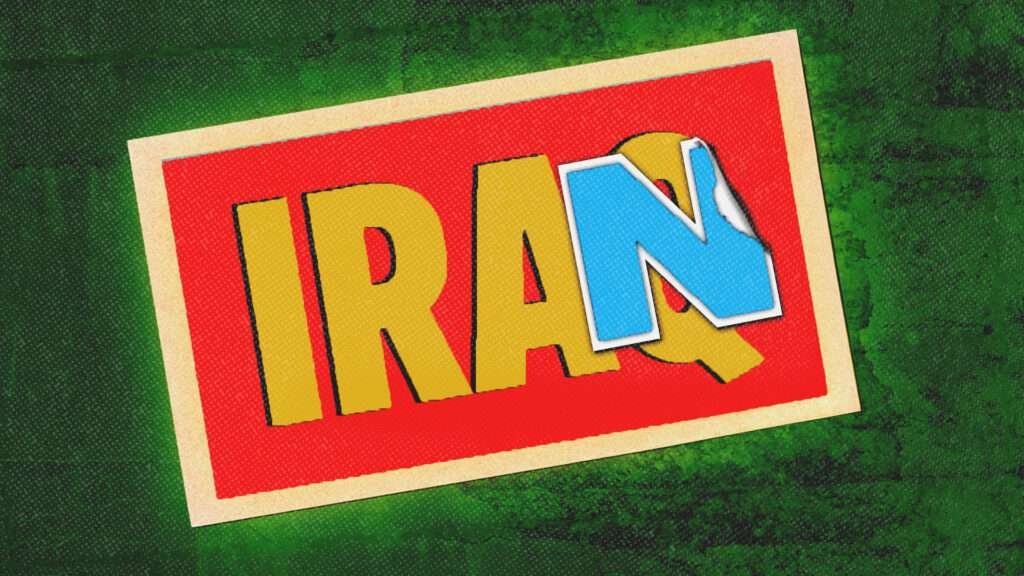
The Iraq War Cheerleaders Were Wrong. They’re Wrong About Iran Too.

36 seconds ago

Bitcoin ETF Demand Grows While Ether and XRP Cool

2 hours ago

Southeast Asia’s crypto funding rebounds to $680 million as investors focus on mature firms

4 hours ago
Facebook X (Twitter) Instagram
Facebook X (Twitter) Discord Telegram
FSNN | Free Speech News NetworkFSNN | Free Speech News Network
Market Data Newsletter
Saturday, September 5
  • Home
  • News
    • Politics
    • Legal & Courts
    • Tech & Big Tech
    • Campus & Education
    • Media & Culture
    • Global Free Speech
  • Opinions
    • Debates
  • Video/Live
  • Community
  • Freedom Index
  • About
    • Mission
    • Contact
    • Support
FSNN | Free Speech News NetworkFSNN | Free Speech News Network
Home»News»Media & Culture»The Iraq War Cheerleaders Were Wrong. They’re Wrong About Iran Too.
Media & Culture

The Iraq War Cheerleaders Were Wrong. They’re Wrong About Iran Too.

News RoomBy News Room36 seconds agoNo Comments5 Mins Read0 Views
Share Facebook Twitter Pinterest Copy Link LinkedIn Tumblr Email VKontakte Telegram
The Iraq War Cheerleaders Were Wrong. They’re Wrong About Iran Too.
Share
Facebook Twitter Pinterest Email Copy Link

Listen to the article

0:00
0:00

Key Takeaways

Playback Speed

Select a Voice

The George W. Bush administration and its camp followers in the media sold the Iraq War with lies and spin. Before the war, hawkish pundits such as CNN host Fareed Zakaria and New York Times columnist Thomas L. Friedman promised that it would bring reform to the Arab world. Once the war started, Fox News host Brit Hume gloated that critics got it “completely wrong,” and his colleague Tony Snow declared a “relatively bloodless victory”—two statements that aged very badly as the new Iraq collapsed into decades of war, with U.S. troops in the line of fire.

So it went in Iran. Pro-war journalists and TV talking heads predicted that the Iranian government would collapse at the first push. Once the war started, they ignored signs that things were not going as planned. Unlike the Iraq War, the war in Iran has not turned into a drawn-out insurgency. The U.S. did not even topple the government, instead accepting a ceasefire after four weeks. But that ceasefire did not hold. At press time, the U.S. and Iran were fighting over the Strait of Hormuz, a key chokepoint for trade that had been fully open before the war.

***

Before the U.S. attacked Iran on February 28, a chorus of media personalities, including several with direct lines to President Donald Trump, argued that a war with Iran would last only a few days. Washington Post columnist Marc Thiessen predicted that the Iranian government would quickly fall because “the Iranian people are the boots on the ground.” Mark Dubowitz, CEO of the neoconservative Foundation for Defense of Democracies, told The Hugh Hewitt Show that Ali Khamenei, then Iran’s supreme leader, would not fight back because “that’s the end of his regime.” Fox News host Mark Levin claimed Iran physically couldn’t fight back.

Reza Pahlavi, the crown prince of Iran overthrown in the 1979 revolution, was frequently featured on Fox News as a pro-war Iranian voice. Although he had some support among Iranians, the suburban dad formerly known as prince was making wild promises he couldn’t keep. In a February 12 interview with the German magazine Der Spiegel, Pahlavi urged U.S. intervention, claiming he had recruited an army of 100,000 defectors. Not a single uprising against the Iranian government happened during the war.

John Podhoretz, heir to the neoconservative magazine Commentary, at least admitted that his predictions fell flat. In the first hours of the war, he wrote that the U.S. military would leave “quick work for Iranians themselves to kick the mullahs to the curb.” On a Commentary podcast four months later, he said “there is no person on Earth who is going to say that America didn’t lose the war.”

Other pundits simply refused to acknowledge when things were not going their way. Week after week, Fox News commentator Jack Keane said the war would be over in two or three more weeks. Many of these pundits’ arguments were simply an appeal to shut up and trust the leader. In mid-March, retired British Army officer Richard Kemp complained in The Telegraph about an excess of “doom mongering.” The media, he claimed, were simply “not privy” to the genius of Trump’s plans.

On CNN a few days before the April ceasefire, former Bush administration official Scott Jennings said “there is no doubt we have defanged this regime.” Zineb Riboua, a research fellow with the neoconservative Hudson Institute, complained a few days after the ceasefire that the West was ignoring the “lived experience” of Arabs, who she claimed supported the war. Public opinion polling from both before and after the war suggested that Arab publics were increasingly rooting for Iran and opposing the war. Riboua also claimed the war was “all about” weakening China by, among other things, eliminating a cheap source of oil. Three months after the ceasefire, China was snapping up discounted oil from Iran’s rivals.

Soon after the ceasefire, Trump attempted to pressure Iran further by blockading its ports, and the Foundation for Defense of Democracies published a prediction that Iran would be forced to shut down its oil wells within 13 days, causing permanent damage. Trump repeated a similar timeline on Fox News, predicting that the wells would literally explode at the end of April. That didn’t happen.

Many of the cheerleaders for war with Iran were the same people who had cheered on the invasion of Iraq, often with the same arguments. Fox News host Sean Hannity, who predicted in February 2003 that the Iraq War was “going to be over very quickly,” said almost exactly the same thing in February 2026: “It’s not going to be a forever war. It’s going to be overwhelming military might and force, and then it’s going to be up to the people of Iran. If they want a chance at freedom, they will have it, I believe, within the next few weeks.” New York Times columnist Bret Stephens, who bragged in 2023 about his lack of regrets about the Iraq War, whined in March 2026 about “our inability to appreciate the advantages we now possess.”

There is a revolving door between hawkish punditry and government work. Benjamin Netanyahu, testifying before the U.S. Congress as a retired prime minister and private citizen in 2002, said invading Iraq would have “enormous positive reverberations.” Netanyahu, who is once again the prime minister of Israel, helped Trump plan the Iran War. Back in 2002, Condoleezza Rice, then the U.S. national security adviser, was pushing the false claim that Iraq was building weapons of mass destruction. “We don’t want the smoking gun to be a mushroom cloud,” she famously told CNN. In July 2026, Rice was invited to address the Aspen Security Forum about the new war in Iran. “When I hear, ‘Well, it wasn’t imminent,'” she told the crowd, “I think, ‘Do you really want to wait until it’s imminent?'”

Fool us once, shame on you. Fool us twice, shame on us.

This article originally appeared in print under the headline “Pundits Got the Iran War Wrong.”

Read the full article here

Fact Checker

Verify the accuracy of this article using AI-powered analysis and real-time sources.

Get Your Fact Check Report

Enter your email to receive detailed fact-checking analysis

5 free reports remaining

Continue with Full Access

You've used your 5 free reports. Sign up for unlimited access!

Already have an account? Sign in here

#CivicEngagement #Democracy #FreePress #PoliticalCoverage #PoliticalNews
Share. Facebook Twitter Pinterest LinkedIn Tumblr Email Telegram Copy Link
News Room
  • Website
  • Facebook
  • X (Twitter)
  • Instagram
  • LinkedIn

The FSNN News Room is the voice of our in-house journalists, editors, and researchers. We deliver timely, unbiased reporting at the crossroads of finance, cryptocurrency, and global politics, providing clear, fact-driven analysis free from agendas.

Related Articles

Media & Culture

“Incredulity” That “Competent Law Firm Representing One of the Largest Financial Institution[s] in the World” Filed Brief with AI Hallucinations

6 hours ago
Media & Culture

Lawyers’ Responsibility for Hallucinations in Briefs That They Sign

7 hours ago
Media & Culture

Data Centers Are Not the Problem

8 hours ago
Media & Culture

Eleventh Circuit Holds Qui Tam Relators Are Not “Officers of the United States.” What Happens Next?

9 hours ago
Cryptocurrency & Free Speech Finance

BitMEX Co-Founder Ben Delo Gives Farage’s Reform UK Another £4 Million

10 hours ago
Media & Culture

The Right to Trial is Vanishing. Could Bolder Juries Save It?

10 hours ago
Add A Comment
Leave A Reply Cancel Reply

Editors Picks

Bitcoin ETF Demand Grows While Ether and XRP Cool

2 hours ago

Southeast Asia’s crypto funding rebounds to $680 million as investors focus on mature firms

4 hours ago

XRP Ledger has fewer active accounts than last year, but bigger trades and more value

5 hours ago

“Incredulity” That “Competent Law Firm Representing One of the Largest Financial Institution[s] in the World” Filed Brief with AI Hallucinations

6 hours ago
Latest Posts

Lawyers’ Responsibility for Hallucinations in Briefs That They Sign

7 hours ago

Data Centers Are Not the Problem

8 hours ago

Eleventh Circuit Holds Qui Tam Relators Are Not “Officers of the United States.” What Happens Next?

9 hours ago

Subscribe to News

Get the latest news and updates directly to your inbox.

At FSNN – Free Speech News Network, we deliver unfiltered reporting and in-depth analysis on the stories that matter most. From breaking headlines to global perspectives, our mission is to keep you informed, empowered, and connected.

FSNN.net is owned and operated by GlobalBoost Media
, an independent media organization dedicated to advancing transparency, free expression, and factual journalism across the digital landscape.

Facebook X (Twitter) Discord Telegram
Latest News

The Iraq War Cheerleaders Were Wrong. They’re Wrong About Iran Too.

37 seconds ago

Bitcoin ETF Demand Grows While Ether and XRP Cool

2 hours ago

Southeast Asia’s crypto funding rebounds to $680 million as investors focus on mature firms

4 hours ago

Subscribe to Updates

Get the latest news and updates directly to your inbox.

© 2026 GlobalBoost Media. All Rights Reserved.
  • Privacy Policy
  • Terms of Service
  • Our Authors
  • Contact

Type above and press Enter to search. Press Esc to cancel.

🍪

Cookies

We and our selected partners wish to use cookies to collect information about you for functional purposes and statistical marketing. You may not give us your consent for certain purposes by selecting an option and you can withdraw your consent at any time via the cookie icon.

Cookie Preferences

Manage Cookies

Cookies are small text that can be used by websites to make the user experience more efficient. The law states that we may store cookies on your device if they are strictly necessary for the operation of this site. For all other types of cookies, we need your permission. This site uses various types of cookies. Some cookies are placed by third party services that appear on our pages.

Your permission applies to the following domains:

  • https://fsnn.net
Necessary
Necessary cookies help make a website usable by enabling basic functions like page navigation and access to secure areas of the website. The website cannot function properly without these cookies.
Statistic
Statistic cookies help website owners to understand how visitors interact with websites by collecting and reporting information anonymously.
Preferences
Preference cookies enable a website to remember information that changes the way the website behaves or looks, like your preferred language or the region that you are in.
Marketing
Marketing cookies are used to track visitors across websites. The intention is to display ads that are relevant and engaging for the individual user and thereby more valuable for publishers and third party advertisers.