

 Freedom Index
Listen to the article
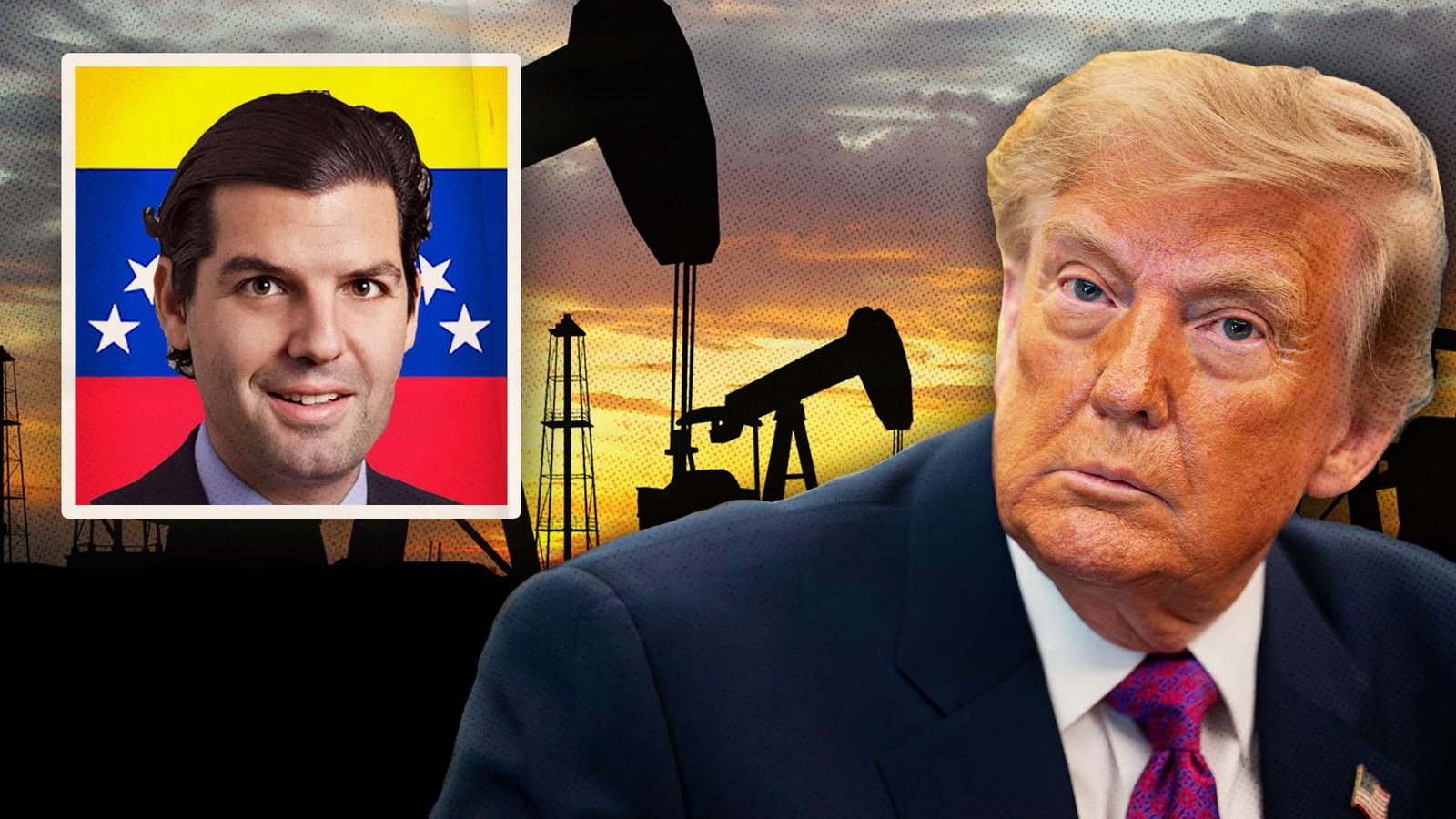
After the ouster of Venezuelan dictator Nicolás Maduro, President Donald Trump promised to make the South American nation “prosperous again.” Eight months later, we’re getting a clear picture of how the Trump administration hopes to achieve this objective: by becoming a shareholder in a Venezuelan oil company.
Under an extraordinary agreement first reported by The Wall Street Journal on Saturday, the U.S. government is taking a 35 percent passive stake in North American Blue Energy Partners (NABEP), the company led by Venezuelan businessman Alejandro Betancourt. Under the terms of the agreement, NABEP will have the opportunity to develop 17 oil fields said to hold 65 billion barrels—about one-fifth of Venezuela’s total reserves—while the U.S. government would gain preferential rights to buy 20 percent of its output at cost. The State Department would also have the right of first refusal to purchase the remaining 80 percent, per the White House. The Pentagon would ultimately hold those interests, according to the Journal, although a Pentagon spokesman told Reuters that the office structuring the deal lacks authority to take equity.
The arrangement emerged like a bunny out of a hat after major American oil companies proved reluctant to invest billions in a country still burdened by political risk, weak institutions, and, consequently, an uncertain legal order. (Trump had predicted otherwise in January, saying American oil companies would spend billions to “fix the badly broken infrastructure” and “start making money for the country.”) Regardless, the deal is sure to be a boon for Betancourt, one of the largest beneficiaries of Trump’s involvement in Venezuela.
Betancourt belongs to the generation Venezuelans have nicknamed the bolichicos: young men from wealthy old Caracas families who became fabulously rich under Hugo Chávez’s supposedly anti-oligarchic revolution. When Chávez officially declared an electricity emergency in 2010, the government spent billions of dollars while bypassing ordinary procurement. Betancourt and his cousin, Pedro Trebbau, allegedly decided to cash in on this lapse of oversight. Their new company, Derwick Associates, had no record of building power plants. Within roughly 14 months, however, it won billions of dollars in contracts and relied heavily on a U.S. company for engineering and equipment. In 2018, Transparencia Venezuela—the national chapter of the watchdog Transparency International—estimated that 11 Derwick projects billed at about $5 billion should have cost $2.1 billion.
Betancourt and Derwick Associates disputed those figures and have denied wrongdoing. Betancourt would go on to buy a nearly $12 million Fifth Avenue penthouse and later a sprawling estate outside Madrid, where his lavish wedding appeared in ¡Hola! magazine. In 2013, former U.S. Ambassador Otto Reich brought racketeering charges against Betancourt and others, alleging corrupt contracting and retaliation. Betancourt denied the allegations, and the federal charges were later dismissed because Reich had not adequately alleged a pattern of racketeering.
Electricity was only the beginning. Betancourt moved into oil through a venture connected to the Russian bank Gazprombank and Petrozamora, a producer partnered with Venezuela’s state oil company, PDVSA, according to internal records from the Swiss private bank CBH, obtained by the Venezuela Leaks investigative collaboration. Betancourt denied that the companies had formed a joint venture.
In 2019, while reportedly a target of a federal money-laundering investigation involving PDVSA, Betancourt hired Rudy Giuliani, who was then Trump’s personal lawyer. Betancourt was not charged. Giuliani urged Justice Department officials to consider Betancourt’s claim that he had secretly supported Juan Guaidó’s U.S.-backed opposition, a claim that Reuters could not verify and Guaidó denied.
In 2020, the relationship between Betancourt—who was living abroad at the time—and the Maduro regime ruptured after the businessman supported the U.S.-backed effort to install Guaidó, reportedly acting as an intermediary between Venezuelan military officers and Russia and helping finance the opposition. Maduro’s government subsequently ordered his arrest, froze his domestic assets and displaced him from effective control of his Petrozamora interests. The government also “dispatched security forces to his Venezuelan properties,” The Washington Post reports.
In 2023, a corruption scandal fractured Maduro’s inner circle and brought down Oil Minister Tareck El Aissami, whose faction had pushed Betancourt out of Petrozamora. The purge cleared the way for Betancourt’s return to Caracas in 2023 and he was reportedly offered security guarantees and a role rebuilding Petrozamora—which was only producing about 20,000 barrels a day after years of underinvestment and repeated changes in operational control—if he stayed out of politics. Operations later passed to NABEP, the company he now controls.
Then came January 3, 2026. In the hours after Maduro’s capture, Betancourt consoled Venezuela’s new dictator, Delcy Rodríguez, and convinced her to speak with U.S. Secretary of State Marco Rubio, reports El País. During Rodríguez’s initial calls with the United States, U.S. officials “made clear…that Betancourt would be a key intermediary in restarting the country’s oil business,” per The Washington Post. He helped arrange early oil contracts and coordinated between Washington, Rodríguez, PDVSA, and American firms. One early deal allowed oil-trading companies Vitol and Trafigura to buy Venezuelan crude at a prepaid discount of $15 per barrel, according to the Post, which described the arrangement as “opaque.” Trafigura told the outlet that no outside party held a financial interest in its negotiations or contract; Vitol declined to comment.
The connection between Betancourt and the Trump administration doesn’t end at oil contracts. As the Post reported last week, several high-ranking members of the administration—including Deputy Secretary of State Christopher Landau, then–Attorney General Pam Bondi, and then–Deputy Attorney General Todd Blanche—have either spoken with Swiss officials since January about their investigation into Betancourt, or negotiated with them to drop an extradition request against the Venezuelan businessman. Swiss prosecutors have been investigating Betancourt on suspicion of laundering proceeds from alleged PDVSA and Venezuelan Treasury corruption schemes through Swiss accounts. He has not been formally charged and denies wrongdoing. U.S. officials sought a resolution without criminal penalties and later arranged a one-year, multiple-entry visa to the United States.
In May, Switzerland withdrew its British extradition request but extended an international warrant and asked the Justice Department to arrest him if he entered the United States. The department did not act. Swiss proceedings remain active; Betancourt has not been charged in Switzerland, the United States, or Venezuela, and he denies wrongdoing. Betancourt did not respond to Reason‘s request for comment.
Betancourt’s success and access are a representation of what Venezuela’s economy has become under Rodríguez. While the state is loosening ownership rules—and private firms are being invited back into industries such as oil and mining—it maintains its power to decide who gets access.
For instance, while Rodríguez’s January oil reform ended PDVSA’s formal monopoly, allowed private producers more control over operations and sales, and authorized international arbitration, it removed parliamentary oversight, preserved broad executive discretion over contracts, taxes, and royalties, and left PDVSA as the industry’s dominant administrator without an independent regulator. Competitive bidding is not the organizing principle. In February, Venezuelan officials suspended 19 production-sharing contracts signed under Maduro and then began reviewing them with U.S. officials, many involving little-known companies, even as PDVSA continued selling the oil they produced. U.S. Treasury licenses became another gate through which prospective operators had to pass.
A new mining law opened gold and strategic minerals to private and foreign companies. Before that, those were reserved to the state, forcing investors to operate through state-controlled joint ventures or specially approved alliances. But this happened before Venezuela’s mining sector had institutions capable of supervising its implementation. This could legalize existing criminal supply chains: Much of the gold in the Venezuelan states of Bolívar and Amazonas comes from informal mines controlled by armed groups, military-linked networks, and politically connected intermediaries. Meanwhile, the state retains broad discretion, concessions can last up to 50 years, international arbitration creates contingent liabilities, and the law protects earlier opaque agreements.
Eight months after the United States captured Maduro, Venezuela has made some improvements, even if many of the scandals of the former regime remain. But Trump’s scheme to take an equity stake in the nation’s oil production—a tactic he’s applied elsewhere—threatens what little progress has been made and entrenches a system that rewards the politically connected instead of market winners. For Venezuela, dictators may change, but the Betancourts remain.
Read the full article here
Fact Checker
Verify the accuracy of this article using AI-powered analysis and real-time sources.