Close Menu
FSNN | Free Speech News NetworkFSNN | Free Speech News Network
  • Home
  • News
    • Politics
    • Legal & Courts
    • Tech & Big Tech
    • Campus & Education
    • Media & Culture
    • Global Free Speech
  • Opinions
    • Debates
  • Video/Live
  • Community
  • Freedom Index
  • About
    • Mission
    • Contact
    • Support
Trending

Bitcoin back above $81,000 as hike odds fade, Zcash leads with 15% jump

6 minutes ago

El Salvador Used No Public Funds for Bitcoin: IMF

7 minutes ago

Judge Rejects Trump Administration’s Plan To Break Up Google’s Ad Business

34 minutes ago
Facebook X (Twitter) Instagram
Facebook X (Twitter) Discord Telegram
FSNN | Free Speech News NetworkFSNN | Free Speech News Network
Market Data Newsletter
Friday, September 4
  • Home
  • News
    • Politics
    • Legal & Courts
    • Tech & Big Tech
    • Campus & Education
    • Media & Culture
    • Global Free Speech
  • Opinions
    • Debates
  • Video/Live
  • Community
  • Freedom Index
  • About
    • Mission
    • Contact
    • Support
FSNN | Free Speech News NetworkFSNN | Free Speech News Network
Home»News»Media & Culture»Trump’s Venezuela Oil Deal Sells Out Democracy and Free Markets
Media & Culture

Trump’s Venezuela Oil Deal Sells Out Democracy and Free Markets

News RoomBy News Room1 day agoNo Comments5 Mins Read0 Views
Share Facebook Twitter Pinterest Copy Link LinkedIn Tumblr Email VKontakte Telegram
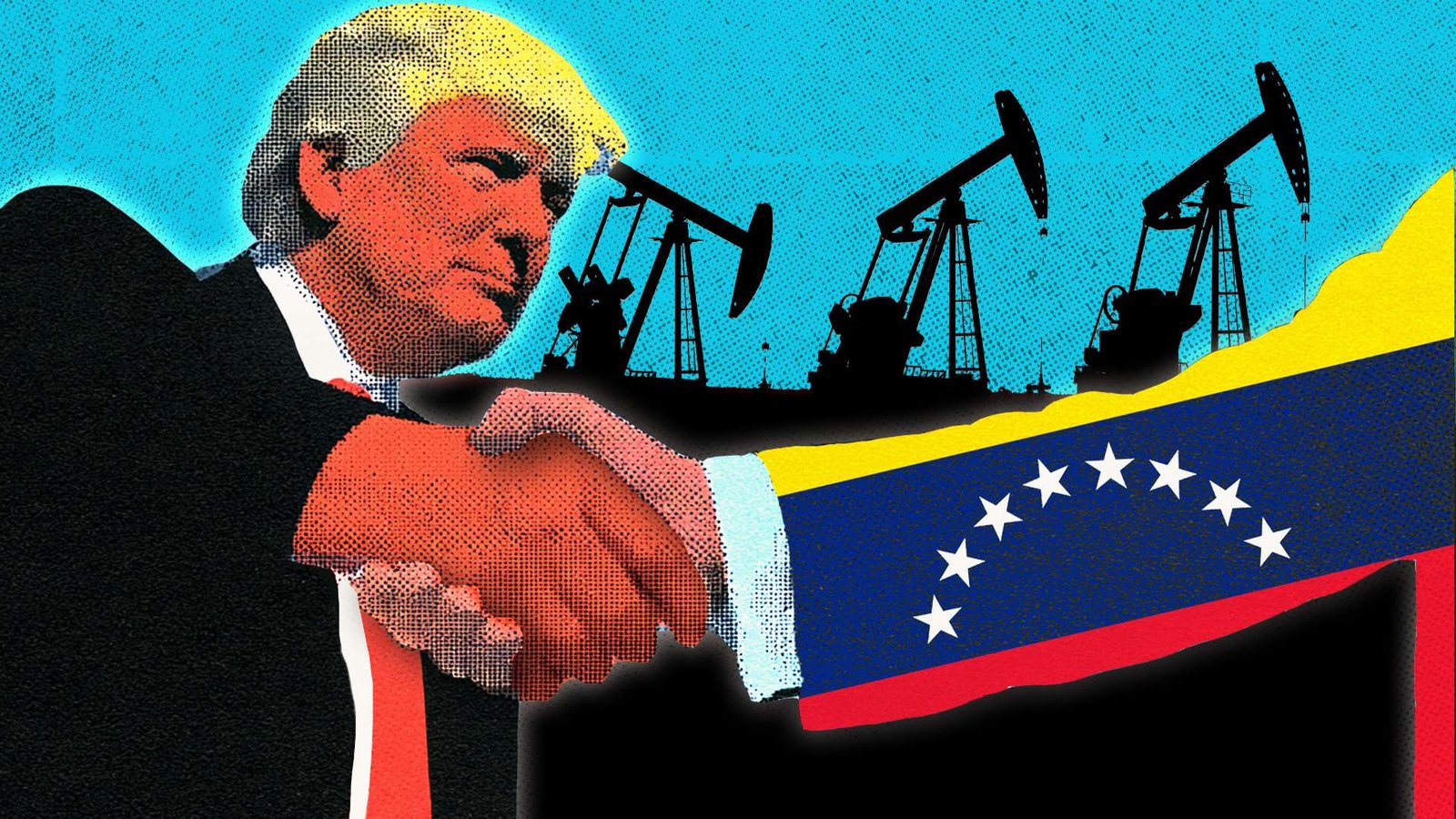
Trump’s Venezuela Oil Deal Sells Out Democracy and Free Markets
Share
Facebook Twitter Pinterest Email Copy Link

Listen to the article

0:00
0:00

Key Takeaways

Playback Speed

Select a Voice

Just days after the U.S. military captured Venezuelan dictator Nicolás Maduro in early January, Secretary of State Marco Rubio outlined the Trump administration’s plans for the future of the South American country.

Rubio described a three-stage process. First would be “stabilization of the country,” which would include President Donald Trump’s biggest priority: seizing oil reserves. “We are going to take between 30 and 50 million barrels of oil,” Rubio said in January.

Then would come the latter stages of the plan, which Rubio described as “recovery” (opening up Venezuelan markets) and, lastly, a political “transition” toward new leaders.

Those remarks—and the order of Rubio’s priorities—are worth revisiting in light of last week’s announcement that the U.S. would be, in President Trump’s terms, taking “control of more than 65 BILLION BARRELS of proven Oil Reserves in Venezuela.”

According to The Wall Street Journal, the deal includes a 100-year lease of some Venezuelan oil fields. The oil will be extracted by what is technically a new private company—but the U.S. government will be a major shareholder in the entity.

Under the terms of the deal announced by the White House on Monday, the government will hold a 35 percent stake in North American Blue Energy Partners, previously the second-largest private oil producer in Venezuela. The federal government will also hold “veto power over the appointment of any member of” the company’s board of directors, the White House announced.

This is a rather shocking expansion of the state corporatism that the Trump administration has mainstreamed into American politics. Now, in addition to owning stakes in more than two dozen American companies, the Trump administration is giving the federal government direct control over an oil company that will operate in a foreign country while competing with other American and international firms.

It is effectively the “American nationalization of Venezuelan oil,” as National Review termed it. The Trump administration has apparently decided it can solve socialism in Venezuela by…doing socialism in Venezuela.

Meanwhile, the deal also seems likely to create additional hurdles to the democratic transition in Venezuela—a country that is still officially governed by socialist Delcy Rodríguez, Maduro’s second-in-command, who was appointed as interim president by the Trump administration in January.

Indeed, inking this oil deal with the Trump administration is likely to strengthen the Venezuelan regime. “Both the Trump administration and the Rodríguez regime might now share an incentive to prevent any elected government from taking office,” concludes The Economist.

Then again, Rubio made the Trump administration’s priorities clear all the way back in January, didn’t he? Bringing democracy to Venezuela was always a distant third.

No wonder Rodríguez seems thrilled. “The benefits are endless,” she said during a brief television broadcast announcing the deal.

Many other Venezuelans seem to disagree.

Ricardo Hausmann, a former Venezuelan official who teaches at Harvard’s Kennedy School, called the deal “shameful” and told Rubio that “it will come to haunt you.”

“You opted to use US power, not to free Venezuelans, but to go to bed with our oppressors,” Haussman posted on X. “You opted to push an asset grab, an unconstitutional deal with an illegitimate oppressive government, instead of using US leadership to re-establish constitutional rule and democracy first, and then deal with a legitimate government that could have made credible long-term commitments, in due course.”

Juan Pablo Guanipa, a prominent figure in the Venezuelan opposition movement, characterized the oil deal as “a skyscraper [built] on pillars of clay,” in a post on X.

“The only way to truly reactivate the Venezuelan economy in the long term and make this agreement benefit both parties is through a free election that leads to a representative government, clear rules of the game, rule of law, and institutions that allow our resources to be managed transparently and for the benefit of the nation,” Guanipa wrote.

The oil deal makes those goals more difficult to achieve. It suggests that the Trump administration prefers a Venezuela ruled by a deeply unpopular and unlawful leader who acquiesces to bizarre forms of neo-colonialism, rather than a democratic country with a legitimate government and free markets.

And the consequences of this deal could be felt well beyond Venezuela. The Trump-Rodríguez oil deal is “a gift to socialists all over the world who can now point to it with some credibility as an example of an imperial resource grab,” writes Ian Vásquez, vice president for international studies at the Cato Institute.

“The deal flies in the face of economic freedom and the principle of voluntary exchange that made the United States prosperous,” writes Vásquez, “and it makes little strategic or economic sense.”

A more stable, democratic Venezuela would be the kind of place where American oil companies would be able and willing to invest resources. Prioritizing “taking the oil” undermines both the interests of Venezuelans and the principles for which America supposedly stands.

Read the full article here

Fact Checker

Verify the accuracy of this article using AI-powered analysis and real-time sources.

Get Your Fact Check Report

Enter your email to receive detailed fact-checking analysis

5 free reports remaining

Continue with Full Access

You've used your 5 free reports. Sign up for unlimited access!

Already have an account? Sign in here

#Journalism #MediaEthics #NewsAnalysis #PressFreedom #PublicOpinion
Share. Facebook Twitter Pinterest LinkedIn Tumblr Email Telegram Copy Link
News Room
  • Website
  • Facebook
  • X (Twitter)
  • Instagram
  • LinkedIn

The FSNN News Room is the voice of our in-house journalists, editors, and researchers. We deliver timely, unbiased reporting at the crossroads of finance, cryptocurrency, and global politics, providing clear, fact-driven analysis free from agendas.

Related Articles

Media & Culture

Judge Rejects Trump Administration’s Plan To Break Up Google’s Ad Business

34 minutes ago
Media & Culture

A California County Used Drones To Spy on Homes. A Settlement Will Now Require Warrants.

2 hours ago
Debates

The Case for Elites with Richard Hanania | Quillette Cetera Episode 71

2 hours ago
Media & Culture

ICE Reportedly Lowered Its Standards To Meet Trump’s Hiring Goal

3 hours ago
Media & Culture

An Essay on How to Get Top Grades On Law School Exams

4 hours ago
Media & Culture

State Film Subsidies Lose Money. Trump Wants To Try the Idea Nationally.

5 hours ago
Add A Comment
Leave A Reply Cancel Reply

Editors Picks

El Salvador Used No Public Funds for Bitcoin: IMF

7 minutes ago

Judge Rejects Trump Administration’s Plan To Break Up Google’s Ad Business

34 minutes ago

OpenAI puts $1 billion behind cyber defense after unveiling AI that can find zero-days

1 hour ago

A California County Used Drones To Spy on Homes. A Settlement Will Now Require Warrants.

2 hours ago
Latest Posts

The Case for Elites with Richard Hanania | Quillette Cetera Episode 71

2 hours ago

One full bitcoin now buys a little more than 18 ounces of gold, the most since January

2 hours ago

US, UK Launch Joint Crypto Scam Center Alliance

2 hours ago

Subscribe to News

Get the latest news and updates directly to your inbox.

At FSNN – Free Speech News Network, we deliver unfiltered reporting and in-depth analysis on the stories that matter most. From breaking headlines to global perspectives, our mission is to keep you informed, empowered, and connected.

FSNN.net is owned and operated by GlobalBoost Media
, an independent media organization dedicated to advancing transparency, free expression, and factual journalism across the digital landscape.

Facebook X (Twitter) Discord Telegram
Latest News

Bitcoin back above $81,000 as hike odds fade, Zcash leads with 15% jump

6 minutes ago

El Salvador Used No Public Funds for Bitcoin: IMF

7 minutes ago

Judge Rejects Trump Administration’s Plan To Break Up Google’s Ad Business

34 minutes ago

Subscribe to Updates

Get the latest news and updates directly to your inbox.

© 2026 GlobalBoost Media. All Rights Reserved.
  • Privacy Policy
  • Terms of Service
  • Our Authors
  • Contact

Type above and press Enter to search. Press Esc to cancel.

🍪

Cookies

We and our selected partners wish to use cookies to collect information about you for functional purposes and statistical marketing. You may not give us your consent for certain purposes by selecting an option and you can withdraw your consent at any time via the cookie icon.

Cookie Preferences

Manage Cookies

Cookies are small text that can be used by websites to make the user experience more efficient. The law states that we may store cookies on your device if they are strictly necessary for the operation of this site. For all other types of cookies, we need your permission. This site uses various types of cookies. Some cookies are placed by third party services that appear on our pages.

Your permission applies to the following domains:

  • https://fsnn.net
Necessary
Necessary cookies help make a website usable by enabling basic functions like page navigation and access to secure areas of the website. The website cannot function properly without these cookies.
Statistic
Statistic cookies help website owners to understand how visitors interact with websites by collecting and reporting information anonymously.
Preferences
Preference cookies enable a website to remember information that changes the way the website behaves or looks, like your preferred language or the region that you are in.
Marketing
Marketing cookies are used to track visitors across websites. The intention is to display ads that are relevant and engaging for the individual user and thereby more valuable for publishers and third party advertisers.