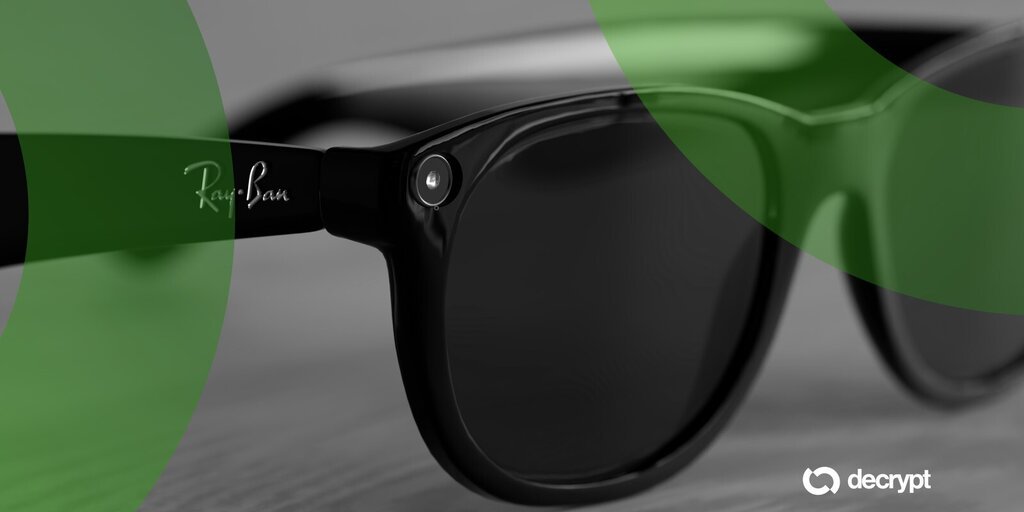
Digitalisation Minister Karianne Tung said Norway will regulate smart glasses more strictly and may ban facial recognition in public spaces.
She plans to appoint an expert group on privacy and has urged organizations to set their own rules in the meantime.
The Norwegian Consumer Council called on retailers to halt sales of the devices until there is legal clarity.
Norway plans to regulate smart glasses more tightly and is considering a ban on facial recognition in public spaces, Digitalisation Minister Karianne Tung said on August 25.
Artificial intelligence is increasingly being paired with cameras and microphones built into glasses, earbuds and caps, Tung said in a statement, adding that Norway “must avoid this equipment being used to monitor other people in public spaces.”
She said she would appoint an expert group to advise the government on protecting consumers from the technology, and urged public and private organizations to draw up their own guidelines while the rules are written. No timetable has been set.
Finn Lützow-Holm Myrstad, head of digital policy at the Norwegian Consumer Council, welcomed the move but said shops should stop selling smart glasses until the law is settled.
Meta’s facial recognition is built and awaiting rollout, he said, and banning the feature would not stop wearers from filming people covertly, calling the potential for abuse of the technology “enormous.”
Myriad: When will OpenAI release GPT-6? Click to make your prediction.
The backlash against smart glasses
A BBC investigation in January found women were being secretly filmed with Ray-Ban Meta glasses after being approached in public, with the footage posted to TikTok. Swedish newspapers reported in February that Nairobi-based contractors hired to train Meta’s AI had reviewed recordings of people undressing, using bathrooms and having sex.
The ACLU and 75 other groups urged Meta in April to abandon facial recognition in the glasses, calling it a line society should not cross. Texas Attorney General Ken Paxton opened an investigation in May, and Meta patched the devices in July after users found ways to defeat the light that signals recording.
Meta has since patented eyewear that recognizes faces and logs what wearers do. Privacy-focused search engine DuckDuckGo, meanwhile, sold out of its deliberately camera-free “Normal F***ing Sunglasses” in under a week.
Comic Con organizer Monopoly Events and the DEF CON security conference have both barred the glasses from their venues, and Police Scotland opened an investigation in July into a TikToker accused of filming people with a pair.
Norway would be among the first countries to legislate specifically for the devices. Tung’s ministry has not said when the expert group will convene or when a bill might follow.
Daily Debrief Newsletter
Start every day with the top news stories right now, plus original features, a podcast, videos and more.
The FSNN News Room is the voice of our in-house journalists, editors, and researchers. We deliver timely, unbiased reporting at the crossroads of finance, cryptocurrency, and global politics, providing clear, fact-driven analysis free from agendas.
We and our selected partners wish to use cookies to collect information about you for functional purposes and statistical marketing. You may not give us your consent for certain purposes by selecting an option and you can withdraw your consent at any time via the cookie icon.
Cookies are small text that can be used by websites to make the user experience more efficient. The law states that we may store cookies on your device if they are strictly necessary for the operation of this site. For all other types of cookies, we need your permission. This site uses various types of cookies. Some cookies are placed by third party services that appear on our pages.
Your permission applies to the following domains:
https://fsnn.net
Necessary
Necessary cookies help make a website usable by enabling basic functions like page navigation and access to secure areas of the website. The website cannot function properly without these cookies.
Statistic
Statistic cookies help website owners to understand how visitors interact with websites by collecting and reporting information anonymously.
Preferences
Preference cookies enable a website to remember information that changes the way the website behaves or looks, like your preferred language or the region that you are in.
Marketing
Marketing cookies are used to track visitors across websites. The intention is to display ads that are relevant and engaging for the individual user and thereby more valuable for publishers and third party advertisers.


 Freedom Index