

 Freedom Index
Listen to the article
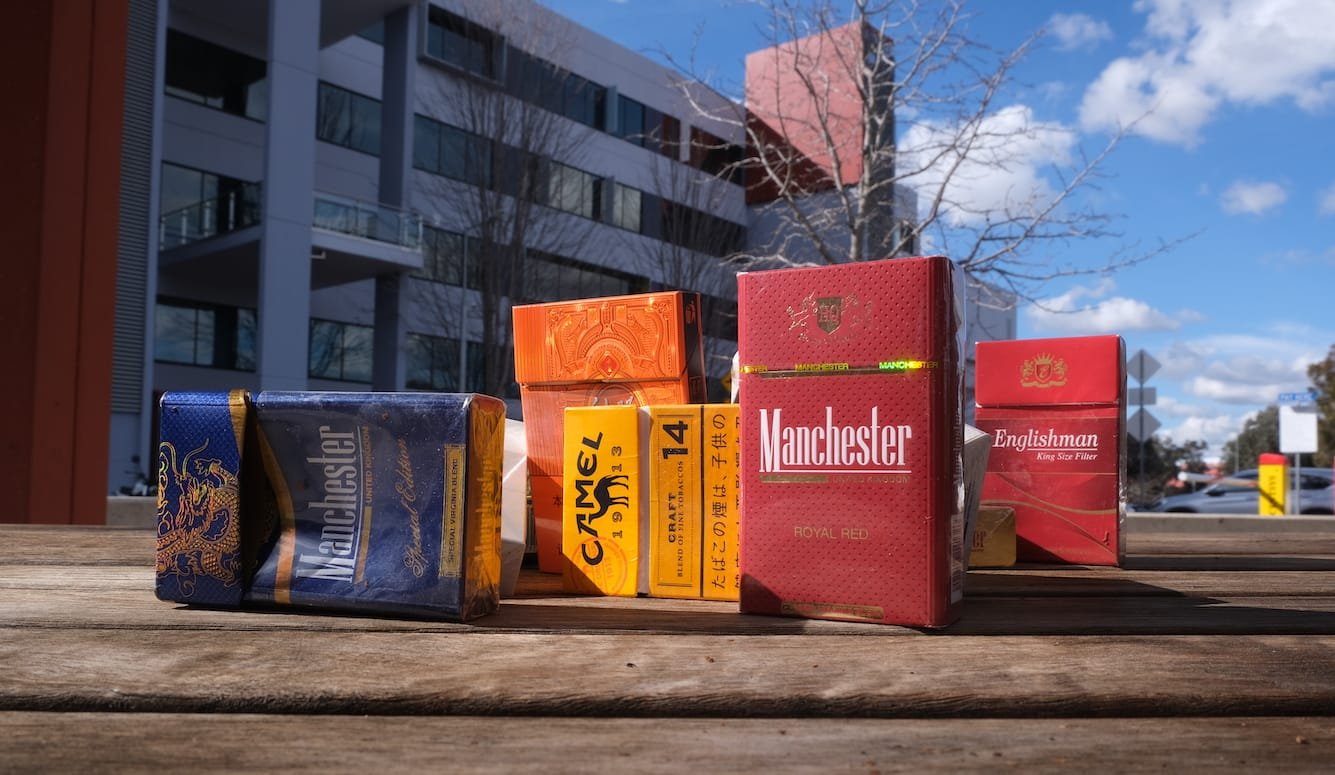
People in Canberra are typically quite polite, non-intrusive, and tolerant. That may be why the civil servants up the road from where I live don’t ask, “What the hell are you doing?” The doing for which I’m attracting sidelong glances is picking up garbage—specifically discarded cigarette packets. Not vape containers. Not cigar or cigarillo packages. Just empty packs of Manchester Sapphire Blue smokes, Winfield Original Classic, or one of the other 155 varieties that I’ve come across.
Many of these packets have dark olive-green packaging, broken by ugly pictures of diseased flesh and unmarked by any information regarding the amount of tar or nicotine. Most of those are what I shall call “legitimate” cigarette packets. By legitimate, I mean cigarettes that conform to the Australian government’s rules regarding packaging, and that are sold through channels so that they are taxed by the government.
I say “most” because, despite appearances, some of these packets are likely to be what I shall call “illicit” cigarettes. Like those without the so-called “plain packaging,” they are illegally imported and sold. I suppose they are designed to look legitimate at a glance. I can’t be certain about those ones. Maybe they are legitimate, but they often carry the same brand names as the obviously illicit brands. I’ve telephoned the customer helplines on the packets and the numbers are defunct, or they connect me to people who have no idea about the company named on the packet. In one case, there was no contact number, nor even a manufacturer. Quality control isn’t always high with illicit products.
Read the full article here
Fact Checker
Verify the accuracy of this article using AI-powered analysis and real-time sources.