Close Menu
FSNN | Free Speech News NetworkFSNN | Free Speech News Network
  • Home
  • News
    • Politics
    • Legal & Courts
    • Tech & Big Tech
    • Campus & Education
    • Media & Culture
    • Global Free Speech
  • Opinions
    • Debates
  • Video/Live
  • Community
  • Freedom Index
  • About
    • Mission
    • Contact
    • Support
Trending

Today in Supreme Court History: August 28, 1958

8 minutes ago

Bitcoin hits highest level in 3 months before pulling back as altcoins consolidate

27 minutes ago

BitGo Acquires NYDIG Institutional Trading Business

31 minutes ago
Facebook X (Twitter) Instagram
Facebook X (Twitter) Discord Telegram
FSNN | Free Speech News NetworkFSNN | Free Speech News Network
Market Data Newsletter
Friday, August 28
  • Home
  • News
    • Politics
    • Legal & Courts
    • Tech & Big Tech
    • Campus & Education
    • Media & Culture
    • Global Free Speech
  • Opinions
    • Debates
  • Video/Live
  • Community
  • Freedom Index
  • About
    • Mission
    • Contact
    • Support
FSNN | Free Speech News NetworkFSNN | Free Speech News Network
Home»News»Media & Culture»A Connecticut Couple Is Fighting for the Right To Let People Hike on Their Land
Media & Culture

A Connecticut Couple Is Fighting for the Right To Let People Hike on Their Land

News RoomBy News Room2 hours agoNo Comments5 Mins Read3 Views
Share Facebook Twitter Pinterest Copy Link LinkedIn Tumblr Email VKontakte Telegram
A Connecticut Couple Is Fighting for the Right To Let People Hike on Their Land
Share
Facebook Twitter Pinterest Email Copy Link

Listen to the article

0:00
0:00

Key Takeaways

Playback Speed

Select a Voice

One of the most enduring principles of liberty is owning property. “America’s Founders understood clearly that private property is the foundation not only of prosperity but of freedom itself,” Roger Pilon, founder of the Cato Institute’s Center for Constitutional Studies, wrote in 2017.

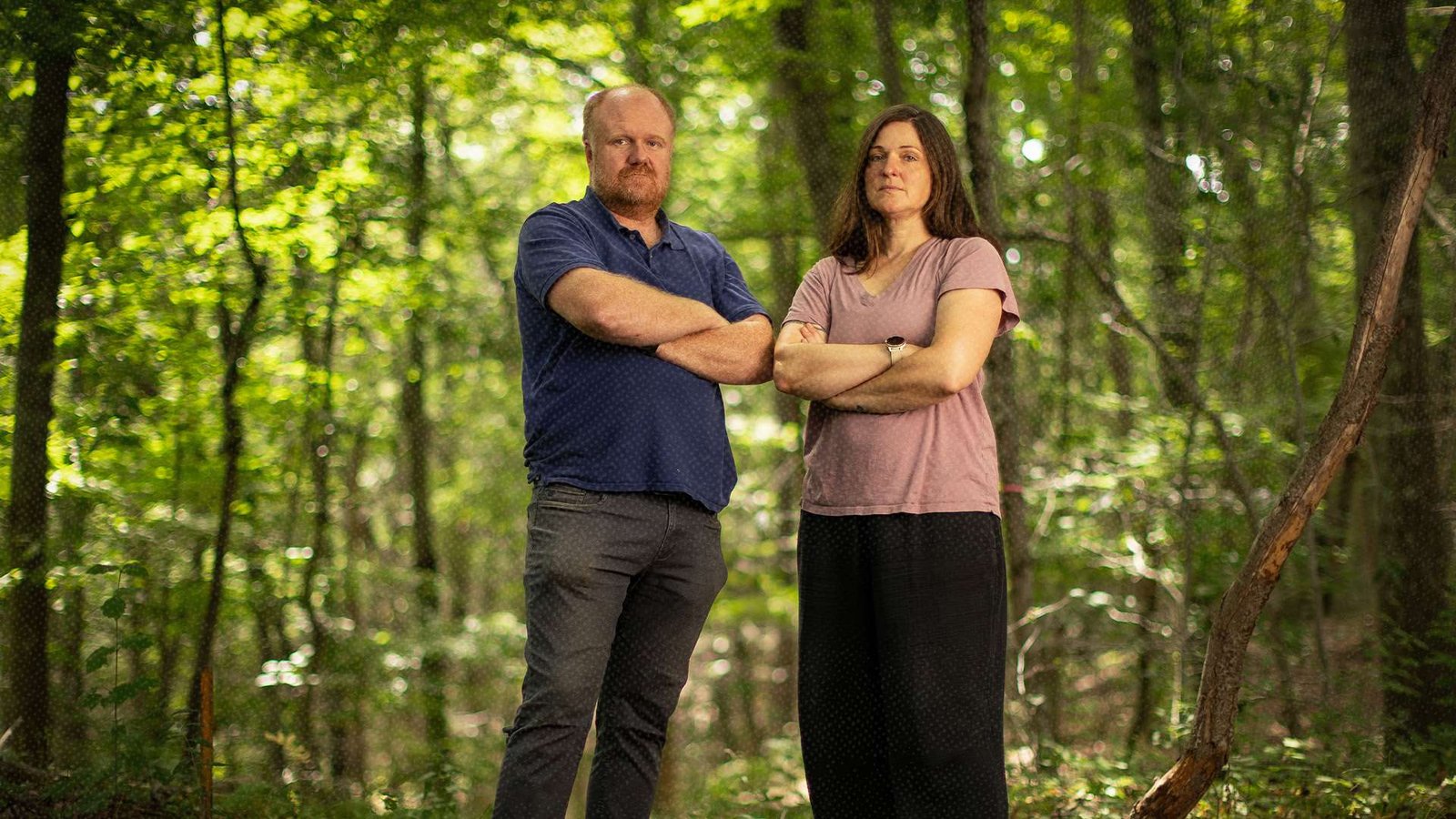
And yet all too often, bureaucrats put unnecessary rules and regulations on how we can use our property. One couple is fighting with their town over the right to just let people go for a walk on their land.*

Charles Copley met his wife, Elizabeth, at Oxford University, while they were each pursuing a Ph.D. After living a few years in his native South Africa, they moved with their children to Connecticut to be closer to Elizabeth’s family.

Wanting to make the area their permanent home, they purchased two plots of rural land in Roxbury totaling 50 acres in 2022. They hoped not only to live on the land but to really make it their own: farming, planting, and otherwise tailoring the property to their family while protecting and preserving its natural beauty.

They hired a forester to draw up a 10-year forest management plan, which the town approved, and then began removing invasive species and cutting miles of walking trails throughout all 50 acres.

The trails would keep the invasive plants at bay, but they would also need to be maintained. To help accomplish that, the Copleys started using Sniffspot, an app like Airbnb that lets property owners rent out land by the hour for hikes or dog walks. They only charged $10 per hour, while the app handled scheduling and processed the payments. In return, the steady foot traffic would keep the trails from being overrun.

That worked well for several months—until April 2025, when the Copleys suddenly received a letter from the city. A zoning enforcement officer wrote that the Copleys were “operating a ‘dog park,'” and he warned, “this business cease operation unless the home enterprise requirements are met.”

As it happened, the town had adopted an ordinance one week earlier that regulated short-term rentals, like Airbnb. But as Charles tells Reason, “one of the things that that short-term rental ordinance did was to prohibit any kind of hourly rentals.” (Elizabeth says that when they raised an objection at an earlier town meeting, they were told—inaccurately, it turned out—that the ordinance would not affect them.)

Confused but hoping not to run afoul of the law, the Copleys applied for a home enterprise license. But their property consisted of two plots, and the trails covered both; town officials said they couldn’t cover two plots with the same business license. They could apply to join the plots together, but that would involve an expensive surveying process, potentially decrease the value of the property, and prevent them from being able to freely build on it in the future.

This set off several months of conversations in which officials gave conflicting answers on how the Copleys could legally let people hike on their property, and when pressed, they could not point to a specific town ordinance that forbade it.

To reiterate, the conduct at issue is charging $10 per hour to hike on their land.

This was only meant to be a very minor part of the Copleys’ overall yearslong plan for their property. “I am running a farm here, I need to be able to make a plan,” Charles says. “I’ve got nut trees I want to plant. I’ve got invasives I need to remove.” And yet the hiking trails have taken up an inordinate amount of the family’s time.

On Thursday, the Institute for Justice (I.J.), a public interest law firm, sent a letter to the town of Roxbury on the Copleys’ behalf.

“We’d like the town to tell us what ordinance prohibits the Copleys from inviting people onto their property for a small fee, to walk on their trails in the same way that…any other private landowner would be allowed to invite people onto their property,” I.J. senior attorney Ari Bargil tells Reason. “And if there is no such ordinance that they can point to, we’d like the town to confirm that they could resume their operation as they were before, peacefully and harmlessly allowing people onto their property.”

While the town’s ordinances don’t explicitly address by-the-hour trail rentals, the letter notes, “all agricultural uses—and all attendant ‘accessory uses’—are permitted by-right,” meaning they conform to existing zoning codes and are inherently allowed. The letter notes that Roxbury already approved the Copleys’ forest management plan, which “identifies recreational uses like hunting, hiking, wildlife watching, snowshoeing, and cross-country skiing as consistent with the broader goals of ‘[e]xpand[ing] and improv[ing] the trail system for forest fire suppression, forest management,'” and “‘property maintenance.'”

The case is particularly galling because it involves prohibiting the use of one’s property in whatever way they see fit, even just using an app to let people hike. “The government’s stance seems to be that because something isn’t expressly permitted, it must therefore be prohibited,” Bargil adds.

But if anything, the app actually introduces a level of security that would be missing in a previous era, when by-the-hour trail rentals would just be conducted by word of mouth and cash under the table.

“One of the things that was really important to us was to know who the person was that was on our property and when,” Charles says. “I actually think that this is a more regulated use than a lot of public parks: I know who the person is, I meet them, I explain how everything works. So it’s even more bizarre to me that this would be a problem.”

The letter demands an answer by September 30, otherwise, the Copleys will resume hosting hikers on October 1.

*CORRECTION: This article originally misstated the Copleys’ demands.

Read the full article here

Fact Checker

Verify the accuracy of this article using AI-powered analysis and real-time sources.

Get Your Fact Check Report

Enter your email to receive detailed fact-checking analysis

5 free reports remaining

Continue with Full Access

You've used your 5 free reports. Sign up for unlimited access!

Already have an account? Sign in here

#IndependentMedia #InformationWar #MediaBias #MediaEthics #PoliticalDebate
Share. Facebook Twitter Pinterest LinkedIn Tumblr Email Telegram Copy Link
News Room
  • Website
  • Facebook
  • X (Twitter)
  • Instagram
  • LinkedIn

The FSNN News Room is the voice of our in-house journalists, editors, and researchers. We deliver timely, unbiased reporting at the crossroads of finance, cryptocurrency, and global politics, providing clear, fact-driven analysis free from agendas.

Related Articles

Media & Culture

Today in Supreme Court History: August 28, 1958

8 minutes ago
Cryptocurrency & Free Speech Finance

Judge Rules Trump Administration Illegally Retaliated Against Anthropic Over AI Red Lines

34 minutes ago
Media & Culture

Israeli-American Emory Professor’s Defamation Case Against CAIR Georgia and Emory Student Can Go Forward (in Part)

1 hour ago
Media & Culture

Brickbat: No-Time Delivery

3 hours ago
Media & Culture

Home Possession of AI-Generated Porn Depicting Fake Children Remains Constitutionally Protected, Seventh Circuit Rules

4 hours ago
Media & Culture

Is Alito Making the Same Mistake as Ginsburg by Refusing To Retire?

5 hours ago
Add A Comment
Leave A Reply Cancel Reply

Editors Picks

Bitcoin hits highest level in 3 months before pulling back as altcoins consolidate

27 minutes ago

BitGo Acquires NYDIG Institutional Trading Business

31 minutes ago

Judge Rules Trump Administration Illegally Retaliated Against Anthropic Over AI Red Lines

34 minutes ago

Israeli-American Emory Professor’s Defamation Case Against CAIR Georgia and Emory Student Can Go Forward (in Part)

1 hour ago
Latest Posts

Kraken users briefly locked out after a flood of sanctioned crypto transactions

1 hour ago

ENA Rises 10% after Ethena Foundation Reveals Token Buyback Proposal

2 hours ago

A Connecticut Couple Is Fighting for the Right To Let People Hike on Their Land

2 hours ago

Subscribe to News

Get the latest news and updates directly to your inbox.

At FSNN – Free Speech News Network, we deliver unfiltered reporting and in-depth analysis on the stories that matter most. From breaking headlines to global perspectives, our mission is to keep you informed, empowered, and connected.

FSNN.net is owned and operated by GlobalBoost Media
, an independent media organization dedicated to advancing transparency, free expression, and factual journalism across the digital landscape.

Facebook X (Twitter) Discord Telegram
Latest News

Today in Supreme Court History: August 28, 1958

8 minutes ago

Bitcoin hits highest level in 3 months before pulling back as altcoins consolidate

27 minutes ago

BitGo Acquires NYDIG Institutional Trading Business

31 minutes ago

Subscribe to Updates

Get the latest news and updates directly to your inbox.

© 2026 GlobalBoost Media. All Rights Reserved.
  • Privacy Policy
  • Terms of Service
  • Our Authors
  • Contact

Type above and press Enter to search. Press Esc to cancel.

🍪

Cookies

We and our selected partners wish to use cookies to collect information about you for functional purposes and statistical marketing. You may not give us your consent for certain purposes by selecting an option and you can withdraw your consent at any time via the cookie icon.

Cookie Preferences

Manage Cookies

Cookies are small text that can be used by websites to make the user experience more efficient. The law states that we may store cookies on your device if they are strictly necessary for the operation of this site. For all other types of cookies, we need your permission. This site uses various types of cookies. Some cookies are placed by third party services that appear on our pages.

Your permission applies to the following domains:

  • https://fsnn.net
Necessary
Necessary cookies help make a website usable by enabling basic functions like page navigation and access to secure areas of the website. The website cannot function properly without these cookies.
Statistic
Statistic cookies help website owners to understand how visitors interact with websites by collecting and reporting information anonymously.
Preferences
Preference cookies enable a website to remember information that changes the way the website behaves or looks, like your preferred language or the region that you are in.
Marketing
Marketing cookies are used to track visitors across websites. The intention is to display ads that are relevant and engaging for the individual user and thereby more valuable for publishers and third party advertisers.