

 Freedom Index
Listen to the article
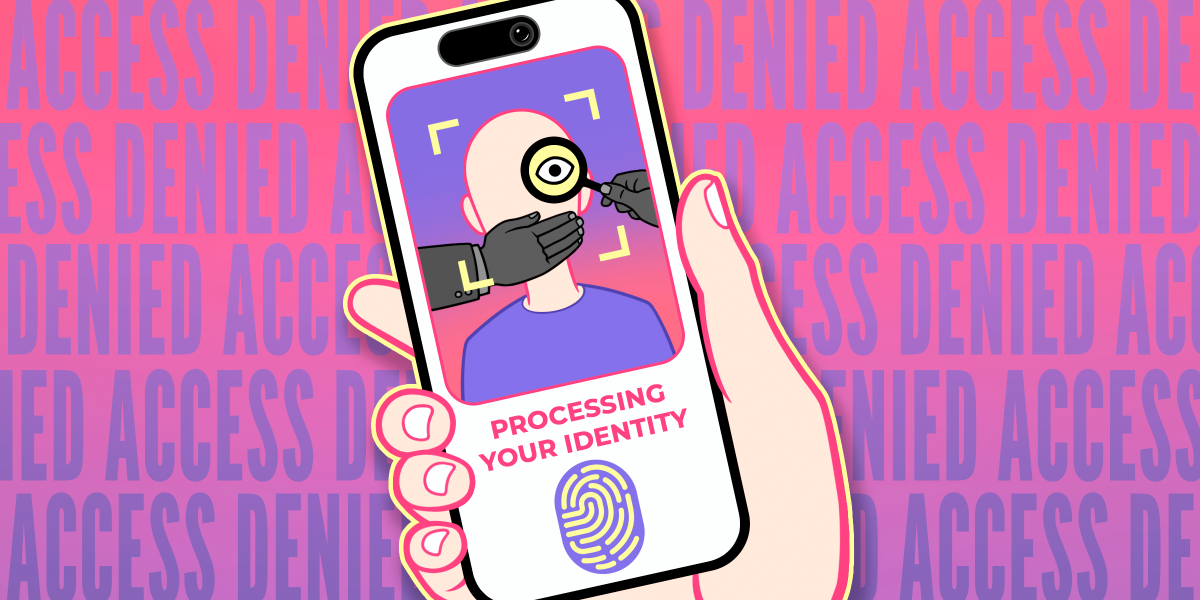
Age verification (laws and regulations requiring platforms and websites to assure or estimate that a user seeking to use an online service is of a certain age) is everywhere. At the time of writing, about half the states in the US have some internet age verification law in place, and dangerous proposals, from the KIDS Act to the Kids Online Safety Act (KOSA), have been advancing at the federal level. European Union member states are moving toward having age verification in a centralized app by the end of this year. Australia famously now has one extremely broad restriction in place.
Most age verification laws tend to fail at their primary goal of barring kids from being online or from entering only specially designated zones, not to mention they pose a significant threat to everyone’s privacy. Some proponents of these age-based internet restrictions think they’ve found the silver bullet: Zero-Knowledge Proofs (ZKPs). We wrote about ZKP’s when they were first rolled out in the age verification context last year. However, more recent examples show our concerns weren’t just conjecture; ZKP-focused AV schemes are gameable, hackable, and not the cure-all some may claim.
ZKPs in Age Verification Would Only Centralize Power and Create More Harms
Before we jump into how these systems work, it must be said: creating a single point of failure for internet access contradicts the very idea of a free and open internet.
The mechanisms underlying ZKPs pose an existential threat to everyone’s digital rights, not just kids. The idea behind ZKPs is that you are issued a “token” that vouches for your age every time you log in, creating a constant link back to the entity that verified you. The issuer of the tokens these AV schemes rely on could track every time that credential is used, creating a dangerous trail of metadata on any user they wanted to target. The issuer itself could be pressured by authoritarian governments to remove a user’s access to a service, essentially removing that person’s access to the internet entirely. Without oversight of who has authority to implement and operate these systems, this approach centralizes critical internet infrastructure in the hands of very few actors.
How ZKPs Work
ZKPs are mathematically impressive cryptographic tools–but they weren’t developed with age verification in mind. Essentially, they let a computer quickly attest to the validity of a given question asked by another computer without divulging any underlying private data.
Computer A (such as the device operated by a person trying to access a website) is able to prove to Computer B (such as the server for the website that person is trying to access) that something is true without actually sharing the contents of that information itself. Computer A locks in a “commitment” to the information it needs to convey. Computer B, which wants to verify that information, generates mathematical “challenges” that can be answered correctly only if the information is true. Traditionally, this happens over many different “challenges” until there is no room for doubt that Computer A’s “commitment” is true.
Since that kind of lengthy back-and-forth process would drastically slow things down over the internet, there’s a shortened version of this exchange that’s “non-interactive.” In that case, the ZKP is verified instantly. The answer itself is hashed (mathematically converted into a fixed, shorter string of characters), and the resulting hash is theoretically unpredictable and tamper-resistant. This shortened version of the ZKP exchange is called “zk-SNARK,” which is the current preferred method for age verification.
In the ideal scenario, this means that ZKP’s are able to attest to a person’s status as an adult or a child without actually giving away any other private information about that person. In other words, only one entity would collect that private information, typically on the user’s device, instead of every website or app that needs the user’s age attested to. Unfortunately, recent real-world testing of these systems prove that ZKP’s aren’t the silver bullet that proponents of AV laws were hoping for.
EU’s AV Rollout Reveals How Broken It Is
By the end of 2026, the 27 states within the European Union are expected to have infrastructure in place to do age verification within a “mini-wallet” app that will live inside the EUDI (European Digital Identity) Wallet. This is being met with plenty of warranted criticism from digital rights experts. The “mini-wallet” version is already being rolled out, with promises that the ZKPs are in working order. But recent insights show that the ZKP features aren’t yet turned on except for the closed demo/prototype build (not the version of the app people are using “out of the box”), which the vast majority of everyday users can’t access.
Worse still, a security researcher found they could bypass the app’s system using a quickly built Chrome extension that tricked the app into repeatedly accepting the same “over-18” token. It did so without ever asking for fresh verification.
Over 400 security researchers signed an open letter stating that age assurance checkpoints, even if implemented with privacy in mind, would cause more harm than good. A primary focus of their concern, which we share, is the fact that a centralized identity verification system creates a single point of failure that is extremely vulnerable to both cyberattack and authoritarian overreach.
Once the “mini-wallet” version of this is fully integrated into the EUDI Wallet, it will replicate these same failures, perhaps more, but at a much larger scale. At that point, the failures will involve many more pieces of sensitive information that the EUDI Wallet contains: passports, driver’s licenses, travel information, financial information, to name a few.
ZKP’s Aren’t The Magic Bullet
As we’ve said time and time again, no method of online age verification is privacy-protective, fully accurate, and capable of guaranteeing universal coverage without introducing severe security risks.
Lawmakers concerned about the privacy failures of age verification mandates must understand that ZKPs are not a magic bullet. They do not solve the age verification paradox; they simply push the burden of trust down the road, relying on technical ignorance and magical thinking about how the internet actually functions.
Mandatory online age verification of any kind is a dangerously flawed idea. Tell your lawmakers we said so.
Read the full article here
Fact Checker
Verify the accuracy of this article using AI-powered analysis and real-time sources.