43 of WorldClaw’s 90 AI models came from Chinese developers.
The platform offers models from Alibaba, Baidu, Z.ai, DeepSeek, and Moonshot.
WorldClaw accepts World Liberty’s USD1 stablecoin as payment.
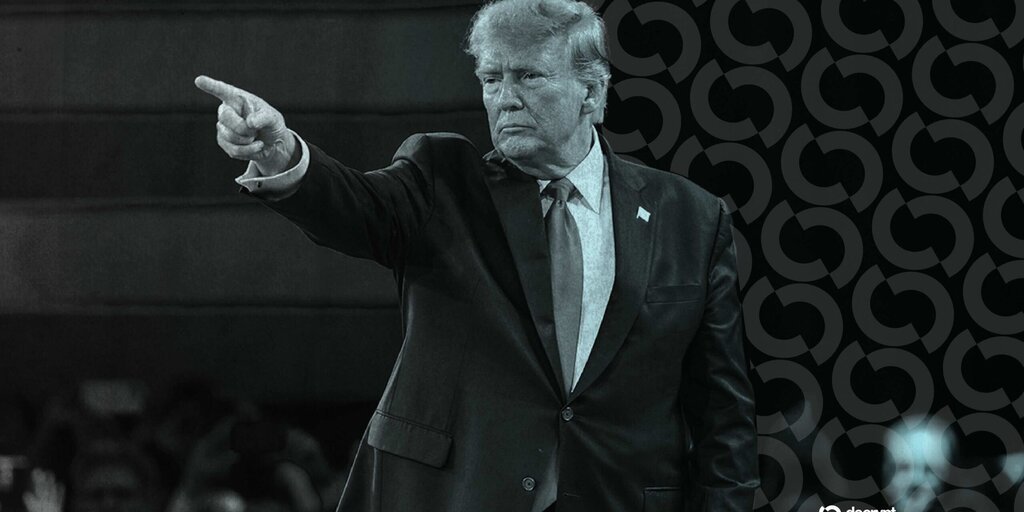
President Donald Trump-backed World Liberty Financial is working with an AI company that offers models from Chinese tech firms his administration has flagged over national security concerns, Reuters reported Monday.
According to Reuters, the companies are collaborating to expand the use of World Liberty’s USD1 stablecoin, which WorldClaw accepts as payment for access to its AI models. World Liberty executive Ryan Fang also serves as an adviser to WorldClaw.
Myriad: Will the Clarity Act be signed into law in 2026? Click to make your prediction.
Hong Kong-based WorldClaw offers access to dozens of AI models, with 43 of its 90 models developed by Chinese companies, including Alibaba, Baidu, and Z.ai. It also offers models from OpenAI and Anthropic.
World Liberty spokesperson David Wachsman said WorldClaw is independent and noted that major U.S. firms also offer Chinese and American AI models.
“This is a common and widely accepted approach,” Wachsman told Reuters.
In January 2025, Z.ai, formerly Zhipu AI, was added to the Commerce Department’s Entity List, restricting its access to U.S. technology. In June, the Pentagon designated Alibaba and Baidu as “Chinese Military Companies Operating in the United States,” barring the Defense Department from doing business with them.
“Alibaba is not a Chinese military company nor part of any military-civil fusion strategy,” an Alibaba spokesperson told Reuters, calling the designation “arbitrary and capricious” and said it would sue to have it removed.
It’s unknown how much the Trump family has earned from WorldClaw or the financial terms between the companies. World Liberty executive Ryan Fang advises WorldClaw, while Donald Trump Jr. and Eric Trump have promoted it.
The news comes as several Chinese AI firms available on WorldClaw have also been accused of distillation attacks on U.S. AI developers.
In February, Anthropic accused DeepSeek, Moonshot AI, and MiniMax of using roughly 24,000 fraudulent accounts to generate more than 16 million Claude exchanges through model distillation, a technique in which one AI model learns from another’s outputs. In June, Anthropic urged Congress to tighten export controls and penalize large-scale model extraction.
“We believe combating the threat of illicit distillation requires coordinated action between government and industry, and we will continue working with Congress and the administration to maintain American AI leadership,” an Anthropic spokesperson told Decrypt.
Daily Debrief Newsletter
Start every day with the top news stories right now, plus original features, a podcast, videos and more.
The FSNN News Room is the voice of our in-house journalists, editors, and researchers. We deliver timely, unbiased reporting at the crossroads of finance, cryptocurrency, and global politics, providing clear, fact-driven analysis free from agendas.
We and our selected partners wish to use cookies to collect information about you for functional purposes and statistical marketing. You may not give us your consent for certain purposes by selecting an option and you can withdraw your consent at any time via the cookie icon.
Cookies are small text that can be used by websites to make the user experience more efficient. The law states that we may store cookies on your device if they are strictly necessary for the operation of this site. For all other types of cookies, we need your permission. This site uses various types of cookies. Some cookies are placed by third party services that appear on our pages.
Your permission applies to the following domains:
https://fsnn.net
Necessary
Necessary cookies help make a website usable by enabling basic functions like page navigation and access to secure areas of the website. The website cannot function properly without these cookies.
Statistic
Statistic cookies help website owners to understand how visitors interact with websites by collecting and reporting information anonymously.
Preferences
Preference cookies enable a website to remember information that changes the way the website behaves or looks, like your preferred language or the region that you are in.
Marketing
Marketing cookies are used to track visitors across websites. The intention is to display ads that are relevant and engaging for the individual user and thereby more valuable for publishers and third party advertisers.


 Freedom Index