

 Freedom Index
Listen to the article
President Donald Trump has always loved the idea of taking other countries’ oil by force. And he claims to have accomplished that goal in Venezuela. The war there “lasted 48 minutes, and we paid for the war with what we’ve taken out many, many, many times. Where have you heard that before? You haven’t heard that before. That’s the old fashioned way, right? The old-fashioned way. To the victor belong the spoils,” Trump told a crowd in Las Vegas on Wednesday.
That’s not how other officials advertised U.S. oversight of Venezuelan oil. “We’re the bankers, we don’t direct the funds,” Secretary of the Treasury Scott Bessent told the Economic Club of Minnesota in January. “This is the oil of the people of Venezuela,” Secretary of State Marco Rubio testified to Congress a few weeks later, claiming that the U.S. government was making sure that “the needs of the Venezuelan people can be met” through oil sales.
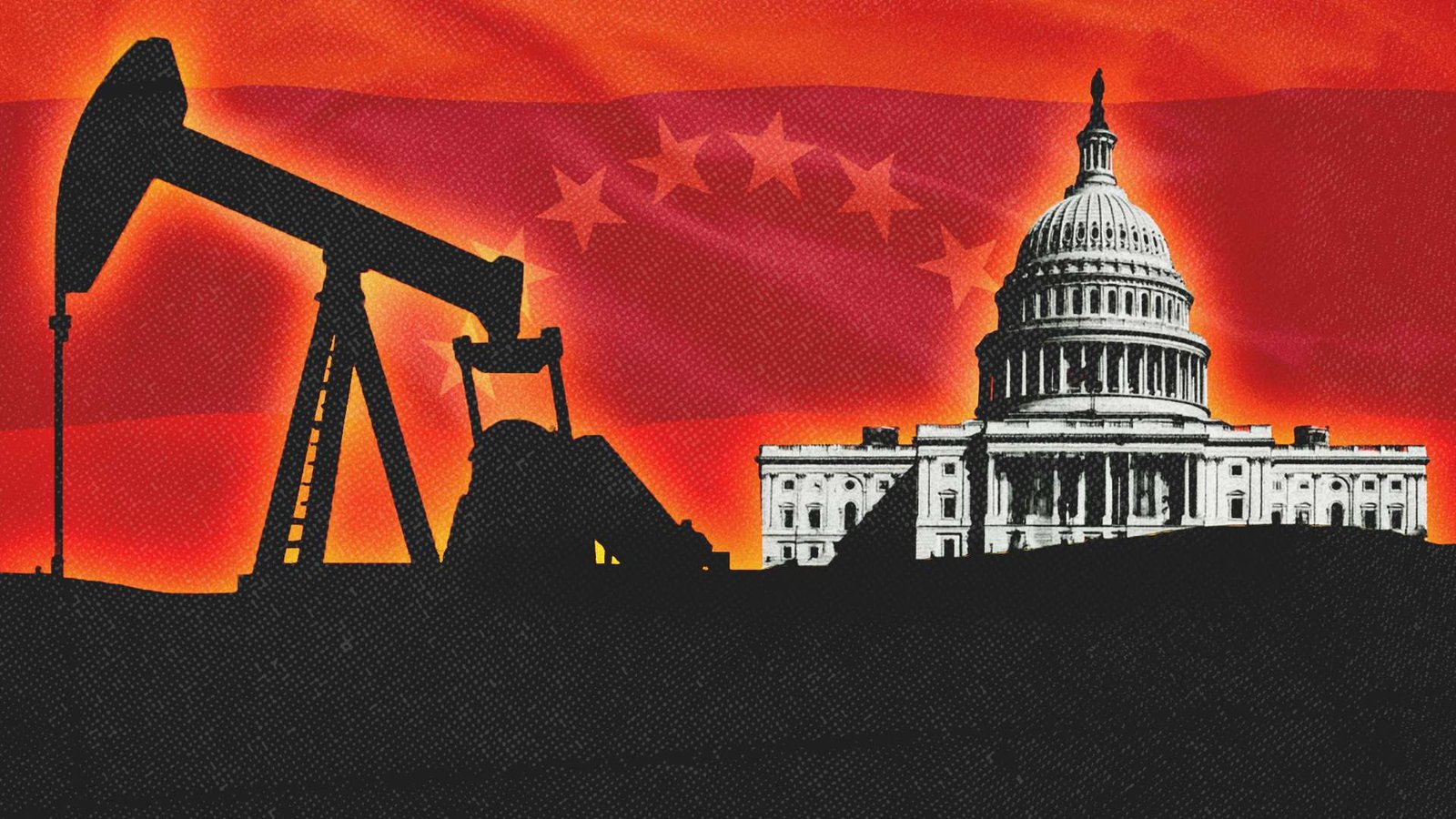
In a way, they’re both right. Shortly after the U.S. military operation in Venezuela on January 3, 2026, the two countries cut a deal to put sanctioned Venezuelan oil revenues under the control of the U.S. Treasury. The money still belongs to Venezuela on paper, but it’s controlled by U.S. officials for all practical purposes—and trying to get any transparency on where it’s going has been like pulling teeth.
The oil deal demonstrates the raw, unaccountable, and global power that economic sanctions give to the U.S. Treasury. Neither the American nor the Venezuelan people have a clear picture of what’s going on. The case of Venezuela also shows how, despite invoking Ronald Reagan’s anticommunism, the Trump administration is much more concerned with imposing direct economic control than nurturing free markets. After all, the Venezuelan oil deal is a U.S. partnership with a socialist dictatorship.
Over the past two decades, the U.S. Treasury had imposed sanctions on the Venezuelan oil and banking sectors, preventing Venezuela’s state-owned oil company from exporting to North America and its socialist government from dealing in U.S. dollars. After the January 2026 operation, the Venezuelan leadership cut a deal. The Trump administration issued sanctions exemptions and even shielded Venezuelan money from U.S. lawsuits. In exchange, Venezuela began putting its oil revenues into bank accounts in the “custody” of the U.S. Treasury.
At first, the money went into a mysterious account in Qatar. Rubio told Congress on January 28 that there was a “short-term mechanism” for the Venezuelan government to “submit every month a budget of this is what we need funded.” A week later, Bessent stammered and refused to answer while Rep. Sean Casten (D–Ill.) asked him what legal authority the Treasury was exercising or what written agreements were in place.
On February 13, U.S. Secretary of Energy Chris Wright announced that the Qatari account was being closed after $500 million had passed through it. “Since Venezuela has so many creditors and they owe a lot of money, we had some risk if we put it into a U.S. bank account set up quickly that creditors could freeze that money,” he told NBC News. But now the administration was ready to move the money through a Citibank account controlled by the Treasury.
The new Citibank account had slightly more checks and balances, in theory. Both the U.S. State Department and the Venezuelan government announced in April that they had hired outside auditors, and Rubio told Congress in June that it would be “an ongoing audit, so it’s not a once-a-year audit, it’s on every expenditure, every single disbursement is audited.” The Venezuelan government also created a website called Transparent Sovereignty to publish oil transactions.
But as far as the public is concerned, it is still a big mystery. The State Department has not published either the written agreements or the results of the audits. Transparent Sovereignty only lists one transaction, a $300 million fuel oil sale from March 2026. The Financial Times estimated last month that Venezuela had sold more than $13 billion in oil under the new arrangement. Asked about the report, Trump bragged that it was “even more than that.”
The administration simply hasn’t forked over all the information it promised. Despite promising in April to produce quarterly audit reports, the Trump administration hasn’t sent anything to Democrats on the House Foreign Affairs Committee, the Financial Times reported on July 22. Democrats on the House Oversight Committee wrote another letter on Wednesday demanding information. Even hawkish Republicans who supported the operation have started to get uneasy about the lack of transparency on the money.
“We have never seen those [audit] reports…It’s been six months. I would like to see two reports, because it’s every three months,” Rep. María Elvira Salazar (R–Fla.) said during a July hearing. In response, Assistant Secretary of State Caleb Orr promised to give Congress “appropriate summaries” that would “protect relevant information that’s part of our foreign policy.” In other words, the fate of that money is a state secret.
The administration has consistently named what the oil money will be used for: paying Venezuelan government employees’ salaries. Transparent Sovereignty, the Venezuelan website, also says that the $300 million from fuel oil went towards paying for the increase in minimum wages announced in April. But it’s impossible to actually evaluate those claims without a paper trail.
Although the Venezuelan arrangement is uniquely secretive, it isn’t the only place where the U.S. government exercises dictatorial power over another country’s finances. After invading Iraq in 2003, the U.S. government redirected all of its oil revenues—which account for 90 percent of the Iraqi state budget—to the Federal Reserve Bank in New York. When the Iraqi parliament asked U.S. troops to leave in 2020, the Trump administration threatened to seize the account. U.S. officials privately threatened the Iraqi oil account after Iraqi elections in November 2025, telling the winning parties that the money would be cut off if they appointed the wrong people to his cabinet, Reuters reports.
Trump wants to use the ongoing war in the Middle East to expand these arrangements even more. “We’re doing the same thing, by the way, in the lovely Islamic Republic of Iran. We’re knocking the hell out of them,” he said in his Vegas speech.
Read the full article here
Fact Checker
Verify the accuracy of this article using AI-powered analysis and real-time sources.