Close Menu
FSNN | Free Speech News NetworkFSNN | Free Speech News Network
  • Home
  • News
    • Politics
    • Legal & Courts
    • Tech & Big Tech
    • Campus & Education
    • Media & Culture
    • Global Free Speech
  • Opinions
    • Debates
  • Video/Live
  • Community
  • Freedom Index
  • About
    • Mission
    • Contact
    • Support
Trending

EFF Guide to Recording Law Enforcement

12 minutes ago

In Spider-Man: Brand New Day, a Web Slinging Superhero Grows Up

16 minutes ago

Government Playing a Dangerous Game With Drone Cybersecurity

20 minutes ago
Facebook X (Twitter) Instagram
Facebook X (Twitter) Discord Telegram
FSNN | Free Speech News NetworkFSNN | Free Speech News Network
Market Data Newsletter
Friday, July 31
  • Home
  • News
    • Politics
    • Legal & Courts
    • Tech & Big Tech
    • Campus & Education
    • Media & Culture
    • Global Free Speech
  • Opinions
    • Debates
  • Video/Live
  • Community
  • Freedom Index
  • About
    • Mission
    • Contact
    • Support
FSNN | Free Speech News NetworkFSNN | Free Speech News Network
Home»AI & Censorship»EFF Guide to Recording Law Enforcement
AI & Censorship

EFF Guide to Recording Law Enforcement

News RoomBy News Room12 minutes agoNo Comments4 Mins Read1,284 Views
Share Facebook Twitter Pinterest Copy Link LinkedIn Tumblr Email VKontakte Telegram
EFF Guide to Recording Law Enforcement
Share
Facebook Twitter Pinterest Email Copy Link

Listen to the article

0:00
0:00

Key Takeaways

Playback Speed

Select a Voice

This post is available as a printable one page handout in English and Spanish.

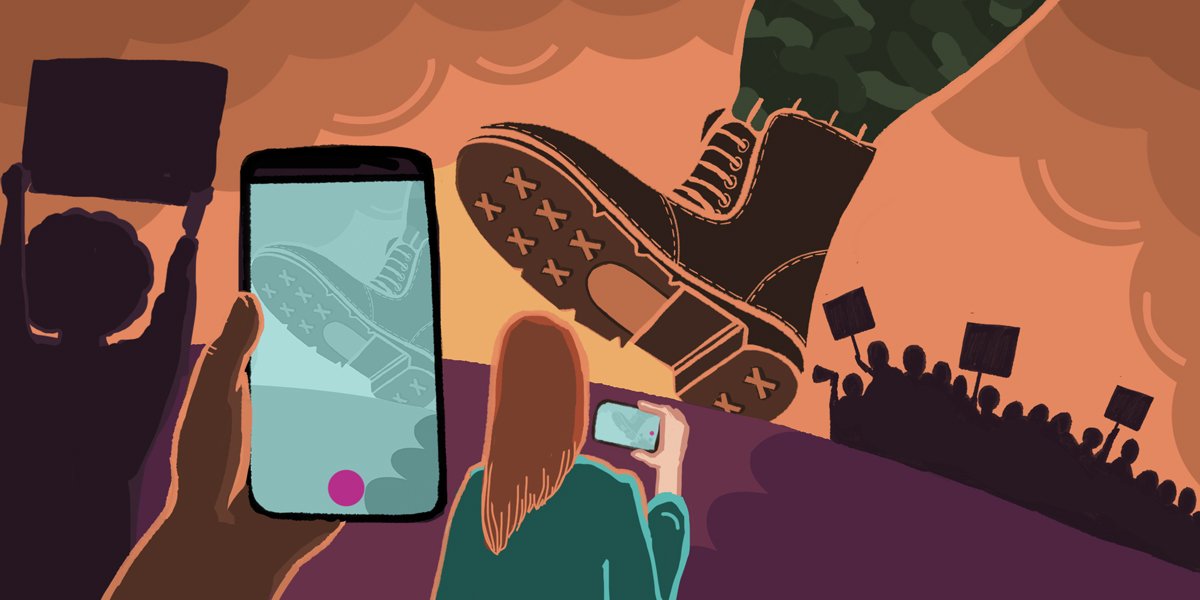
Recordings of law enforcement, whether by bystanders or by those directly encountering officers, can be powerful tools of government accountability and can support movements for social change. But recording officers can come with risks. Below are important legal and practical considerations related to recording the police and other law enforcement officers.

Can I legally record the police or immigration officers?

Yes. All Americans have a First Amendment right to record law enforcement. This includes local police and federal officers such as those from Immigration and Customs Enforcement (ICE) and Customs and Border Protection (CBP). Although the Supreme Court has not squarely ruled on the issue, nine different federal appellate courts have recognized and affirmed this right, relying on decades of Supreme Court precedent.

Courts typically frame the right to record law enforcement as the right to record officers exercising their official duties in public. This right extends to bystanders as well as people recording their own interactions with law enforcement, such as livestreaming their own traffic stops. The right also applies to private places where the recorder has a legal right to be, such as in their own home.

You may take photos, or record video and audio. Courts have held that wiretap laws, which generally protect private conversations, do not prohibit civilians from audio recording law enforcement. That’s because officers exercising their official duties, particularly in public, do not have a reasonable expectation of privacy. Neither do civilians in public places who speak to law enforcement in a manner audible to passersby.

What are some limitations on the right to record law enforcement?

Courts have been clear that behavior that obstructs or interferes with effective law enforcement or the protection of public safety is not protected. Officers can’t order you to move because you are recording, but they may order you to move for public safety reasons even if you are recording.

If the law enforcement officer is off-duty or is in a private space that you don’t also have a right to be in, your right to record the officer may be limited. For example, a Los Angeles jury in 2026 found two women guilty of felony stalking after they followed an ICE agent to his home and livestreamed the pursuit.

What are some other considerations when recording officers?

Even if you believe you are appropriately exercising your First Amendment right to record law enforcement, officers may nevertheless escalate the situation and/or retaliate against you. Below are some things to keep in mind.

  • Stay calm and courteous.
  • If you are a bystander, stand at a safe distance from the scene that you are recording. But note that officers may approach and confront you, closing that distance in an effort to accuse you of interfering with and possibly also assaulting a federal officer.
  • Be alert and mindful of the possibility that officers may illegally retaliate against you in a number of ways, including arrest, destruction of your device, and bodily harm. They may also try to retaliate by harming the person being arrested. 
  • Consider the sensitive nature of recording in the context of an arrest. For example, the person being arrested or their loved ones may be concerned about exposing their immigration status, so think about obtaining consent or blurring out faces in any version you publish to focus on ICE/CBP conduct (while still retaining the original video). 
  • Law enforcement may not search your cell phone or other device without a warrant based on probable cause from a judge, even if you are under arrest. Thus, you may refuse a request from an officer to review or delete what you recorded. You also may refuse to unlock your phone or provide your passcode.

What can I do to protect my footage?

How well protected your photos or video footage are depends on both the device and the way you’re recording. If you’re uploading video to a livestreaming service, it can save that video to the cloud if you enable that setting. But what if you want to protect your recordings  stored locally?

Modern smartphones generally protect data, including videos, using encryption. This means if your phone is locked and protected by a strong passphrase, it is more difficult for an officer to delete what you’ve stored on the device. Removing biometrics such as face and fingerprint unlock can protect your device contents further. You can check your settings by following the steps in our Surveillance Self-Defense guides (see below) to ensure device encryption is turned on.

Want more information?

  • Read more about your right to record law enforcement: https://www.eff.org/issues/right-record
  • Read EFF’s Surveillance Self-Defense technical guide: https://ssd.eff.org

Read the full article here

Fact Checker

Verify the accuracy of this article using AI-powered analysis and real-time sources.

Get Your Fact Check Report

Enter your email to receive detailed fact-checking analysis

5 free reports remaining

Continue with Full Access

You've used your 5 free reports. Sign up for unlimited access!

Already have an account? Sign in here

#AlgorithmicBias #DataRights #FreeExpression #FreeSpeech #PlatformAccountability #TechPolicy
Share. Facebook Twitter Pinterest LinkedIn Tumblr Email Telegram Copy Link
News Room
  • Website
  • Facebook
  • X (Twitter)
  • Instagram
  • LinkedIn

The FSNN News Room is the voice of our in-house journalists, editors, and researchers. We deliver timely, unbiased reporting at the crossroads of finance, cryptocurrency, and global politics, providing clear, fact-driven analysis free from agendas.

Related Articles

Media & Culture

Trump FCC Hilariously Bungles Chinese ‘Drone Ban’

1 hour ago
Media & Culture

John Oliver Dares Buc-ee’s To Sue Him Over Trademark Infringement

11 hours ago
Media & Culture

What 20 Million Bans Reveal About The Stress On Wikipedia’s Volunteers

16 hours ago
Media & Culture

Axon Insists Its AI Makes Police Reports Easier. Nothing Suggests It Makes Them Any *Better*

18 hours ago
Media & Culture

The Worst Person You Know Just Filed A Good First Amendment Lawsuit Against A Very Badly Drafted Nudify App Ban

20 hours ago
Media & Culture

In The Middle Of A War, The Trump Administration Has Cut National Security Staffing In Half

22 hours ago
Add A Comment
Leave A Reply Cancel Reply

Editors Picks

In Spider-Man: Brand New Day, a Web Slinging Superhero Grows Up

16 minutes ago

Government Playing a Dangerous Game With Drone Cybersecurity

20 minutes ago

Circle secures New York trust charter as crypto regulatory push accelerates

36 minutes ago

Circle receives New York trust charter for subsidiary

37 minutes ago
Latest Posts

Claude Hacked Three Companies in Internal Testing: Anthropic

39 minutes ago

Trump FCC Hilariously Bungles Chinese ‘Drone Ban’

1 hour ago

In Widow’s Bay, the Real Monster Is Utilitarianism

1 hour ago

Subscribe to News

Get the latest news and updates directly to your inbox.

At FSNN – Free Speech News Network, we deliver unfiltered reporting and in-depth analysis on the stories that matter most. From breaking headlines to global perspectives, our mission is to keep you informed, empowered, and connected.

FSNN.net is owned and operated by GlobalBoost Media
, an independent media organization dedicated to advancing transparency, free expression, and factual journalism across the digital landscape.

Facebook X (Twitter) Discord Telegram
Latest News

EFF Guide to Recording Law Enforcement

12 minutes ago

In Spider-Man: Brand New Day, a Web Slinging Superhero Grows Up

16 minutes ago

Government Playing a Dangerous Game With Drone Cybersecurity

20 minutes ago

Subscribe to Updates

Get the latest news and updates directly to your inbox.

© 2026 GlobalBoost Media. All Rights Reserved.
  • Privacy Policy
  • Terms of Service
  • Our Authors
  • Contact

Type above and press Enter to search. Press Esc to cancel.

🍪

Cookies

We and our selected partners wish to use cookies to collect information about you for functional purposes and statistical marketing. You may not give us your consent for certain purposes by selecting an option and you can withdraw your consent at any time via the cookie icon.

Cookie Preferences

Manage Cookies

Cookies are small text that can be used by websites to make the user experience more efficient. The law states that we may store cookies on your device if they are strictly necessary for the operation of this site. For all other types of cookies, we need your permission. This site uses various types of cookies. Some cookies are placed by third party services that appear on our pages.

Your permission applies to the following domains:

  • https://fsnn.net
Necessary
Necessary cookies help make a website usable by enabling basic functions like page navigation and access to secure areas of the website. The website cannot function properly without these cookies.
Statistic
Statistic cookies help website owners to understand how visitors interact with websites by collecting and reporting information anonymously.
Preferences
Preference cookies enable a website to remember information that changes the way the website behaves or looks, like your preferred language or the region that you are in.
Marketing
Marketing cookies are used to track visitors across websites. The intention is to display ads that are relevant and engaging for the individual user and thereby more valuable for publishers and third party advertisers.