Close Menu
FSNN | Free Speech News NetworkFSNN | Free Speech News Network
  • Home
  • News
    • Politics
    • Legal & Courts
    • Tech & Big Tech
    • Campus & Education
    • Media & Culture
    • Global Free Speech
  • Opinions
    • Debates
  • Video/Live
  • Community
  • Freedom Index
  • About
    • Mission
    • Contact
    • Support
Trending

Brickbat: In-N-Out but Not Thru

22 minutes ago

Cambodia jails journalist Luot Sophal for 2 years over report on soldiers’ water shortages

28 minutes ago

Bitcoin ETFs post a fifth straight day of inflows in a first since April

40 minutes ago
Facebook X (Twitter) Instagram
Facebook X (Twitter) Discord Telegram
FSNN | Free Speech News NetworkFSNN | Free Speech News Network
Market Data Newsletter
Tuesday, July 21
  • Home
  • News
    • Politics
    • Legal & Courts
    • Tech & Big Tech
    • Campus & Education
    • Media & Culture
    • Global Free Speech
  • Opinions
    • Debates
  • Video/Live
  • Community
  • Freedom Index
  • About
    • Mission
    • Contact
    • Support
FSNN | Free Speech News NetworkFSNN | Free Speech News Network
Home»Cryptocurrency & Free Speech Finance»Bank of Korea Scales Up CBDC Pilot With Half a Million Users
Cryptocurrency & Free Speech Finance

Bank of Korea Scales Up CBDC Pilot With Half a Million Users

News RoomBy News Room12 hours agoNo Comments4 Mins Read282 Views
Share Facebook Twitter Pinterest Copy Link LinkedIn Tumblr Email VKontakte Telegram
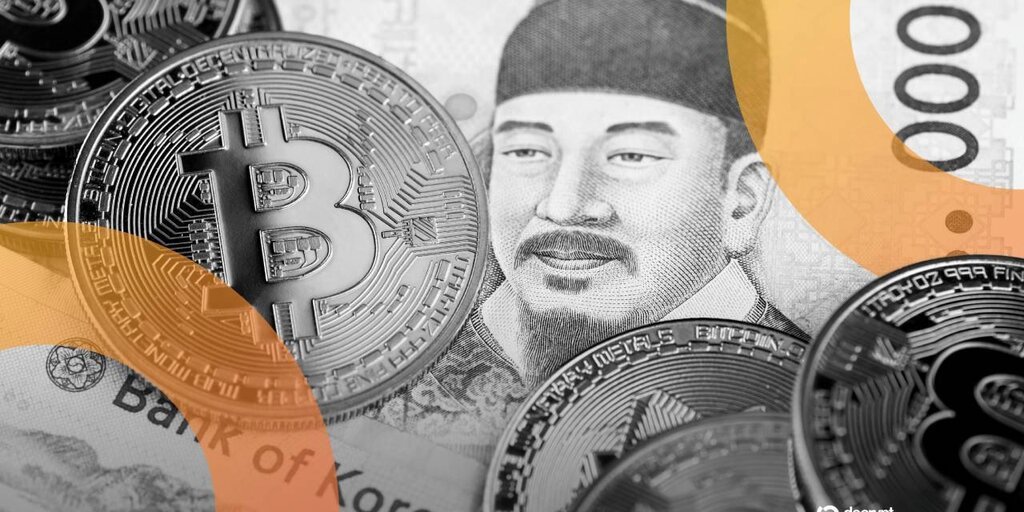
Bank of Korea Scales Up CBDC Pilot With Half a Million Users
Share
Facebook Twitter Pinterest Email Copy Link

Listen to the article

0:00
0:00

Key Takeaways

Playback Speed

Select a Voice

In brief

  • The Bank of Korea will launch Phase 2 of its CBDC pilot in September, expanding to nine banks and a cap of 500,000 users for live deposit token testing.
  • Phase 1 (April–June 2025) processed 114,880 transactions across 81,000 wallets.
  • Phase 2 adds biometric payments, person-to-person transfers, and real government subsidy disbursements.

South Korea’s Bank of Korea ran a central bank digital currency, or CBDC, pilot for three months last year. Eighty-one thousand people opened wallets, but only 42% actually spent anything.

The next phase of its CBDC push starts in September—with nine banks involved, up to 500,000 users spending the tokens, and real government money on the line this time.

The central bank announced the expansion of Project Hangang—its CBDC (a government-issued, blockchain-based version of the paper won) initiative—on Monday, per a Yonhap News Agency report. “From the second phase, we will lay the groundwork for commercialization,” a Bank of Korea official told Yonhap.

Phase 1 ran from April to June 2025 with seven banks and 12,000 merchants producing 114,880 transactions. According to a review by the HRF CBDC tracker, banks had collectively put up around 30–35 billion won building the infrastructure for that result.

Phase 2 addresses the engagement problem with functionality that resembles actual banking. New features include biometric fingerprint approvals, person-to-person wallet transfers, automatic top-ups (your linked bank account converts funds into deposit tokens automatically when the balance runs low), recurring auto-payments, cash receipt generation, and interest payments.

For the first time, the pilot will also test government subsidy disbursements using programmable tokens.

The Bank of Korea issues a wholesale CBDC—a digital currency used only between financial institutions to settle transactions behind the scenes, not something ordinary people hold directly. Commercial banks then create deposit tokens (a blockchain-based version of the money already in your bank account) that consumers and merchants use for actual payments. Kim Dong-seop, head of the bank’s Digital Currency Planning Team, called the design “a middle ground between a CBDC and a stablecoin.”

For regular users, that architecture could eventually mean receiving government benefits directly into a digital wallet instead of waiting for a voucher or a check. For small businesses and retailers, the test will measure whether deposit token payments can undercut the interchange fees that card networks charge on every transaction—a cost that compounds quickly for high-volume merchants.

Phase 2 will run programmable deposit tokens with spending rules baked in: funds locked to permitted purposes, vendors, and time windows, replacing the paper trail of manual audits and cutting fraud at the point of disbursement.

In other words, this implementation gives the Bank of Korea broader control into how citizens spend money given by the government for a specific purpose.

Joining the original seven banks—KB Kookmin, Shinhan, Hana, Woori, Nonghyup, Industrial Bank of Korea, and BNK Busan—are Gyeongnam Bank and iM Bank. The pilot will run open-ended rather than with a fixed close date.

South Korea’s new Bank of Korea Governor, Shin Hyun-song, made Project Hangang a centerpiece of his first policy address after taking office in April 2026. Hana Bank, meanwhile, has started designing systems for a won-backed stablecoin—a privately issued digital token pegged 1:1 to the Korean won—ahead of legislation that has been at the center of a stablecoin debate in Seoul since mid-2025. The Ministry of Economy and Finance has also announced plans to update a 76-year-old national asset law to classify cryptocurrencies as national assets.

CBDCs, however, are not without controversy. The same programmability that makes deposit tokens attractive to regulators is exactly what worries critics. Rules that lock government funds to specific vendors can just as easily be extended beyond subsidies—expiring balances, spending category restrictions, or wallet freezes without a court order. Unlike cash, every CBDC transaction is logged on a ledger the central bank and its partners can read.

Civil liberties organizations have flagged this as a structural problem with CBDCs as a category, not just South Korea’s version. China’s digital yuan has already been rolled out with expiry dates on certain stimulus payments—Beijing frames it as anti-hoarding policy, critics call it financial coercion. Researchers at Lawfare have warned the e-CNY could set a global precedent for state-controlled financial surveillance. The concern is the same regardless of who’s running the system: programmable money is money with conditions attached, and those conditions can always be expanded.

Meanwhile, the United States is heading the other direction. The four-year ban on CBDC issuance became law on July 11—the 21st Century ROAD to Housing Act took effect without President Donald Trump’s signature when the constitutional 10-day window expired, after Trump declined to sign it over unrelated demands on voting legislation.

Daily Debrief Newsletter

Start every day with the top news stories right now, plus original features, a podcast, videos and more.


Read the full article here

Fact Checker

Verify the accuracy of this article using AI-powered analysis and real-time sources.

Get Your Fact Check Report

Enter your email to receive detailed fact-checking analysis

5 free reports remaining

Continue with Full Access

You've used your 5 free reports. Sign up for unlimited access!

Already have an account? Sign in here

Share. Facebook Twitter Pinterest LinkedIn Tumblr Email Telegram Copy Link
News Room
  • Website
  • Facebook
  • X (Twitter)
  • Instagram
  • LinkedIn

The FSNN News Room is the voice of our in-house journalists, editors, and researchers. We deliver timely, unbiased reporting at the crossroads of finance, cryptocurrency, and global politics, providing clear, fact-driven analysis free from agendas.

Related Articles

Media & Culture

Brickbat: In-N-Out but Not Thru

22 minutes ago
Cryptocurrency & Free Speech Finance

Bitcoin ETFs post a fifth straight day of inflows in a first since April

40 minutes ago
Cryptocurrency & Free Speech Finance

Bitcoin ETFs post five-day inflow streak, longest since May

48 minutes ago
Media & Culture

Working Class Hero

1 hour ago
Cryptocurrency & Free Speech Finance

Ripple-linked token up 4% as traders watch breakout toward $1.35

2 hours ago
Cryptocurrency & Free Speech Finance

Base’s 1:1-backed tokenized equities launch ‘imminent,’ Pollak says

2 hours ago
Add A Comment
Leave A Reply Cancel Reply

Editors Picks

Cambodia jails journalist Luot Sophal for 2 years over report on soldiers’ water shortages

28 minutes ago

Bitcoin ETFs post a fifth straight day of inflows in a first since April

40 minutes ago

Bitcoin ETFs post five-day inflow streak, longest since May

48 minutes ago

Working Class Hero

1 hour ago
Latest Posts

Ripple-linked token up 4% as traders watch breakout toward $1.35

2 hours ago

Base’s 1:1-backed tokenized equities launch ‘imminent,’ Pollak says

2 hours ago

Does The “Aloha Spirit” Violate The Establishment Clause?

2 hours ago

Subscribe to News

Get the latest news and updates directly to your inbox.

At FSNN – Free Speech News Network, we deliver unfiltered reporting and in-depth analysis on the stories that matter most. From breaking headlines to global perspectives, our mission is to keep you informed, empowered, and connected.

FSNN.net is owned and operated by GlobalBoost Media
, an independent media organization dedicated to advancing transparency, free expression, and factual journalism across the digital landscape.

Facebook X (Twitter) Discord Telegram
Latest News

Brickbat: In-N-Out but Not Thru

22 minutes ago

Cambodia jails journalist Luot Sophal for 2 years over report on soldiers’ water shortages

28 minutes ago

Bitcoin ETFs post a fifth straight day of inflows in a first since April

40 minutes ago

Subscribe to Updates

Get the latest news and updates directly to your inbox.

© 2026 GlobalBoost Media. All Rights Reserved.
  • Privacy Policy
  • Terms of Service
  • Our Authors
  • Contact

Type above and press Enter to search. Press Esc to cancel.

🍪

Cookies

We and our selected partners wish to use cookies to collect information about you for functional purposes and statistical marketing. You may not give us your consent for certain purposes by selecting an option and you can withdraw your consent at any time via the cookie icon.

Cookie Preferences

Manage Cookies

Cookies are small text that can be used by websites to make the user experience more efficient. The law states that we may store cookies on your device if they are strictly necessary for the operation of this site. For all other types of cookies, we need your permission. This site uses various types of cookies. Some cookies are placed by third party services that appear on our pages.

Your permission applies to the following domains:

  • https://fsnn.net
Necessary
Necessary cookies help make a website usable by enabling basic functions like page navigation and access to secure areas of the website. The website cannot function properly without these cookies.
Statistic
Statistic cookies help website owners to understand how visitors interact with websites by collecting and reporting information anonymously.
Preferences
Preference cookies enable a website to remember information that changes the way the website behaves or looks, like your preferred language or the region that you are in.
Marketing
Marketing cookies are used to track visitors across websites. The intention is to display ads that are relevant and engaging for the individual user and thereby more valuable for publishers and third party advertisers.