

 Freedom Index
Listen to the article
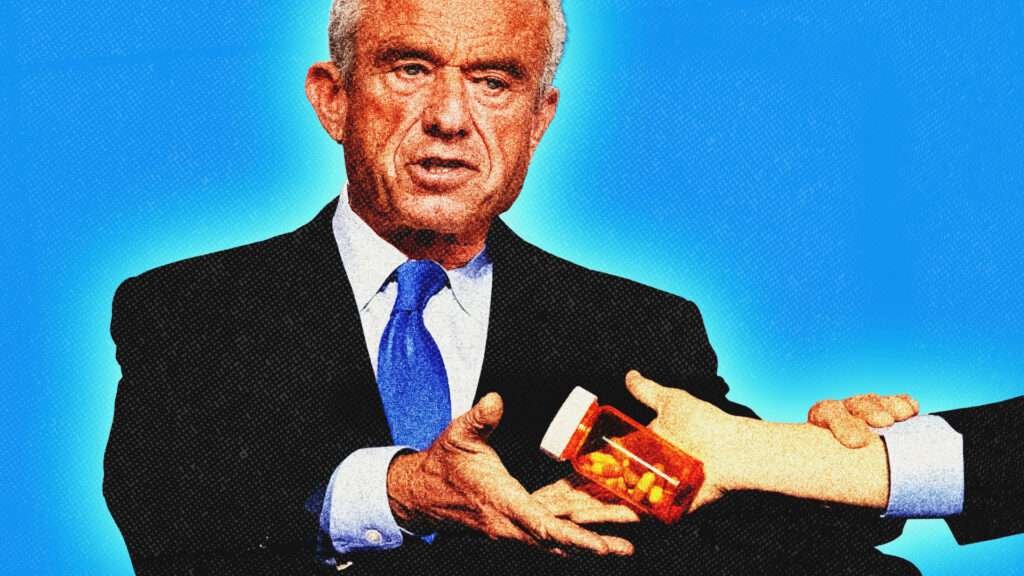
In May, the Department of Health and Human Services (HHS) announced a plan to address what it calls “psychiatric overprescribing.” Antidepressants—especially selective serotonin reuptake inhibitors (SSRIs) such as Prozac, Zoloft, Paxil, and Lexapro—are likely to become the central test case. They are common, politically salient, and prescribed for conditions ranging from major depression to anxiety, pain, insomnia, and distress that may or may not meet the criteria for a psychiatric diagnosis.
Contrary to the most alarming reports, HHS has not announced an antidepressant ban, and it has not advised current users to hop off their medications. The agency’s stated goal is to “promote appropriate psychiatric prescribing” and support “deprescribing when clinically indicated.” Although that is unobjectionable as far as it goes, there is a serious danger that the HHS initiative could drift from clinical guidance into potentially devastating access limitations, especially because “better prescribing” and “less prescribing” are easily confused.
HHS says it wants more emphasis on informed consent, more patient participation in prescribing decisions, and regular reviews of risks and benefits. The department would like to see increased use of nonpharmacological treatments, along with supervised tapering and/or discontinuation for patients who don’t seem to be benefiting from medication. HHS is also calling for better prescribing reports, improved continuing medical education, dissemination of updated guidance, and Medicare billing clarifications for clinical work related to deprescribing.
The simple story is that HHS Secretary Robert F. Kennedy Jr. wants Americans off antidepressants. Kennedy has said “getting off of SSRIs” is harder than “getting off heroin.” He claims there is “tremendous circumstantial evidence” that SSRIs “might be contributing to violence,” including mass shootings. “This proliferation of antidepressants…represents so much of what is wrong with healthcare today,” writes Calley Means, a senior adviser to Kennedy at HHS. “Antidepressants are a way for the medical system to earn recurring revenue without solving the root causes of what is actually making people depressed.”
Whatever Kennedy’s personal preferences, it is fair to say that HHS wants to change the default settings for psychiatric treatment. Per HHS, starting an antidepressant should involve a clearer discussion of benefits and side effects, withdrawal symptoms, alternatives, and expected time under treatment. Continuing antidepressants should involve periodic reassessment rather than an indefinite series of automatic refills. Finally, stopping an antidepressant, when appropriate, should be treated as clinical work rather than an afterthought.
On its face, much of what HHS is proposing is eminently reasonable. In many cases, psychiatric prescriptions do act like a one-way door. It is also true that psychiatric medications are easier to start than they are to stop: While a patient can begin taking an SSRI after a short visit to his general practitioner, discontinuing the medication years down the line can require multiple visits, slow and painful dose reductions, burdensome symptom monitoring, and a clinician who can distinguish withdrawal from relapse. If the medical system reimburses initiation more easily than discontinuation, and if clinicians have more experience starting drugs than tapering people off them, it should not be surprising that the system produces more starts than stops.
The concerns underlying the HHS initiative are legitimate. Antidepressants are not harmless mood vitamins. They can—and frequently do—cause sexual dysfunction, nausea, insomnia, weight change, emotional blunting, agitation, and discontinuation symptoms. Withdrawal is real, and existing guidelines tell clinicians not to treat stopping as trivial.
The British National Institute for Health and Care Excellence (NICE), for example, recommends that patients who want to stop antidepressants taper in stages. It notes that dose reductions might need to be done in smaller increments when the initial dose is relatively low, adding that withdrawal can be severe for some patients and last weeks or months for many more. The American Psychiatric Association (APA), the American Academy of Family Physicians, and the Veterans Health Administration offer similar advice.
Ostensibly, HHS wants better prescribing practices, not less antidepressant use per se. The danger is that HHS will conflate those two things. Appropriate prescribing is a quality measure, while lower prescribing has to do with quantity. A system can reduce antidepressant use by improving diagnosis, expanding access to psychotherapy, eschewing medication for mild distress, and helping stable patients taper down. It can also reduce antidepressant use by making doctors leery of prescribing, instilling fear of medication in the hearts of patients, or creating administrative barriers that deter people from treatment that could improve their lives. Prescriptions would fall in both cases, but the welfare effects would be very different.
This distinction is especially important because HHS reportedly has considered steps that go beyond official advice. In May, Reuters reported that HHS officials have explored whether they could restrict or ban some SSRIs. HHS denied that it had considered bans, and Reuters noted that restricting previously approved antidepressants through the Food and Drug Administration (FDA), which is part of HHS, would require strong evidence that the risks of these drugs outweighed their benefits. Taking HHS at its word, it has no plans to ban SSRIs. But even without such drastic steps, promoting a general wariness of antidepressants threatens to hurt the people HHS says it is trying to help.
To evaluate the merits of the HHS plan, we need to ask two questions. First, how large is the overprescribing problem? Second, how large are the harms and benefits of the drugs themselves?
The first question is hard to answer because the denominator is uncertain. In 2025, the Centers for Disease Control and Prevention (CDC) estimated that 11.4 percent of U.S. adults took prescription medication for depression in 2023. But that result was based on a question that asked about medication “for depression” rather than antidepressant use generally. The distinction makes a difference because SSRIs and related drugs are prescribed for a wide range of other conditions, including anxiety disorders, obsessive-compulsive disorder (OCD), post-traumatic stress disorder, panic disorder, premenstrual dysphoric disorder, neuropathic pain, and fibromyalgia.
The CDC has provided another estimate based on data collected by the National Health and Nutrition Examination Survey (NHANES) between 2015 and 2018. The NHANES data indicated that 13.2 percent of U.S. adults had used antidepressant medications in the previous 30 days. The rate was higher among women than among men and highest among women 60 or older, 24.3 percent of whom reported past-month antidepressant use. According to a more recent study reported this year in BMJ Mental Health, which was based on a survey conducted in 2025, 16.6 percent of American adults reported “current” antidepressant use.
These numbers are related but not quite interchangeable. Taking a prescription medication “for depression” in a given year is not the same as using an antidepressant in the last 30 days, which in turn may not be the same as “current” antidepressant use. Data on prescriptions, meanwhile, tell us how many prescriptions were written and how many were filled, but that does not give us an estimate of regular, long-term antidepressant use.
On average from 2011 through 2014, the CDC reports, 12.7 percent of NHANES respondents 12 or older reported using antidepressants during the previous month. Within that group, 68 percent said they had been taking antidepressants for at least two years, while about a quarter said they had been taking them for 10 years or longer. Those results suggest that 8 percent to 9 percent of Americans 12 or older used antidepressants in the past month and had used them for at least two years, while about 3 percent were past-month users with prescriptions going back at least a decade.
It seems clear that a substantial percentage of Americans use antidepressants, that long-term use is fairly common within that group, and that there is no standard off-ramp. These facts alone are enough to justify doubling down on review practices and tapering support. But they do not prove that “psychiatric overprescribing” is a massive or widespread problem.
When it comes to the risks and benefits of antidepressants, the debate becomes even murkier. Critics of SSRIs frequently suggest they have only tiny benefits but common and major side effects. They also argue that the continued use of antidepressants is largely a product of pharmaceutical marketing practices or clinical inertia. That gloss is misleading.
Some critics have argued that antidepressant benefits are largely, and perhaps entirely, a placebo response due to broken blinding in trials. If subjects inferred they had received antidepressants based on side effects they experienced, according to this theory, that would have boosted their expectations of improvement. But while a 2022 meta-analysis of antidepressant trials found that blinding assessments were rare, trials of new-generation antidepressants did assess blinding, and they found that neither patients nor assessors were reliably able to infer the group to which subjects had been assigned. Nor did successful blinding predict effect sizes.
Patient-level analyses likewise cut against the idea that SSRI efficacy can be attributed to unblinding: Citalopram (Celexa) and paroxetine (Paxil) reduce depressed mood more than placebo even when patients don’t report adverse events, and the severity of adverse events does not predict response. Trial-level data likewise show adverse events don’t mediate SSRI efficacy. If anything, standard analyses of popular measures like the Hamilton Depression Rating Scale seem to understate antidepressant effects because common side effects overlap with their items and plausibly get counted as residual depressive symptoms. Finally, antidepressant efficacy rises with dose to a point but then levels off, whereas side effects continue to rise with higher and higher doses.
While antidepressants are far from miracle drugs, their intended effects are at least modest, and there is a large “nocebo” element to their side effects, meaning negative expectations affect how people react to them. They are relatively easy to justify for conditions that seriously disrupt people’s lives, as opposed to ordinary “unhappiness” or mild depressive symptoms. NICE, accordingly, says antidepressants should not be routinely offered as first-line treatments for mild depression, unless that is the patient’s informed preference.
The fact that antidepressants are not for everyone, however, does not mean they barely work. A 2018 Lancet meta-analysis found that all 21 antidepressants covered by the study were superior to placebo for acute major depressive disorder in adults, with notable variation between different drugs in the class. A 2009 Cochrane review of primary-care depression trials likewise found that SSRIs were effective. Its estimate of the “number needed to treat” (NNT)—i.e., the number of people who need to be treated to generate a benefit—was very low: seven to eight. By comparison, the “number needed to harm” (NNH)—i.e., the number of people who need to be treated to generate damage to patients—was somewhere between 20 and 90, depending on the drug and the measure of efficacy.
That comparison is important, since clinicians want to see a low NNT and a high NNH. Side effects are common enough to matter, and some patients do find antidepressants to be intolerable. But the popular belief that antidepressants have small benefits and large harms does not survive contact with trial data. In clinical practice, SSRIs have a lower NNT than is commonly thought, and they have a higher NNH than alarmists are willing to admit. That does not mean any particular prescription is justified, but it does mean the case for reducing use cannot rest on the premise that SSRIs are essentially placebo drugs with unusually severe side effects.
Withdrawal effects are also a real problem that is rarely described correctly. While discontinuation symptoms can be serious, estimates that count each symptom after stopping lead to dramatically inflated estimates of true withdrawal effects. Symptoms also occur after placebo discontinuation, and ordinary symptom fluctuation can be mistaken for withdrawal effects. So can symptoms caused by relapse of the condition for which antidepressants were prescribed in the first place. A 2024 Lancet Psychiatry review estimated that one-sixth to one-seventh of patients experienced symptoms attributable to discontinuation of antidepressants, while about 3 percent had severe withdrawal symptoms. That is a clinically meaningful number, but it does not mean most patients will suffer the sort of withdrawal symptoms predictably caused by abrupt cessation of narcotics.
Pediatric problems are tougher. Since parents are making decisions for their children rather than themselves, it is especially important to be clear about the risks, which may be greater than they are for adults. In 2004, the FDA issued a warning that antidepressant use by children and adolescents can increase the risk of suicidal ideation. That concern was based on short-term trial data showing that 4 percent of minors treated with antidepressants reported suicidal ideation, compared to 2 percent of minors who received a placebo, although there were no completed suicides. This finding is important and should not be minimized. It implies that children and adolescents who start antidepressants do need careful selection, family involvement, and monitoring after drug initiation or dose changes.
Still, the finding that prompted the FDA’s warning is often presented misleadingly as part of the case against antidepressants. The claim that “antidepressants double suicidality in children” is essentially correct, but it obscures the absolute risk: 4 percent vs. 2 percent. It also ignores the point that benefits still outweigh risks in many pediatric cases. A 2007 meta-analysis of clinical trials found that pediatric use of antidepressants had a favorable cost-to-benefit profile for major depression, OCD, and non-OCD anxiety disorders. The estimated NNTs were about 10, six, and three, respectively. The overall increase in the risk of suicidal ideation or attempt was about 0.7 percentage point, which corresponds to an NNH of 143. There were no completed suicides.
The evidence suggests that SSRIs can increase nonfatal suicidal thoughts or behaviors in a subset of young patients, especially early in treatment or after dose changes. There is a real risk to consider, but it is not so large that it supports a general presumption against pediatric treatment, as HHS and the White House seem to favor. Untreated depression, anxiety, and OCD carry real risks too, including failure in school, social isolation, disruption of family life, self-harm, and, yes, suicide. The American Academy of Child and Adolescent Psychiatry has therefore urged policymakers to make sure that official guidance is grounded in evidence, while noting that psychiatric medications are safe, effective, and potentially lifesaving when used appropriately.
The same cautious attitude applies to adults. It is reasonable to say that antidepressants are overused in some settings. But it is not reasonable to treat antidepressant exposure as a major, population-level suicide hazard without much stronger evidence to that effect.
Policy risks run in both directions. Overprescribing can harm people, but so can underprescribing. Delayed treatment also can cause real harm. Imagine what might happen to someone in crisis who could be effectively treated with an antidepressant if the government decides to restrict access. Alarmist messaging likewise can cause harm by deterring clinicians and patients from using antidepressants, while abrupt discontinuation can hurt patients who subsequently relapse. These are the potential costs of HHS efforts to stop “psychiatric overprescribing.”
No wonder the American Foundation for Suicide Prevention (AFSP) is worried. “AFSP strongly supports access to comprehensive, research-informed treatment for depression and other mental health conditions,” it said in response to the HHS plan. “This includes psychotherapy, medications, and proven interventions for suicide prevention such as safety planning and lethal means counseling. For many people, these treatments are life-changing and lifesaving.”
Pregnancy is another area where this sort of risk communication can go sideways. As with any medication, there are risks to consider. But the discussion is complicated by confounding factors: Women who use antidepressants while pregnant are different in many ways from women who do not. A large 2026 Lancet Psychiatry meta-analysis found that associations between prenatal antidepressant exposure and autism or ADHD were greatly diminished or became nonsignificant after a simple accounting for maternal mental health and familial confounding.
The Society for Maternal-Fetal Medicine says available data do not show that SSRI use during pregnancy is associated with congenital anomalies, fetal growth problems, or long-term developmental issues. But it notes that discontinuation of antidepressants is associated with relapse of depression. The evidence does not support a general rule against antidepressants during pregnancy. As with other patients, the right approach is individualized counseling rather than blanket abstinence.
Prior experience suggests the harm that could flow from warning people away from antidepressants or restricting access to them. A 2024 Health Affairs research review found that the FDA’s pediatric antidepressant warnings were followed by unintended reductions in mental healthcare, including the use of antidepressants. The review noted that several studies also found increases in psychotropic drug poisonings and suicide deaths after the warnings went up. Similarly, a 2026 study found increases in attempted and completed suicides among chronic disease patients after South Korea limited antidepressant prescriptions to 60 days in nonpsychiatric clinics.
This does not mean every antidepressant prescription prevents suicide. Completed suicide is a rare enough outcome that randomized controlled trials often can’t resolve the question of whether or how much antidepressants affect mortality risk. Observational evidence is confounded because patients who take antidepressants differ from patients who do not take them. A Finnish cohort study of people who had ever used antidepressants, for example, found more suicide attempts but fewer completions among patients who were currently taking them—a mixed pattern that is difficult to causally interpret. But it seems clear that antidepressants are lifesaving for some patients, making it plausible that broad deterrence or restrictions will cost lives.
This is where a campaign to reduce antidepressant use can, and likely will, go wrong. If the campaign begins from the premise that antidepressant use sometimes starts too casually, sometimes continues indefinitely without review, and sometimes is hard to stop because doctors lack the time or training to appropriately taper patients off, it will be targeting real defects in care. If the campaign begins from the premise that antidepressants are mostly dangerous, mostly ineffective, and generally socially harmful, it is apt to result in devastating levels of undertreatment.
Psychiatry’s institutional response to HHS has sought to draw that distinction. The APA says it supports research, enhanced prescription training for clinicians, individualized treatment planning, and promoting patient participation in treatment decisions. But it objects to framing the nation’s mental health crisis as a problem of overmedicalization or overprescription. Instead, the APA points to broader access problems driven by a shortage of mental health professionals, limited numbers of beds at psychiatric institutions, short visit times, barriers to psychotherapy, poor integration between psychiatric and primary care, and “a lack of coordinated care to support patients from crisis treatment through follow-up care.”
The APA’s objection is persuasive: “Use psychotherapy first” is good advice if effective therapy exists and can be delivered in a timely and affordable manner appropriate for a patient’s needs. Otherwise, it becomes a way of telling patients to prefer treatment they can’t obtain. The same is true of lifestyle interventions. Sleep, exercise, nutrition, and social connection all matter, but they can only rarely substitute for acute treatment. For some patients, such interventions are the best option; for others, they are a good adjunct to recommend. But for an even larger population, they are impossible until symptoms improve.
A better antidepressant policy would not be pro- or anti-medication, but instead pro-matching. Patients with mild, recent symptoms and intact psychological and social functioning would not be pushed to medicate. But patients with severe, recurrent, suicidal, psychotic, melancholic, or highly impairing depression should not be made to wait for relief because prescription is politically unpopular. Patients who are stable and want to taper off the drugs should be helped to do so. Patients who are stable and prefer to remain medicated after they understand the tradeoffs should not be second-guessed by bureaucrats.
Less antidepressant use could mean better care, but it also could mean less or worse care. We need more meaningful metrics, including measures such as symptom remission, relapse rates, suicide attempts, completed suicides, objective functioning measures, adverse event reports, patient satisfaction ratings, data on access to psychotherapy, quality of informed consent, and the availability of supervised tapering. If deprescribing is clinically indicated, successful discontinuation can be a good outcome to measure. But if treatment is clinically indicated, continued access can also be a good outcome to measure.
The HHS initiative identifies a genuine weakness in American mental healthcare: Medications are easier to start than to evaluate or stop, and nonpharmacological alternatives are sometimes ignored because they are difficult to recommend or implement. But the solution cannot be a population-level campaign whose implicit goal is less antidepressant use. The solution has to be a better sorting process: Some people should never start antidepressants, some need to taper, and some need long-term treatment that in many cases should have started earlier.
For many patients, antidepressants are not symbols of overmedicalization but ordinary medicines. They are imperfect, they can be unpleasant, and they can be overused, but they are currently accessible, often effective, and occasionally lifesavers. A good policy would give those who need it an off-ramp; a bad policy would treat the drugs themselves as a problem to be solved. HHS needs to ask the right questions: not how many prescriptions can be taken away, but whether particular patients are better off with their medications or without them. Until policymakers can actually answer that question, I say, on behalf of patients everywhere: Come and take ’em.
Read the full article here
Fact Checker
Verify the accuracy of this article using AI-powered analysis and real-time sources.