

 Freedom Index
Listen to the article
Subscribe to the Free Future Newsletter
Or get immediate notifications of new posts via Substack
Free Future home
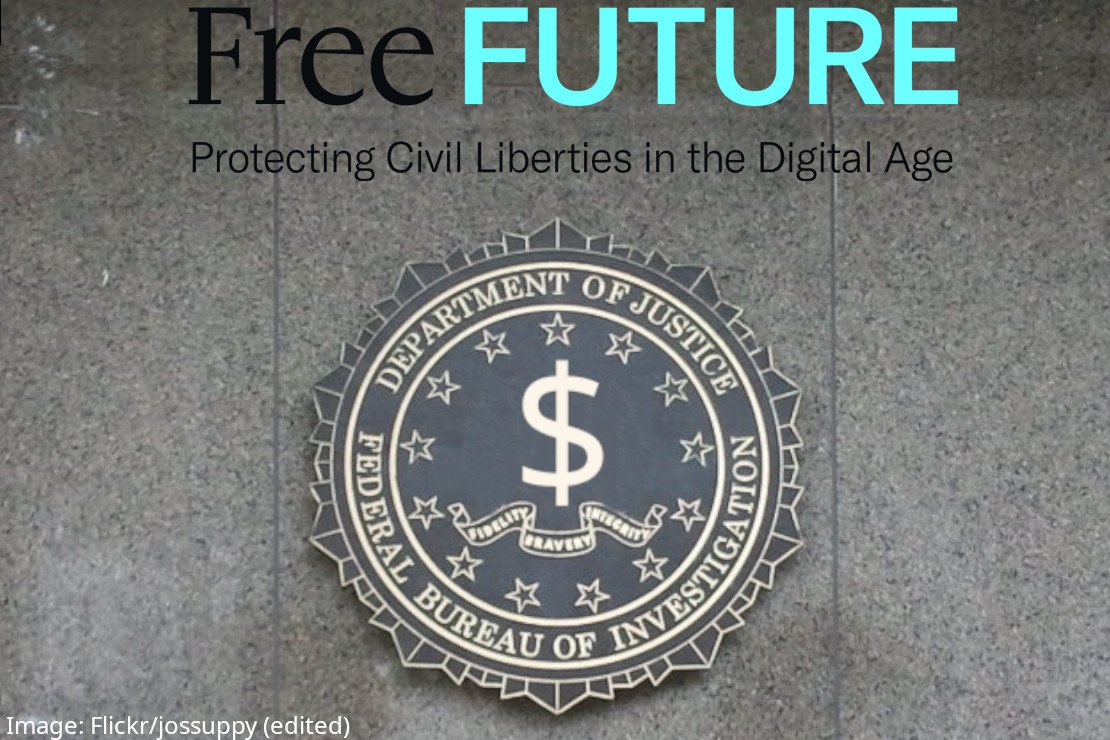
The FBI says that it has seized over 600 drones from people flying near World Cup games, raising serious questions about fairness and due process, the police corruption that asset forfeiture laws encourage, and the future of drones as an authoritarian technology reserved for government agencies and corporations and unavailable to ordinary people.
Of course we don’t know if the FBI’s claim (which includes seizures by the FBI “and our DHS partners”) is accurate. What we do know is that drone seizures appear to be emerging as an unaccountable government power that is being exercised more regularly.
It’s easy to imagine that “police seized a drone” means they removed it from the sky due to a violation, and then gave it back. But the law says that any drone that is seized “is subject to forfeiture to the United States” or, where state and local law enforcement seize aircraft, are “subject to forfeiture under the laws of the agency’s jurisdiction.” That means that seizures can be carried out in the sense of, “this drone is now ours.” We don’t know how many if any FBI-seized drones are being returned to their owners.
These seizures raise many other questions, too, including:
- Under what circumstances has the FBI been seizing people’s drones? For any violation? Some violations? How much discretion is involved?
- Has the agency been differentiating between flights that appear to be intentionally disruptive, such as an attempted flight over a stadium, versus flights where a violation is accidental or results from ignorance or misunderstanding about the rules?
- What happens when a drone seizure is unfair (“You say you’re outside the no-drone zone? Well I say you’re inside it.”) Are there procedures by which a drone owner can contest the seizure of their drone, other than filing a federal lawsuit?
- What is done with seized drones? Are they sold with proceeds going into the FBI’s budget as with other civil forfeiture assets?
- What is the total value of drones that the FBI has seized?
- Is the agency seizing expensive $20,000 drones but not bothering with $300 consumer models, as we have seen with some agencies implementing civil asset forfeiture practices?
- Has the FBI destroyed any drones (which equally deprives people of their property without due process)?
How can law enforcement just take people’s drones?
If you ride a bicycle or drive a car somewhere you’re not supposed to be, the government doesn’t get to seize and keep your bike or your car, so why can they do that with respect to drones? Obviously if a drone is somewhere it’s not supposed to be, such as within the area of a temporary flight restriction (TFR) around a major sporting event, then it makes sense that law enforcement should be able to act. But why should they be able to take your property?
The reason they can is that agencies have been pushing for such a power, which they already exercise in other areas through American law enforcement’s corrupt and abusive practice of civil asset forfeiture. They want that power because the proceeds from seizures go right into their budgets. Under these War-on-Drugs laws, police can seize people’s cars, cash, and other belongings without proof of wrongdoing, bending law enforcement officers away from their role as disinterested enforcers of the law and giving them a “profit motive” to claim that someone is in violation when they are actually not. It gives them an incentive to settle close calls, small technical violations, or ambiguous situations in favor of seizure, and generally to engage in unjustified over-enforcement. The ongoing scandal over these patently unjust laws and practices gives fuel to accusations that the police are “just another gang.”
With drones, the problem started in 2018 when Congress first gave DHS and DOJ the power to destroy or seize drones. As the ACLU warned at the time, the bill failed to “mandate a prior or after-the-fact review to ensure that DOJ and DHS appropriately exercised their authority,” including “any independent determination from a judge that an individual did something wrong or such seizure was necessary to prevent harm.”
In 2022 the Biden administration in 2022 proposed a bill expanding those authorities that represented essentially a security-agency wish-list of counter-drone authorities unbalanced by civil liberties protections. That bill languished until December 2025, when the Trump Administration pushed through language echoing the Biden proposal by attaching it to a must-pass Defense Department funding measure. At the end of the day law enforcement got their wish and forfeiture powers are now part of the law.
Smoothing the path to seizure by local authorities as well
Although the FBI appears to have been doing most of the World Cup drone seizing, the government is also extending seizure authority to state and local law enforcement. Localities are only authorized under the law to seize drones where action is “necessary to mitigate a credible threat.” However, the DOJ and DHS say in interim final implementing regulations that the state and local seizure power “applies to the physical taking of possession of an unmanned aircraft that is no longer active in flight.” Bizarrely, in short, if a police officer claims your former flight was a “credible threat” (a very subjective term), then they can seize your drone even though you’re done flying, at which point it’s hard to see how a drone could pose a threat.
Before any state or local officer can act to mitigate a drone threat, they have to undergo an FBI training course, after which they receive a “Mitigation Certification” authorizing them to take various actions against drones posing credible threats, and they have to coordinate their actions with the federal government. Except, DOJ and DHS say, when state or local police want to seize a drone — then there’s no need for police to bother with any of this certification or coordination. Apparently the government doesn’t want any friction slowing down its drone seizures.
Unlike state and local police, DHS and the DOJ don’t need a credible threat to seize a drone; they can also do so merely “to enforce the law.” Again, outside of the War on Drugs, police enforcing rules in other areas doesn’t generally do so by confiscating property.
Even careful operators can be trapped
Some might think that in some cases the loss of a person’s drone is a just punishment, such as where an operator creates disruption by intentionally flying a drone over a stadium during a game. But such cases are the small tip of a very large pyramid. Any law enforcement expert who works on drones will tell you that the vast majority of non-compliant flights are by “the clueless and the careless.” And a drone operator need not even be especially clueless or careless; as Haye Kesteloo at DroneXL points out, the World Cup TFRs extend across a three-nautical-mile radius around the stadiums — and there are enough complex drone regulations that even some operators who are aware they’re inside a restricted zone may mistakenly think they have authorization to fly drones there. For example, those using an FAA program called LAANC that grants exemptions to certain flight restrictions. “The structure is layered in a way that traps even careful operators,” as Kesteloo puts it.
But regardless of an operator’s intent, the fact is that the law gives police vast discretion to seize their drones based on a mere claim of wrongdoing. And to do so with no due process short of filing a federal lawsuit. If Congress wants to make loss of a drone part of the punishment for violating airspace restrictions, it should require that a person be prosecuted in a court of law and then their property seized after a conviction. In the United States, people shouldn’t have to go to court to prove their innocence in order to avert punishments.
Finally, in the wake of the Trump Administration’s ban on foreign-made drones, these aircraft are becoming far more expensive technology than they used to be, making seizure a more significant risk, especially for an ordinary person or small commercial drone operator. And overall, the lack of checks and balances over the rules for drone seizures is just another part of a larger trend that we have discussed: the creation of a regime in which drones are reserved for government agencies and corporations, and individual users are squeezed out.
Read the full article here
Fact Checker
Verify the accuracy of this article using AI-powered analysis and real-time sources.