

 Freedom Index
Listen to the article
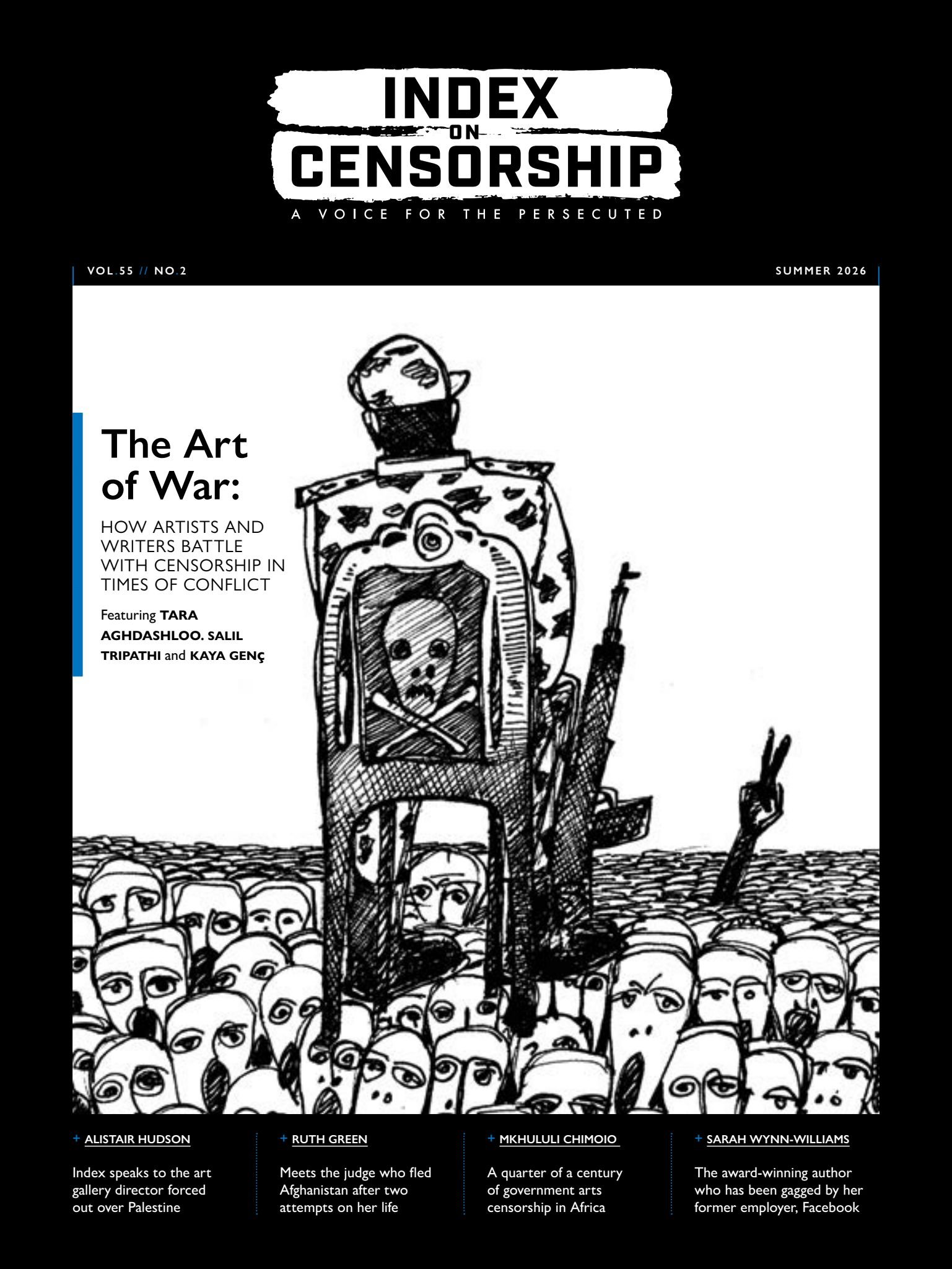
War is brutal. During conflicts there is little time for art. Museums and theatres are flattened by bombs, a trend we have been covering in Index for some years now. On the ground, people often have more pressing concerns like finding food or repelling the enemy. But war can also inspire the most incredible artistic endeavour, as painters and poets are forced to look again at a fragile world and bear witness to the atrocities that warring parties would rather keep hidden.
In this issue, Martin Bright talks to Magnum photographer and artist Nanna Heitmann about her work The Machinery of War, which presents uncomfortable truths about propaganda and the Ukraine war.
As Salil Tripathi writes from the USA, writers and artists are able to discuss the Israel-Hamas war much more freely than they could during the Iraq war a quarter-century ago, and are less likely to face blanket censorship. After 9/11, Tripathi observes, George Bush essentially threw down the gauntlet. War is often talked about in stark black and white terms, but artists are able to give nuance.
Maria Sorenson makes this point while highlighting work about war that has been censored in Russia, Belarus and Ukraine because it does not toe the official patriotic line. “Narrowing life into ideology, flattening human complexity into slogans, symbols and sanctioned truths is what propaganda does best. Art has always been – and still remains – one of the ways to resist that,” she writes.
See the full list of contents for this issue >>
Read the full article here
Fact Checker
Verify the accuracy of this article using AI-powered analysis and real-time sources.