

 Freedom Index
Listen to the article
Colleen Hroncich
“That’s insane. I can’t start a school,” Rachel Good, founder of Discovery Learners’ Academy in Chattanooga, TN, initially told her husband. A longtime public school special education teacher, Rachel had grown increasingly frustrated by the system. Her career had spanned K‑8th grade, including self-contained special education classrooms, students with emotional and behavioral disorders, and inclusion, which means supporting kids with special needs who are in mainstream classrooms.
Over time, Rachel shifted into reading intervention, helping schools implement multi-tiered systems of support. What she found shocked her. “We started doing that and found like 75 percent of our kids in the whole school qualified for tier three support [the highest level]. Multi-tiered systems are made for 5–10 percent, not three-quarters of your school,” she explains. That realization set off alarm bells. Something was deeply wrong with the broader instructional model, not just the struggling students.
Rachel went to her principal and described what she was seeing: “I said, ‘We have a tier one problem.’ And she was like, ‘No, that is not your domain. Do not touch tier one. Don’t tell our teachers how to teach.’” Rachel tried to explain that the school was full of good teachers who really cared, but that what they were doing wasn’t working for the students, most of whom came from difficult economic situations. The principal essentially told her to stay in her lane.
The final straw came from a simple reading lesson. She read a story aloud where a little girl cried, and she asked her third graders why she cried. They wouldn’t even guess. “I thought, my gosh, these are eight-year-olds. They’ve all cried before. Why won’t they tell me something when they’re not sure they’re going to be right?” she remembers. “I was afraid that they’re afraid of being wrong, that we’ve convinced them that failure is not safe.”
When she later did the same activity with a kindergarten class, the kids offered lots of reasons for the little girl’s tears. The difference between the two groups helped convince Rachel she was right: “I thought, oh my gosh, in three or four years, we have taught them that their voice doesn’t matter and that it’s not safe to be wrong. That is not what I am here for, and it’s not what I want my kids to have.”
That moment pushed her to ask where she could find schools that nurture curiosity instead of crushing it. The answer she kept hearing was, “It doesn’t exist.” Some suggested Montessori, but she felt even that had “a different mold you had to fit in.” Her frustration grew until one evening her husband asked, “Are you going to talk about this forever, or are you going to do it?” When she hesitated, pointing out she knew nothing about running a business, he offered her own mantra back to her: “What do you tell your kids? Aim high, fail big, try again.”
So she did. In 2020, amid the pandemic, she assembled a board, connected with SCORE business mentors, and filed paperwork to become a nonprofit. One mentor gave advice that changed everything: don’t start as a school—start as a camp. Camps, he explained, were a low-risk way to build trust and test ideas. They were also simpler to set up compared to a school. She balked at first, but he convinced her, and she ran her first camps in summer 2021.
Parents started coming to Rachel that June, begging her to open her school by fall. When she said she couldn’t, they told her, “My kid hates going to school, but they want to come here.” They told her about children who were finally excited about learning or who had friends for the first time. “Oh my gosh, this is more than just creating lifelong learners,” Rachel thought. “That’s really important. But kids deserve a place where they feel like they belong.” She knew she couldn’t be ready in two months, but she decided to accelerate her timeline.
In December 2021, Rachel resigned from her public school job to open Discovery Learners’ Academy in fall 2022. She figured if she could get eight kids, she’d launch. In July, she had 21 students registered, and she closed enrollment. “That first year felt magical,” she says. “Not that it wasn’t hard, but it was happening.”
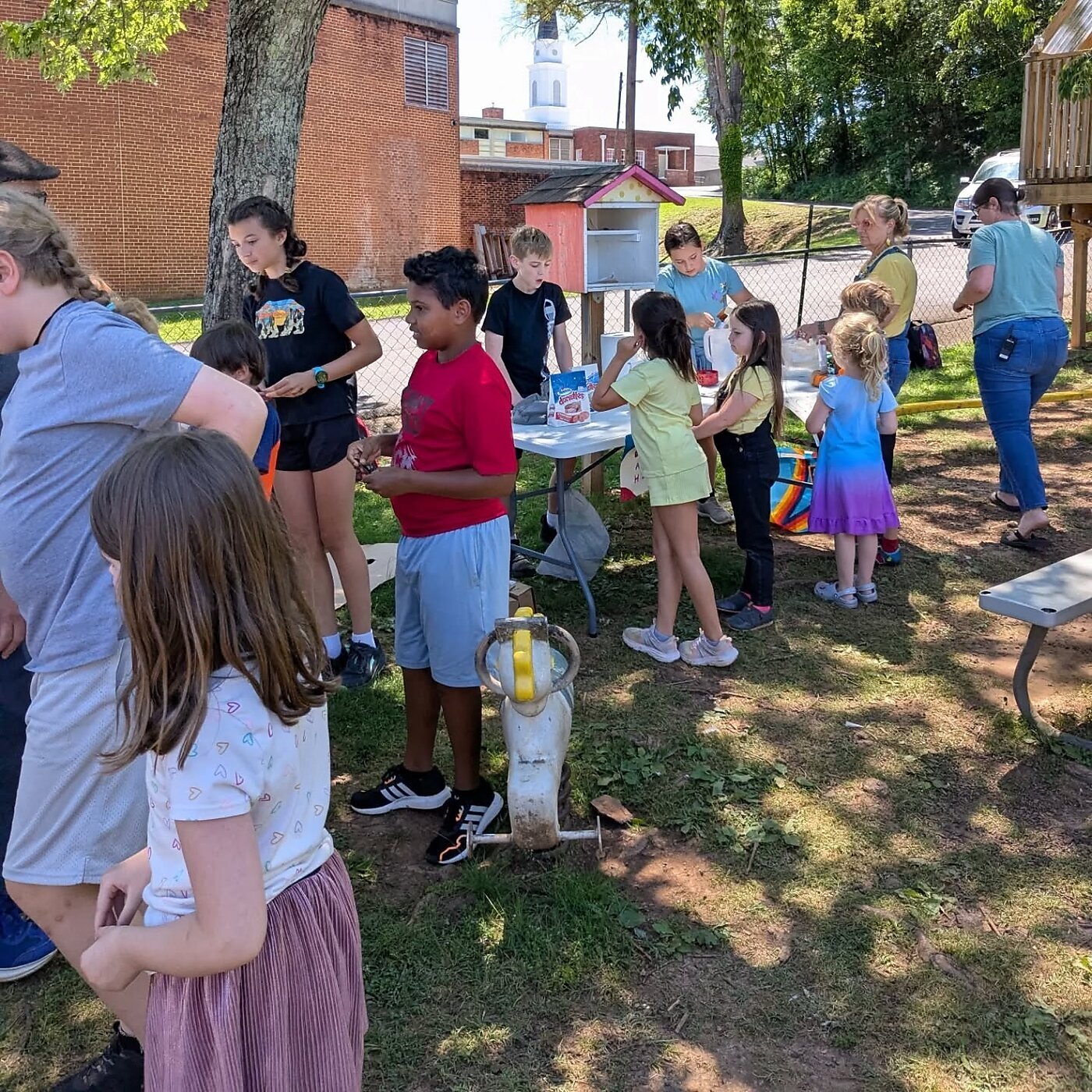
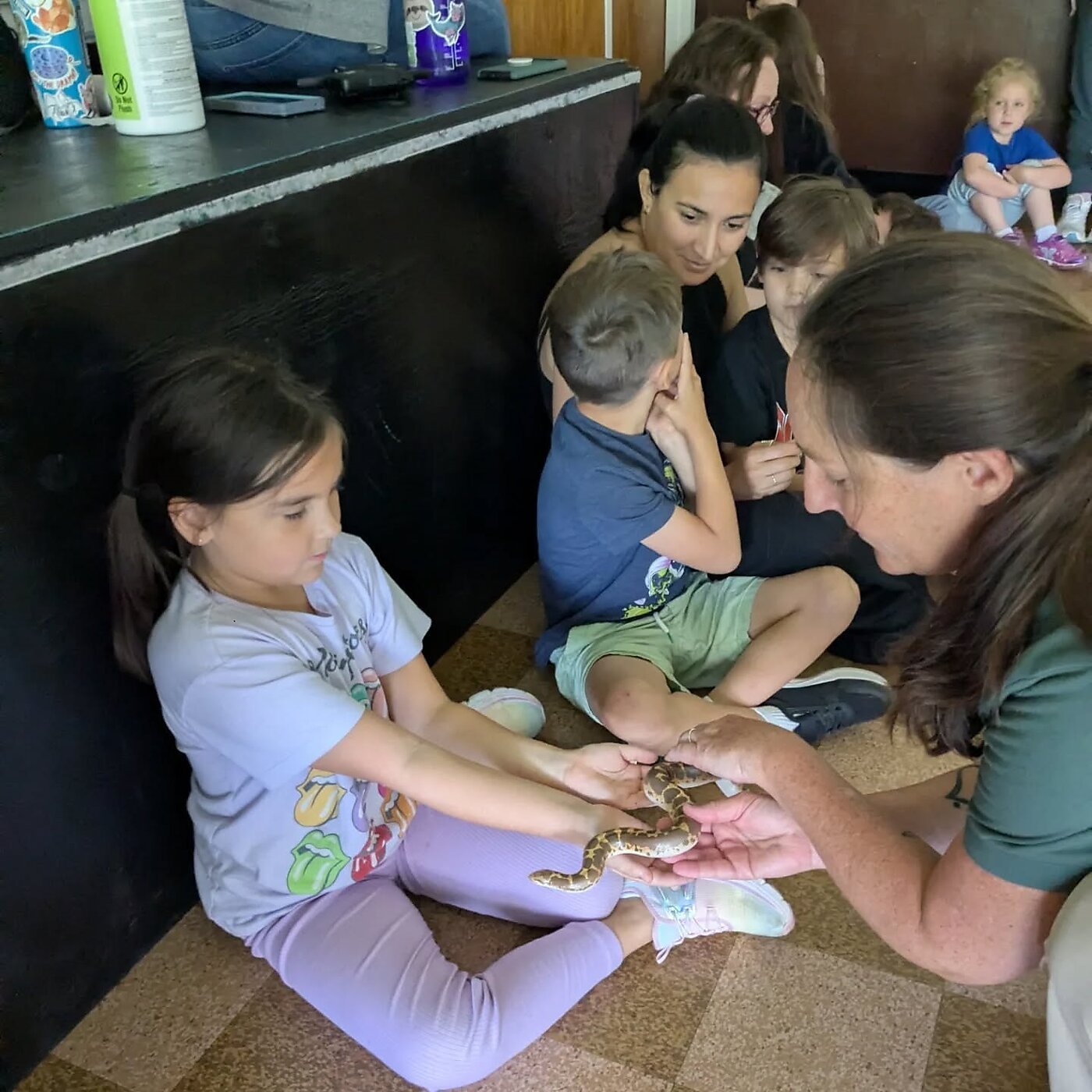
The school grew quickly. Families came from public and private schools, as well as homeschooling. Some kids arrived far behind, others well ahead, but all seemed to thrive. “We really focused on emotional health, emotional awareness, and self-regulation. Not just complying for compliance’s sake, but why are we doing things, and what are our other options?” she explains. And it worked. “When we treated them like people and we made space for all of the messiness of being a person, they actually learned better.” Parents who once swore their children would never enjoy reading called her in tears, saying, “He wants books for Christmas, Rachel.”
Growth brought challenges. Enrollment doubled to 40 in year two, straining her as a first-time administrator. “It almost killed me. I almost shut the school down,” she admits. “It was aim high, fail big, try again all year long. But we made it to the end of year two, and the kids had still made progress. And the families were, by and large, pretty happy.” She realized that while she was “crazy stressed,” everybody else was okay.
By year three, things stabilized with better hiring and systems. Now in year four, the school serves more than 50 full-time students plus 14 part-time homeschoolers in a flexible, multi-age, project-based model. Kids move between groups based on ability, not grade labels. “School fed you a lie that every seven-year-old should be doing the same exact thing and on this exact same schedule. That’s not how humans work,” she tells the kids who may resist being moved to a lower level. “We want you to learn, and you’re going to learn when somebody’s teaching at your level.”
Students at DLA can use Tennessee’s Individualized Education Accounts, an education savings account program for students with special needs, to pay tuition at DLA. But Rachel hasn’t decided yet if the school will participate in the new universal ESA, the Education Freedom Scholarship program, due to the rules attached to it and the limited number of scholarships available. “We are currently being accredited, which will potentially give us access to it,” she says.
To aspiring founders, Rachel encourages them to go for it. “There is no such thing as being fully ready. It’s like becoming a parent. If you wait to become a parent until you’re fully ready, you’ll just never do it. And I think it’s the same with starting a school,” she says. “At some point, you just have to decide you’re going to do it and be willing to learn along the way.”
Rachel acknowledges that learning as you go can be messy and hard, but she keeps her “aim high, fail big, try again” adage in mind. While failure isn’t fun, she’s found that it speeds up learning and really benefits the kids. “Our staff and I all model failing. We model not knowing things. We model these things that we want them to embody. Like, let’s get creative about this. Let’s be flexible,” she says. “You can’t tell them to do something and then not do it yourself and expect that they’re going to follow it.”
Read the full article here
Fact Checker
Verify the accuracy of this article using AI-powered analysis and real-time sources.