Close Menu
FSNN | Free Speech News NetworkFSNN | Free Speech News Network
  • Home
  • News
    • Politics
    • Legal & Courts
    • Tech & Big Tech
    • Campus & Education
    • Media & Culture
    • Global Free Speech
  • Opinions
    • Debates
  • Video/Live
  • Community
  • Freedom Index
  • About
    • Mission
    • Contact
    • Support
Trending

Bitcoin faces $80,000 test as thinner weekend liquidity looms

11 minutes ago

Solana Cuts Blockchain Slot Time to 350 Milliseconds

13 minutes ago

Morning Minute: CFTC Will Give Crypto Clarity If Congress Won’t

15 minutes ago
Facebook X (Twitter) Instagram
Facebook X (Twitter) Discord Telegram
FSNN | Free Speech News NetworkFSNN | Free Speech News Network
Market Data Newsletter
Friday, August 21
  • Home
  • News
    • Politics
    • Legal & Courts
    • Tech & Big Tech
    • Campus & Education
    • Media & Culture
    • Global Free Speech
  • Opinions
    • Debates
  • Video/Live
  • Community
  • Freedom Index
  • About
    • Mission
    • Contact
    • Support
FSNN | Free Speech News NetworkFSNN | Free Speech News Network
Home»News»Legal & Courts»It’s time for Congress to reform FOIA. Here’s how RCFP would do it.
Legal & Courts

It’s time for Congress to reform FOIA. Here’s how RCFP would do it.

News RoomBy News Room2 months agoNo Comments8 Mins Read5 Views
Share Facebook Twitter Pinterest Copy Link LinkedIn Tumblr Email VKontakte Telegram
It’s time for Congress to reform FOIA. Here’s how RCFP would do it.
Share
Facebook Twitter Pinterest Email Copy Link

Listen to the article

0:00
0:00

Key Takeaways

Playback Speed

Select a Voice

This post originally appeared in The Nuance, the Reporters Committee’s newsletter on legal and policy issues at the forefront of a free press. Sign up today!

Last month marked 10 years since the federal Freedom of Information Act was last amended by Congress. At the time, the transparency reforms signed into law by then-President Barack Obama were expected to make it easier for members of the press and public to use FOIA to access records held by federal agencies.

Most notably, the FOIA Improvement Act of 2016 created what’s known as the “foreseeable harm standard,” which lawmakers intended to cut down on agencies’ abuse of the law’s nine exemptions to withhold data, documents, and other records. It also created a consolidated online FOIA request portal and required more government records to be proactively disclosed to the public, among other amendments.

All welcome changes, for sure. But they haven’t exactly solved all of what ails FOIA. Journalists and other requesters (including our attorneys at the Reporters Committee for Freedom of the Press) continue to complain about agencies citing the law’s exemptions — often with little or no justification — to significantly redact documents or withhold them entirely. In FY 2025, federal data show that more than 81% of substantively processed FOIA requests across all agencies were either denied in part or in full.

And it’s not just the denials. Federal data show that FOIA delays that have plagued the law for decades have actually gotten worse since the law was last amended. For example, the average processing time for simple FOIA requests increased nearly 73% — from 28.04 days in FY 2016 to 48.5 days in FY 2025, according to the federal government. 

The number of backlogged requests, meanwhile, has gotten out of hand. In FY 2016, there were 115,080 backlogged requests across all federal agencies. That number rose to 339,671 in FY 2025 — a staggering 195% increase. 

The situation isn’t getting any better. Since President Donald Trump returned to office last year, his administration has taken steps to dismantle the law. Federal agencies have reduced their FOIA staff by 14%, resulting in “delayed responses to a range of FOIAs,” The Washington Post recently reported. And in an unprecedented move, the U.S. Department of Energy actually attempted to mass cancel FOIA requests.

RCFP attorney Gunita Singh
RCFP attorney Adam Marshall

All that to say, FOIA is long overdue for another round of reforms. 

But what exactly should lawmakers prioritize when putting together legislation to improve this well-intended but deeply flawed law? For answers, I enlisted the help of Reporters Committee attorneys who have dedicated their careers to FOIA: Director of National Litigation Adam Marshall and Staff Attorney Gunita Singh. 

Marshall and Singh have countless ideas for ways to strengthen FOIA, but I asked them to come up with a short wishlist of changes that could go a long way toward making the federal government more transparent and accountable. Here’s what they came up with.

Public interest balancing 

Right now, most of FOIA’s exemptions do not require agencies or courts to consider the public interest in determining whether certain information should be withheld, no matter how much that information could benefit our democracy or protect public health and safety.

Congress should change that by creating what’s known as a public interest balancing test. Under this test, agencies and courts would be required to weigh the public’s interest in accessing records versus the government’s interest in keeping them secret. If the public interest wins out, the records would have to be released, even if they fall within the scope of a FOIA exemption. 

Reporters Committee attorneys have been calling for the addition of a public interest balance test for more than a decade. In a chapter for the 2016 book “Troubling Transparency,” Marshall and former Reporters Committee attorney Katie Townsend wrote that such a test would help restore the “workable balance” that Congress originally sought to achieve between the public’s right to know and the government’s legitimate need for secrecy.

Timely compliance 

FOIA delays are a menace to government transparency. Federal agencies are simply not doing enough to comply with the law in a timely manner. And that’s especially concerning for journalists, who often need to access records quickly in order to tell important stories in the public interest.

The delays are largely the result of limited resources. Even before the Trump administration started laying off FOIA employees en masse, FOIA teams were understaffed and unable to keep up with the influx of records requests. Now, the delays have reached a breaking point. 

One simple solution is for Congress to significantly increase agency funding for FOIA processing. In addition to funding more staff, the money could be used to modernize the technologies that FOIA teams use to process requests. In the age of artificial intelligence, agencies should be using the technology to more efficiently locate requested records. 

In order for these reforms to work, however, lawmakers must add penalties if agencies fail to comply with FOIA deadlines. For example, they should consider adding to the law language that would make it mandatory for agencies to pay requesters’ attorney’s fees if they fail to respond in a timely manner. Such penalties would encourage agencies to better fund their FOIA departments and focus on modernizing their technologies so that journalists and other requesters don’t have to wait months or even years to get a response to a records request. 

Proactive disclosure

So many of the problems that plague FOIA could be solved if federal agencies proactively disclosed more records to the public, especially those that are the subject of a high volume of requests. By posting documents on their websites, agencies could dramatically reduce the number of FOIA requests they need to respond to, allowing them to focus their limited resources on tackling other requests for information.

As mentioned above, the FOIA Improvement Act of 2016 included requirements that agencies proactively disclose records. This was a good first effort, but Congress should focus on expanding and strengthening these requirements. For example, lawmakers should mandate that agencies post the calendars of their leadership, information about their top contractors and lobbying activities, and unclassified Inspector General reports, among many other records.

FOIA court 

Since FOIA’s inception, disputes between requesters and agencies have always made their way through the traditional federal court system. This path can take a long time and cost a lot of money, and it often scares journalists and other requesters away from challenging delays and denials even when they have a good case. 

But what if Congress created a streamlined, FOIA-specific court system where the judges can focus just on the public records law? Such a system, which could feed into the existing federal courts, could function like other speciality courts, such as the Court of National Trade or bankruptcy courts. 

This kind of reform is certainly much more of a long shot — creating a new court system can’t happen overnight — but as Marshall told me, “It’s not crazy.” The idea has already been floated by the Federal Freedom of Information Act Advisory Committee, a body that makes recommendations on improving the law.

A FOIA court would help requesters get a faster resolution to their cases without having to endure the full federal litigation process. And it would also alleviate the FOIA burden on federal district courts, especially the U.S. District Court for the District of Columbia, which hears the most FOIA cases.

Congress wouldn’t have to reinvent the wheel either. Ohio, for example, has already implemented a system where requesters pay a small fee to have their disputes handled through a specialized public records court process. Some cases are resolved through mediation while others reach a magistrate judge for a ruling. Disputes are handled entirely on the papers — no oral arguments, no discovery — and, according to a study published last year, most cases are resolved in just a few weeks. 

Wouldn’t that be nice?

Conclusion

The bottom line is that FOIA badly needs to be reformed. Congress can take many different paths toward making FOIA work the way it should, but we hope the ideas we’ve laid out here offer a helpful roadmap for lawmakers. 

Do you have other ideas for improving the federal public records law? Send them to comms@rcfp.org, and we will consider highlighting them in a future edition of The Nuance. 

*Reporters Committee Intern Vivian Rong contributed research to this post.


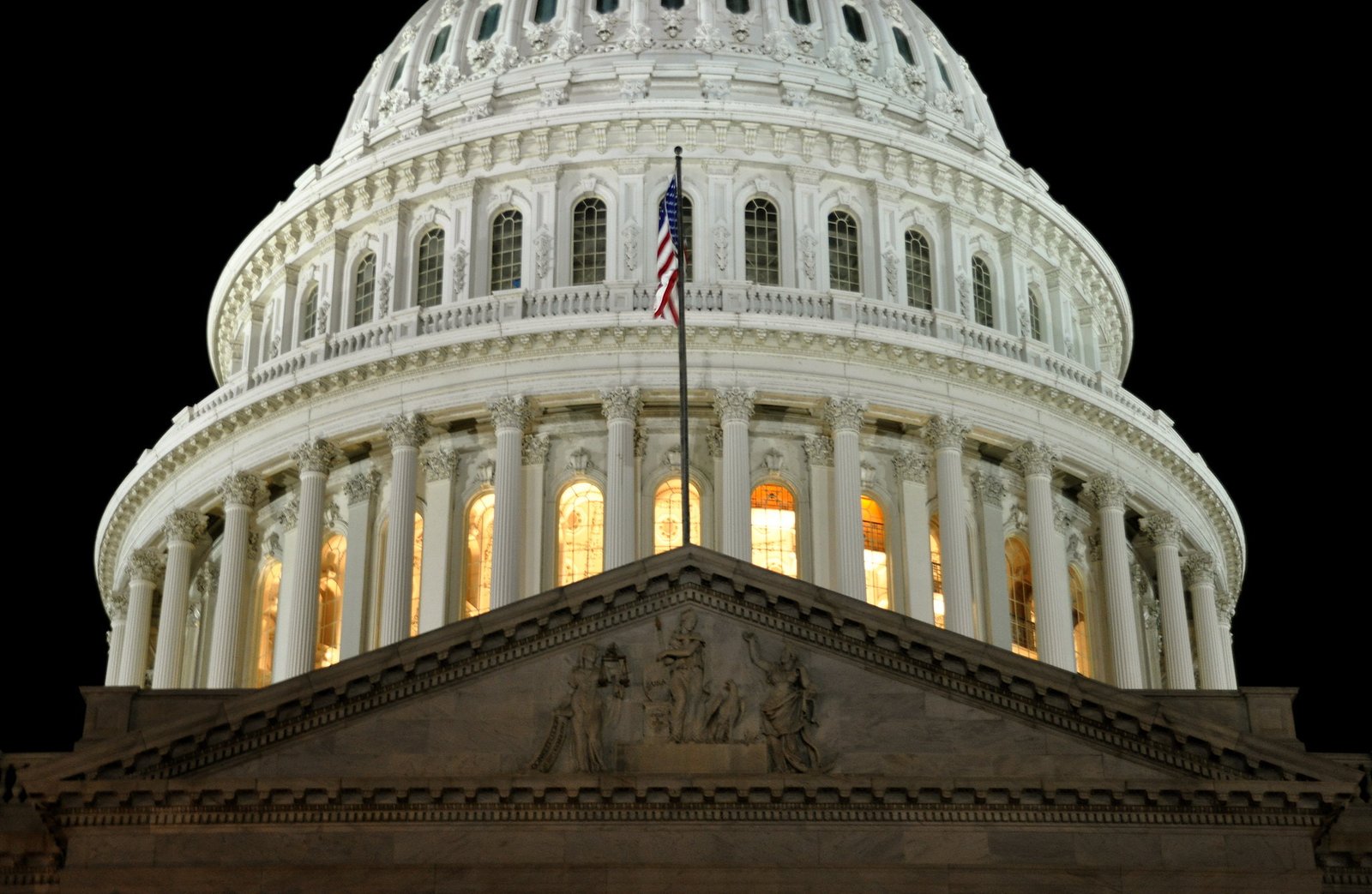
(Photo by Kevin Burkett, via Flickr)

Read the full article here

Fact Checker

Verify the accuracy of this article using AI-powered analysis and real-time sources.

Get Your Fact Check Report

Enter your email to receive detailed fact-checking analysis

5 free reports remaining

Continue with Full Access

You've used your 5 free reports. Sign up for unlimited access!

Already have an account? Sign in here

Share. Facebook Twitter Pinterest LinkedIn Tumblr Email Telegram Copy Link
News Room
  • Website
  • Facebook
  • X (Twitter)
  • Instagram
  • LinkedIn

The FSNN News Room is the voice of our in-house journalists, editors, and researchers. We deliver timely, unbiased reporting at the crossroads of finance, cryptocurrency, and global politics, providing clear, fact-driven analysis free from agendas.

Related Articles

Cryptocurrency & Free Speech Finance

Morning Minute: CFTC Will Give Crypto Clarity If Congress Won’t

15 minutes ago
Media & Culture

Colonizing the Moon

53 minutes ago
Media & Culture

Trump FCC Weakens U.S. Broadband Speed Goals To The Benefit Of Elon Musk And Comcast

2 hours ago
Media & Culture

“Denaturalization’s Missing Limit” out in Northwestern University Law Review Online

2 hours ago
Cryptocurrency & Free Speech Finance

Most Americans Say Trump’s Crypto Profits Cross the Line: Poll

2 hours ago
Media & Culture

Today in Supreme Court History: August 21, 1798

3 hours ago
Add A Comment

Comments are closed.

Editors Picks

Solana Cuts Blockchain Slot Time to 350 Milliseconds

13 minutes ago

Morning Minute: CFTC Will Give Crypto Clarity If Congress Won’t

15 minutes ago

Colonizing the Moon

53 minutes ago

  Chow Hang-tung and Lee Cheuk-yan, co-leaders of the now disbanded Hong Kong Alliance in Support of Patriotic Democratic Movements of China (HKA) were found guilty today (21 August 2026) of incitement to subversion, because they organised vigils attended by tens of thousands in Hong Kong’s Victoria Park to mark the 1989 Tiananmen Square massacre. The vigils were banned in 2020 and both have been detained since 2021. Below is a translation of Chow Hang-tung’s message to the world, published yesterday I’m curious about tomorrow’s verdict. Justice resides in the hearts of the people; there’s no need to look up to such top-down judgments. One verdict is nothing. Thank you all for walking alongside me in different ways. I have received all your support and blessings. ************ Because I don’t want everyone to worry too much, and I don’t want the focus to be lost, I’m sharing these feelings that have been weighing on my mind since the trial: Several years ago, I made a documentary with friends, trying to visualise the issue of torture by inviting Hong Kong friends to experience the various forms of torture suffered by protesters in China, so that it wouldn’t just remain a “tragedy” on paper. The “torture” depicted in the film was designed and researched by me. I thought I had some understanding of the subject, but only in the last couple of days have I realised I was a completely incompetent “torture officer” back then. I knew absolutely nothing about inflicting physical pain. It’s true that some things are impossible to comprehend no matter how much you read about them; you have to experience them firsthand. I say this because since the trial began, the Correctional Services Department [Hong Kong’s prison authority] has changed its method of transport. It’s no longer just simple handcuffs; now they use a full set of handcuffs, leg irons, waist chains, and ankle chains, and then lead the prisoners like dogs on a chain. From the written description alone, it seems like it’s just more inconvenient and somewhat humiliating, nothing like torture. But it’s only when you actually put on those shackles that you realise the devil is in the details. Ordinary handcuffs have buckles on both sides that connect with slipknots, allowing for limited movement between the hands. However, this set of specially made handcuffs has an outer layer of hard plastic covering the outer layer, locking the hands tightly together. This alone wouldn’t be so bad, but the “rings” on the handcuffs aren’t the round kind you usually see in adult stores (uh, I’ve been there, but only to buy props for filming!). Instead, there’s an additional hard material inside, shrinking into a flat, crescent shape that fits snugly at the thickest part of the wrist. So, when the wrist is inside, there’s absolutely no possibility of rotation; you can only constantly twist your arm to accommodate the angle designed by the handcuffs. That already restricts movement to two dimensions. Then comes the small buckle on the waist chain, which locks the handcuffs above the abdomen. If you dare to relax and let your hands hang down, the buckle will move up and lock into the thicker part of the wrist. Moreover, the locking angle is an extremely unnatural twisted pretzel, forcing one to constantly hunch their shoulders, hunch their back, bend their wrists, and twist their arms to try and avoid the handcuffs getting stuck in their wrist bones. However, complete avoidance is impossible; after all, constantly hunching one’s shoulders for the entire journey from Tai Lam [the prison where Hang-tung is incarcerated] to West Kowloon [the courthouse where the trial is taking place] would likely lead to muscle cramps. So, one can only “choose” which part of the body shall suffer in turn—when the shoulders are too tired, let the bones ache; when the hands are numb with pain, tighten the shoulders further. Then, throughout the entire journey, although most of the time is spent “still,” one is already exhausted from the unseen “muscle battle.” Not to mention, no matter how you are locked, you have to carry your belongings; for me, that means court documents. With that added weight, it is inevitable that the handcuffs will cut into the flesh. The deep marks carved into the wrists don’t fade even after a whole day in court. It turns out that locking a person’s joints in certain relative positions can create a kind of “interlocking” effect between body parts. But to the untrained eye, it’s invisible—”It’s just putting your hands in front of your stomach, child’s play.” Sigh, just looking at that statement, I feel I have no reason to complain; but I never imagined the combined effect of locking all the joints would be so powerful. Thinking back to when I was researching for the documentary, I only focused on finding the most exaggerated physical movements, the torture methods most easily identifiable by the naked eye. I was indeed viewing the victims’ experiences through the eyes of a layman. When I “tortured” my friend, the handcuffs were loosely fastened. I was completely unaware that locking the joints was the key—it really was just a childish experiment. Sophisticated torture, much like mature totalitarianism, avoids the visible, “violent” acts of violence. Its power lies in exploiting and creating internal conflicts among the people, fostering constant mutual surveillance, control, and reporting. This diffuses the perpetrators, making it impossible to identify or apprehend any single “evildoer.” People appear to have “choices,” but they are ultimately forced to choose between harming one party and abandoning another. Power, however, seems detached, never directly intervening. Visible, publicly observable conflicts vanish, leaving only unseen internal strife. The damage to society can be far more lasting and profound than occasional violence. On a more personal level, I find my resistance to physical torture is quite low. When my body aches, my mind becomes blank, overwhelmed by aches and pains, making it impossible to enjoy the scenery as usual. If I were subjected to some of the Ten Great Tortures of the Qing Dynasty, I might confess quickly. The ability to endure torture truly requires dedicated training. So, on the bright side, these 75 days of transport can be seen as initial training in physical endurance—as long as my hands aren’t ruined? To say that this correctional system is intentionally designed to torture prisoners wouldn’t be accurate; it’s just that the prisoners’ comfort or pain isn’t a consideration in its design. So, frankly, what I have endured is far from real torture; at best, it was just a preliminary glimpse. The designers’ primary consideration was probably “safety first,” ensuring prisoners have no possibility of movement. Ultimately, prisoners are at the bottom of the food chain—voiceless, powerless. Our opinions, even after suffering, are meaningless in the face of “safety.” Not to mention asking what security needs there were – frankly, even without handcuffs, a weak scholar like me couldn’t escape. Using so many tricks is overkill, but where can I reason with that? In cases where national security is invoked, even if a lawsuit is filed, it will have to be dropped and legal fees paid. But it’s precisely because I don’t want to never have anywhere to voice my grievances, and I don’t want people to remain silent and at the mercy of others, that I must persist in fighting for democracy and human rights, and for systemic change. In this sense, this new experience offered by Correctional Services is actually helping to strengthen my resolve to fight. Well then, thank you for this generous gift. I will certainly not let you down and will fight this ongoing battle well. I also hope that everyone can gain something from this long trial, perhaps just a little bit of strength, a little bit of encouragement, and that would be enough to fulfill my wish! This message was first posted on Chow Hang-tung’s Patreon account yesterday. We are publishing this with the permission of Brian Kern who translated her message on his Substack account     READ MORE

1 hour ago
Latest Posts

The hard truth is that the Clarity Act is an anti-crypto bill

1 hour ago

Laser Digital Secures Japan Crypto Registration

1 hour ago

Trump FCC Weakens U.S. Broadband Speed Goals To The Benefit Of Elon Musk And Comcast

2 hours ago

Subscribe to News

Get the latest news and updates directly to your inbox.

At FSNN – Free Speech News Network, we deliver unfiltered reporting and in-depth analysis on the stories that matter most. From breaking headlines to global perspectives, our mission is to keep you informed, empowered, and connected.

FSNN.net is owned and operated by GlobalBoost Media
, an independent media organization dedicated to advancing transparency, free expression, and factual journalism across the digital landscape.

Facebook X (Twitter) Discord Telegram
Latest News

Bitcoin faces $80,000 test as thinner weekend liquidity looms

11 minutes ago

Solana Cuts Blockchain Slot Time to 350 Milliseconds

13 minutes ago

Morning Minute: CFTC Will Give Crypto Clarity If Congress Won’t

15 minutes ago

Subscribe to Updates

Get the latest news and updates directly to your inbox.

© 2026 GlobalBoost Media. All Rights Reserved.
  • Privacy Policy
  • Terms of Service
  • Our Authors
  • Contact

Type above and press Enter to search. Press Esc to cancel.

🍪

Cookies

We and our selected partners wish to use cookies to collect information about you for functional purposes and statistical marketing. You may not give us your consent for certain purposes by selecting an option and you can withdraw your consent at any time via the cookie icon.

Cookie Preferences

Manage Cookies

Cookies are small text that can be used by websites to make the user experience more efficient. The law states that we may store cookies on your device if they are strictly necessary for the operation of this site. For all other types of cookies, we need your permission. This site uses various types of cookies. Some cookies are placed by third party services that appear on our pages.

Your permission applies to the following domains:

  • https://fsnn.net
Necessary
Necessary cookies help make a website usable by enabling basic functions like page navigation and access to secure areas of the website. The website cannot function properly without these cookies.
Statistic
Statistic cookies help website owners to understand how visitors interact with websites by collecting and reporting information anonymously.
Preferences
Preference cookies enable a website to remember information that changes the way the website behaves or looks, like your preferred language or the region that you are in.
Marketing
Marketing cookies are used to track visitors across websites. The intention is to display ads that are relevant and engaging for the individual user and thereby more valuable for publishers and third party advertisers.