Close Menu
FSNN | Free Speech News NetworkFSNN | Free Speech News Network
  • Home
  • News
    • Politics
    • Legal & Courts
    • Tech & Big Tech
    • Campus & Education
    • Media & Culture
    • Global Free Speech
  • Opinions
    • Debates
  • Video/Live
  • Community
  • Freedom Index
  • About
    • Mission
    • Contact
    • Support
Trending

Can the Supreme Court Slaughter Slaughter Without Cooking Cook?

4 minutes ago

Wall Street’s BNY expands stablecoin ties with Circle, lets institutions mint and hold USDC

17 minutes ago

Donald Trump Has 10 Days to Decide on Housing Bill with CBDC Ban

19 minutes ago
Facebook X (Twitter) Instagram
Facebook X (Twitter) Discord Telegram
FSNN | Free Speech News NetworkFSNN | Free Speech News Network
Market Data Newsletter
Tuesday, June 30
  • Home
  • News
    • Politics
    • Legal & Courts
    • Tech & Big Tech
    • Campus & Education
    • Media & Culture
    • Global Free Speech
  • Opinions
    • Debates
  • Video/Live
  • Community
  • Freedom Index
  • About
    • Mission
    • Contact
    • Support
FSNN | Free Speech News NetworkFSNN | Free Speech News Network
Home»News»Media & Culture»Can Trump v. Slaughter be Used to Challenge the Continued Legality of Executive Agencies Congress Intended to be Independent?
Media & Culture

Can Trump v. Slaughter be Used to Challenge the Continued Legality of Executive Agencies Congress Intended to be Independent?

News RoomBy News Room2 hours agoNo Comments5 Mins Read498 Views
Share Facebook Twitter Pinterest Copy Link LinkedIn Tumblr Email VKontakte Telegram
Can Trump v. Slaughter be Used to Challenge the Continued Legality of Executive Agencies Congress Intended to be Independent?
Share
Facebook Twitter Pinterest Email Copy Link

Listen to the article

0:00
0:00

Key Takeaways

Playback Speed

Select a Voice

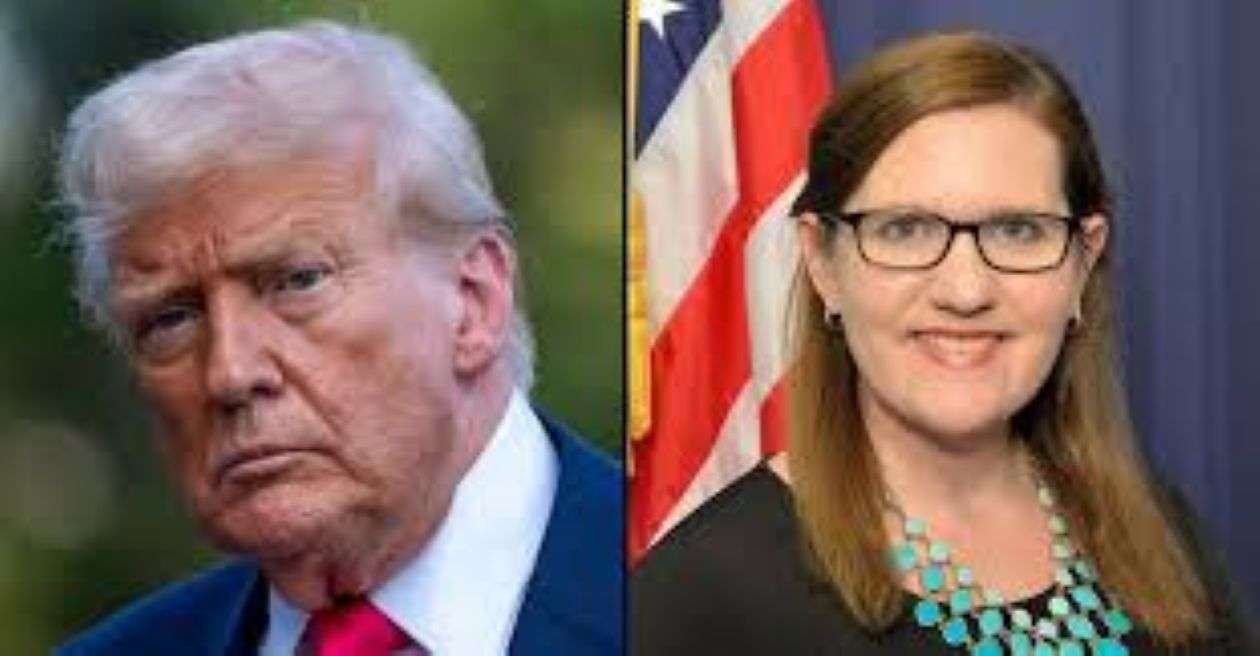
Donald Trump and FTC Commissioner Rebecca Slaughter.


In today’s decision in Trump v. Slaughter, the Supreme Court ruled that laws protecting the heads of “independent” executive agencies from firing are unconstitutional, because they infringe on the president’s constitutional removal authority. In my last post, I noted that the exact scope of this principle is unclear, given the exception the Court carved out for members of the Federal Reserve Board in Trump v. Cook, also issued today. But let’s assume that, after Slaughter, protection against removal really is unconstitutional for the heads of all or nearly all previously “independent” federal agencies. If so, I would suggest that that renders the very existence of at least some of these agencies subject to legal challenge on the grounds that the removal protection provisions are not “severable” from the rest.

In his concurring opinion in Slaughter, Justice Neil Gorsuch rightly highlights that Congress might not have created many of the independent agencies in the first place (or at least not given them as much power) if they had known their leadership would be subject to the complete control of the president:

Today, independent agencies do not just exercise executive law-enforcement powers. Congress has also delegated to them vast legislative and judicial powers, effectively allowing these agencies to make laws and decide disputes under them. And, after today’s decision, the President can effectively exercise all those powers too.

It’s a development that raises important questions, not least these: Would Congress have delegated so much power, including legislative and judicial power, to independent agencies had it known that the President would come to control them? How will Congress respond now—if realistically it can? And what, if anything, will this Court do about it?

Gorsuch goes on to argue that this problem necessitates stronger judicial enforcement of constitutional nondelegation rules and the related “major questions” doctrine. I agree that these two doctrines are important and valuable constraints on executive power, and that courts should enforce them more aggressively.  But the end of agency head protection against removal doesn’t by itself trigger stronger judicial review under these doctrines. Whether a claimed delegation runs afoul of nondelegation and major questions constraints depends on the scope and nature of the power delegated, not on whether it is granted to an agency or to the president, and not on the extent to which the agency heads are insulated from removal.

By contrast, the invalidation of removal protection does matter under the Supreme Court’s “severability” precedent, which addresses the question of what to in situations where one part of a law has been invalidated as unconstitutional, but others have not. In such cases, does the rest of the law fall too, or does it remain in place.

The relevant precedent here is far from a model of clarity. But, as a general rule, it turns on how significant the invalidated provision is to the overall statutory scheme, and whether Congress would have enacted the law without the unconstitutional element. Much of that precedent is summarized in an amicus brief I filed along with a cross-ideological group of other legal scholars in California v. Texas (2021), the Obamacare severability case.

The right answer will likely vary from agency to agency. But I suspect that Justice Gorsuch is right to think that at least some of these agencies would not have been created in their current form if not for the expectation that their leaders would be insulated from removal by the White House. If so, now that these protections against removal have been invalidated, their existence can be challenged as “inseverable” from the unconstitutional anti-removal provision.

If the ensuing litigation results in the invalidation of the agencies, Congress could, of course, try to recreate them with new legislation. But the new agencies might not be granted as much power as their predecessors.

I will not here attempt to canvas the relevant agencies or the gauge the prospects of inseverability lawsuits challenging each one. As already noted, the legal viability of a challenge may vary from case to case. In addition, courts may be reluctant to invalidate some agencies because of accumulated reliance interests or because of their economic and political significance. But I urge public interest groups, industries, consumers, and others affected by these agencies’ regulatory powers to give serious consideration to challenging them on this basis.

NOTE: For those keeping score, the position I tentatively advocate here is totally consistent with what I advocated in the Obamacare severability litigation referenced above. In various writings and amicus briefs during the course of that litigation, I argued that what was left of the Obamacare “individual mandate” after Congress largely neutered it in 2017 (by abolishing the penalty for noncompliance) was too insignificant to render it inseverable from the rest of the Affordable Care Act. By contrast, protection of agency heads from removal is a far more important part of the statutes establishing at least some of the regulatory agencies to which it applied until ruled unconstitutional in Slaughter.

Read the full article here

Fact Checker

Verify the accuracy of this article using AI-powered analysis and real-time sources.

Get Your Fact Check Report

Enter your email to receive detailed fact-checking analysis

5 free reports remaining

Continue with Full Access

You've used your 5 free reports. Sign up for unlimited access!

Already have an account? Sign in here

#FreePress #MediaEthics #PoliticalDebate #PoliticalMedia #PublicOpinion
Share. Facebook Twitter Pinterest LinkedIn Tumblr Email Telegram Copy Link
News Room
  • Website
  • Facebook
  • X (Twitter)
  • Instagram
  • LinkedIn

The FSNN News Room is the voice of our in-house journalists, editors, and researchers. We deliver timely, unbiased reporting at the crossroads of finance, cryptocurrency, and global politics, providing clear, fact-driven analysis free from agendas.

Related Articles

Media & Culture

Can the Supreme Court Slaughter Slaughter Without Cooking Cook?

4 minutes ago
Cryptocurrency & Free Speech Finance

Bitcoin Is in a Fight at $60K—Here’s What the Charts Say

20 minutes ago
Media & Culture

Is Socialism Going Mainstream?

1 hour ago
Cryptocurrency & Free Speech Finance

Supreme Court Says Trump Can Fire SEC, CFTC Commissioners at Will—At a Crucial Moment for Crypto

1 hour ago
Cryptocurrency & Free Speech Finance

Strategy Snaps 9-Day Losing Streak as Bitcoin Giant Adopts ‘Robust’ Capital Framework

2 hours ago
Media & Culture

Chief Justice Roberts (Likely) Ordered The Release Of Cook 30 Minutes Before He Announced It

3 hours ago
Add A Comment
Leave A Reply Cancel Reply

Editors Picks

Wall Street’s BNY expands stablecoin ties with Circle, lets institutions mint and hold USDC

17 minutes ago

Donald Trump Has 10 Days to Decide on Housing Bill with CBDC Ban

19 minutes ago

Bitcoin Is in a Fight at $60K—Here’s What the Charts Say

20 minutes ago

Is Socialism Going Mainstream?

1 hour ago
Latest Posts

Securitize heads to NYSE debut after investors approve SPAC merger; CEPT gains 20%

1 hour ago

UK Sets Final Crypto Rules as Firms Face 2027 FCA Authorization Deadline

1 hour ago

Supreme Court Says Trump Can Fire SEC, CFTC Commissioners at Will—At a Crucial Moment for Crypto

1 hour ago

Subscribe to News

Get the latest news and updates directly to your inbox.

At FSNN – Free Speech News Network, we deliver unfiltered reporting and in-depth analysis on the stories that matter most. From breaking headlines to global perspectives, our mission is to keep you informed, empowered, and connected.

FSNN.net is owned and operated by GlobalBoost Media
, an independent media organization dedicated to advancing transparency, free expression, and factual journalism across the digital landscape.

Facebook X (Twitter) Discord Telegram
Latest News

Can the Supreme Court Slaughter Slaughter Without Cooking Cook?

4 minutes ago

Wall Street’s BNY expands stablecoin ties with Circle, lets institutions mint and hold USDC

17 minutes ago

Donald Trump Has 10 Days to Decide on Housing Bill with CBDC Ban

19 minutes ago

Subscribe to Updates

Get the latest news and updates directly to your inbox.

© 2026 GlobalBoost Media. All Rights Reserved.
  • Privacy Policy
  • Terms of Service
  • Our Authors
  • Contact

Type above and press Enter to search. Press Esc to cancel.

🍪

Cookies

We and our selected partners wish to use cookies to collect information about you for functional purposes and statistical marketing. You may not give us your consent for certain purposes by selecting an option and you can withdraw your consent at any time via the cookie icon.

Cookie Preferences

Manage Cookies

Cookies are small text that can be used by websites to make the user experience more efficient. The law states that we may store cookies on your device if they are strictly necessary for the operation of this site. For all other types of cookies, we need your permission. This site uses various types of cookies. Some cookies are placed by third party services that appear on our pages.

Your permission applies to the following domains:

  • https://fsnn.net
Necessary
Necessary cookies help make a website usable by enabling basic functions like page navigation and access to secure areas of the website. The website cannot function properly without these cookies.
Statistic
Statistic cookies help website owners to understand how visitors interact with websites by collecting and reporting information anonymously.
Preferences
Preference cookies enable a website to remember information that changes the way the website behaves or looks, like your preferred language or the region that you are in.
Marketing
Marketing cookies are used to track visitors across websites. The intention is to display ads that are relevant and engaging for the individual user and thereby more valuable for publishers and third party advertisers.