Close Menu
FSNN | Free Speech News NetworkFSNN | Free Speech News Network
  • Home
  • News
    • Politics
    • Legal & Courts
    • Tech & Big Tech
    • Campus & Education
    • Media & Culture
    • Global Free Speech
  • Opinions
    • Debates
  • Video/Live
  • Community
  • Freedom Index
  • About
    • Mission
    • Contact
    • Support
Trending

Aethir Stops Bridge Hack After Contract Exploit

1 minute ago

Morning Minute: Bitcoin Breaks $73K as Strategy’s STRC Bid Grows

7 minutes ago

We Need You: Our Privacy Cannot Afford a Clean Extension of Section 702

33 minutes ago
Facebook X (Twitter) Instagram
Facebook X (Twitter) Discord Telegram
FSNN | Free Speech News NetworkFSNN | Free Speech News Network
Market Data Newsletter
Friday, April 10
  • Home
  • News
    • Politics
    • Legal & Courts
    • Tech & Big Tech
    • Campus & Education
    • Media & Culture
    • Global Free Speech
  • Opinions
    • Debates
  • Video/Live
  • Community
  • Freedom Index
  • About
    • Mission
    • Contact
    • Support
FSNN | Free Speech News NetworkFSNN | Free Speech News Network
Home»News»Media & Culture»Politicians Go Out of Their Way To Make Political Tensions Worse
Media & Culture

Politicians Go Out of Their Way To Make Political Tensions Worse

News RoomBy News Room7 months agoNo Comments6 Mins Read1,482 Views
Share Facebook Twitter Pinterest Copy Link LinkedIn Tumblr Email VKontakte Telegram
Politicians Go Out of Their Way To Make Political Tensions Worse
Share
Facebook Twitter Pinterest Email Copy Link

Listen to the article

0:00
0:00

Key Takeaways

Playback Speed

Select a Voice

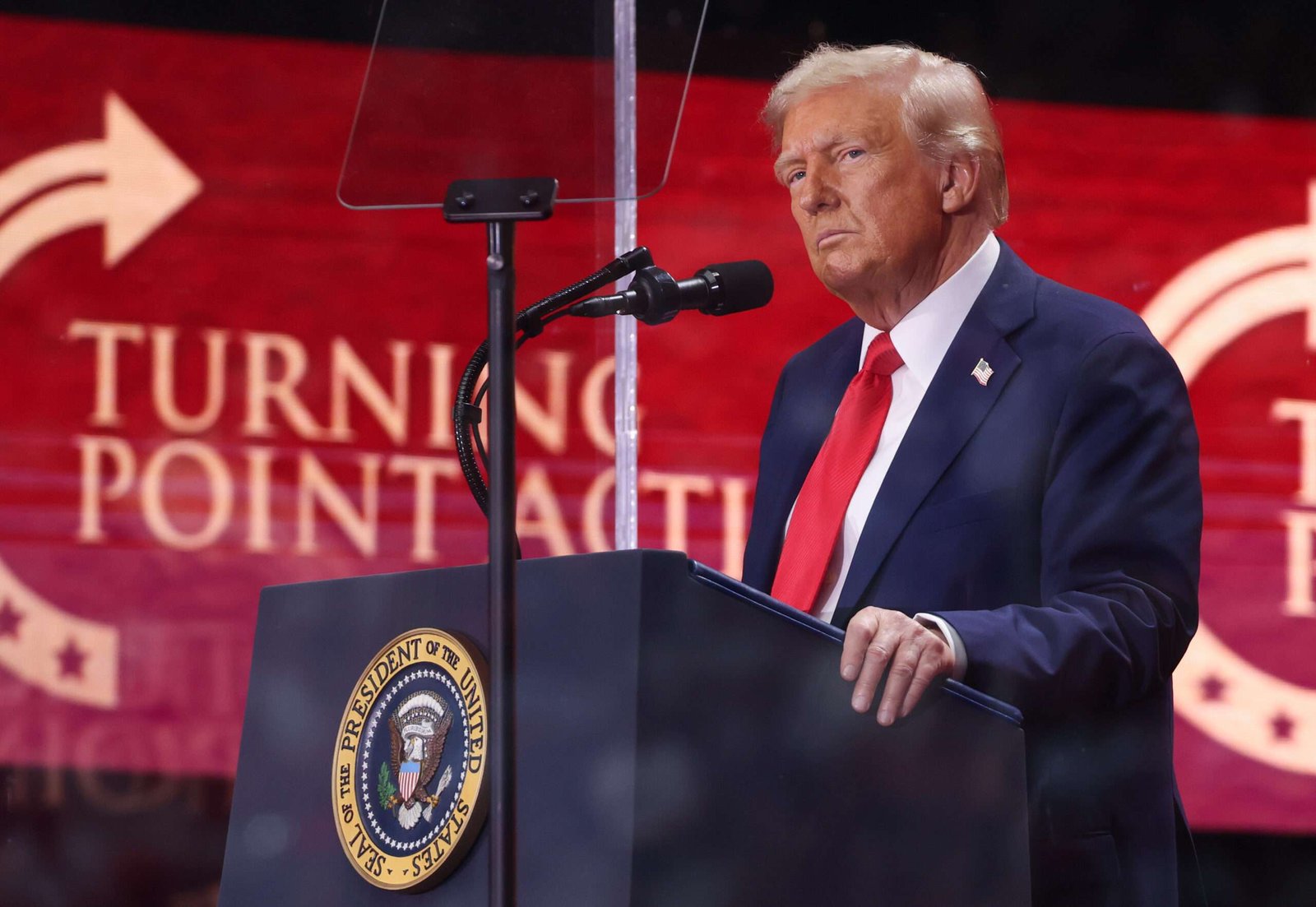
At the Arizona memorial service for Charlie Kirk, who was assassinated two weeks ago, President Donald Trump acknowledged Kirk’s character, saying, “he did not hate his opponents; he wanted the best for them.” And then he added, “That’s where I disagreed with Charlie. I hate my opponents. And I don’t want the best for them.”

It was an honest moment if an awkward comment to make at a memorial service for a man murdered (to all appearances) by a political opponent. Like too much of the political class across the ideological spectrum, Trump is prone to despising those he disagrees with. It raises questions about why people should ever submit to the governance of those who hate them—and whether politicians realize that they’re a big part of what brought us to this unfortunate moment.

You are reading The Rattler from J.D. Tuccille and Reason. Get more of J.D.’s commentary on government overreach and threats to everyday liberty.

“It’s long past time for all Americans and the media to confront the fact that violence and murder are the tragic consequence of demonizing those with whom you disagree,” Trump had told the nation on the day of Kirk’s assassination at a kinder and, perhaps, more self-aware moment. “This kind of rhetoric is directly responsible for the terrorism that we’re seeing in our country today.”

In truth, that day Trump also put the blame for Kirk’s murder on “the radical left” and promised to “find each and every one of those who contributed to this atrocity and to other political violence,” hinting at something nastier than a criminal investigation. But for a moment, the president seemed to recognize that hating political opponents and wishing them ill might have unhappy consequences. For a moment.

Trump isn’t alone in the political class when it comes to villainizing those who disagree or treating them as aliens in their own country and unworthy of respect. In a bizarre address to the nation in 2022, then-President Joe Biden lectured the country that “MAGA Republicans do not respect the Constitution” and “fan the flames of political violence.”

By that time, Biden had already accused his opponents of “semi-fascism.”

Kamala Harris, Biden’s unsuccessful successor as Democratic standard bearer in the 2024 presidential race, dropped the “semi” and went with “fascist” to describe her opponent.

That wasn’t the beginning of the dismissal of half the country by politicians courting the other half. Trump and his allies regularly accuse their opponents of anti-Americanism—”I really believe they hate our country,” Trump said in July. Trump’s 2016 Democratic opponent, Hillary Clinton, dismissed her foes as belonging in a “basket of deplorables” characterized as “racist, sexist, homophobic, xenophobic, Islamaphobic—you name it.” And, as a presidential candidate in 2008, Barack Obama sniffed at small-town dwellers as “bitter, they cling to guns or religion or antipathy to people who aren’t like them.”

The result is that no matter which of the big political parties wins national office, around half the people over whom the victors exercise power know they’re governed by people who hate them – and they return the favor.

“I think that is something to be fearful of, the normalization of what can devolve into dehumanizing, inciting rhetoric,” James Druckman, a professor of political science and co-author of Partisan Hostility and American Democracy: Explaining Political Divisions and When They Matter, commented last year. “It has consequences for what people think of other groups. It has consequences for what people think of democracy.”

In terms of what Americans think of each other, we already know partisan hostility is intensifying.

“About three-quarters (73 percent) of voters who identify themselves as Republican agree that ‘Democrats are generally bullies who want to impose their political beliefs on those who disagree,'” a poll by the University of Chicago’s Institute of Politics found in 2022. “An almost identical percentage of Democrats (74 percent) express that view of Republicans.”

In summarizing YouGov polls, Eli McKown-Dawson noted last year that “Democrats and Republicans are increasingly likely to dislike each other and to feel hostile toward members of the other political party.” Specifically, “85% of Democrats have an unfavorable opinion of the Republican Party, an increase of 16 percentage points since February 2023. The share of Republicans who view the Democratic Party unfavorably rose by a similar amount: 88% of Republicans feel unfavorably toward the Democratic Party, compared to 74% last year.”

Maybe it was inevitable that a political culture that has normalized “demonizing those with whom you disagree,” as Trump put it in the day of Kirk’s murder, would turn to force to settle disputes. That’s meant vandalism, arson, vehicle attacks, attempted assassinations, and murders, such as those of Yaron Lischinsky, Sarah Milgrim, Brian Thompson, Melissa Hortman, and Charlie Kirk.

This is insane, and it’s dangerous. Americans—people in general—should not be subject to the whims of those who despise them. We deserve better than to be governed by those who disdain what we believe and how we live. This is a big enough country that there’s no need to live at daggers-drawn alongside people whose values and preferences are so different they’d rather fight than find common ground.

For years, Americans have been moving to live in neighborhoods where they feel politically comfortable. “Our analysis suggests partisanship itself, intentional or not, plays a powerful role when Americans uproot and find a new home,” Ronda Kaysen and Ethan Singer wrote last year for The New York Times in a piece on Americans’ moving patterns. “In all but three states that voted for Mr. Biden in 2020, more Democrats have moved in than Republicans. The reverse is true for states Mr. Trump won.”

Rather than seethe at “deplorables” or those who “hate our country,” and instead of fighting with opponents for a brief opportunity to force policies on the unwilling before they do the same in return, perhaps our political class could turn their attention to those localities dominated by people willing to buy what they’re selling. They could leave the rest of us alone to live by different rules. That was, after all, how our federal system was designed to work—as separate experiments in laws and governance.

At Kirk’s memorial, Erika Kirk, Charlie’s widow, had a different message than that of Trump. “That young man,” she said of her husband’s assassin, “I forgive him.

That’s a kinder sentiment than I could summon in such circumstances. But nobody would be asked to extend such forgiveness if members of the political class could keep their loathing for people who disagree with them unvoiced and confine themselves to inflicting their views on willing followers.

Read the full article here

Fact Checker

Verify the accuracy of this article using AI-powered analysis and real-time sources.

Get Your Fact Check Report

Enter your email to receive detailed fact-checking analysis

5 free reports remaining

Continue with Full Access

You've used your 5 free reports. Sign up for unlimited access!

Already have an account? Sign in here

Share. Facebook Twitter Pinterest LinkedIn Tumblr Email Telegram Copy Link
News Room
  • Website
  • Facebook
  • X (Twitter)
  • Instagram
  • LinkedIn

The FSNN News Room is the voice of our in-house journalists, editors, and researchers. We deliver timely, unbiased reporting at the crossroads of finance, cryptocurrency, and global politics, providing clear, fact-driven analysis free from agendas.

Related Articles

Cryptocurrency & Free Speech Finance

Morning Minute: Bitcoin Breaks $73K as Strategy’s STRC Bid Grows

7 minutes ago
Media & Culture

A.I. NIMBYs

41 minutes ago
Media & Culture

Court Blocks Republican Push To (Further) Dominate And Destroy Local Broadcast News

2 hours ago
Media & Culture

Today in Supreme Court History: April 10, 1967

2 hours ago
Media & Culture

Lawsuits Targeting Social Media Are an Attack on Free Speech

3 hours ago
Media & Culture

Review: A Cognitive Neuroscientist’s Take on How AI Models Think

4 hours ago
Add A Comment

Comments are closed.

Editors Picks

Morning Minute: Bitcoin Breaks $73K as Strategy’s STRC Bid Grows

7 minutes ago

We Need You: Our Privacy Cannot Afford a Clean Extension of Section 702

33 minutes ago

A.I. NIMBYs

41 minutes ago

Georgian police detain a protester during a protest outside the Georgian parliament building in Tbilisi, Georgia, Wednesday, March 8, 2023. Georgian authorities used tear gas and water cannon outside the parliament building in the capital Tuesday against protesters who oppose a proposed law some see as stifling freedom of the press. Photo by: AP Photo/Zurab Tsertsvadze/Alamy The Georgian authorities were probably hoping their terrible treatment of exiled Azerbaijani journalist Afgan Sadigov would pass unnoticed. No such luck. Their hopes were dashed. The news of his deportation has started to spread. It all happened last Sunday, when Sadigov, who is the founder of Azerbaijani news outlet and YouTube channel Azel.tv, was sent back to Azerbaijan. Sadigov had been living in the Georgian capital Tbilisi since 2023, after he left having been persected in his home country for his journalism. The Georgian authorities had allowed him to stay but had then detained him so they could deport him, only letting him go a year ago, after an interim order by the European Court of Human Rights. His deportation when it came was swift. It followed an arrest at his home on charges of “insulting police” on social media (a new crime, resulting from changes to Georgian legislation in 2025). There was a hearing by a judge at 4am which lasted only a few hours. And then the judge ruled Sadigov be immediately sent back to Azerbaijan. He imposed a three-year re-entry ban. Hours later Sadigov found himself in Baku, where he was immediately arrested. We, and partners of the Media Freedom Rapid Response, condemned his deportation here. I have never met Sadigov, but I met his wife and two young children in Tbilisi in October 2024 for a Council of Europe mission on media freedom in Georgia. At the time Afgan was in Georgian detention and I remember how exhausted she looked as she told us about him. Sadigov’s story is reflective of Georgia’s slide into autocracy. Gone are the days when the country could be considered a safe haven for journalists from neighbouring countries. Now it’s the place that deports journalists. It’s also about Azerbaijan. Sadigov had committed the cardinal sin there – reporting on corruption and social injustice – which led to multiple arrests. The most egregious was in 2020 when he was sentenced to seven years in jail. During a July 2021 appeal, his sentence was reduced to four years. He was later pardoned by President Ilham Aliyev. The situation in Azerbaijan is terrible. Hundreds of activists, academics and reporters are currently in jail and this week the Supreme Court of Azerbaijan rejected an appeal from journalists at the independent media outlet Azbas, who’ve been jailed for between seven and nine years. Nothing was fair about the hearing. I spoke to Gunel Safarova who is the acting director and editor-in-chief at Abzas Media. She told me about the immense pressures journalists face there. Many have left the profession altogether. The “space for free and critical reporting inside the country has been destroyed step by step”, she said, adding that “the law no longer feels like protection”. “When you see that the government can decide people’s fate and take years of their lives for their journalism, it destroys trust in justice even more. Maybe we already knew this in some way, but each case like this makes us lose whatever hope was still left, even the smallest hope that justice in our country could still mean something.” This is the country to which Sadigov has been returned, and even though he has apparently been released and spoken to his wife, they are not together and he is not safe. READ MORE

51 minutes ago
Latest Posts

Hedera (HBAR) drops 1.9%, leading index lower

59 minutes ago

Bitget Rolls Out SpaceX-Linked Pre-IPO Proxy with Republic

1 hour ago

Court Blocks Republican Push To (Further) Dominate And Destroy Local Broadcast News

2 hours ago

Subscribe to News

Get the latest news and updates directly to your inbox.

At FSNN – Free Speech News Network, we deliver unfiltered reporting and in-depth analysis on the stories that matter most. From breaking headlines to global perspectives, our mission is to keep you informed, empowered, and connected.

FSNN.net is owned and operated by GlobalBoost Media
, an independent media organization dedicated to advancing transparency, free expression, and factual journalism across the digital landscape.

Facebook X (Twitter) Discord Telegram
Latest News

Aethir Stops Bridge Hack After Contract Exploit

1 minute ago

Morning Minute: Bitcoin Breaks $73K as Strategy’s STRC Bid Grows

7 minutes ago

We Need You: Our Privacy Cannot Afford a Clean Extension of Section 702

33 minutes ago

Subscribe to Updates

Get the latest news and updates directly to your inbox.

© 2026 GlobalBoost Media. All Rights Reserved.
  • Privacy Policy
  • Terms of Service
  • Our Authors
  • Contact

Type above and press Enter to search. Press Esc to cancel.

🍪

Cookies

We and our selected partners wish to use cookies to collect information about you for functional purposes and statistical marketing. You may not give us your consent for certain purposes by selecting an option and you can withdraw your consent at any time via the cookie icon.

Cookie Preferences

Manage Cookies

Cookies are small text that can be used by websites to make the user experience more efficient. The law states that we may store cookies on your device if they are strictly necessary for the operation of this site. For all other types of cookies, we need your permission. This site uses various types of cookies. Some cookies are placed by third party services that appear on our pages.

Your permission applies to the following domains:

  • https://fsnn.net
Necessary
Necessary cookies help make a website usable by enabling basic functions like page navigation and access to secure areas of the website. The website cannot function properly without these cookies.
Statistic
Statistic cookies help website owners to understand how visitors interact with websites by collecting and reporting information anonymously.
Preferences
Preference cookies enable a website to remember information that changes the way the website behaves or looks, like your preferred language or the region that you are in.
Marketing
Marketing cookies are used to track visitors across websites. The intention is to display ads that are relevant and engaging for the individual user and thereby more valuable for publishers and third party advertisers.