Close Menu
FSNN | Free Speech News NetworkFSNN | Free Speech News Network
  • Home
  • News
    • Politics
    • Legal & Courts
    • Tech & Big Tech
    • Campus & Education
    • Media & Culture
    • Global Free Speech
  • Opinions
    • Debates
  • Video/Live
  • Community
  • Freedom Index
  • About
    • Mission
    • Contact
    • Support
Trending

Libel by “Buddy Comedy”

23 minutes ago

Mounting AI costs and weaker performance are driving investors toward AI infrastructure

44 minutes ago

G7 calls for joint action on North Korean crypto theft, cybercrime

45 minutes ago
Facebook X (Twitter) Instagram
Facebook X (Twitter) Discord Telegram
FSNN | Free Speech News NetworkFSNN | Free Speech News Network
Market Data Newsletter
Thursday, June 18
  • Home
  • News
    • Politics
    • Legal & Courts
    • Tech & Big Tech
    • Campus & Education
    • Media & Culture
    • Global Free Speech
  • Opinions
    • Debates
  • Video/Live
  • Community
  • Freedom Index
  • About
    • Mission
    • Contact
    • Support
FSNN | Free Speech News NetworkFSNN | Free Speech News Network
Home»News»Media & Culture»1776 All-Stars: Why a Pseudonymous Anti-Federalist Is My Favorite Founder
Media & Culture

1776 All-Stars: Why a Pseudonymous Anti-Federalist Is My Favorite Founder

News RoomBy News Room2 hours agoNo Comments4 Mins Read1,875 Views
Share Facebook Twitter Pinterest Copy Link LinkedIn Tumblr Email VKontakte Telegram
1776 All-Stars: Why a Pseudonymous Anti-Federalist Is My Favorite Founder
Share
Facebook Twitter Pinterest Email Copy Link

Listen to the article

0:00
0:00

Key Takeaways

Playback Speed

Select a Voice

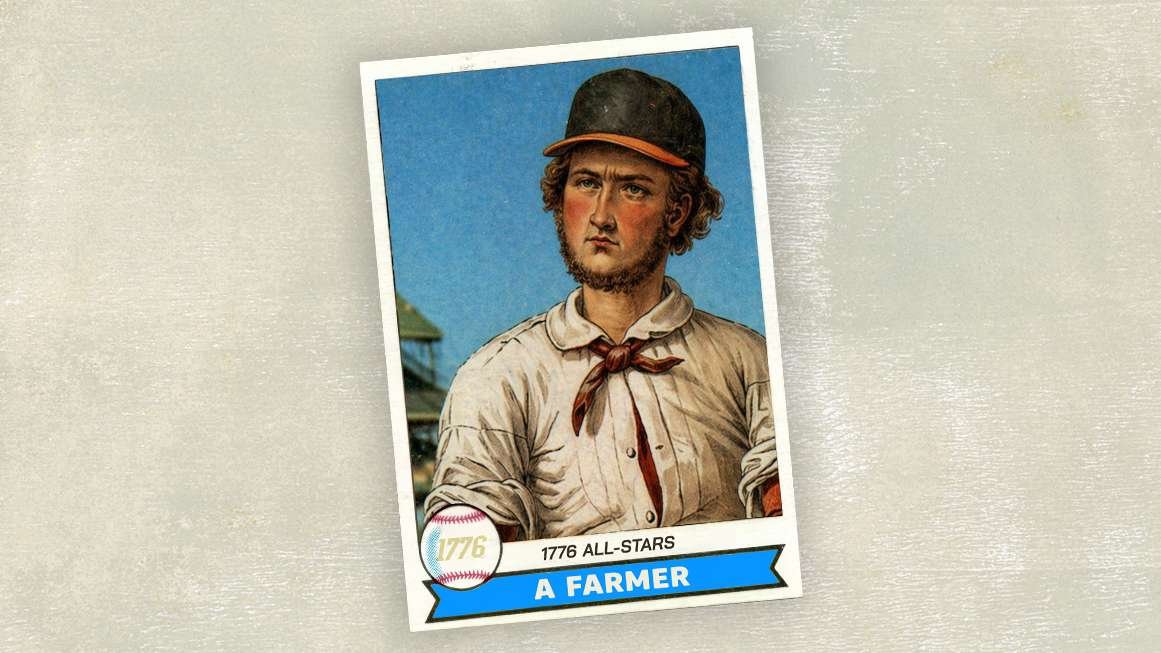
This is part of 1776 All-Stars, a series about Reason’s favorite American Founders. Read more here.

Joanna Andreasson

I do not know my favorite Founder’s name. I just know that in 1788 a Baltimore newspaper published a series of pseudonymous essays where he warned against standing armies, called for a bill of rights, and declared, paraphrasing Jonathan Swift, that “laws are cobwebs, catching only the flies and letting the wasps escape.” See-sawing between fears of an aristocratic legislature and a tyrannical executive, he argued that we’d be best off with the highly decentralized democracy found in certain Swiss cantons. “If I am told that the people are incapable of governing themselves” like the Swiss, he wrote, “I shall answer that [it has] never been tried in America, except among the native Indians, who are free and happy, and who prove that self-government is the growth of our soil.” He signed these articles “A Farmer.”

The essayist was an Anti-Federalist, part of that band of skeptics who thought the proposed Constitution granted too much power to the federal government. I do not share some of his opinions—he liked sumptuary laws, for example, and would have limited the vote to property holders. And yes, his idealized vision of rural Swiss life missed the ways that even that system restricted liberty. Well, no one’s perfect. He still wrote one of the era’s most spirited attacks on concentrated authority.

His series’ high point was its third installment, which rejected the idea that a national regime would ensure domestic peace. The “sword of government,” A Farmer argued, was more likely to inflict one group’s preferences on another, bringing “that series of desolation, which France, Spain, and the other great kingdoms of the world have suffered, in order to bring so many separate States into uniformity.” Better, he wrote, to let Americans “separate and divide as interest or inclination prompted.”

Nor did A Farmer accept the idea that a national government would better protect us from foreign subversion or invasion. “The only foreign, or at least evil foreign influence, must be obtained through corruption,” he argued—and the “facility of corruption is increased in proportion as power tends…to a concentration in the hands of a few.”

After offering reasons to doubt a confederation would be more attractive to invaders, his essay warned of the opposite danger—that America itself would become an empire. “It was the extensive territory of the Roman republic that produced a Sylla, a Marius, a Caligula, a Nero, and an Elagabalus,” he wrote. Decentralism magnified not just the power of voice but also the power of exit: “In small independent States contiguous to each other, the people run away and leave despotism to reek its vengeance on itself.”

It’s a fiery anti-authoritarian jeremiad, and part of me wants to learn more about the man who wrote it. Did he fight in the Revolution? Was he politically active in other ways? Was he actually a farmer, or was that just a convenient mask?

But another part of me prefers not to know how much this man’s life matched his rhetoric. Some historians have guessed that A Farmer was future Maryland Gov. John Francis Mercer, a planter who owned slaves and eventually joined the centralizing Federalist Party. The evidence for Mercer’s authorship is pretty thin, though, basically coming down to the fact that he offered some overlapping arguments elsewhere. So I’ll take these essays on their own. If their author enslaved people, joined the Hamiltonian coalition, or otherwise departed from the ideals in these editorials, the uncertainties of history have severed such unhappy facts from the words on the page.

Of all those words, my favorite passage comes in that third essay, when our farmer-writer addressed those who think a national government is better suited for “cutting a figure in history.” They are correct, he conceded. But “the silence of historians is the surest record of the happiness of a people. The Swiss have been four hundred years the envy of mankind, and there is yet scarcely an history of their nation. What is history, but a disgusting and painful detail of the butcheries of conquerors, and the woeful calamities of the conquered?”

1776 All-Stars, a series about Reason‘s favorite American Founders:

Read the full article here

Fact Checker

Verify the accuracy of this article using AI-powered analysis and real-time sources.

Get Your Fact Check Report

Enter your email to receive detailed fact-checking analysis

5 free reports remaining

Continue with Full Access

You've used your 5 free reports. Sign up for unlimited access!

Already have an account? Sign in here

#FreePress #Journalism #MediaAndPolitics #PoliticalMedia #PoliticalNews
Share. Facebook Twitter Pinterest LinkedIn Tumblr Email Telegram Copy Link
News Room
  • Website
  • Facebook
  • X (Twitter)
  • Instagram
  • LinkedIn

The FSNN News Room is the voice of our in-house journalists, editors, and researchers. We deliver timely, unbiased reporting at the crossroads of finance, cryptocurrency, and global politics, providing clear, fact-driven analysis free from agendas.

Related Articles

Media & Culture

Libel by “Buddy Comedy”

23 minutes ago
Cryptocurrency & Free Speech Finance

CME to Sue CFTC Over Bitcoin Perpetual Futures Approval: CEO

50 minutes ago
Media & Culture

The Founders Revered the Right to Trial by Jury. Will SCOTUS Now Follow Their Example?

1 hour ago
Cryptocurrency & Free Speech Finance

Bitcoin Steadies Near $64K as Analysts Eye Floor After Hawkish Fed

2 hours ago
Media & Culture

What 1976 Got Right About America

3 hours ago
Media & Culture

Brickbat: Sacré Bleu

4 hours ago
Add A Comment
Leave A Reply Cancel Reply

Editors Picks

Mounting AI costs and weaker performance are driving investors toward AI infrastructure

44 minutes ago

G7 calls for joint action on North Korean crypto theft, cybercrime

45 minutes ago

CME to Sue CFTC Over Bitcoin Perpetual Futures Approval: CEO

50 minutes ago

The Founders Revered the Right to Trial by Jury. Will SCOTUS Now Follow Their Example?

1 hour ago
Latest Posts

Malta’s financial regulator explores bringing parts of DeFi under MiCA’s orbit

2 hours ago

Bitcoin market cap rebound to take '5-10 years' after dropping 10 places since mid-2025

2 hours ago

Bitcoin Steadies Near $64K as Analysts Eye Floor After Hawkish Fed

2 hours ago

Subscribe to News

Get the latest news and updates directly to your inbox.

At FSNN – Free Speech News Network, we deliver unfiltered reporting and in-depth analysis on the stories that matter most. From breaking headlines to global perspectives, our mission is to keep you informed, empowered, and connected.

FSNN.net is owned and operated by GlobalBoost Media
, an independent media organization dedicated to advancing transparency, free expression, and factual journalism across the digital landscape.

Facebook X (Twitter) Discord Telegram
Latest News

Libel by “Buddy Comedy”

23 minutes ago

Mounting AI costs and weaker performance are driving investors toward AI infrastructure

44 minutes ago

G7 calls for joint action on North Korean crypto theft, cybercrime

45 minutes ago

Subscribe to Updates

Get the latest news and updates directly to your inbox.

© 2026 GlobalBoost Media. All Rights Reserved.
  • Privacy Policy
  • Terms of Service
  • Our Authors
  • Contact

Type above and press Enter to search. Press Esc to cancel.

🍪

Cookies

We and our selected partners wish to use cookies to collect information about you for functional purposes and statistical marketing. You may not give us your consent for certain purposes by selecting an option and you can withdraw your consent at any time via the cookie icon.

Cookie Preferences

Manage Cookies

Cookies are small text that can be used by websites to make the user experience more efficient. The law states that we may store cookies on your device if they are strictly necessary for the operation of this site. For all other types of cookies, we need your permission. This site uses various types of cookies. Some cookies are placed by third party services that appear on our pages.

Your permission applies to the following domains:

  • https://fsnn.net
Necessary
Necessary cookies help make a website usable by enabling basic functions like page navigation and access to secure areas of the website. The website cannot function properly without these cookies.
Statistic
Statistic cookies help website owners to understand how visitors interact with websites by collecting and reporting information anonymously.
Preferences
Preference cookies enable a website to remember information that changes the way the website behaves or looks, like your preferred language or the region that you are in.
Marketing
Marketing cookies are used to track visitors across websites. The intention is to display ads that are relevant and engaging for the individual user and thereby more valuable for publishers and third party advertisers.