

 Freedom Index
Listen to the article
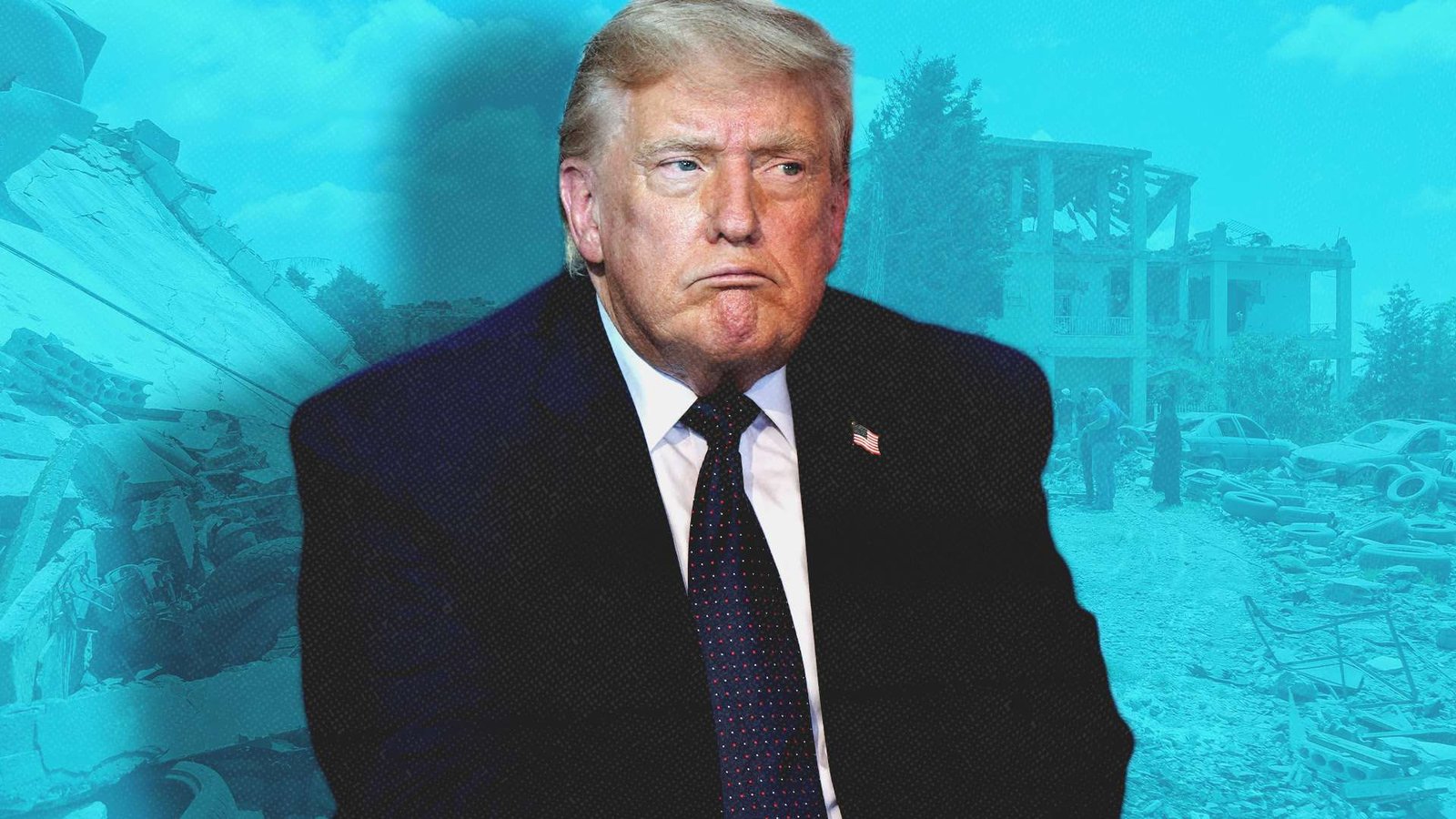
Nobody will ever accuse President Donald Trump of being a linguist. But in a recent prescient moment, the oft-rambling, mercurial commander in chief stumbled upon an unconventional interpretation of a word that may be more accurate than the agreed-upon definition.
“How do you define ceasefire?” asked a reporter at the White House, questioning the dizzying, on-again, off-again nature of the volatile negotiations between the U.S., Israel, Iran, and Lebanon.
“In that part of the world, a ceasefire is when you’re shooting in a more moderate manner,” Trump said.
The clumsy comment, of course, provoked criticism. Shireen Akram-Boshar of TruthOut accused the president of “excusing his own failure to bring an end to his unprovoked war on Iran.” Most online critics seemed to echo Inigo Montoya from The Princess Bride: “You keep using that word. I do not think it means what you think it means.”
But Trump, the broken clock he is, may be more correct than most people would like to give him credit for.
The research seems to back him up. The Ceasefire Project, a joint research initiative of the Center for Humanitarian Dialogue and the Center for Security Studies, published a dataset and study analyzing ceasefires worldwide. It found that ceasefires occur in roughly 21 percent of conflicts. And those ceasefires—2,202 across 109 conflicts in 66 countries—rarely succeeded and endured some degree of violence despite the official decrees to the contrary.
The numbers are bleak. The median length of a ceasefire, measured from the beginning to the first fatality, is only 10 days. For 100 fatalities, the median length is about six months. Even when fudging the fatality threshold doesn’t produce a lasting peace.
“Almost all ceasefires suffer some violations,” the study concludes.
Recent history confirms these findings. During the two-month ceasefire between Israel and Lebanon in 2024, Al Jazeera reported that Israel had killed 83 and injured 228. At least 118 Palestinians died during the 2025 ceasefire between Israel and Hamas. Russia and Ukraine still managed to exchange drone strikes and artillery shellings during their most recent three-day ceasefire. Reuters reported “explosions rang out in border cities and towns” within hours of the announced ceasefire between India and Pakistan, but that’s nothing new for these two countries that have witnessed ceasefire after ceasefire for nearly a century, but to no avail.
As the old maxim about rules reminds us, ceasefires, apparently, were made to be broken.
Revisiting the word’s origin reveals an equally problematic past, suggesting that ceasefires are mostly in name only.
The literal definition of ceasefire says nothing about Trump’s “moderate shooting.” Merriam-Webster defines it as “a military order to cease firing” and “a suspension of active hostilities.” The modern term traditionally describes a hard stop, not a marginal reduction, of military operations, allowing warring sides to begin diplomatic talks to negotiate a truce or an agreed-upon end to a war.
The etymology of ceasefire reinforces this straightforward definition. The word’s first half—cease—derives from the Latin cessare, meaning “cease, go slow, give over, leave off, be idle.” Again, the word seems neither fractional nor relative.
The term ceasefire was originally a military order. Commanding officers who wanted their soldiers to freeze their trigger finger would yell, “Cease fire!” The first official drill manual for the American Revolution, Regulations for the Order and Discipline of the Troops of the United States (1779), outlined the protocol (emphasis added):
The first part of the general will be the signal for all firing to cease; on the beating of which the officers and non-commissioned officers must see that their platoons cease firing, load and shoulder as quick as possible. The commanding officer will continue the signal till he sees that the men have loaded and shouldered.
It wasn’t until later that the word became a noun used to describe the peace-making process. The first hyphenated iteration—cease-fire—dates back to 1844, according to Merriam-Webster.
Pinning down the exact moment when the word’s definition began to creep—from a hard stop in violence to something “more moderate”—is harder to identify. But history provides some clues.
Google Ngram documents the peak usage of ceasefire (both with and without the hyphen) in 1970—smack dab in the middle of the Vietnam War. Most ceasefires during the conflict offered only brief reprieves on holidays. But military skirmishes still slipped into these fleeting truces.
The most infamous short-lived détente was the 1968 Tet ceasefire. Tet—the Vietnamese celebration of the lunar new year, known colloquially as “the Feast of the First Day”—was traditionally a time for both sides to lay down their arms.
“During the Viet Nam War, it was customary to observe a ceasefire during the holiday, and the new year of 1968 was no different,” notes Roger Durham of the Army Heritage Museum.
The northern side of the conflict—the Democratic Republic of Vietnam and the National Liberation Front (better known as the Viet Cong)—announced a “suspension of military attacks,” beginning January 27, 1968. South Vietnamese and American forces reciprocated, announcing a three-day ceasefire beginning January 30.
But the ceasefire didn’t even survive the agreed-upon first day. On January 30, North Vietnamese forces, under the rallying cry of “crack the sky, shake the Earth,” launched a series of surprise attacks that culminated in the most aggressive escalation of the war at that time: the Tet Offensive. What was supposed to be a brief cessation in the brutal war ended in a months-long campaign, with devastating casualties on both sides.
Even the 1973 Paris Peace Accords—the agreement to withdraw American troops, trade prisoners, and negotiate peace between the warring Vietnamese factions—was an abject failure straight out of the gate. Within hours of the ceasefire, both sides claimed the other had violated the agreement. Decades later, declassified government records, many penned by Richard Nixon and Henry Kissinger, demonstrated that “the signed treaty would be immediately violated and that this would trigger a brutal military response.”
Apparently, ceasefires were as short-lived and violent then as they are now.
The literal definition of ceasefire, ironically, has followed the same trajectory as another highly debated word: literally.
There are two sides to this debate. Sticklers will argue that the word literally means something direct and definitive, neither figurative nor metaphorical. Meanwhile, modern usage favors it as an intensifier that emphasizes more than clarifies, often relying on hyperbole to make a point: “I literally died from boredom”.
But literally has always existed in both of these diametrically opposed realities. In its blog, Merriam-Webster demonstrates how the figurative version has graced the pages of classic literature for centuries, with famous authors ranging from F. Scott Fitzgerald’s “He literally glowed” to James Joyce’s “Lily, the caretaker’s daughter, was literally run off her feet.”
Ceasefire seems to share this split definitional personality, in which diplomacy and war follow parallel realities, with nary an intersection. It’s the linguistic equivalent of Private Joker’s helmet in Stanley Kubrick’s Full Metal Jacket: adorned with a peace symbol and the words “born to kill,” symbolizing humanity’s duality.
Trump may have been onto something with his accidental moment of clarity, but let’s hope he is wrong. In 2025, he predicted that a ceasefire between Israel and Iran would “last forever,” suggesting that Trump’s latter-day definition of ceasefire—”shooting in a more moderate manner”—will continue in perpetuity and that peace will remain an elusive impossibility so long as belligerents refuse to, well, cease firing.
With ceasefires like that, who needs war?
Read the full article here
Fact Checker
Verify the accuracy of this article using AI-powered analysis and real-time sources.