

 Freedom Index
Listen to the article
By the end of 2026, the United Nations will have selected a new Secretary-General. The incoming UN leader will take office at a time when the global intergovernmental organisation is experiencing an unprecedented crisis of purpose.
Of all the issues the UN is facing, the most serious is arguably its fractured relationship with the United States, its most powerful member state. It is one of the five permanent members of the Security Council, the UN’s most powerful body. In financial terms, it is the UN’s largest donor. And it hosts the UN headquarters in New York City.
Despite this, the UN has traditionally been an adversarial forum for American diplomacy. The majority of states in the General Assembly, about 55% of the total by a recent count, range from illiberal democracies to totalitarian dictatorships, and are therefore more likely to side with China and Russia than with the United States. In some cases, these nations are assigned prestigious UN roles that make a mockery of the UN’s mission. Examples include the recent appointment of Iran, which actively seeks nuclear weapons, as vice-president of the 11th Review Conference of the Nuclear Non-Proliferation Treaty.
The question of how to advance American goals at the UN has been one of the perennial questions animating U.S. foreign policy since the UN’s creation in 1945. Given the serious problems the UN is now facing, it’s a question that is particularly relevant today.
The UN Is Broke—and Partly to Blame
Too often, the UN’s valuable field work is overshadowed by cynical political posturing. As a result, collecting annual dues from member states has become more difficult.
For now, the UN still retains key functions. It remains an important instrument for (at least nominally) addressing violent regional conflicts through its extensive peacekeeping operations—though these have been reduced from a 2015-16 peak of more than 125,000 serving personnel to the present count of under 70,000. It is also the lead provider of relief and aid through its broad network of humanitarian agencies, such as the World Food Programme and UNICEF; as well as the main forum for addressing global political challenges.
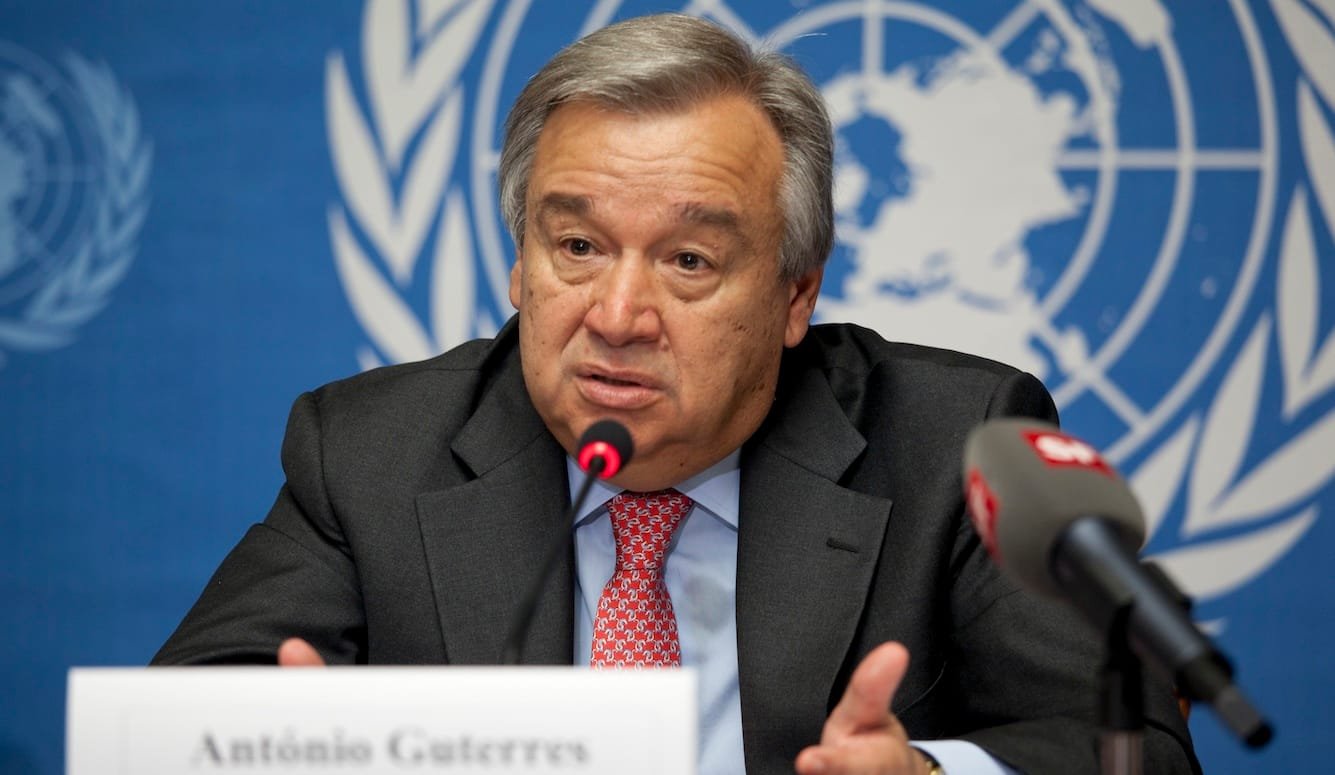
But the UN is now facing what outgoing Secretary-General Antonio Guterres is calling an “imminent financial collapse.” The funding gap reflects several billion dollars in unpaid membership dues, the largest share of which are owed by the United States.
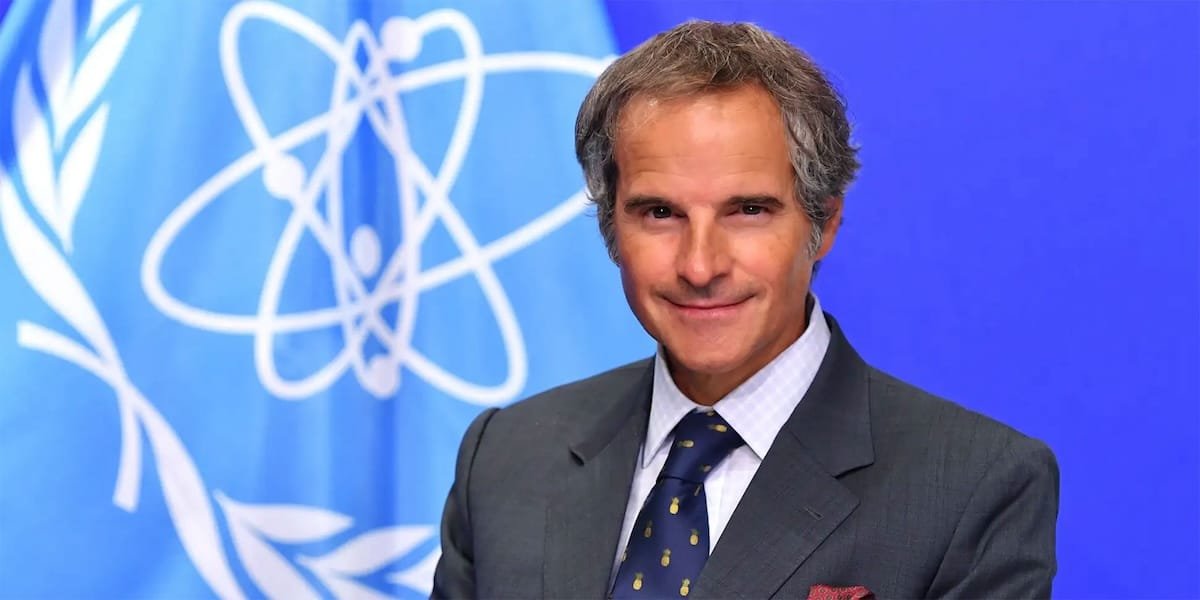
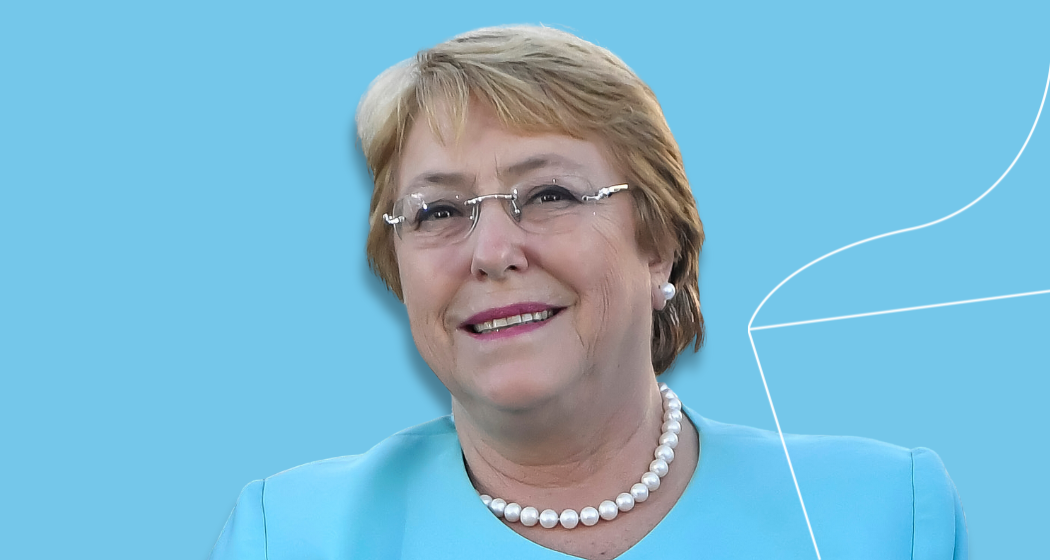
Guterres’ replacement is widely expected to come from Latin America. The two front-runners are Rafael Grossi, a shrewd Argentinian pragmatist who currently heads the International Atomic Energy Agency; and Michele Bachelet, a committed Chilean leftist who’s served as her country’s president (twice) and head of the UN Human Rights Council.
Also in the running are Rebeca Grynspan, a Costa Rican who’s been serving as Secretary-General of the United Nations Conference on Trade and Development, and Macky Sall, a former prime minister and president of Senegal. Nomination by member states is a required condition for all candidates.
As of now, seasoned UN watchers are betting on Grossi, who’s been nominated by Argentina. He will certainly be more palatable to Washington than Bachelet—who’s been nominated by Brazil and Mexico—as she’s been a vocal opponent of Israel and appears close to China. But whoever wins the position, it’s doubtful that the Donald Trump-led White House will soon revise the view, held by many administrations but especially this one, that the UN is wasteful and corrupt in its operations, and often an impediment to American foreign-policy goals.
During the three decades that followed the Cold War, the UN brand was often associated with peacekeeping and conflict resolution efforts in war-torn regions. Yet those missions rarely achieved much success. In Bosnia, 40,000 peacekeepers proved unwilling to prevent a series of massacres that culminated in the 1995 slaughter of 8,000 Bosniak Muslim men and boys by Serb militias in Srebrenica—one of six UN-designated “safe areas” that actually became the most perilous locations in Bosnia. In Rwanda, a monitoring mission deployed in 1993 notoriously failed to act on signs that Hutu paramilitary forces were set to stage a genocide targeting Tutsis and moderate Hutus. At the height of the genocide in early 1994, the pace of killing exceeded that of the Nazi Holocaust.
It’s difficult to identify a conflict zone where the presence of UN forces has resulted in a stable, enduring peace. In Haiti, the Democratic Republic of Congo, and South Sudan, the conflicts that led to UN deployments in the first place remain unresolved.
In Lebanon, the United Nations Interim Force in Lebanon (UNIFIL) has been operating since 1978. At one point, the number of troops serving with UNIFIL peaked at over 13,000. Around half that number now remain. And the entire force is expected to withdraw by the end of 2027. But instead of assisting with the restoration of Lebanese government sovereignty in the south of the country, UNIFIL has effectively acted as a collective human shield for Hezbollah, an Iranian-backed terrorist organisation. Hezbollah is still in control of an arsenal of missiles, drones, and other weapons aimed at Israel, despite a now-20-year-old UN Security Council Resolution demanding the group’s disarmament.
The UN is reluctant to name Hezbollah as a culprit, even when UNIFIL troops are killed by Hezbollah operatives. After two French peacekeepers lost their lives in a Hezbollah attack on April 18, a UNIFIL statement grudgingly conceded only that the fire had “allegedly” come from Hezbollah.
On June 3, when a Serbian peacekeeper was killed by Hezbollah fire, with two more (from El Salvador and Spain, respectively) wounded, a statement from Guterres, who a month earlier had accused the Israeli military of “rendering large portions of Lebanon uninhabitable,” declined to mention Hezbollah at all. Following other incidents, in which UN troops were struck by Israeli fire directed at Hezbollah, UNIFIL has readily named the Israel Defense Forces as the villain. This is typical of the uniquely harsh treatment of Israel within the UN system as a whole.
In other serious conflicts, from Ukraine to Iran, the UN is pretty much invisible. Yes, Gaza is supposed to get a proposed UN International Stabilization Force. But while that force was authorised by a Security Council resolution, it will operate under the command of an American general and be answerable to the Board of Peace—a new international body designed by Trump. Over time, this type of arrangement, in which the UN takes a subordinate operational role, could become an alternative to traditional UN-led peacekeeping.
In some cases, the United Nations has likely done more harm than good. Such is the case with UNRWA, the United Nations Relief and Works Agency for Palestine Refugees in the Near East. It was formed in 1949 as a refugee agency dedicated to the descendants of the original Palestinian refugees from Israel’s 1947-48 War of Independence. But the odd way that “refugee” has come to be defined in regard to UNRWA’s mandate has served to perpetuate a stateless Arab underclass that has little incentive to find permanent settlement.
The much larger UNHCR, known officially as the Office of the United Nations High Commissioner for Refugees, has a mission to integrate first-generation refugees and their offspring into the countries hosting them. UNRWA, by contrast, operates on a (theoretically perpetual) multi-generational model. And it has actually fuelled the Israeli-Palestinian conflict by effectively supporting the so-called Palestinian “right of return” for millions of Arabs who were born decades after the original displacement of their ancestors.
Not unreasonably, Israel takes “right of return” as code for the elimination of the Jewish state through a mass UN-sanctioned influx of Palestinians, many of whom have spent their lives being radicalised in UNRWA-funded schools. According to the UN’s own internal investigation, at least nine UNRWA staff members participated in the October 7, 2023 Hamas terrorist attacks in southern Israel.
The difficulties faced by the next UN Secretary-General will be exacerbated by the multi-polar nature of today’s global politics. During the Cold War, the US-Soviet rivalry often stymied the UN’s ability to act. The world of the late 2020s and 2030s will likely be marked by a more complex three-way division of the world among American, Chinese, and Russian spheres of influence. Anti-western rogue states such as Iran and North Korea will have their choice of two dictatorial permanent UN Security Council members to court as financiers and geopolitical enablers.
The two leading candidates to replace Guterres have offered different visions of how to rehabilitate the United Nations. For Grossi, the goal, rooted in what he calls a “principled, pragmatic multilateralism,” is fundamental structural reform that would “improve coordination, eliminate duplication, digitise operations, and align structures with clearly defined goals.” For Bachelet, the answer lies in an unabashedly activist role for a Secretary-General “who maintains a strong field presence and actively engages on the ground,” and who pushes “sustainable development” as a “tool for conflict prevention and stability.”
While either plan would face long odds, a Grossi victory may at least result in the United States being more amenable to paying the dues it owes. It might also reverse US moves to resign from or defund a slew of UN agencies. Under Trump, the US has withdrawn from the Human Rights Council (UNHRC), World Health Organization (WHO), and the United Nations Education, Scientific and Cultural Organization (UNESCO); while also ending financial support for several lesser known entities, among them the UN Democracy Fund, the UN Peacebuilding Fund, the UN Conference on Trade and Development (UNCTAD), and the United Nations Alliance of Civilizations (UNAOC).
Even under Trump, the US government continues to see value in the Security Council, where the United States has exercised its veto power on 20 occasions since 2000 (mainly to head off measures directed against Israel). Over the last year, the Trump administration has enthusiastically pointed to its success in advancing various Security Council resolutions in concert with its allies. This includes Resolution 2803, which implemented the Trump-backed Comprehensive Plan to End the Gaza Conflict. This past March, the Security Council passed Resolution 2817, which condemned Iranian missile and drone attacks against Arab Gulf states, and called (unsuccessfully) for freedom of navigation in the Strait of Hormuz. These developments show that the relationship between the United Nations and the United States has not yet completely fractured.
The next UN Secretary-General would be well-advised to focus on improving the organisation’s relationship with the world’s most powerful and geopolitically influential nation. Otherwise, he or she may be remembered by history as just another placeholder in a line of UN officials who presided over the institution as it slid into irrelevance.
Quillette invites thoughtful responses to its essays.
Selected responses are published once per week as part of a curated Letters to the Editor feature. If selected, letters appear under the contributor’s real name and may be edited for clarity and length.
To submit a letter for consideration, please email [email protected].
Read the full article here
Fact Checker
Verify the accuracy of this article using AI-powered analysis and real-time sources.