Close Menu
FSNN | Free Speech News NetworkFSNN | Free Speech News Network
  • Home
  • News
    • Politics
    • Legal & Courts
    • Tech & Big Tech
    • Campus & Education
    • Media & Culture
    • Global Free Speech
  • Opinions
    • Debates
  • Video/Live
  • Community
  • Freedom Index
  • About
    • Mission
    • Contact
    • Support
Trending

Ripple Secures $200M Credit Facility to Expand Institutional Prime Brokerage

6 minutes ago

Baidu’s New AI Is Already Beating Top Models and Cost 94% Less to Build

9 minutes ago

EFF to Fourth Circuit: Electronic Device Searches at the Border Require a Warrant

28 minutes ago
Facebook X (Twitter) Instagram
Facebook X (Twitter) Discord Telegram
FSNN | Free Speech News NetworkFSNN | Free Speech News Network
Market Data Newsletter
Monday, May 11
  • Home
  • News
    • Politics
    • Legal & Courts
    • Tech & Big Tech
    • Campus & Education
    • Media & Culture
    • Global Free Speech
  • Opinions
    • Debates
  • Video/Live
  • Community
  • Freedom Index
  • About
    • Mission
    • Contact
    • Support
FSNN | Free Speech News NetworkFSNN | Free Speech News Network
Home»News»Global Free Speech»Haiti’s violence is so extreme, it’s difficult to face up to it. But we must.
Global Free Speech

Haiti’s violence is so extreme, it’s difficult to face up to it. But we must.

News RoomBy News Room8 months agoNo Comments3 Mins Read1,044 Views
Share Facebook Twitter Pinterest Copy Link LinkedIn Tumblr Email VKontakte Telegram
Haiti’s violence is so extreme, it’s difficult to face up to it. But we must.
Share
Facebook Twitter Pinterest Email Copy Link

Listen to the article

0:00
0:00

Key Takeaways

Playback Speed

Select a Voice

Haiti has played on my mind for months, not least since reading a piece in the Miami Herald in June about people being beheaded in a church. That level of violence will always make one sit up but what really got to me were the perpetrators. It was not at the hands of the infamous gangs – it was at the hands of so-called self-defence brigades set up to fight the gangs. At the time of reading this I was surprised the story wasn’t more widely covered. I mostly put it down to one simple fact – a challenge we are all too familiar with – distraction by other world events. I’ve now done some digging and it’s more than that.

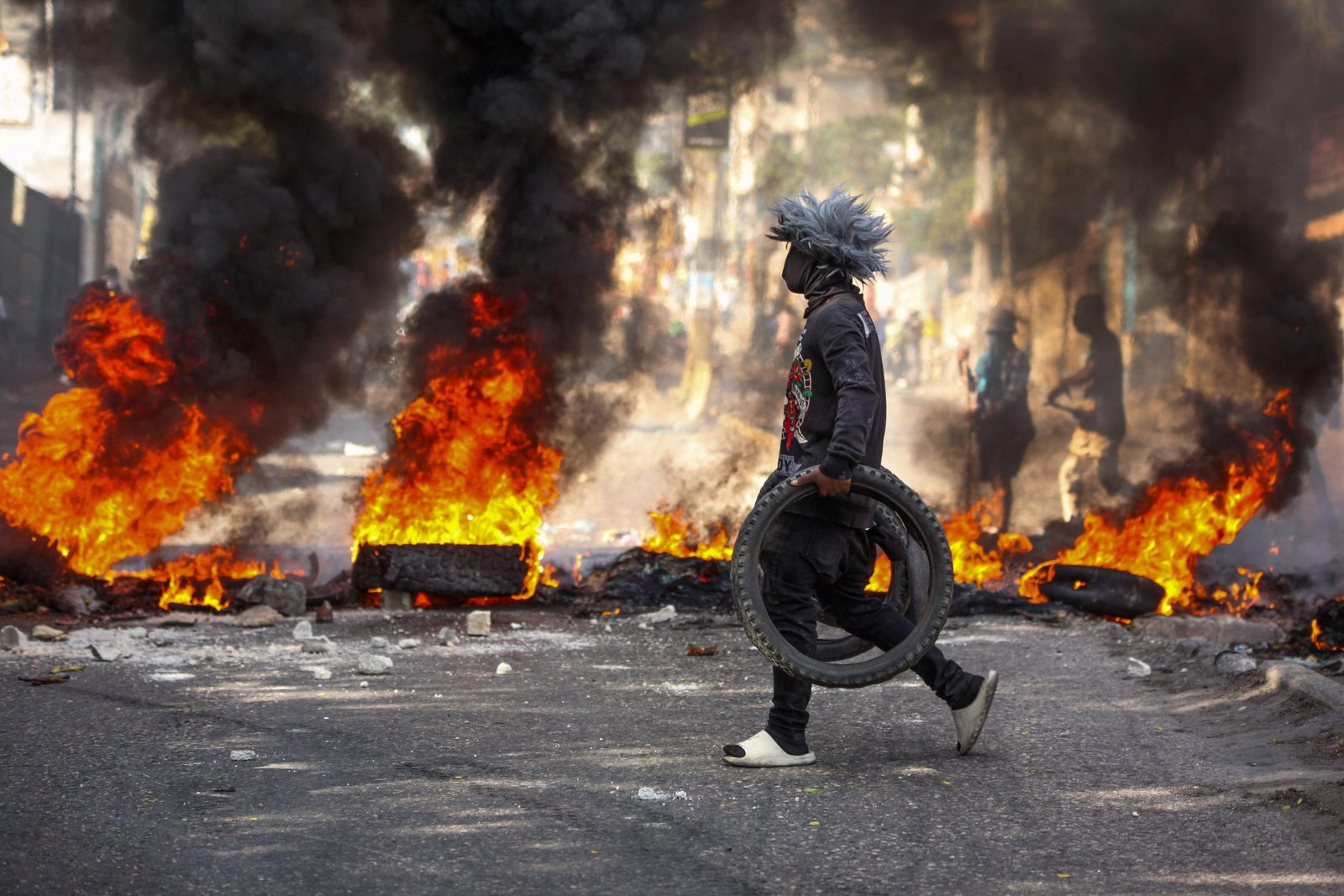
Today Haiti is facing an intense crisis, or “total chaos” as the UN has described it. They’re led by a coalition set up almost two years ago to offer stability after the former prime minister, Ariel Henry, was ousted. Except the coalition is deemed dysfunctional and useless. A network of gangs control swathes of the country, a main spokesman for the largest being the ominously named Jimmy “Barbecue” Chérizier (Barbecue is in fact simply a reference to his mother’s food stall). The gangs run many of the roads, a convenient way to tax people using them and grow rich in so doing. The country’s main airport, in the capital Port-au-Prince, is effectively closed after several planes were shot at. A patchwork of counter militia have emerged who rival the gangs in violence. Thousands have been killed, millions displaced, starvation is rife, as is rape.

Given the violence, alongside the logistical challenges of getting in and out of the country and travelling internally, international media have largely stayed away. This is a big frustration for Michael Deibert, an author, journalist and Index contributor, who is rare in actually still visiting (and will be writing more in-depth for Index on this). He has been reporting from Haiti for decades and was last there in July. While he recognised the extreme difficulties for foreign correspondents, he did nevertheless stress that they needed to be there. As an aside Deibert also told me that he regularly receives videos of gang atrocities.

Deibert’s point about the absence of foreign media is made all the more important because local journalists are struggling to report the story. They are terrified of both sides – the gangs and militia – and speaking to either in the interests of impartial journalism risks them being deemed a “collaborator”. Meanwhile even seemingly neutral areas to cover, like the reopening of a hospital, have led to the death of several of their own.

The violence isn’t just about silencing the messenger, it’s about the message: A viral video of someone being murdered, the ringing sounds of gunshots in the distance, a woman raped in the open – these make people incredibly cautious about speaking out lest they’re next. The UN might describe the scenes in Haiti as “total chaos” but they’re also ones motivated by total control.

Read the full article here

Fact Checker

Verify the accuracy of this article using AI-powered analysis and real-time sources.

Get Your Fact Check Report

Enter your email to receive detailed fact-checking analysis

5 free reports remaining

Continue with Full Access

You've used your 5 free reports. Sign up for unlimited access!

Already have an account? Sign in here

Share. Facebook Twitter Pinterest LinkedIn Tumblr Email Telegram Copy Link
News Room
  • Website
  • Facebook
  • X (Twitter)
  • Instagram
  • LinkedIn

The FSNN News Room is the voice of our in-house journalists, editors, and researchers. We deliver timely, unbiased reporting at the crossroads of finance, cryptocurrency, and global politics, providing clear, fact-driven analysis free from agendas.

Related Articles

Global Free Speech

Bukele administration freezes Salvadoran news outlet’s assets in latest act of retaliation

3 days ago
Global Free Speech

Colombian journalist reported missing following capture by rebels

3 days ago
Global Free Speech

Daughter of murdered Serbian journalist Slavko Ćuruvija on her 27-year fight for justice

3 days ago
Global Free Speech

Tunisia court sentences journalist Zied el-Heni to 1 year in prison

3 days ago
Global Free Speech

Rwandan YouTuber dies of alleged overdose on day of release from prison

3 days ago
Global Free Speech

Narges Mohammadi, Iranian human rights defender and 2023 Nobel Peace Prize winner I pray that when you read this Narges Mohammadi is still alive. The Nobel Peace Prize winner is currently in an Iranian hospital in a critical condition. Her brother, who lives in Oslo, is anticipating terrible news. Mohammadi, 54, is in ill-health and is suspected of having suffered a heart attack in jail. Her move to a hospital is purely tokenistic – she is not in the right place for her condition. If she dies under these conditions, it’s a fate Mohammadi has warned about herself. In 2023 we shared a video made by Iranian filmmaker Vahid Zarezadeh of Mohammadi raising the alarm. When she gave the interview, she had just left hospital because of previous heart complications, following time in an appalling prison renowned for its punishing regime. In the video she said the “system sets up the conditions for the prisoner’s death,” and told people to not be surprised if, in the event she died in jail, the authorities blamed her death on an undiagnosed health problem. Heart attacks are common, they’d claim, downplaying their own role. Today it is even easier for them to downplay their role. The country is still in digital darkness. This Thursday marks day 69. That is 1632 hours of no connection to the global internet. There are some workarounds but they’re hard and risky. The cover of war has also seen an escalation in the execution of political prisoners, including those who took part in January’s protests. To be a dissident in Iran takes guts. To be as dedicated as Mohammadi is frankly awe-inspiring. What has made her so? Mohammadi was born in 1972 into a middle-class family with political persuasions. Following the Islamic revolution, her uncle and two cousins were arrested for activism. She studied nuclear physics at university, and it was there that she met her husband, Taghi Rahmani, who had himself spent 17 years in prison. After university, she worked for newspapers that were part of the reformist movement. In 2003 she joined the Defenders of Human Rights Center, founded by that year’s Nobel Peace Prize laureate, Shirin Ebadi. By this stage she had already been arrested and spent a year in jail. This became a pattern. According to her foundation, she’s been arrested 13 times and sentenced to a total of 31 years in prison and 154 lashes. A mother of twins — Kiana and Ali – Mohammadi has called the long years of separation from them an indescribable suffering. She has spoken about the fear and anxiety of solitary confinement and once said: “The price of the struggle is not only torture and prison, it is a heart that breaks with every regret and a pain that strikes to the marrow of your bones.” Still, she has continued to campaign for justice. Upon winning the Nobel Peace Prize in October 2023 “for her fight against the oppression of women in Iran and her fight to promote human rights and freedom for all”, she said: “I will never stop striving for the realisation of democracy, freedom and equality.” One month later she was on hunger strike to protest the delayed and neglectful medical care for sick prisoners. I’m fascinated by the anatomy of courage, though I’m unsure I’ll ever get to the bottom of it. What I do know is that Narges Mohammadi deserves every accolade and if she dies in the coming days the Iranian authorities are the culprits and not a dodgy heart. READ MORE

3 days ago
Add A Comment

Comments are closed.

Editors Picks

Baidu’s New AI Is Already Beating Top Models and Cost 94% Less to Build

9 minutes ago

EFF to Fourth Circuit: Electronic Device Searches at the Border Require a Warrant

28 minutes ago

The Real Lord of the Flies Story Netflix Isn’t Telling

30 minutes ago

Circle (CRCL) is trying to prove it’s more than just a stablecoin company with $3 billion blockchain

57 minutes ago
Latest Posts

Bitcoin Bulls Attack $82K As Altcoins Consolidate

1 hour ago

Clarity Act Vote Set for Thursday: Here’s Where the Crypto Bill Stands

1 hour ago

Lawmakers see different threats to campus speech — but the same stakes

1 hour ago

Subscribe to News

Get the latest news and updates directly to your inbox.

At FSNN – Free Speech News Network, we deliver unfiltered reporting and in-depth analysis on the stories that matter most. From breaking headlines to global perspectives, our mission is to keep you informed, empowered, and connected.

FSNN.net is owned and operated by GlobalBoost Media
, an independent media organization dedicated to advancing transparency, free expression, and factual journalism across the digital landscape.

Facebook X (Twitter) Discord Telegram
Latest News

Ripple Secures $200M Credit Facility to Expand Institutional Prime Brokerage

6 minutes ago

Baidu’s New AI Is Already Beating Top Models and Cost 94% Less to Build

9 minutes ago

EFF to Fourth Circuit: Electronic Device Searches at the Border Require a Warrant

28 minutes ago

Subscribe to Updates

Get the latest news and updates directly to your inbox.

© 2026 GlobalBoost Media. All Rights Reserved.
  • Privacy Policy
  • Terms of Service
  • Our Authors
  • Contact

Type above and press Enter to search. Press Esc to cancel.

🍪

Cookies

We and our selected partners wish to use cookies to collect information about you for functional purposes and statistical marketing. You may not give us your consent for certain purposes by selecting an option and you can withdraw your consent at any time via the cookie icon.

Cookie Preferences

Manage Cookies

Cookies are small text that can be used by websites to make the user experience more efficient. The law states that we may store cookies on your device if they are strictly necessary for the operation of this site. For all other types of cookies, we need your permission. This site uses various types of cookies. Some cookies are placed by third party services that appear on our pages.

Your permission applies to the following domains:

  • https://fsnn.net
Necessary
Necessary cookies help make a website usable by enabling basic functions like page navigation and access to secure areas of the website. The website cannot function properly without these cookies.
Statistic
Statistic cookies help website owners to understand how visitors interact with websites by collecting and reporting information anonymously.
Preferences
Preference cookies enable a website to remember information that changes the way the website behaves or looks, like your preferred language or the region that you are in.
Marketing
Marketing cookies are used to track visitors across websites. The intention is to display ads that are relevant and engaging for the individual user and thereby more valuable for publishers and third party advertisers.