

 Freedom Index
Listen to the article
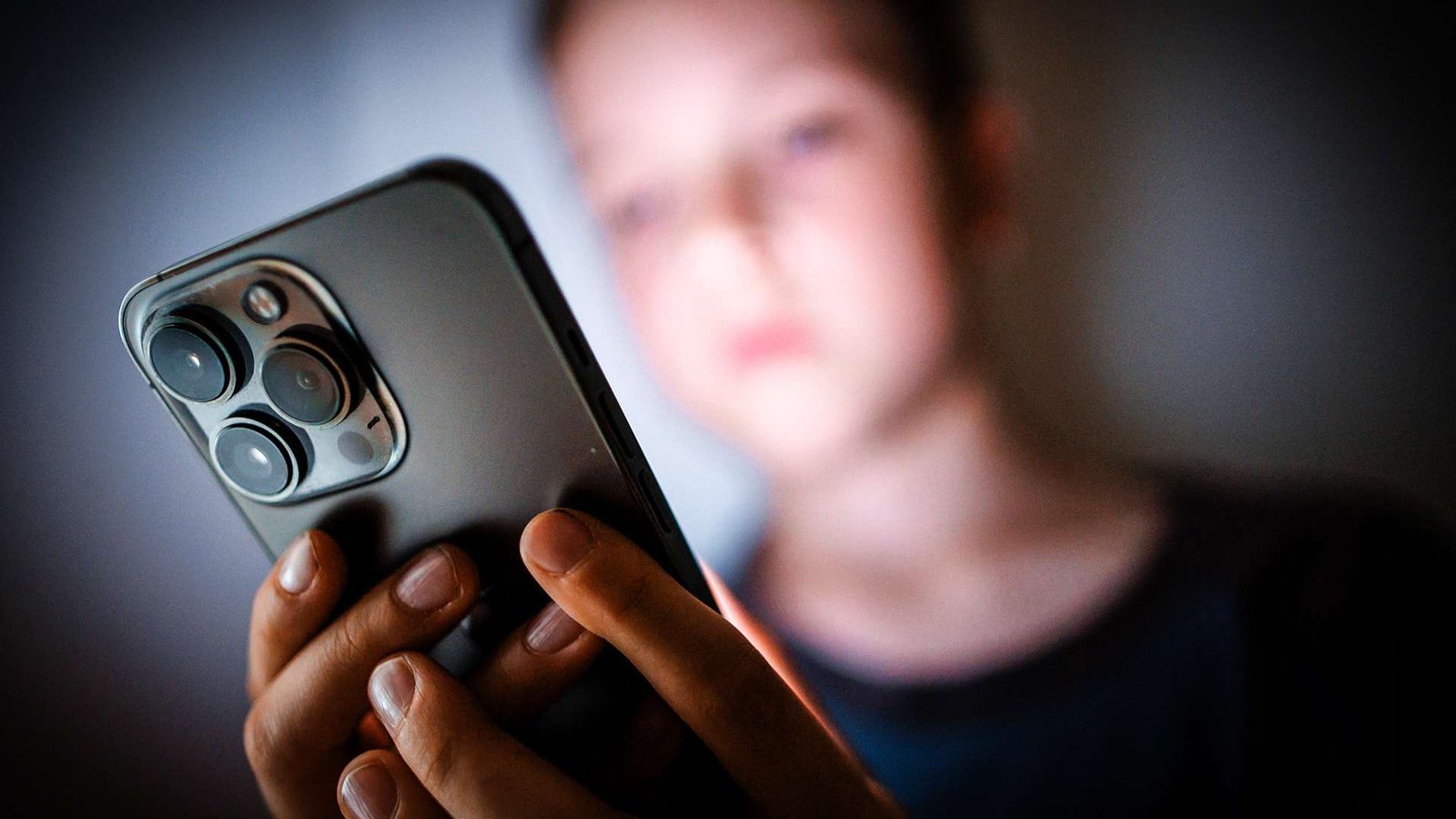
The country has gone without a Senate-confirmed surgeon general for more than a year, yet the office continues producing pronouncements. On May 20, the Office of the Surgeon General released an advisory on screen use in children and adolescents. Yet the advisory rests on surprisingly weak evidence and illustrates how far the office has drifted from its original mission.
The Department of Health and Human Services (HHS) classifies advisories as public statements that call attention to an issue and provide recommendations. They are distinct from the surgeon general’s reports, which are comprehensive scientific reviews prepared by experts, and from calls to action, which are science-based summaries. The screen-use advisory states explicitly that its findings are not the product of a formal systematic review. By the issuing agency’s own standards, it is not a scientific document. But it frames the issue with an authority that makes moral panic sound like public health.
Almost everything we know about children and screens comes from cross-sectional research, examining correlations at a single snapshot in time. It is difficult to determine, without longitudinal data, let alone randomized control trials, what the directionality is of associations between screen time and mental health. Do screens cause worse mental health? Or do children with poor mental health spend more time on screens, seeking social support online?
The advisory is candid about this when it addresses the science directly. It acknowledges that most available evidence is correlational, that findings vary by age, content, and context, and that studies have reported positive, negative, mixed, and null effects. It also notes that causality cannot be proven.
But its summary guidelines suggest the exact opposite. The advisory claims that limiting screen time is necessary to protect children’s mental health. A finding that earlier smartphone ownership is “associated with” later depression becomes, in the surrounding paragraphs, evidence that the phone caused it.
Meanwhile, the largest synthesis of this research, a 2024 meta-analysis in JAMA Pediatrics covering 143 studies and more than 1 million adolescents worldwide, found that the associations between social media use and mental health were small, inconsistent across studies, and drawn almost entirely from non-clinical community samples. When researchers statistically control for the variables that predict both heavy social media use and poor outcomes, including neuroticism, poor emotional regulation, and weak social support, the effects disappear. Genetic research tells the same story: Shared genes influence both digital habits and mental health, suggesting that heavy screen use is a downstream expression of preexisting vulnerabilities rather than a cause of new ones.
Children who are already anxious, isolated, or unstable at home are most often the ones who retreat into a screen. Screen time can be a marker of mental distress without causally contributing to it. But across the smartphone era, American teenagers have committed less violent crime, smoked less, used fewer drugs, had fewer pregnancies, and dropped out of school at lower rates, according to the Centers for Disease Control and Prevention (CDC)’s own Youth Risk Behavior Survey. If screens were broadly impairing a generation, the damage should show up more consistently than a selective worsening on the self-reported measures most sensitive to a culture that has grown more willing to label and report distress.
The advisory’s claims about attention and the developing brain fare no better. It is true that excess screen time has been shown to be associated with diminished attention span and poorer educational outcomes. In quasi-randomized control trials, comparing similar schools within the same district that do or do not have smartphone bans, those that ban screens tend to perform better on standardized testing. The report concludes from this evidence that screens are fundamentally harmful to children’s brain and cognitive development.
But children’s brains are extraordinarily plastic. They wire themselves to match the world they encounter, and that rewiring is the system working, not breaking down. The capacity for prolonged single-task focus, the attentional style that classrooms reward and that the advisory treats as a healthy baseline, is not the brain’s default. It is something the structured environment of industrial-era schooling trained into minds that evolved for a world of shifting stimuli and competing demands. A childhood spent navigating fast feeds and switching between applications will produce a different attentional profile than one raised on books and chalkboards. A different profile is not the same as a deficient one.
Habitual media multitaskers and heavy users of touchscreen devices do tend to perform worse on tasks requiring slow, sustained, narrowly channeled focus and the suppression of impulses. But they perform better at locating a target in a crowded visual field, tracking several objects in motion simultaneously, and reallocating attention on short notice. Action video gaming in particular sharpens visual selective attention, processing speed, and the spatial resolution of vision, and these gains transfer to novel tasks that the player was never trained on. Claims that screens impair children’s cognitive development almost always rest on measuring a single attentional style, the one that schooling prizes, and ignoring the capacities that strengthen on the other side.
Faced with such disputed claims, the advisory invokes the precautionary principle: action cannot wait for all the evidence. Health Secretary Robert F. Kennedy Jr. opens the report arguing that we must act to protect children from potential harm, even before the science is settled. The precautionary principle sounds responsible, but it can be used to justify any intervention in any direction, because evidence is never complete for anything. Strip away the precautionary language and much of what remains is moral instruction. The advisory urges the public to “scroll less and live best” and to put screens away so children can “live real life.” Many parents share those instincts. But a parenting aspiration is not a public health finding, and publishing it under a federal imprimatur does not convert one into the other.
The problem is not merely that the evidence is weak, though that would be problematic enough coming from our nation’s highest medical authority. The advisory also highlights how far the Office of the Surgeon General has strayed from its original purpose.
The office began in the 19th century as part of the Marine Hospital Service. Its mission was to help control infectious diseases and oversee the health of merchant seamen. Public health, in its original and defensible sense, addresses harms that one person imposes on others who did not consent: infectious disease, polluted water, contaminated air. Yet over time, the office increasingly expanded beyond those traditional public health concerns.
Recent surgeon general advisories have addressed loneliness, social media, parenting stress, firearm violence, and now screen use. Whatever one thinks about those issues, they illustrate how the office has drifted from its original mission. As a recent Cato Institute policy analysis documented, this expansion has unfolded over decades, turning the office into a platform for commentary on social and behavioral issues only tangentially related to public health.
A child’s screen time is not a negative externality. It is a question of family life and parental judgment, the kind of question government health officials are least equipped to answer. These are matters of personal health—not within the government’s purview.
The advisory’s practical suggestions to families may be perfectly sensible. But sensible parenting advice does not require a federal advisory, and a federal advisory implies a scientific foundation that this one lacks. The honest course would be to encourage the long-term research the field actually needs and leave questions about children’s screen use where they belong: with families.
Congress should dissolve the Office of the Surgeon General and reassign any remaining legitimate public health functions to existing agencies. The country would scarcely notice.
Read the full article here
Fact Checker
Verify the accuracy of this article using AI-powered analysis and real-time sources.