Close Menu
FSNN | Free Speech News NetworkFSNN | Free Speech News Network
  • Home
  • News
    • Politics
    • Legal & Courts
    • Tech & Big Tech
    • Campus & Education
    • Media & Culture
    • Global Free Speech
  • Opinions
    • Debates
  • Video/Live
  • Community
  • Freedom Index
  • About
    • Mission
    • Contact
    • Support
Trending

Study: RFK Jr., Joe Rogan’s Misinformation Campaigns Led To A 38% Increase In Vitamin A Poisoning Last Year

13 minutes ago

If Judge Ross’s “Improper Sexual Activity” “Greatly Damage[s] [Her] Credibility as a Judge,” Does That Satisfy the Standard for Impeachment?

19 minutes ago

Standard Chartered’s three ‘Ifs’ that stand between bitcoin and a market low: Crypto Daily

33 minutes ago
Facebook X (Twitter) Instagram
Facebook X (Twitter) Discord Telegram
FSNN | Free Speech News NetworkFSNN | Free Speech News Network
Market Data Newsletter
Friday, June 5
  • Home
  • News
    • Politics
    • Legal & Courts
    • Tech & Big Tech
    • Campus & Education
    • Media & Culture
    • Global Free Speech
  • Opinions
    • Debates
  • Video/Live
  • Community
  • Freedom Index
  • About
    • Mission
    • Contact
    • Support
FSNN | Free Speech News NetworkFSNN | Free Speech News Network
Home»News»Media & Culture»The Government Wants a Monopoly on Conservation
Media & Culture

The Government Wants a Monopoly on Conservation

News RoomBy News Room1 hour agoNo Comments5 Mins Read1,741 Views
Share Facebook Twitter Pinterest Copy Link LinkedIn Tumblr Email VKontakte Telegram
The Government Wants a Monopoly on Conservation
Share
Facebook Twitter Pinterest Email Copy Link

Listen to the article

0:00
0:00

Key Takeaways

Playback Speed

Select a Voice

If I told you that a federal agency had dismissed voluntary conservation on the grounds that environmental protection should be done only by government planners and regulators, you’d be forgiven for thinking I was referring to a previous administration. But the Biden administration actually endorsed conservation leasing, a free market approach to reduce conflict and litigation over federal land. In rescinding those policies, the Trump administration’s Department of the Interior is embracing its inner statism.

In 2024, the Bureau of Land Management adopted the Public Lands Rule, which allowed conservation groups to lease public land for conservation, just as ranchers, energy companies, and many other interests do. The goal was to put conservation on an equal footing with other uses and give conservation groups a voluntary, free market alternative to lobbying and litigation to pursue their interests. The Biden administration also hoped to promote cooperation over conflict, with one official telling Congress that the “key to the success” of the program would be conservation groups paying ranchers and other public-land users for voluntary stewardship.

What would conservation leasing look like in practice? Voluntary conservation on private land offers endless examples. In West Virginia, Trout Unlimited has restored 25 miles of stream, along with 500 acres of riparian habitat, and purchased easements from willing landowners to protect those investments. In the Southeast, The Nature Conservancy and American Forest Foundation have established a program to pay family forestowners for conservation practices, including carbon sequestration. And in the Greater Yellowstone Ecosystem, the Ricketts Conservation Foundation and my organization, the Property and Environment Research Center (PERC), partner with ranchers to replace miles of barbed wire with “virtual fences” that improve cattle management and remove barriers to wildlife migrations.

Last month, the BLM rescinded the Public Lands Rule, rejecting any role for private, voluntary conservation on public lands. According to its interpretation, government planning, environmental reviews, and regulation are sufficient tools, and private competition and complements are unnecessary. In effect, the administration declared that the federal government should have a monopoly when it comes to conservation on public land.

When the government insulates its decisions from markets and competition, the results are predictable: poorer service, higher costs, and political gamesmanship. This story has played out again and again in government monopolies in mail service, education, and healthcare. When the government is the sole provider of something and prevents private competition, outcomes—and politics—worsen. 

In the conservation space, government bureaucrats wielding planning, permitting, and regulation are no substitute for private groups investing in conservation outcomes they care about. Government planners face an insurmountable Hayekian knowledge problem, in that information about what people value, and how much they value it, is dispersed and constantly changing. The BLM director simply cannot know what the public desires with the precision needed to perfectly plan across the 245 million acres he oversees. Only prices can reveal that information, which requires market mechanisms to allow for competition among competing uses.

A government monopoly for conservation projects will also lack accountability. When a bureaucrat mismanages a landscape or spends a lot of money on an ill-conceived project, the consequences fall on the public rather than the bureaucrat or his agency. However, if the Rocky Mountain Elk Foundation invests its own money in removing invasive species, implementing a prescribed burn, or improving wildlife habitat, it has strong incentives to deliver the best results at the lowest possible cost.

Channeling conservation exclusively through politics also leads to less durable investments and results. Recently, the Bureau of Land Management upended a 20-year bison restoration program by suddenly changing its interpretation of a century-old law in response to political pressure. Federal agencies are inherently political animals, and their commitments are only as reliable as the next election. Property rights and contracts, on the other hand, provide durable commitments and spur investment in conservation.

Then there’s rent-seeking. If conservation of public lands is purely a question of politics, every side has an incentive to exaggerate claims and push the government to favor their interests. For years, public-land controversies have generated scorched-earth political battles, with industry actors claiming that conservation would be ruinously expensive and conservation advocates predicting development will cause the sky to fall. 

Some of the chief benefits of markets are to force people to put their money where their mouths are and to create incentives for compromise. A conservation group that knows a conservation lease that blocks energy development entirely will be ruinously expensive has a direct stake in finding creative ways for commerce and conservation to coexist. But if the costs exclusively fall on political opponents, why moderate? 

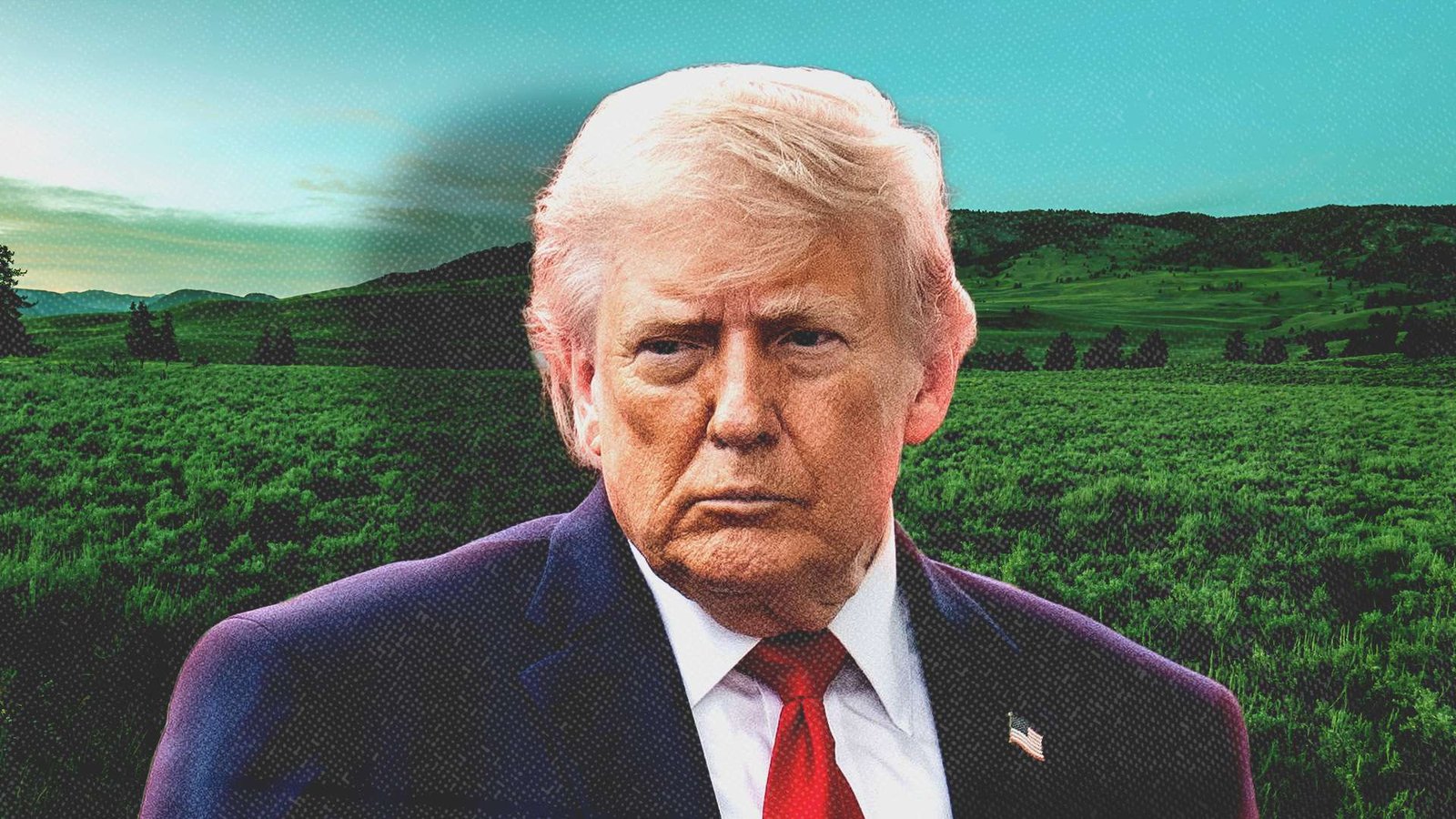
The BLM’s decision is especially disappointing because it undercuts the administration’s own signals that it understands these problems. Last July, President Trump signed the Make America Beautiful Again executive order setting out the administration’s environmental vision, which is “to prioritize responsible conservation, restore our lands and waters, and protect” outdoor recreation. Specifically, it called for policies to “encourage responsible, voluntary conservation efforts” and “cut bureaucratic delays that hinder effective environmental management.” BLM’s decision repudiates both principles in favor of a statist vision of top-down, regulatory conservation.

Read the full article here

Fact Checker

Verify the accuracy of this article using AI-powered analysis and real-time sources.

Get Your Fact Check Report

Enter your email to receive detailed fact-checking analysis

5 free reports remaining

Continue with Full Access

You've used your 5 free reports. Sign up for unlimited access!

Already have an account? Sign in here

#CivicEngagement #IndependentMedia #InformationWar #Journalism #PublicOpinion
Share. Facebook Twitter Pinterest LinkedIn Tumblr Email Telegram Copy Link
News Room
  • Website
  • Facebook
  • X (Twitter)
  • Instagram
  • LinkedIn

The FSNN News Room is the voice of our in-house journalists, editors, and researchers. We deliver timely, unbiased reporting at the crossroads of finance, cryptocurrency, and global politics, providing clear, fact-driven analysis free from agendas.

Related Articles

Media & Culture

Study: RFK Jr., Joe Rogan’s Misinformation Campaigns Led To A 38% Increase In Vitamin A Poisoning Last Year

13 minutes ago
Media & Culture

If Judge Ross’s “Improper Sexual Activity” “Greatly Damage[s] [Her] Credibility as a Judge,” Does That Satisfy the Standard for Impeachment?

19 minutes ago
Debates

The Murder of Henry Nowak and the Politics of Certainty

2 hours ago
Cryptocurrency & Free Speech Finance

Coinbase Launches Pre-IPO Perps, Starting with Elon Musk’s SpaceX

2 hours ago
Media & Culture

Because Flock Can’t Be Trusted, Cities Are Covering Cameras With Garbage Bags

2 hours ago
Media & Culture

CJ Roberts Agrees with AT&T and Verizon, But Rules For FCC

2 hours ago
Add A Comment
Leave A Reply Cancel Reply

Editors Picks

If Judge Ross’s “Improper Sexual Activity” “Greatly Damage[s] [Her] Credibility as a Judge,” Does That Satisfy the Standard for Impeachment?

19 minutes ago

Standard Chartered’s three ‘Ifs’ that stand between bitcoin and a market low: Crypto Daily

33 minutes ago

Bitcoin ETF Sell-Off Hits 13 Days With $4.4B Outflows

34 minutes ago

The Government Wants a Monopoly on Conservation

1 hour ago
Latest Posts

The Murder of Henry Nowak and the Politics of Certainty

2 hours ago

Russia sanctions British teenager for alleging A7A5 use in funding Ukraine war

2 hours ago

Polymarket Resolves Strategy Bitcoin Sale Dispute to No

2 hours ago

Subscribe to News

Get the latest news and updates directly to your inbox.

At FSNN – Free Speech News Network, we deliver unfiltered reporting and in-depth analysis on the stories that matter most. From breaking headlines to global perspectives, our mission is to keep you informed, empowered, and connected.

FSNN.net is owned and operated by GlobalBoost Media
, an independent media organization dedicated to advancing transparency, free expression, and factual journalism across the digital landscape.

Facebook X (Twitter) Discord Telegram
Latest News

Study: RFK Jr., Joe Rogan’s Misinformation Campaigns Led To A 38% Increase In Vitamin A Poisoning Last Year

13 minutes ago

If Judge Ross’s “Improper Sexual Activity” “Greatly Damage[s] [Her] Credibility as a Judge,” Does That Satisfy the Standard for Impeachment?

19 minutes ago

Standard Chartered’s three ‘Ifs’ that stand between bitcoin and a market low: Crypto Daily

33 minutes ago

Subscribe to Updates

Get the latest news and updates directly to your inbox.

© 2026 GlobalBoost Media. All Rights Reserved.
  • Privacy Policy
  • Terms of Service
  • Our Authors
  • Contact

Type above and press Enter to search. Press Esc to cancel.

🍪

Cookies

We and our selected partners wish to use cookies to collect information about you for functional purposes and statistical marketing. You may not give us your consent for certain purposes by selecting an option and you can withdraw your consent at any time via the cookie icon.

Cookie Preferences

Manage Cookies

Cookies are small text that can be used by websites to make the user experience more efficient. The law states that we may store cookies on your device if they are strictly necessary for the operation of this site. For all other types of cookies, we need your permission. This site uses various types of cookies. Some cookies are placed by third party services that appear on our pages.

Your permission applies to the following domains:

  • https://fsnn.net
Necessary
Necessary cookies help make a website usable by enabling basic functions like page navigation and access to secure areas of the website. The website cannot function properly without these cookies.
Statistic
Statistic cookies help website owners to understand how visitors interact with websites by collecting and reporting information anonymously.
Preferences
Preference cookies enable a website to remember information that changes the way the website behaves or looks, like your preferred language or the region that you are in.
Marketing
Marketing cookies are used to track visitors across websites. The intention is to display ads that are relevant and engaging for the individual user and thereby more valuable for publishers and third party advertisers.